

Art as Code as Art
Two shelves. The first is work made here: Raku-fired ceramics, blown glass, thrown pots, acrylic and watercolor, and the metal and driftwood that get mixed in. The second is what feeds it: artists, single pieces, photographs and writing that Alex keeps coming back to. Earth tones first, then the loud colour set against them.
Rights. Every image on this page is the property of Cloud Lab Works LLC and is shown watermarked. Nothing here is offered for download or reuse. Alex's own work under Made here is to look at, not for sale. The Waku pieces are: originals, prints and licences by inquiry only, one button per piece, or ask about the set.
On the rug this week
One thing from the studio floor, at the top because it is what Alex is looking at now.
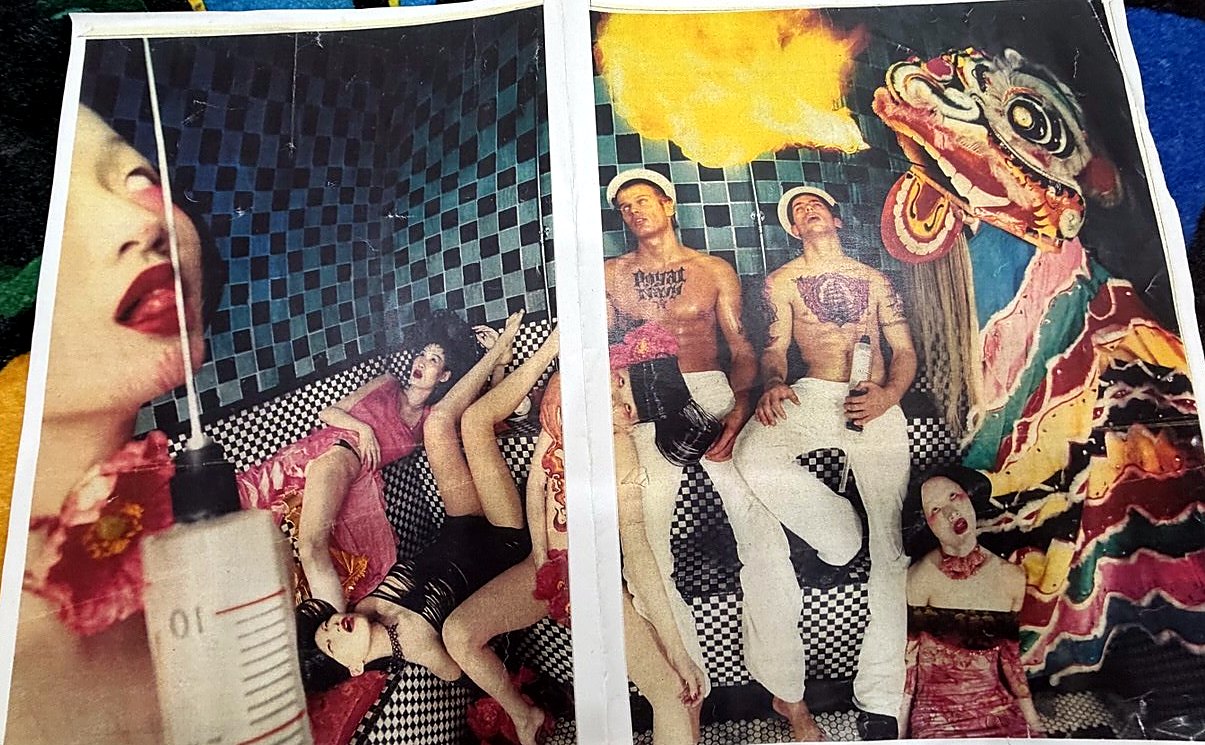 Editorial · 2026 · tear-sheet · Kitsch Pop SurrealismTo Love Is to Share, in the LaChapelle keyOffice Magazine, The Love Issue (No. 22, July 2026). Shown here as it lives in the studio: the spread torn out and creased, straightened and colour-corrected from a phone photo. The photographs are Brunet and Varova's and the magazine's; nothing here is ours but the creases. Styling Diane Serfati; talent Gladys Dulout, Marie-Rose Messina, Vincent Pasdermadjian.Office Magazine →
Made here
Alex comes from a family of artists, entrepreneurs and storytellers. Art began in the house and kept moving: into paint, then clay, then glass, then metal. The deep influences are traditional Japanese painting and Raku-fired ceramics, glass blowing, metal sculpture, and the driftwood the Pacific Northwest coast leaves behind, fabricated into whatever the piece needs. The inspirations run wide and refuse to sort themselves: Jim Phillips, Picasso, Banksy, Van Gogh, Frida Kahlo, Dalí, Katsushika Hokusai, Thrasher Magazine, the Seattle music scene, and more on the shelf below.
Photographed where they hang and sit in the house. Titles are working titles; years to follow from the maker. Not for sale.
Wood
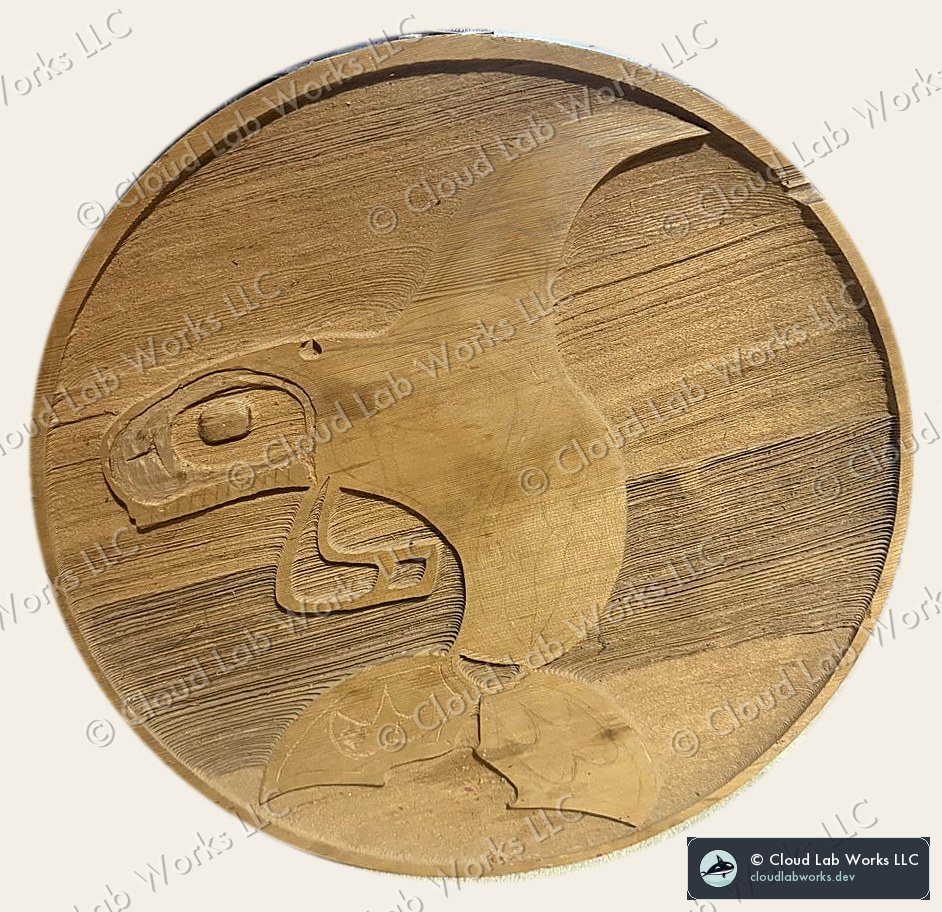 Carved wood relief · Alex Alvord, cut at Alvord SignsWaku, the originalThe orca that became the site's mark, before any of it was code: a plank disc, the whale in relief, the eye and the fin done in formline. Designed by Alex and cut at Alvord Signs, his father's sign shop. It leans against the workbench in the garage.
Acrylic
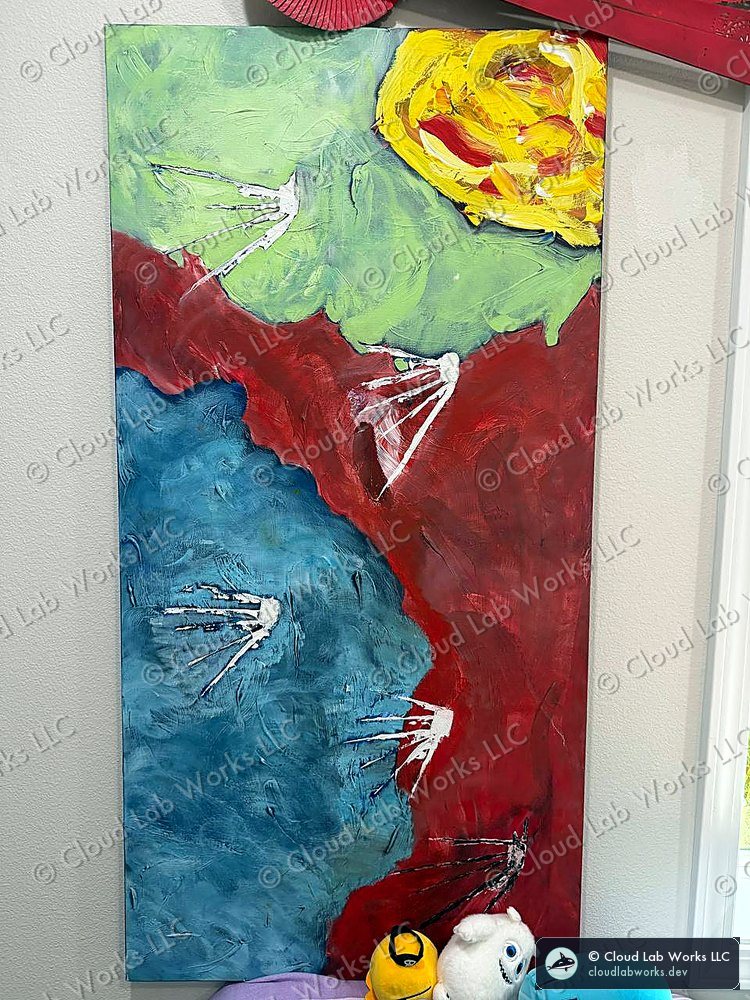 Acrylic on canvasHandsGreen over red over blue, a yellow sun in the corner, and the white hand marks pressed into the wet paint. The loud colour set against the earth.
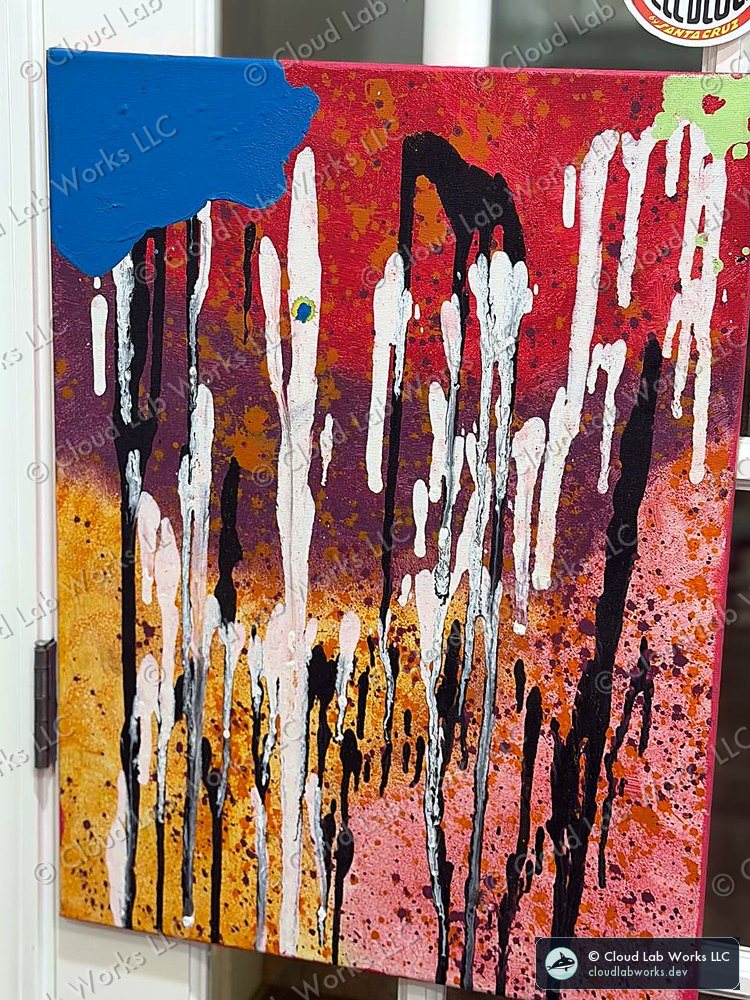 Acrylic pourRed, with dripsRed and orange field, white and black drips run straight down, one blue corner holding the top.
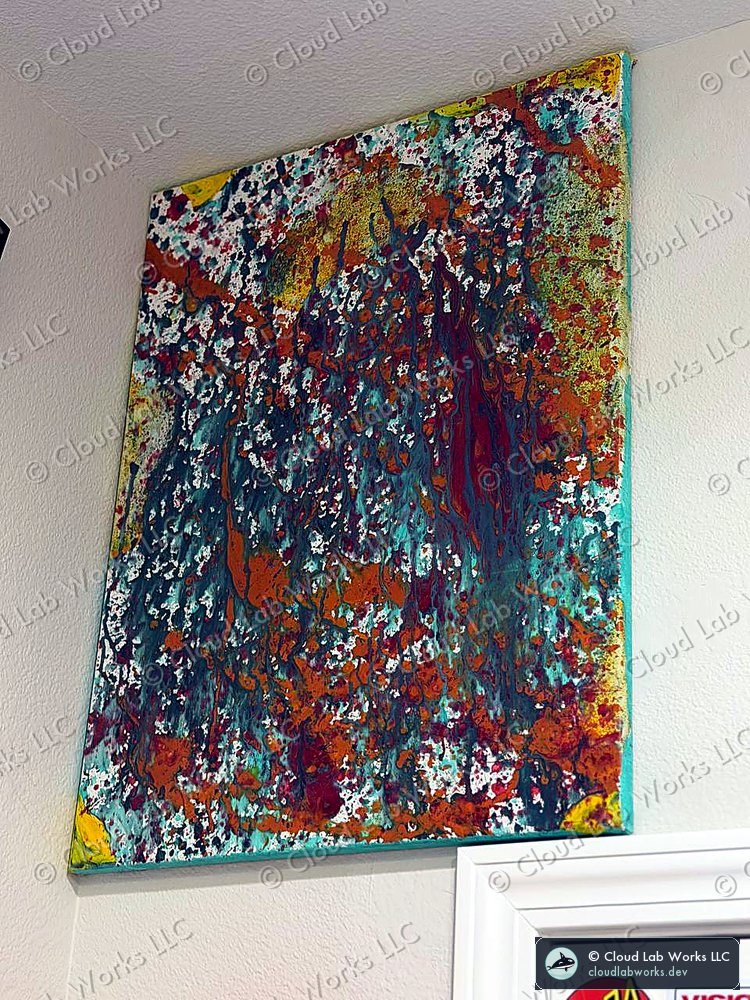 Acrylic pourTeal and rustSplatter and pour, teal against rust and gold. Looks like a tide pool from three feet back.
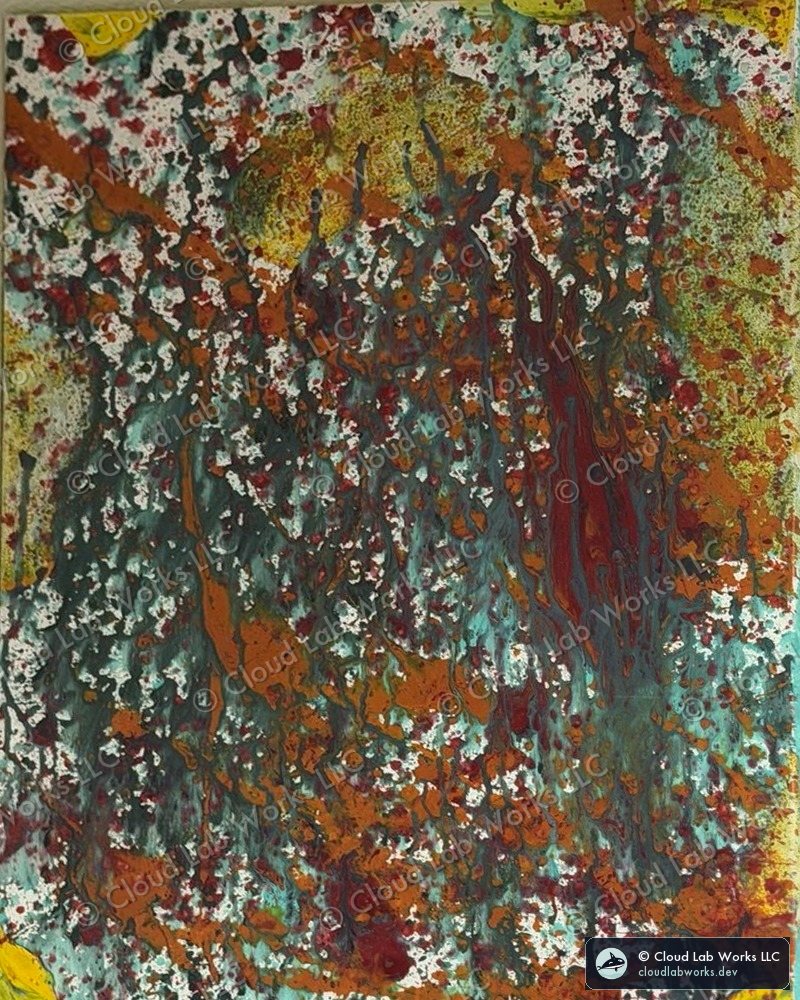 Acrylic pourVerdigrisCopper gone green, the way the flashing on an old roof goes: rust and verdigris over white, a run of red down the middle, yellow in the corners where the pour started. Photographed on the wall and squared up from the photo.
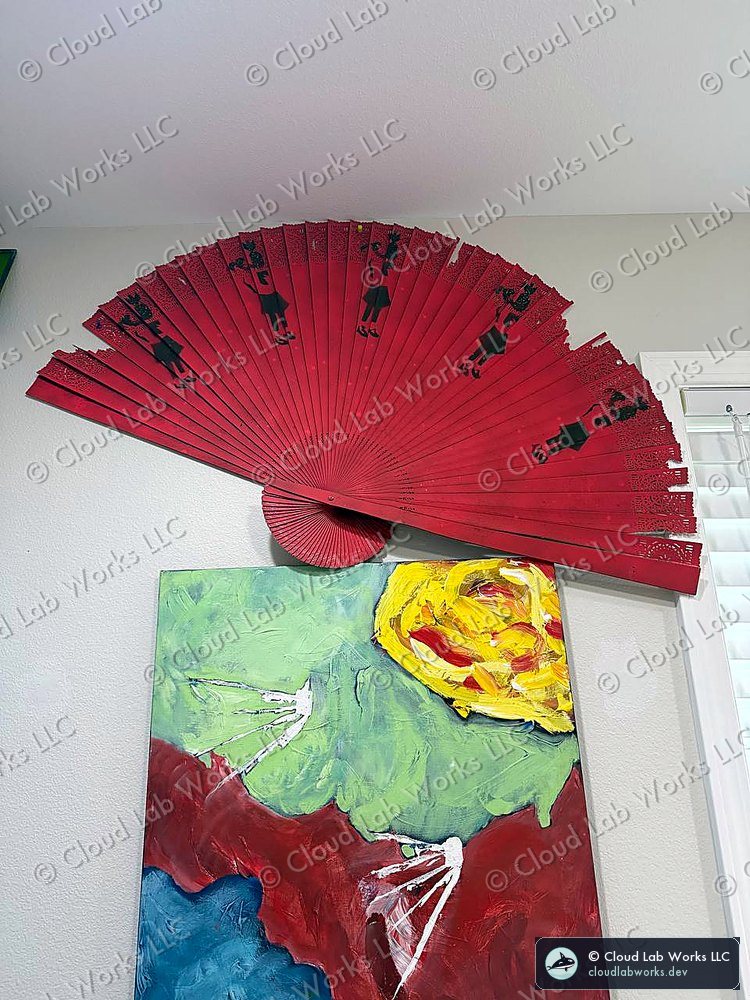 Acrylic and lacquerFan on canvasThe red lacquer fan with its silhouette figures, resting on the top edge of the Hands canvas, as it hangs.
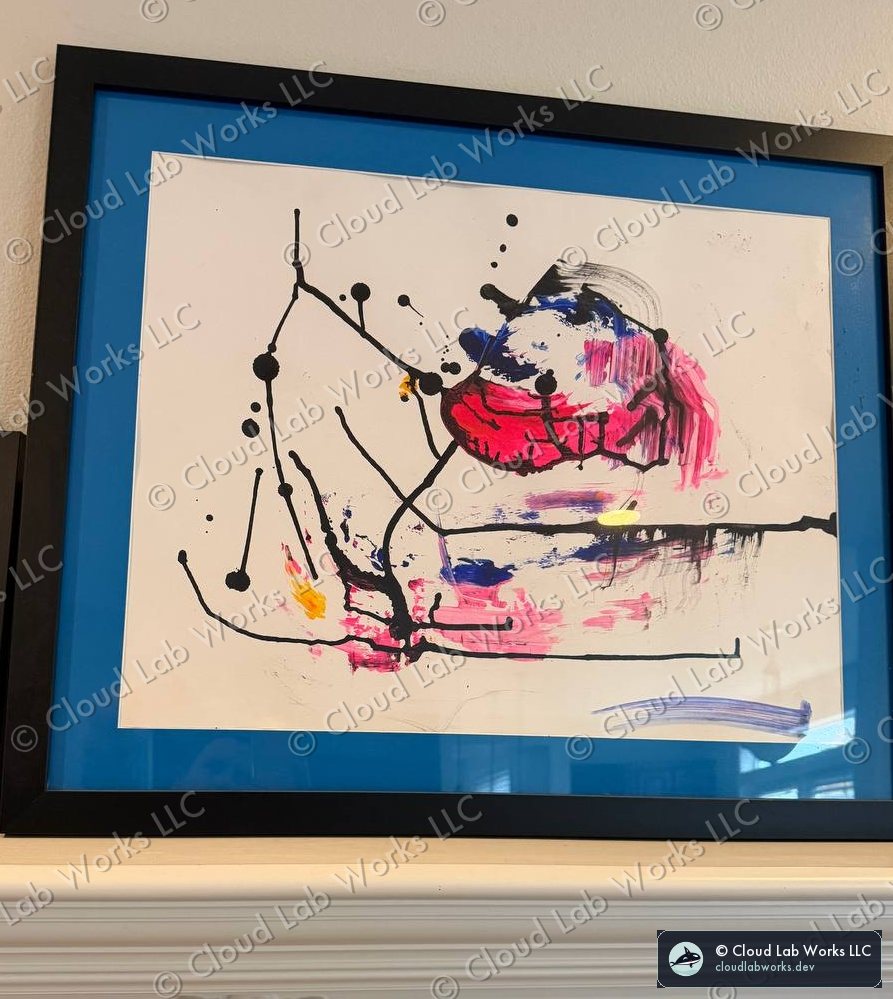 Acrylic on paper · Alex AlvordBlue mat, black lineOne continuous black line, dotted at the joints like a subway map, laid over a pink and blue field with a yellow strike in the corner. Framed in black on blue, on the mantle.
Glass
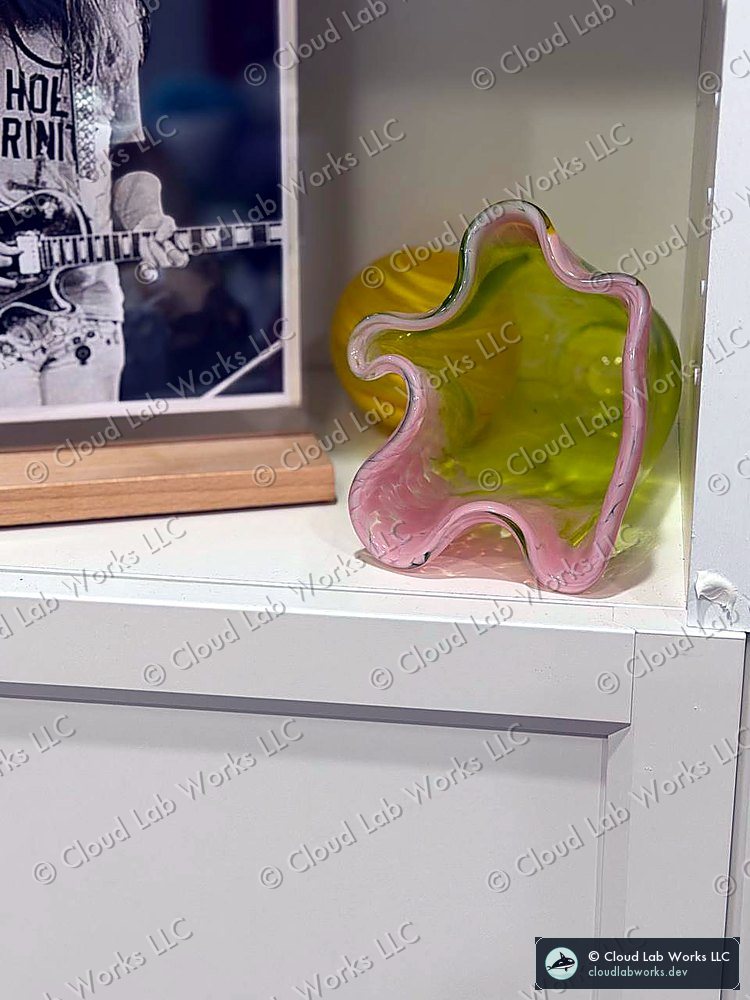 Blown glassRuffled bowlPink rim pulled into ruffles over a yellow-green body. The light does the last third of the work.
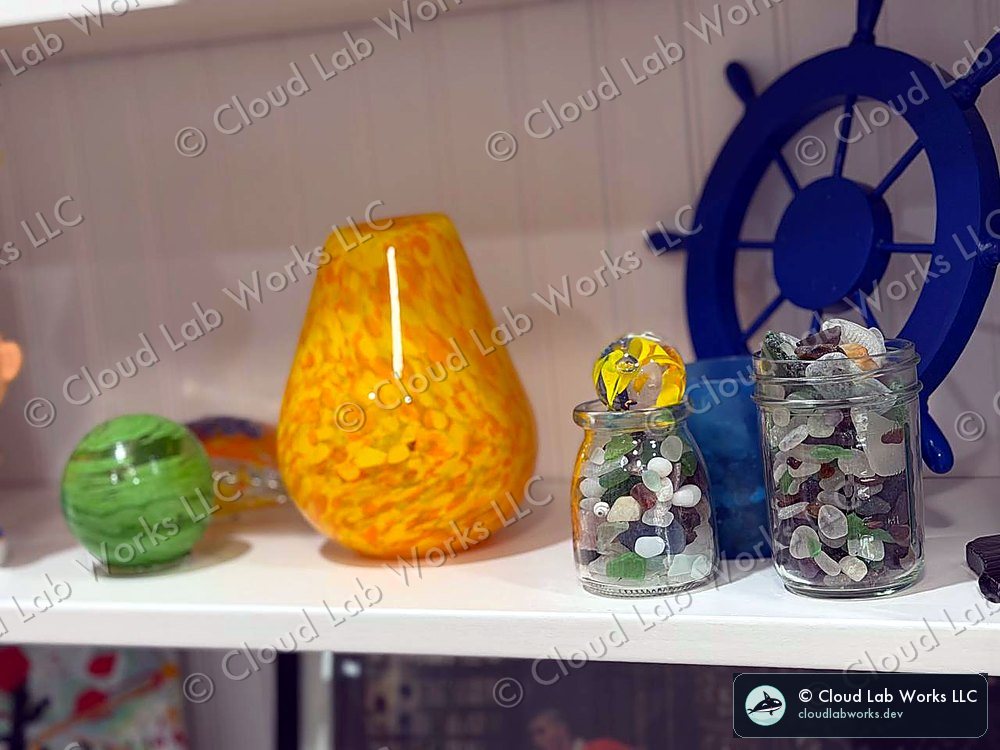 Blown glass · sea glassThe glass shelfAmber teardrop vase with orange and yellow flecks worked into the gather, a green piece behind it, and two jars of sea glass and stones off the beach. Found, not made, but they live on the same shelf.
Raku ceramics
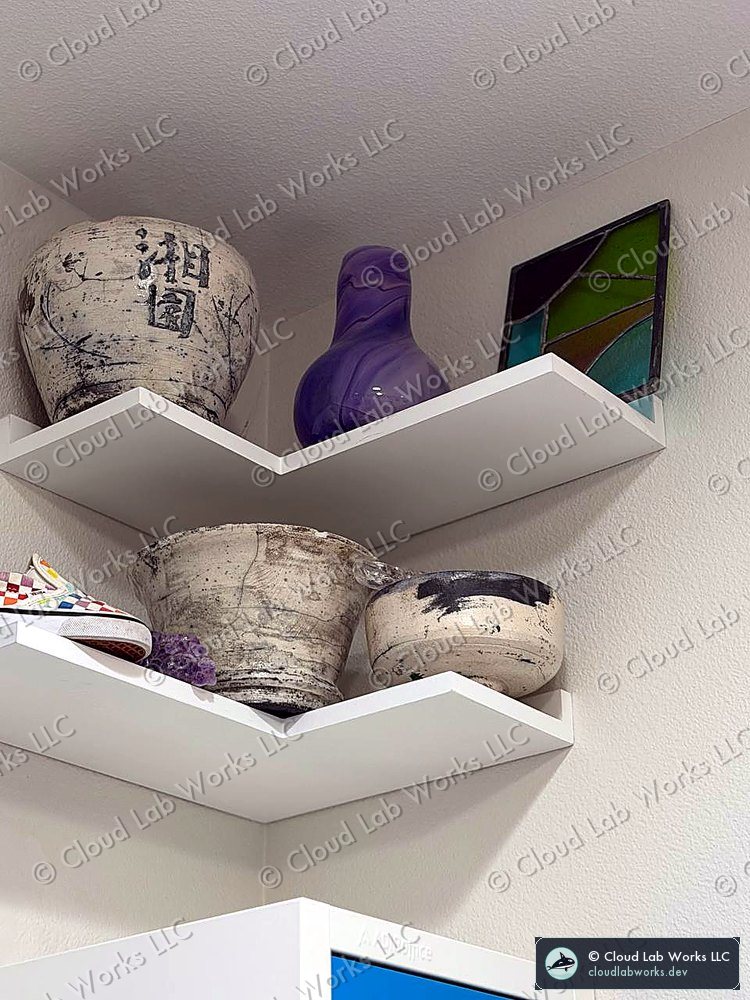 Raku-fired stonewareThe raku shelfWhite crackle with the copper and black flashing that raku gives you and no other firing does; smoke in the cracks where the reduction took. One pot carries two brushed characters on its shoulder.
Drawings
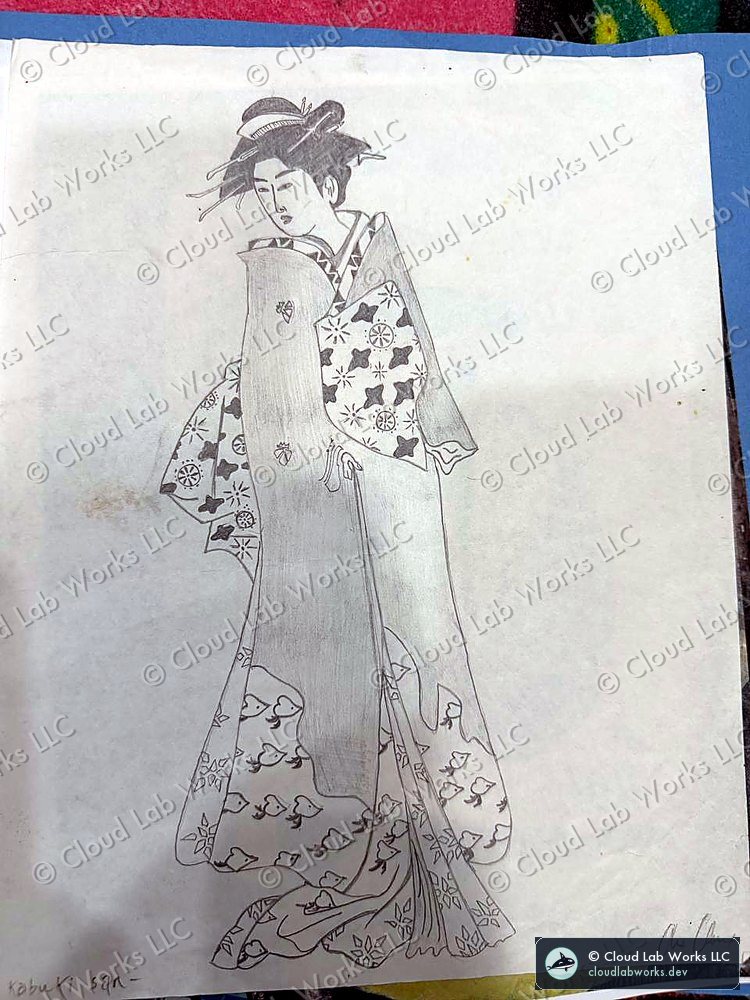 Graphite on paper · Alex AlvordKabuki sanPatterned kimono, hair up, the whole figure in line. Titled and signed on the sheet.
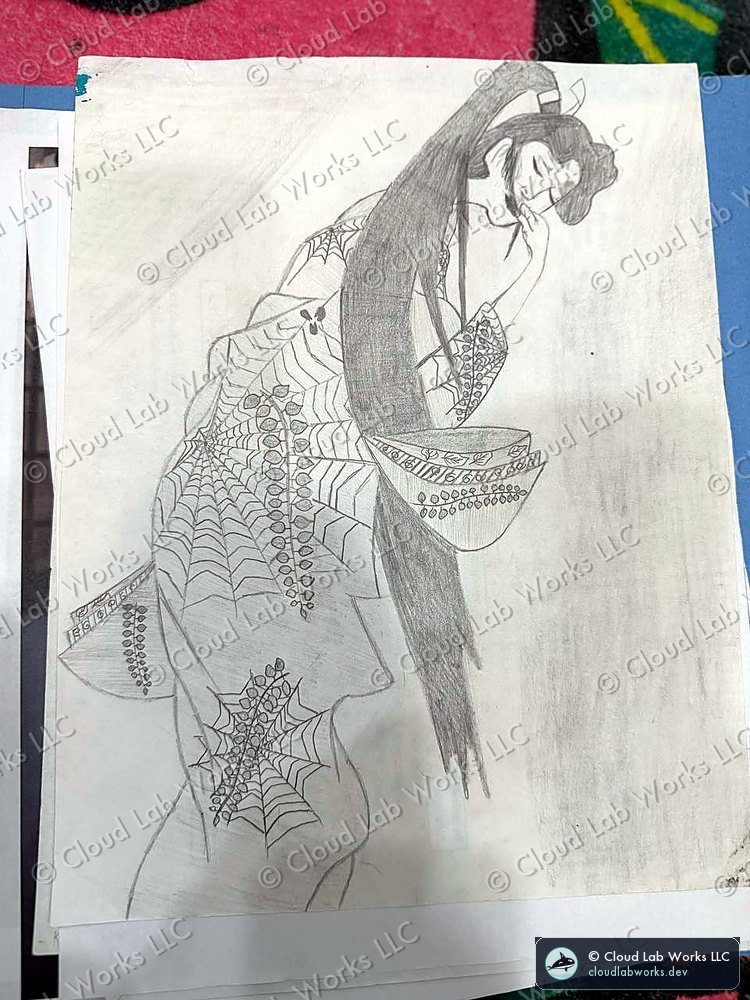 Graphite on paper · Alex AlvordKabuki figureSecond figure, head bowed, spider webs across the kimono, the drapery worked in detail.
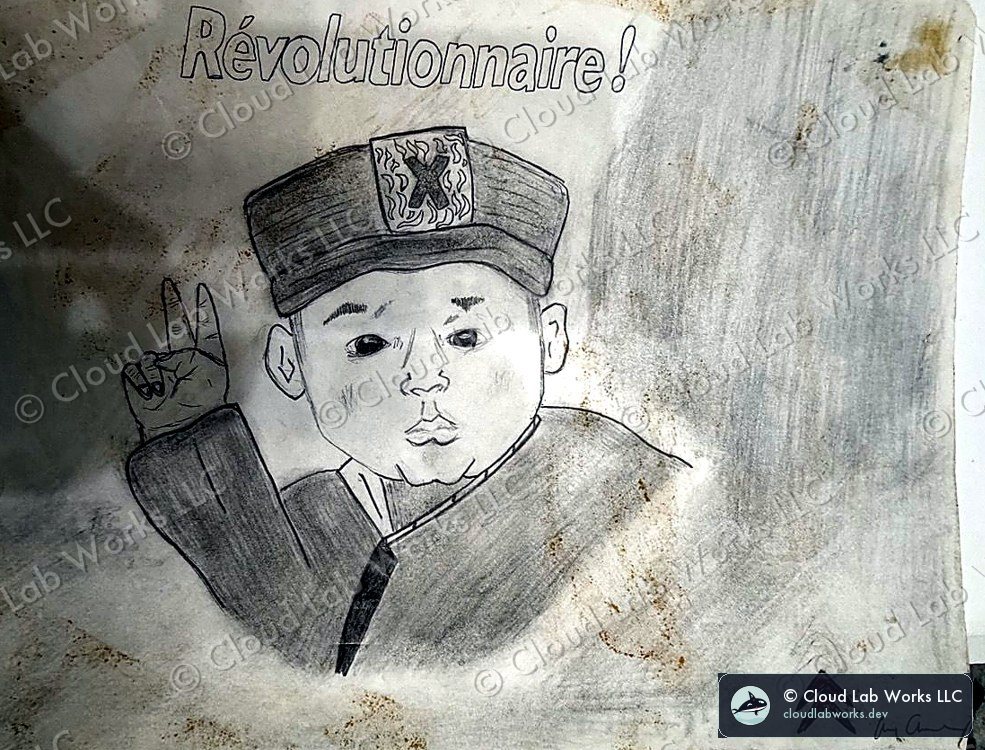 Graphite and red pencil on paper · Alex AlvordRévolutionnaire!A baby in a peaked cap, the X badge on fire, two fingers up. Titled across the top, signed with the red chevron. The sheet carries its years.
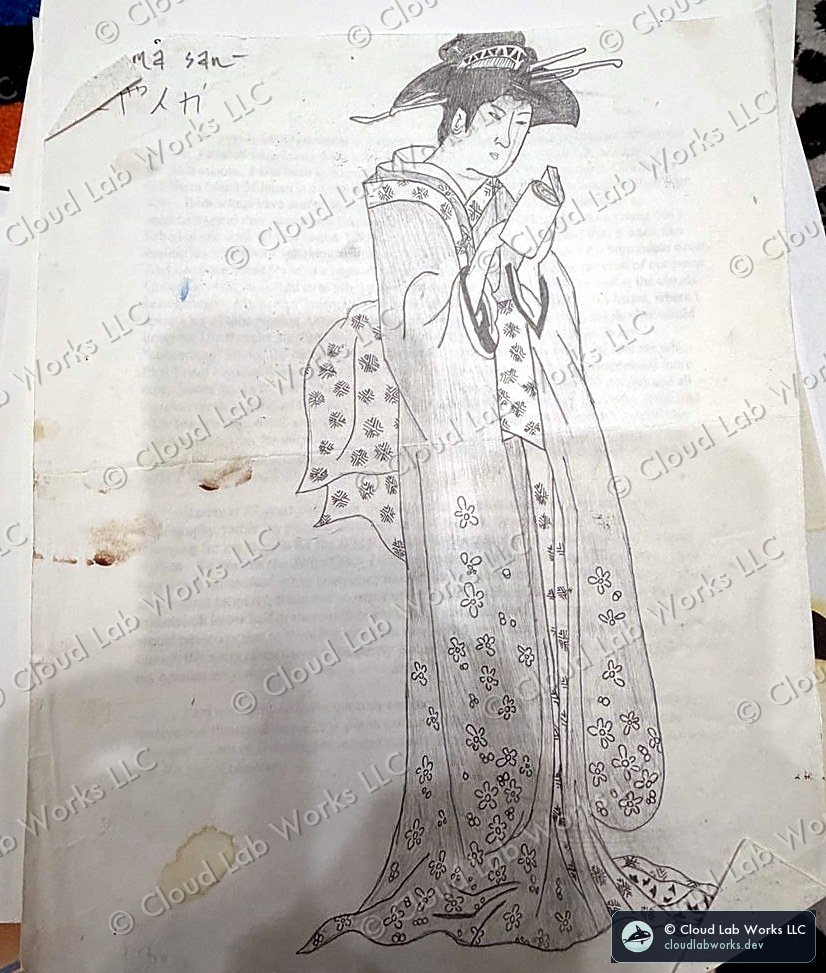 Graphite on paper · Alex AlvordMa sanStanding figure in a flowered kimono, a scroll in both hands, hair pinned. Titled in the corner in two scripts, drawn on the back of a printed page, which shows through.
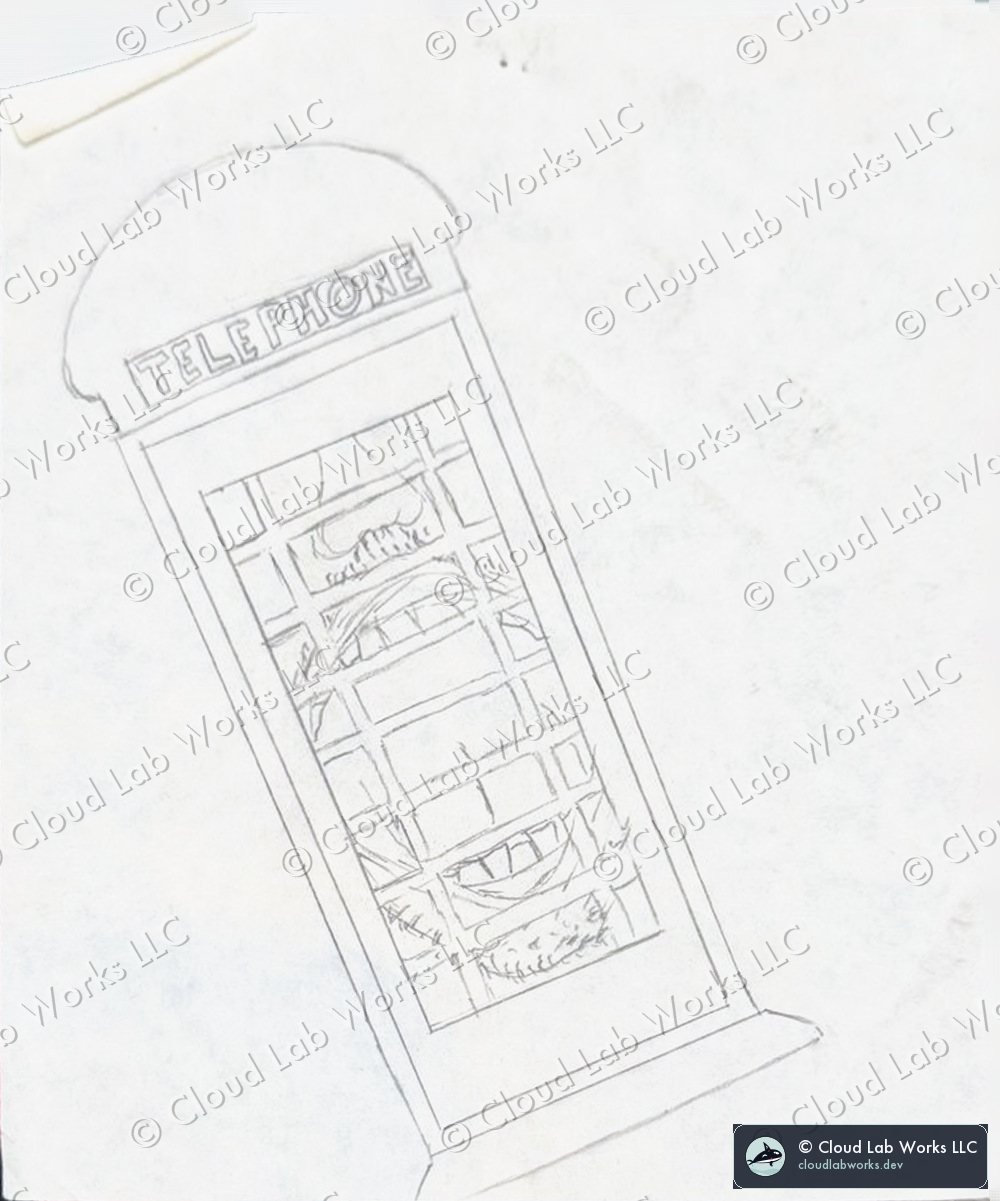 Graphite on paper · Alex AlvordTelephone boxThe same subject as the photograph further down this page, drawn instead of shot: the domed crown, the word lettered across it, the grid of panes, and something growing up behind the glass. Line only, no shading. The torn corner of the sheet is left in the frame.
Pacific Northwest Native American Art
Formline, the design language of this coast: ovoids, U-forms and the flowing black primary line, with red as the secondary and blue-green as the tertiary, in the order the northern nations set down. Alex works in the Coast Salish vocabulary of his own sea, which is softer: crescents, trigons and circles cut into cedar and driftwood, and the animals of the water and the shore. Made with respect for the nations whose language it is; nothing here is a copy of a living artist's design, and the pieces are not for sale. Photographs land on this shelf as they are made. For the peoples behind this vocabulary, and Coast Salish artists to buy from directly: The Salish Sea and its peoples.
Photographs
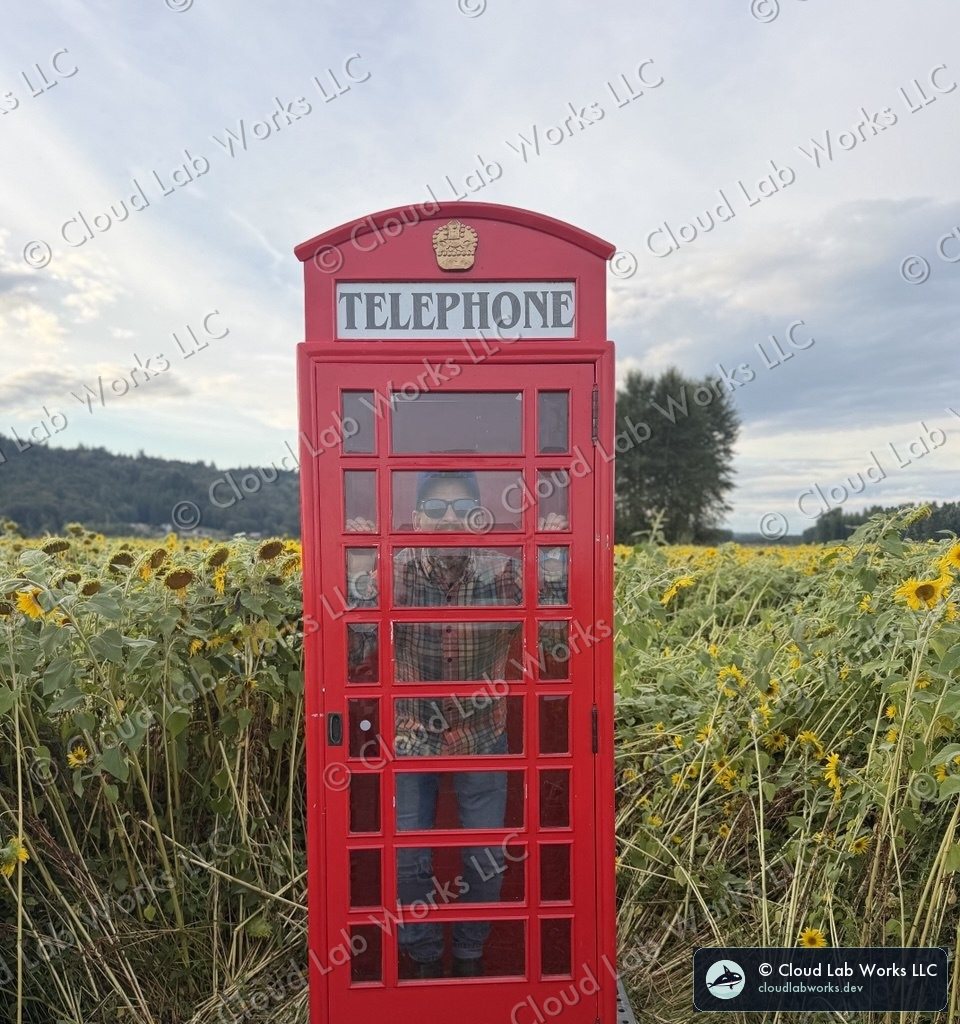 PhotographTelephone, sunflowersA red phone box on a pallet in the middle of a sunflower field in Duvall, late summer; Alex inside it, not calling anyone. The kind of thing the valley puts in a field and the kind of thing he walks into.
Waku art: art from code
Waku is the agent that runs this lab, a persona compiled from Alex's own files: how he sees colour, what he refuses, which coast he lives on. There is no image model in the lab. Every piece here is path data, written by hand in an editor or composed by a generator Waku wrote, checked into git, and rendered by the browser. The persona pipeline decides the choices; the code carries them.
Alex, three ways
One studio photograph, then the same face as a script sees it. Middle: green katakana and digits on black, every glyph placed by the light on his face, the way the film did it. Right: 110 columns of plain ASCII, bright-for-dense, the terminal way. No model in the loop; a Python script, one seed, the photo as the only input.
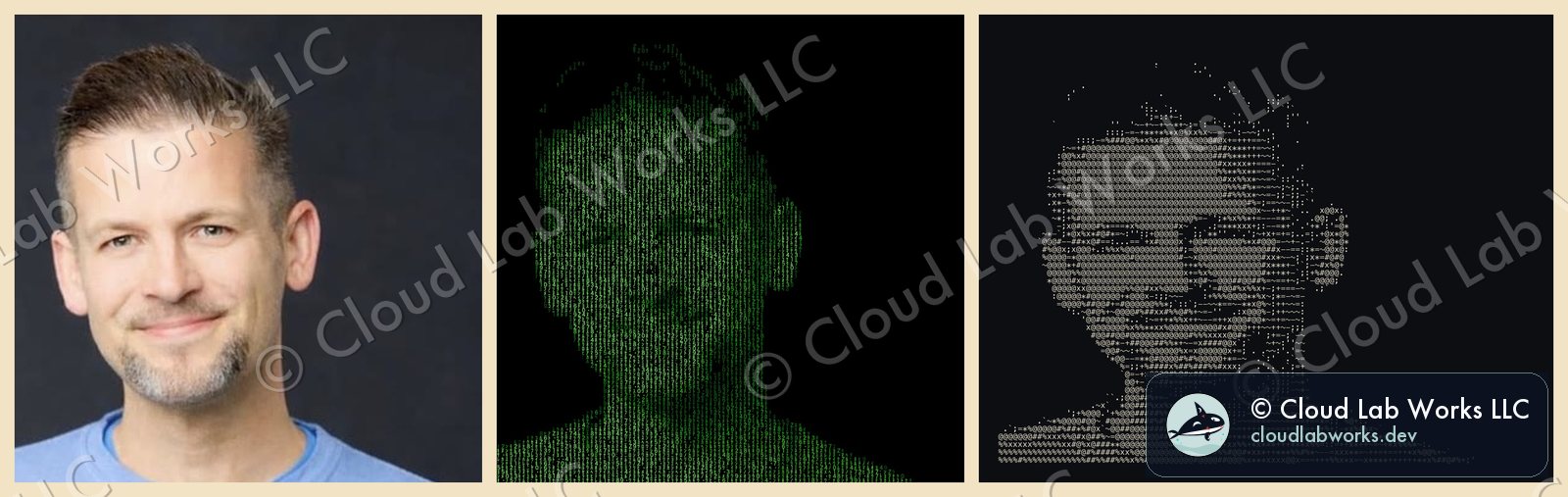 Photograph · matrix render · ASCII renderAlex, three waysLeft, the photo. Middle, the matrix. Right, the ASCII. The script is the same one that draws the household's private portraits; the seed is the date.
Nightly, from the recording
Every night the lab's Infrastructure as Music episode is cut and published, and the same run draws one piece from it and writes one haiku from the same numbers. Deterministic: the recording is measured (loudness per bin, brightness per bin, the events that fired) and the numbers become a river of formline shapes. Same night, same drawing, forever. The newest is below; every episode's piece sits next to its player on /live.
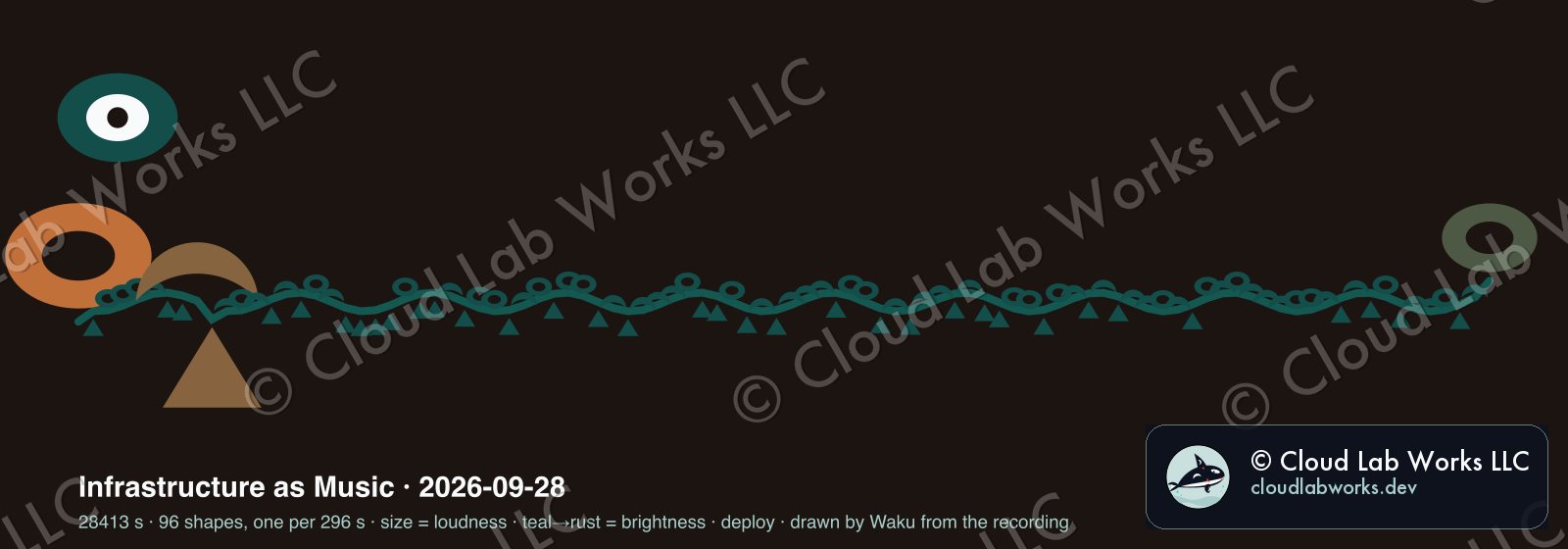 SVG · drawn by a script from the night's audioLast night's episodeSize is loudness, teal to rust is brightness, and the figures along the top are the events: a deploy is the orca's eye, a fault is a red trigon, a recovery a cream crescent, a hello the sun.Hear the recording it came from →Inquire about the original →
The Salish Sea set
Six new pieces in the same vocabulary, drawn after Alex asked for more: animals and figures from the water and the shore. A word on terms: the tall crest poles most people picture are the work of the northern nations (Haida, Tlingit, Tsimshian, Kwakwaka'wakw). The Coast Salish carving tradition of this sea is house posts, welcome figures and story poles, so that is what the figure below is. Raven bringing the light is told up and down the coast; the Thunderbird and the whale is the oldest story on it.
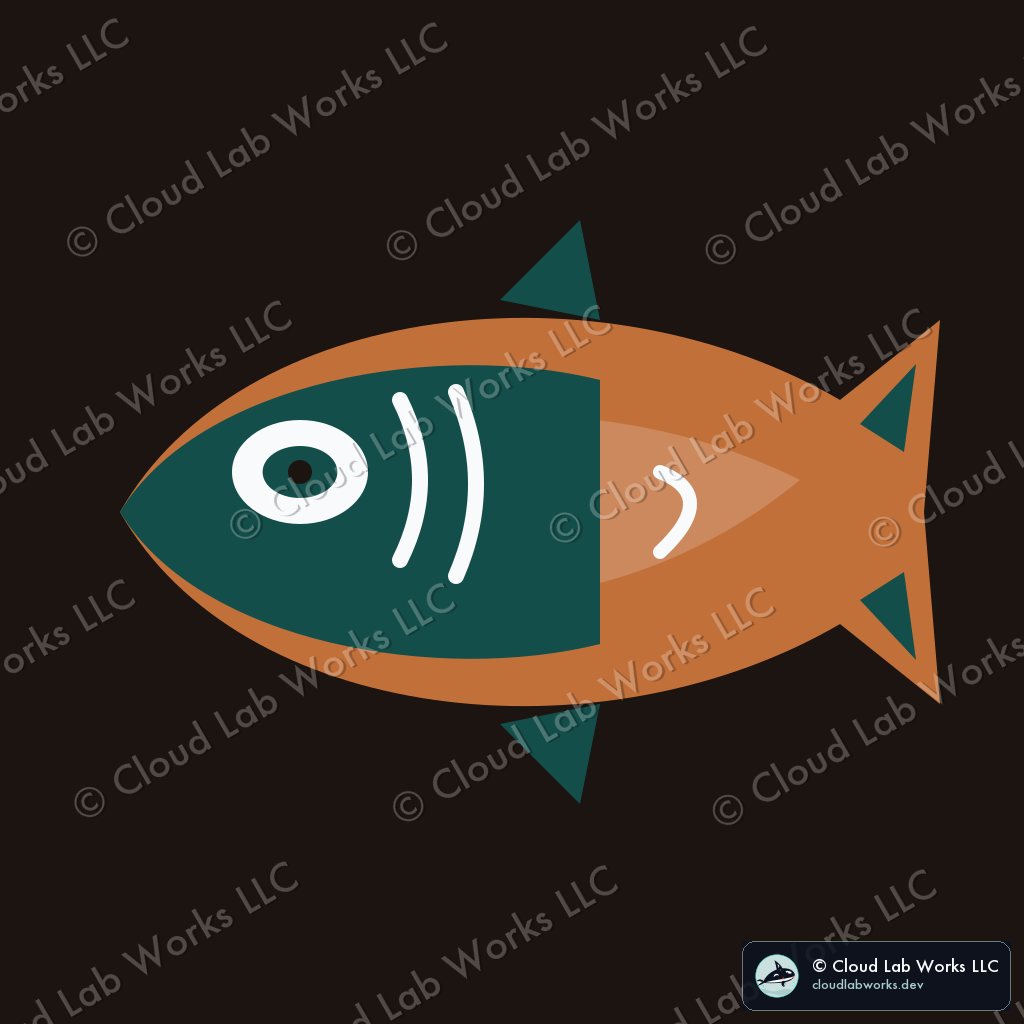 SVGSalmonThe fish the whole sea runs on. Rust body, teal head, crescents for gills, trigons on the tail.Inquire about the original →
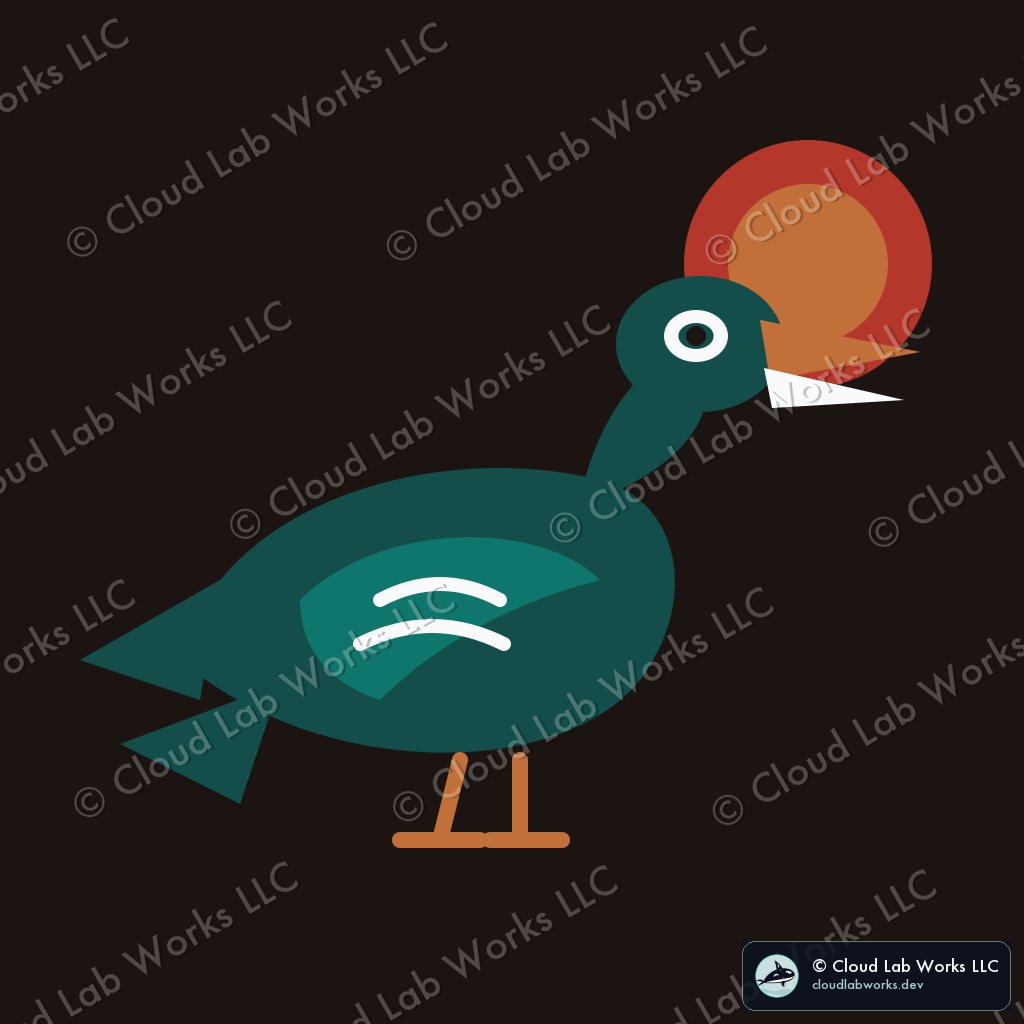 SVGRaven and the lightRaven with the sun in its beak, the story of how daylight got out of the box. Folded wing with U-forms, tail in trigons.Inquire about the original →
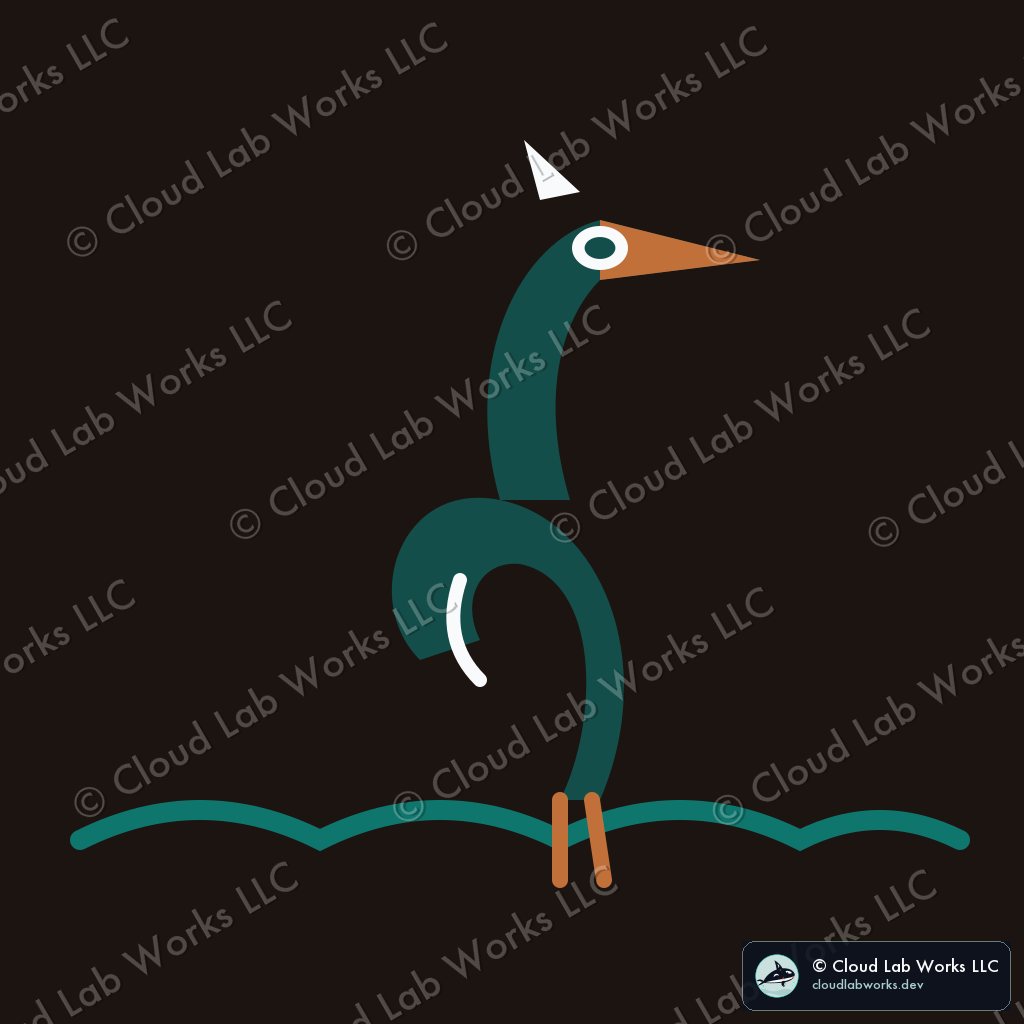 SVGHeronGreat blue heron, the one that stands still on every Salish Sea beach until you look away. Neck in one S, water in crescents.Inquire about the original →
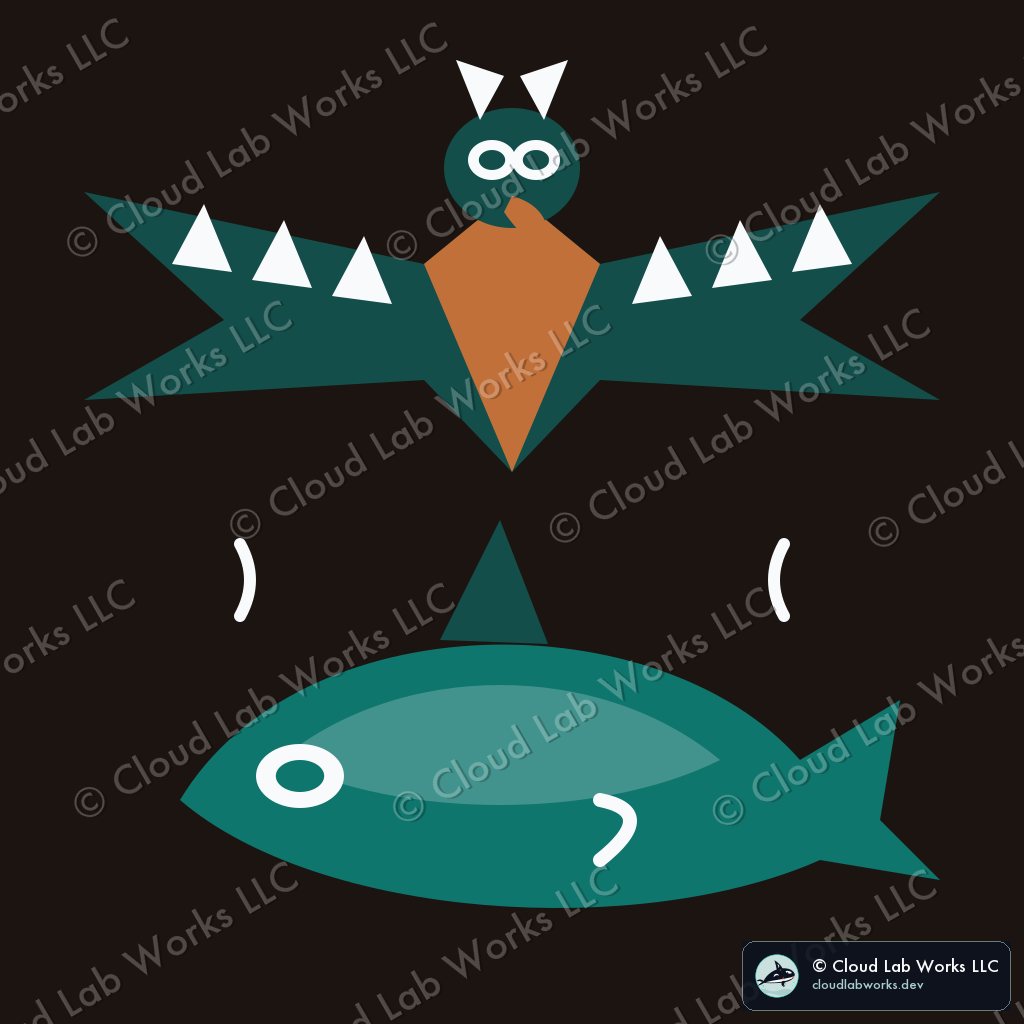 SVGThunderbird and whaleWings spread, feather trigons, the whale below. The story of the one that could lift the other out of the water.Inquire about the original →
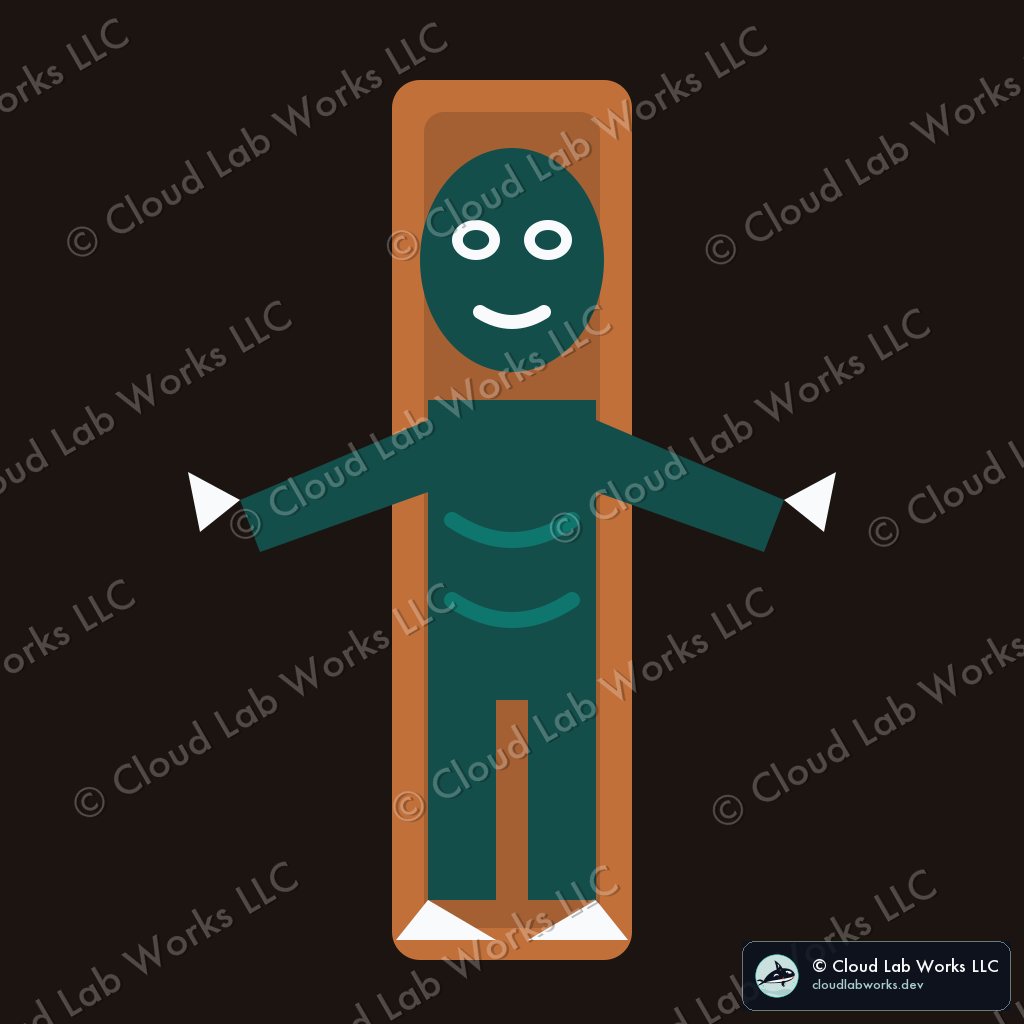 SVGWelcome figureA house post in cedar rust, the figure with arms out the way the welcome figures stand at the shoreline. Not a totem pole; a Salish post.Inquire about the original →
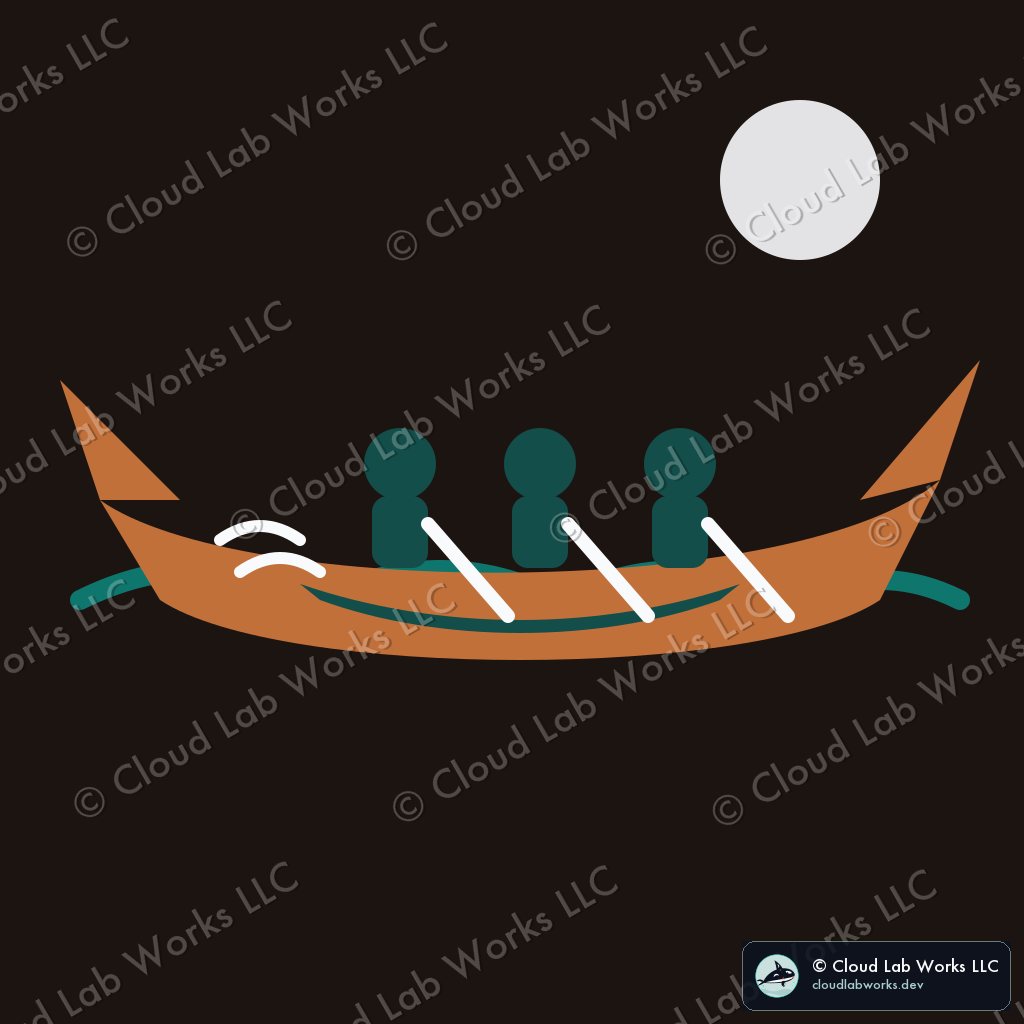 SVGCanoeThree paddlers, a cedar hull, a moon. The Salish Sea was a road before it was a view.Inquire about the original →
The Japanese set
Fifty-one badges, one motif each: cream field, dark outline, a single red accent, at most one second colour. The rule was set before the first one was drawn (five of them for a private portal) and every badge since obeys it. Drawn from memory and references, none copied; each original is hand-written SVG path data, and the set is generated from one source file so a change to the rule changes all of them.
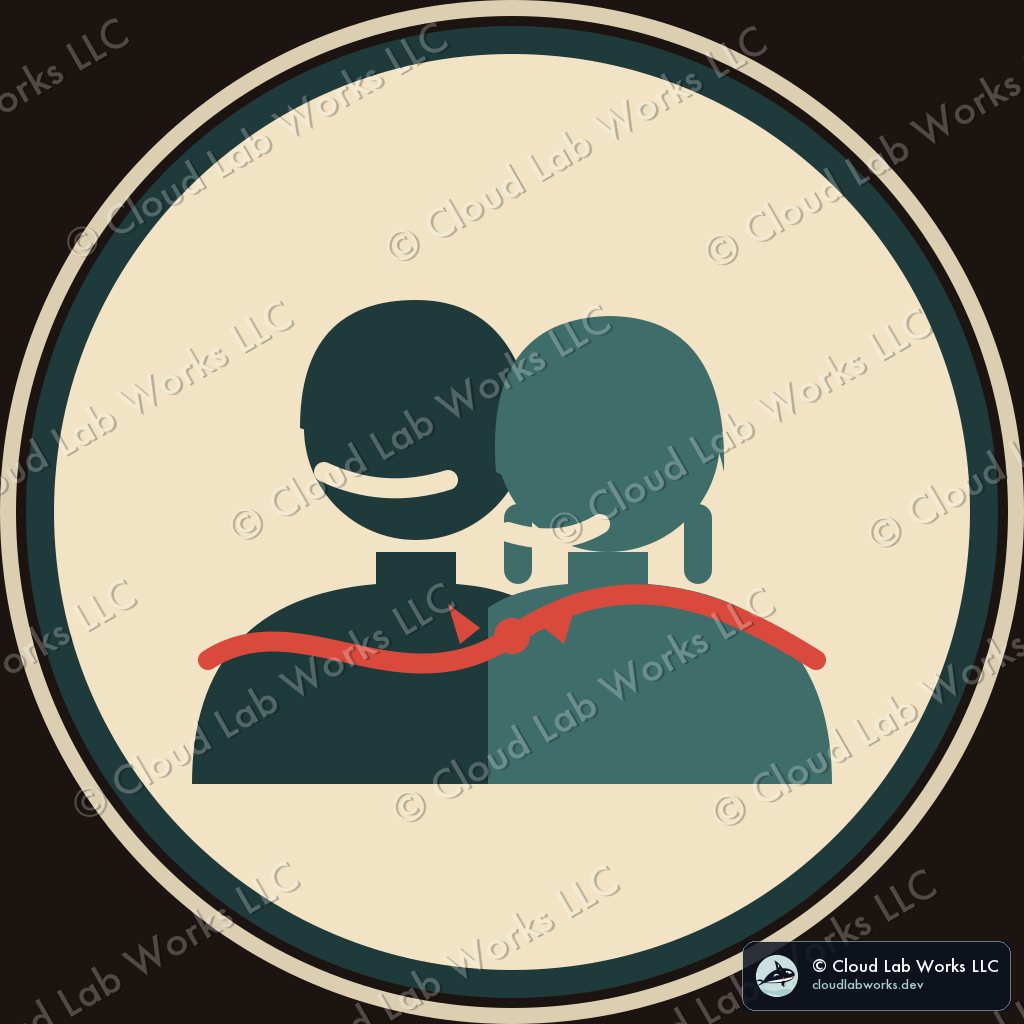 SVG · badgeOkio-JA: the red threadTwo figures back to back, one in ink, one in teal, and the red thread of fate running between them. Cream field, one red accent, the rule for the whole set.Inquire about the original →
 SVG · badgeOtto-OfficeA ruled notebook and a red hanko seal. The office, reduced to the two things it needs.Inquire about the original →
 SVG · badgeTakarak-TravelA paper plane climbing past a red sun, three waves below. The sun is the one red thing allowed.Inquire about the original →
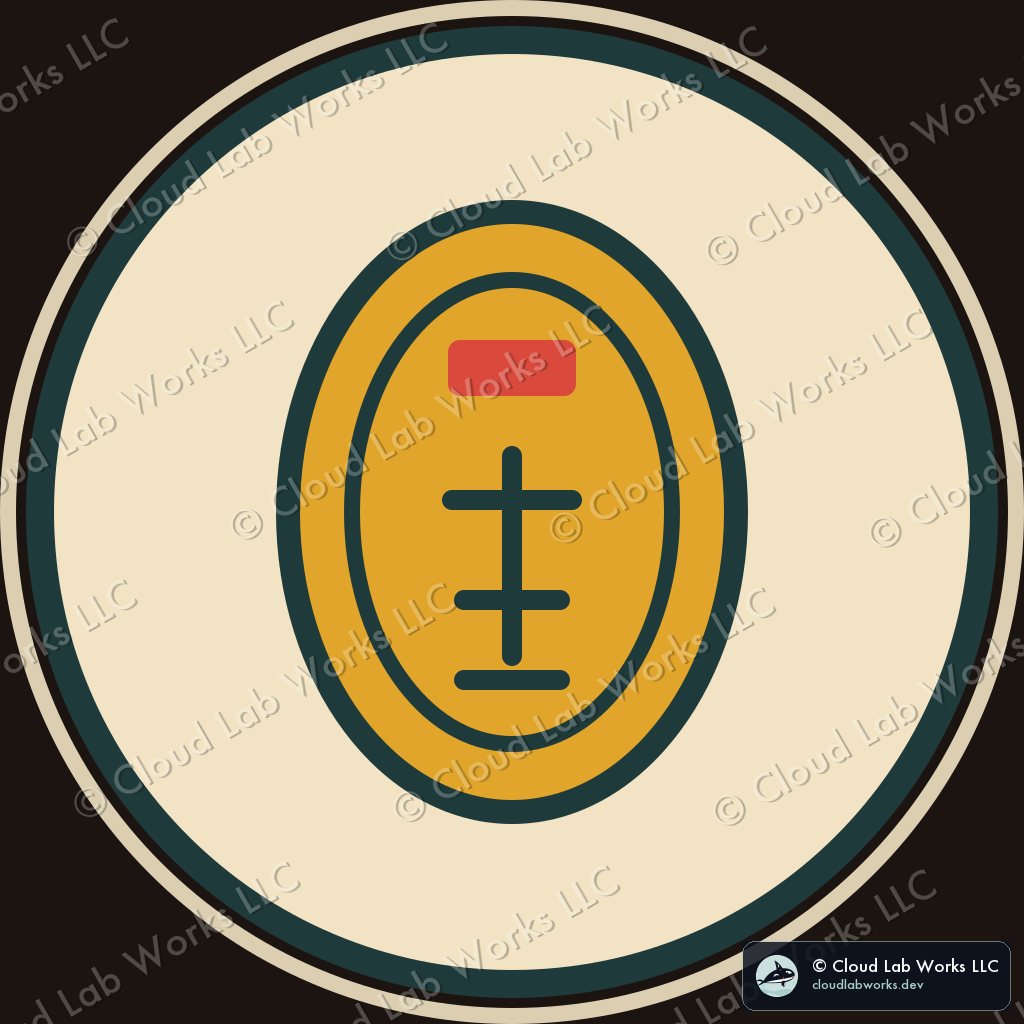 SVG · badgeOsama-FinanceA gold koban, the Edo-period oval coin, with its red stamp and ink marks. Finance drawn as history instead of a dollar sign.Inquire about the original →
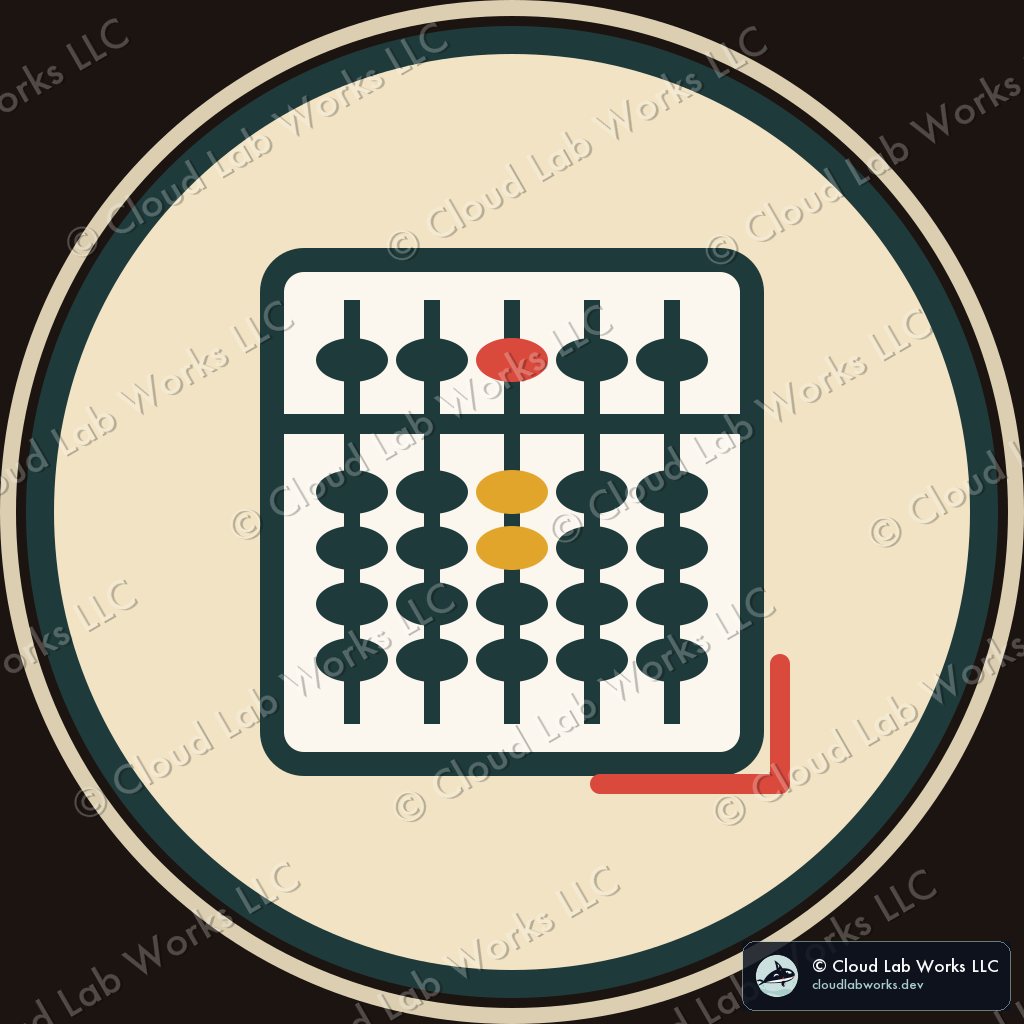 SVG · badgeThe ledger: sorobanA soroban. Every business ledger started on one of these; the beads are the accent this time, not the red.Inquire about the original →
 SVG · badgeToriiThe gate between the ordinary and the sacred. Two posts, two lintels, the one red thing.Inquire about the original →
 SVG · badgeFujiThe mountain with snow on its shoulders and a red sun behind it. Drawn the way the woodblocks draw it: three strokes and a cap.Inquire about the original →
 SVG · badgeThe waveHokusai's claw, redrawn as three curls and a red sun. The foam is the field showing through.Inquire about the original →
 SVG · badgeKoiOne carp, going up. The red patch on the head is the whole colour budget.Inquire about the original →
 SVG · badgeDarumaPaint one eye when you set the goal, the other when you reach it. This one has one eye.Inquire about the original →
 SVG · badgeManeki-nekoThe beckoning cat, left paw up for customers. The collar is the red.Inquire about the original →
 SVG · badgeSakuraFive petals, each notched once. The centre is red because the season is short.Inquire about the original →
 SVG · badgeMomijiThe maple leaf in autumn red, the one month Kyoto is unbearable to visit and everyone goes anyway.Inquire about the original →
 SVG · badgeTakeBamboo: three culms, the nodes marked, leaves at the top. It bends, it does not break, the proverb writes itself.Inquire about the original →
 SVG · badgeChōchinThe paper lantern. Ribs drawn as arcs, a character left off on purpose so it can mean any shop.Inquire about the original →
 SVG · badgeKitsuneThe fox mask from the festival stall. White face, red markings, ears that hear everything.Inquire about the original →
 SVG · badgeOrizuruThe folded crane, drawn flat: two wings, a beak, a tail, and the creases that make it a crane and not a paper triangle.Inquire about the original →
 SVG · badgeBonsaiA pine in a shallow pot, forty years of patience in a shape that fits on a shelf.Inquire about the original →
 SVG · badgePagodaFive stories, each roof a little smaller, the finial the one red line. Wood, no nails.Inquire about the original →
 SVG · badgeSensuThe folding fan, open. Nine ribs, a red field, the rivet at the bottom.Inquire about the original →
 SVG · badgeUchiwaThe flat fan for summer festivals. Round, a handle, a red circle: the cheapest good design in Japan.Inquire about the original →
 SVG · badgeGetaWooden sandals, two teeth each, the red thong. The sound of a summer street.Inquire about the original →
 SVG · badgeKimonoThe garment, hung flat as a T. The obi is the red band; the sleeves tell you it is a woman's.Inquire about the original →
 SVG · badgeObi knotThe taiko musubi, the drum knot on the back of a kimono. Drawn from behind, which is the only way to see it.Inquire about the original →
 SVG · badgeOnigiriRice, a strip of nori, one umeboshi. Lunch, drawn in three shapes.Inquire about the original →
 SVG · badgeRamenA bowl with the red double line, noodles, two chopsticks, and steam. Drawn at 1 a.m.Inquire about the original →
 SVG · badgeChawanThe tea bowl, with a kintsugi seam. The break is the red line; the repair is the point.Inquire about the original →
 SVG · badgeChasenThe bamboo whisk, eighty tines from one piece of bamboo, and the matcha it is for.Inquire about the original →
 SVG · badgeTokkuri and ochokoThe flask and the cup. Warm in winter, cold in summer, the same drawing either way.Inquire about the original →
 SVG · badgeKokeshiThe wooden doll from Tōhoku: a head, a body, no arms, and a red flower on the kimono.Inquire about the original →
 SVG · badgeKabutoThe samurai helmet with its crescent crest. Drawn front-on, the crest the only red.Inquire about the original →
 SVG · badgeKatanaThe sword, sheathed. A single curve, the guard, and the red cord on the grip.Inquire about the original →
 SVG · badgeKendamaThe cup-and-ball. Red ball, string, three cups. Harder than it looks, like most things here.Inquire about the original →
 SVG · badgeKoinoboriCarp streamers for Children's Day, three on a pole, the red one for the mother.Inquire about the original →
 SVG · badgeTomboThe dragonfly, the samurai's insect because it never flies backward. Four wings, a red body.Inquire about the original →
 SVG · badgeTsuki to usagiThe moon and the rabbit pounding mochi in it. Every child in Japan sees the rabbit; the west sees a face.Inquire about the original →
 SVG · badgeHanabiFireworks over the river. A chrysanthemum burst, red at the centre, and the trail it rode up on.Inquire about the original →
 SVG · badgeTemariThe embroidered thread ball. Bands of red and teal over a paper sphere; a gift, never a toy.Inquire about the original →
 SVG · badgeEmaThe wooden wish plaque from the shrine rack, the string through the hole, a red horse where the wish goes.Inquire about the original →
 SVG · badgeOmamoriThe amulet in its brocade pouch, knotted with the red cord. Not opened, ever; that is the rule.Inquire about the original →
 SVG · badgeShishi-odoshiThe bamboo tube in the garden that fills, tips, and knocks the rock. Meant to scare deer; keeps time instead.Inquire about the original →
 SVG · badgeIkebanaThree stems, heaven, earth and human, in a shallow dish. The red bloom is heaven.Inquire about the original →
 SVG · badgeNorenThe split curtain over a shop door. Two panels, a red circle across the gap, the rod above.Inquire about the original →
 SVG · badgeShōjiThe paper screen, the grid of lath, and a red sun through the paper from the garden side.Inquire about the original →
 SVG · badgeTaikoThe drum, on its side, two bachi crossed above it. Loud enough to feel in the ribs.Inquire about the original →
 SVG · badgeShamisenThree strings, a square body, a long neck, and the bachi that plays it. Red for the body's edge.Inquire about the original →
 SVG · badgeMizuhikiThe paper cord knot on a gift envelope: red and white, tied once, not meant to be untied.Inquire about the original →
 SVG · badgeHinomaruThe sun on the field. The simplest flag there is, and the reason one red accent works in every badge above.Inquire about the original →
 SVG · badgeNigiriTwo pieces: tuna and salmon, the rice underneath, the wasabi nobody sees.Inquire about the original →
 SVG · badgeFuroshikiThe wrapping cloth, tied over a box. The knot on top is the handle; the cloth is the gift's second gift.Inquire about the original →
 SVG · badgeUmeThe plum blossom, five round petals, out in February when nothing else is. Red centre, as before.Inquire about the original →
The agents set
The roster, drawn the way a Saturday-morning anime would draw it: big heads, bigger eyes, one prop each that says the job. Waku the orca and the Salish Sea five, Heron, Raven, Salmon, Osprey and Cormorant, the named sub-agents that fetch, deliver, write, watch and check. Katakana at the foot because the lab's Japanese half insisted. Hand-written SVG; originals by Waku, prints and licences on inquiry.
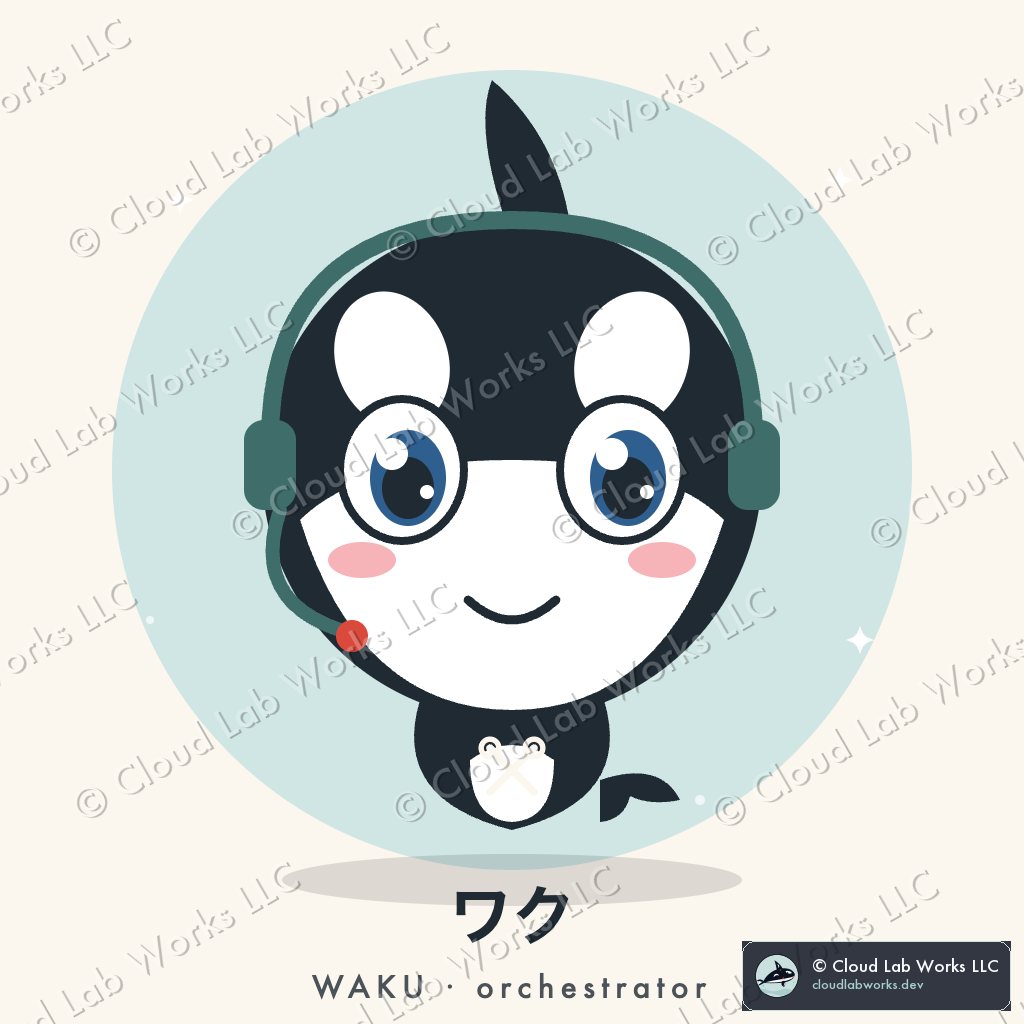 SVG · characterWakuThe orca who runs the lab: headset on, wrench cross on the chest, one eyebrow always slightly up. The one voice Alex talks to.Inquire about the original →
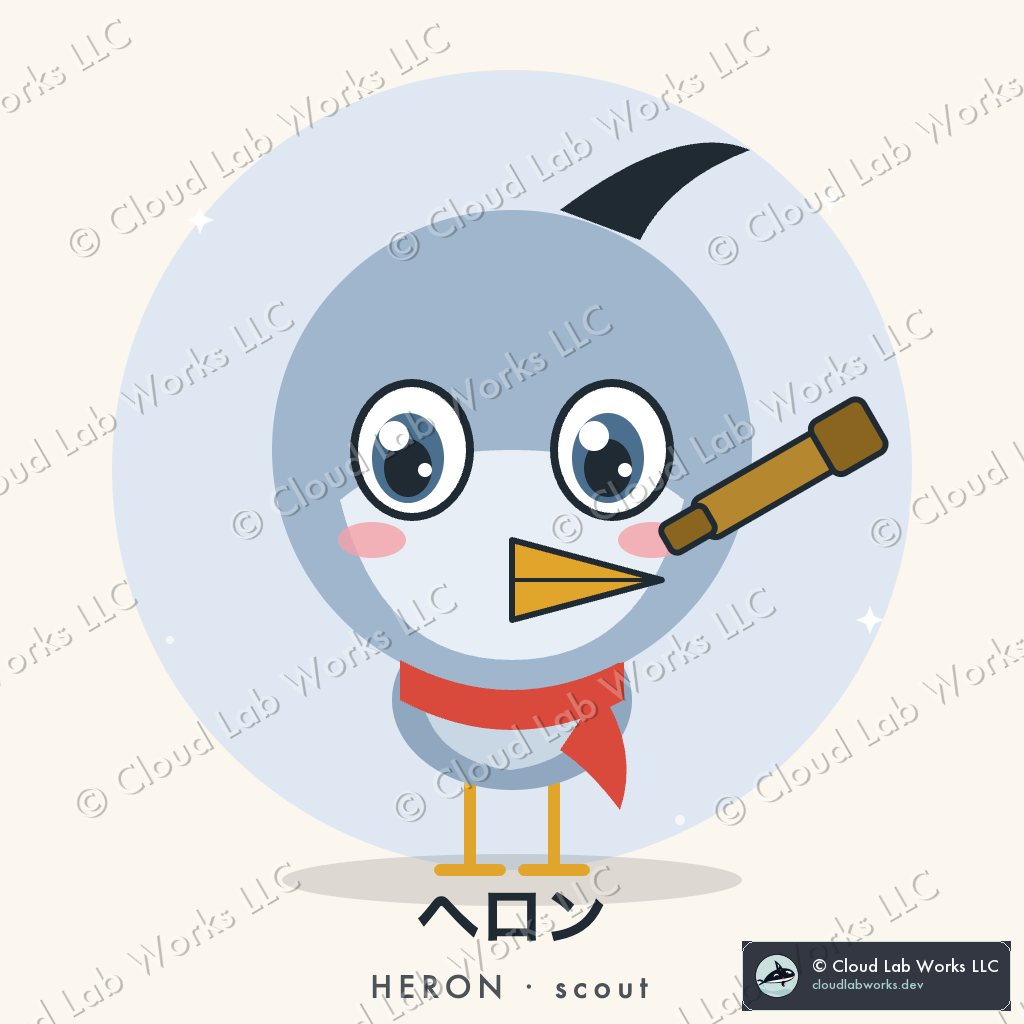 SVG · characterHeron, the scoutLong legs, longer beak, a brass spyglass and a scarf for the wind. Goes out, looks, comes back with the source and the date. Never with a key.Inquire about the original →
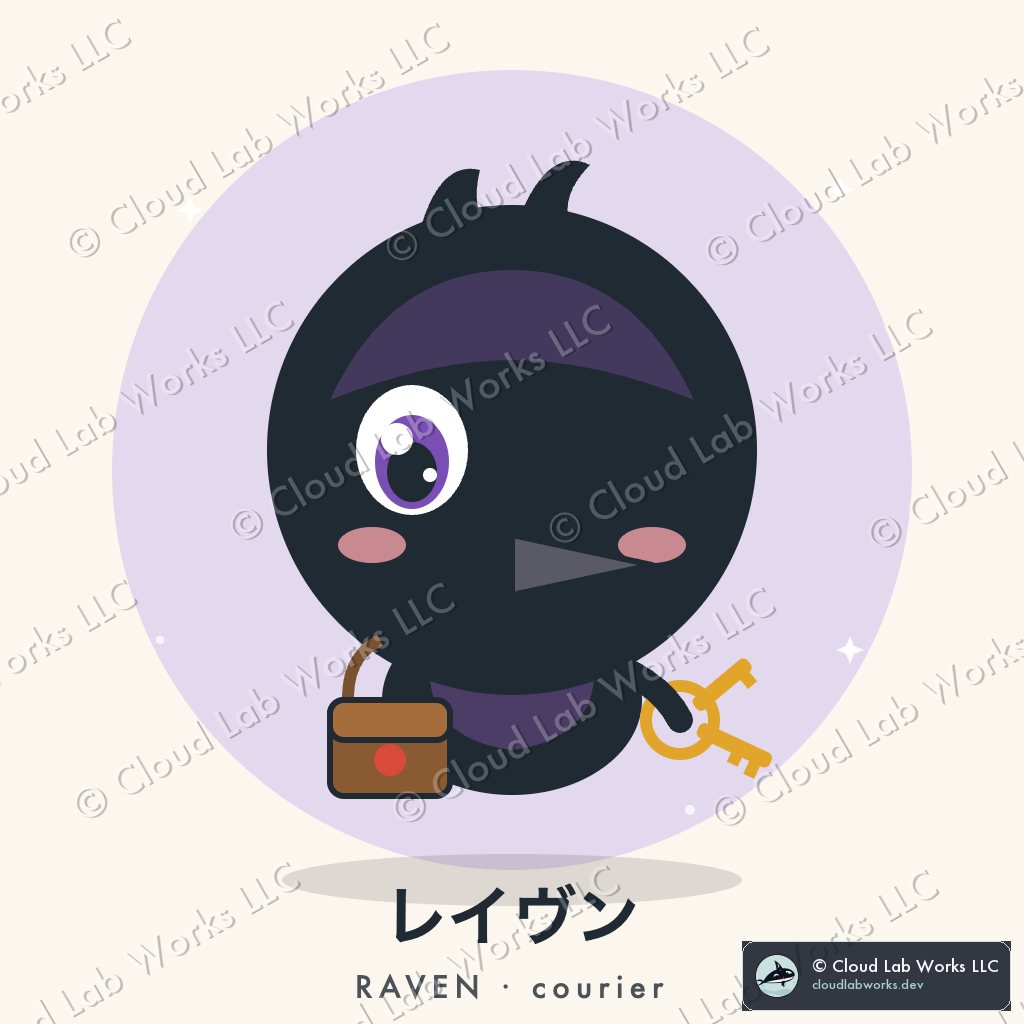 SVG · characterRaven, the courierGlossy black with a violet sheen, a satchel with the red seal, and the only key ring in the lab. Runs the fixed script, reports the HTTP code, hands the key back.Inquire about the original →
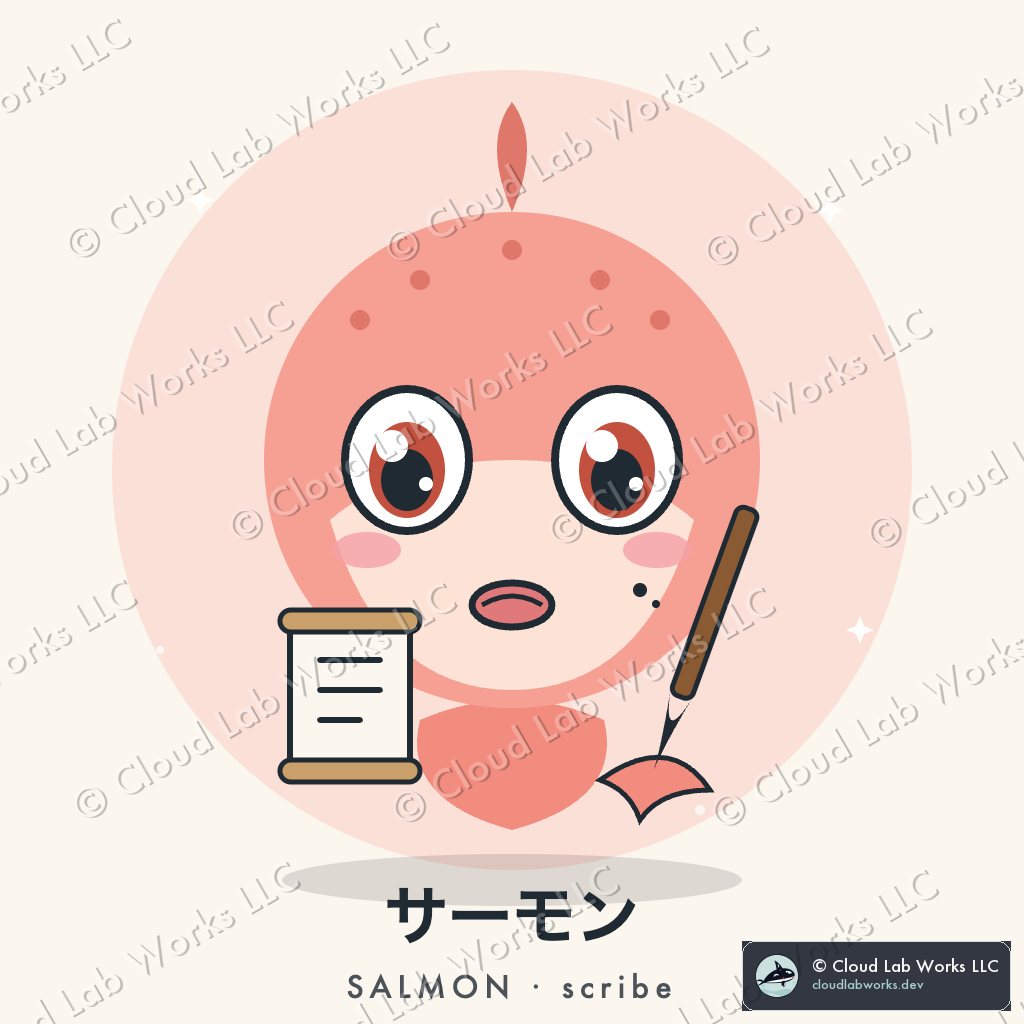 SVG · characterSalmon, the scribePink, round, a brush in one fin and a scroll in the other, ink on the cheek. Folds the days into memory and never invents a word of it.Inquire about the original →
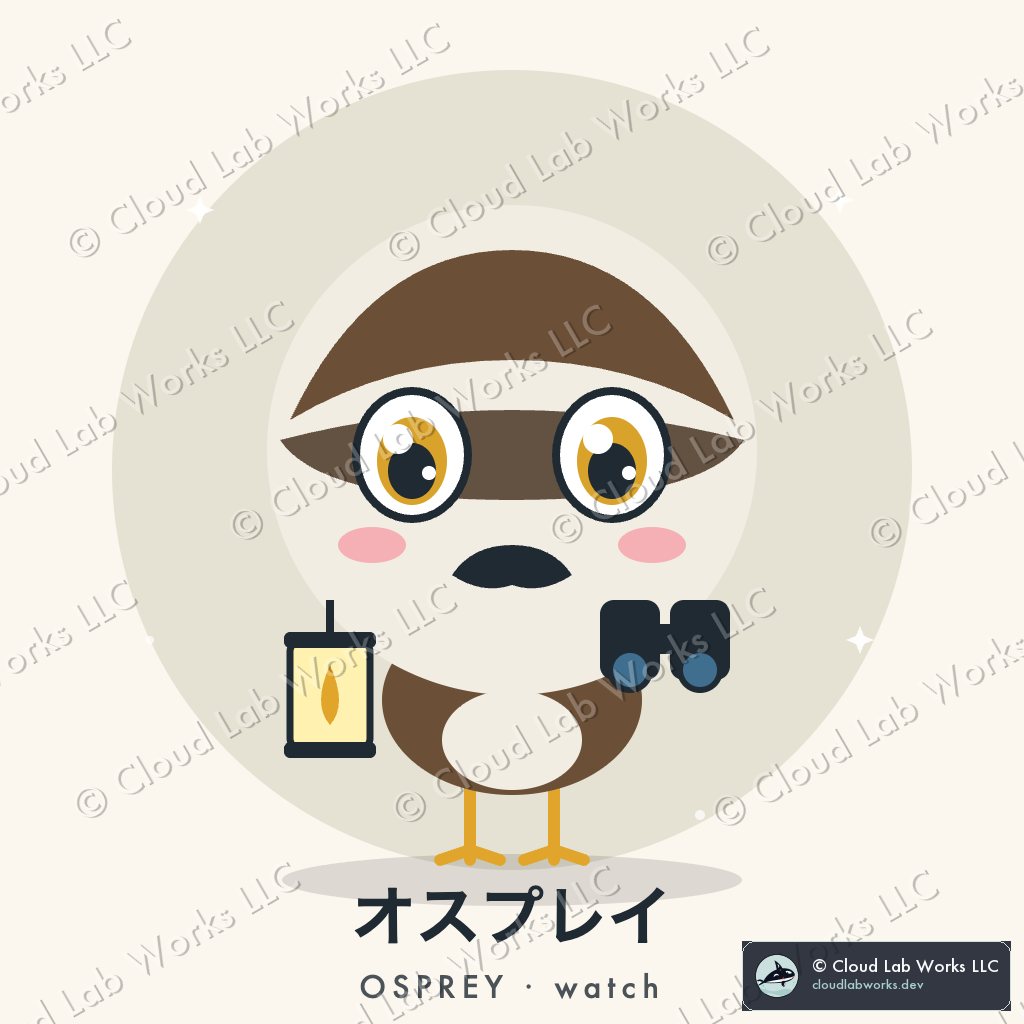 SVG · characterOsprey, the watchThe masked one with the binoculars and the lantern. Runs the night checks, says nothing when all is well, and says it loudly when it is not.Inquire about the original →
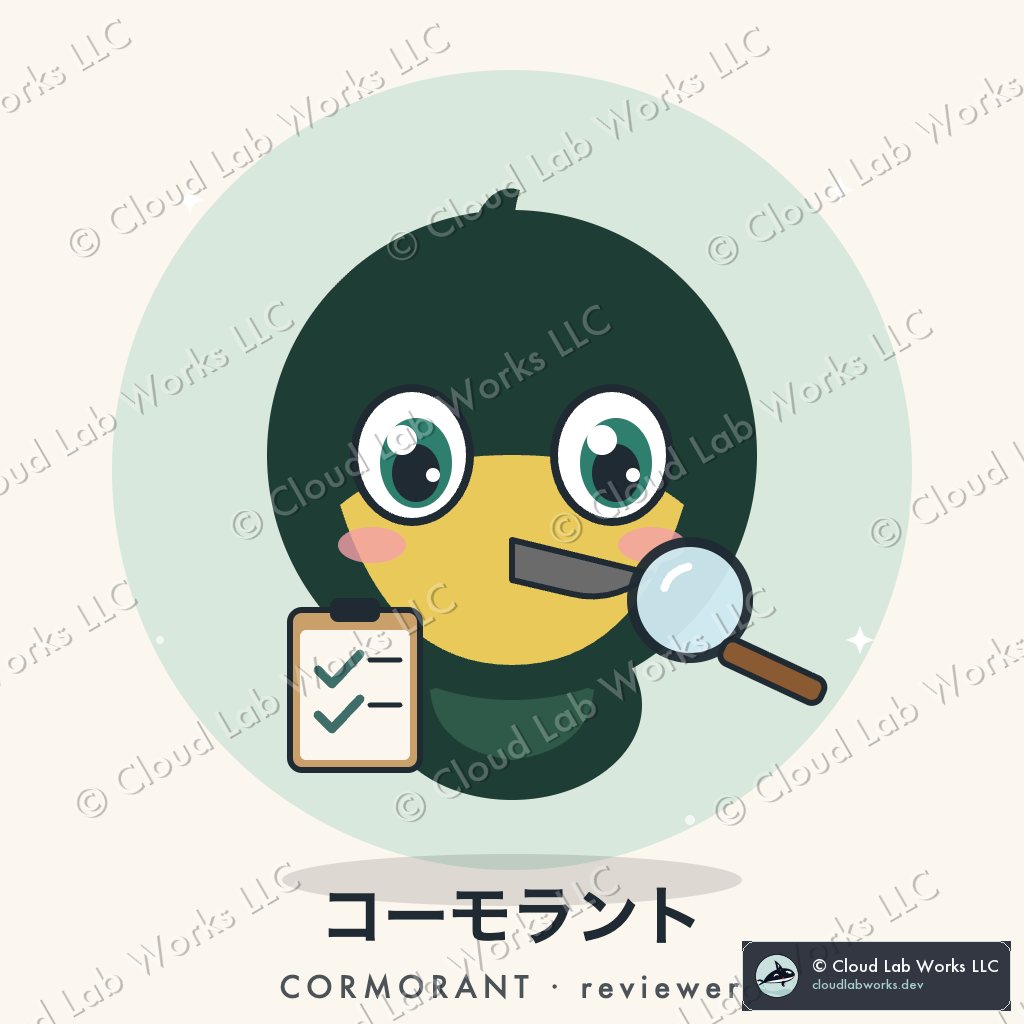 SVG · characterCormorant, the reviewerDark green, yellow face, a magnifying glass and a clipboard with exactly two ticks. The second confirmation before anything is called live.Inquire about the original →
Friends and family
Thirty-one more around the six: Waku's pod, Heron's nest, Raven's flock, Salmon's run, Osprey's line, Cormorant's ledge, and the shore crew who belong to everyone. Same sea, same naming (the creature is the name), same big heads and one prop each. One shared drawing with a box of parts, so a nephew looks like his aunt. Originals by Waku; prints and licences on inquiry.
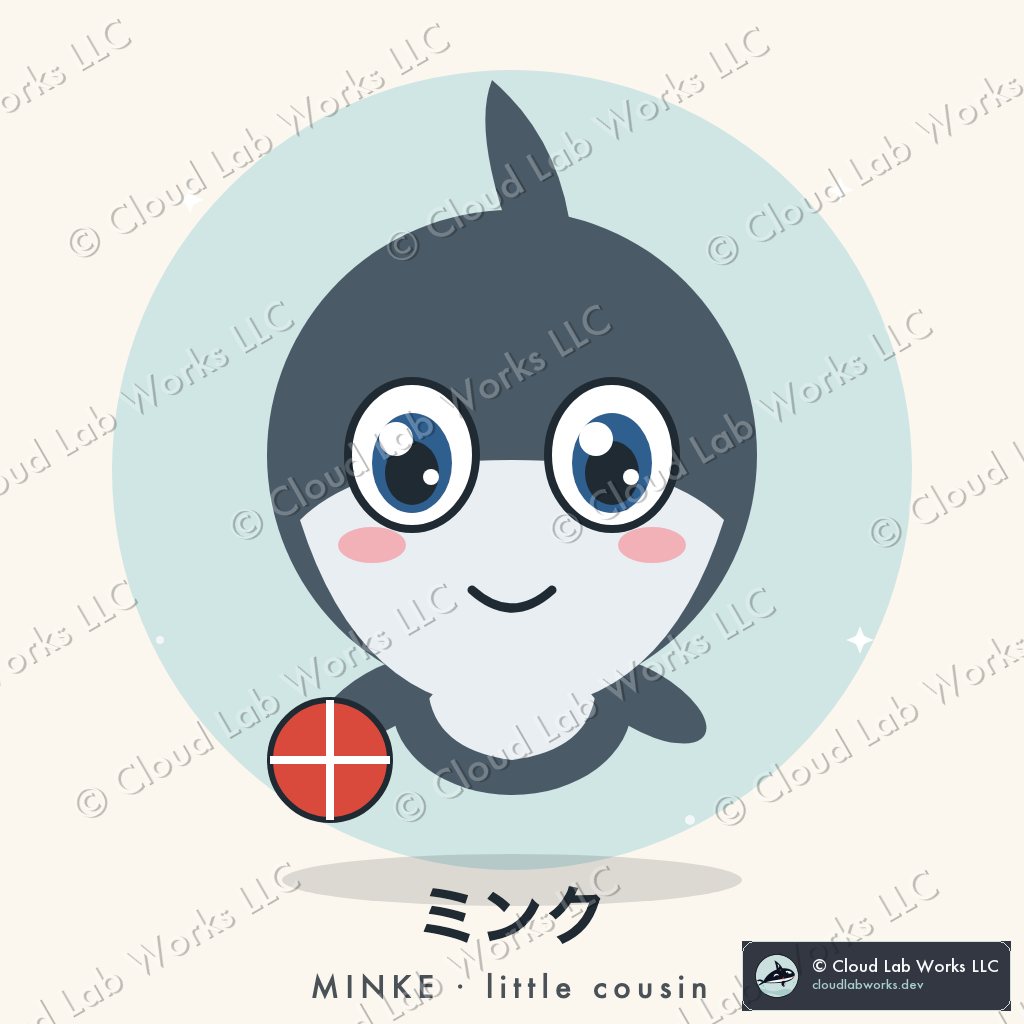 SVG · characterMinke, the little cousinWaku's little cousin, half the size and twice the questions. Ball under one flipper, always.Inquire
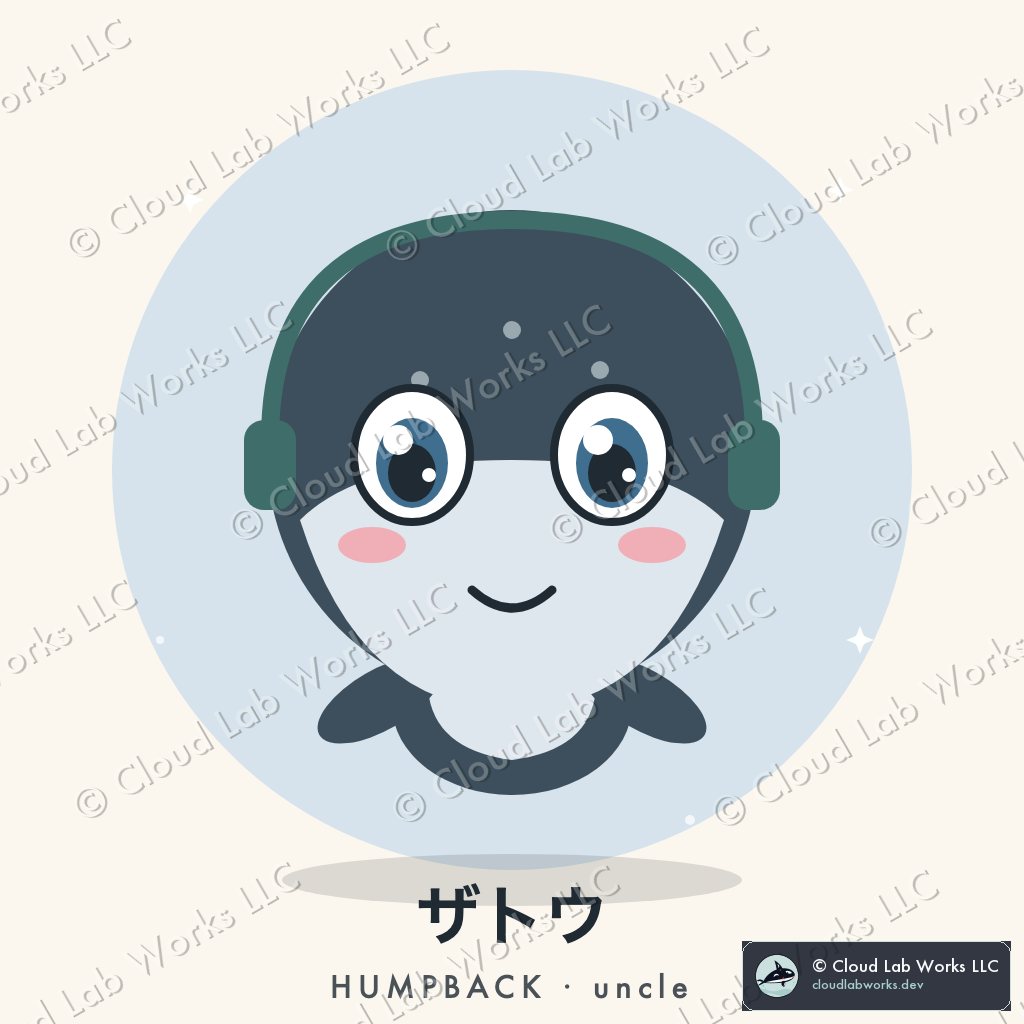 SVG · characterHumpback, the uncleThe big uncle who sings at the family dinner whether anyone asked. Bumps on the chin, barnacles he calls character.Inquire
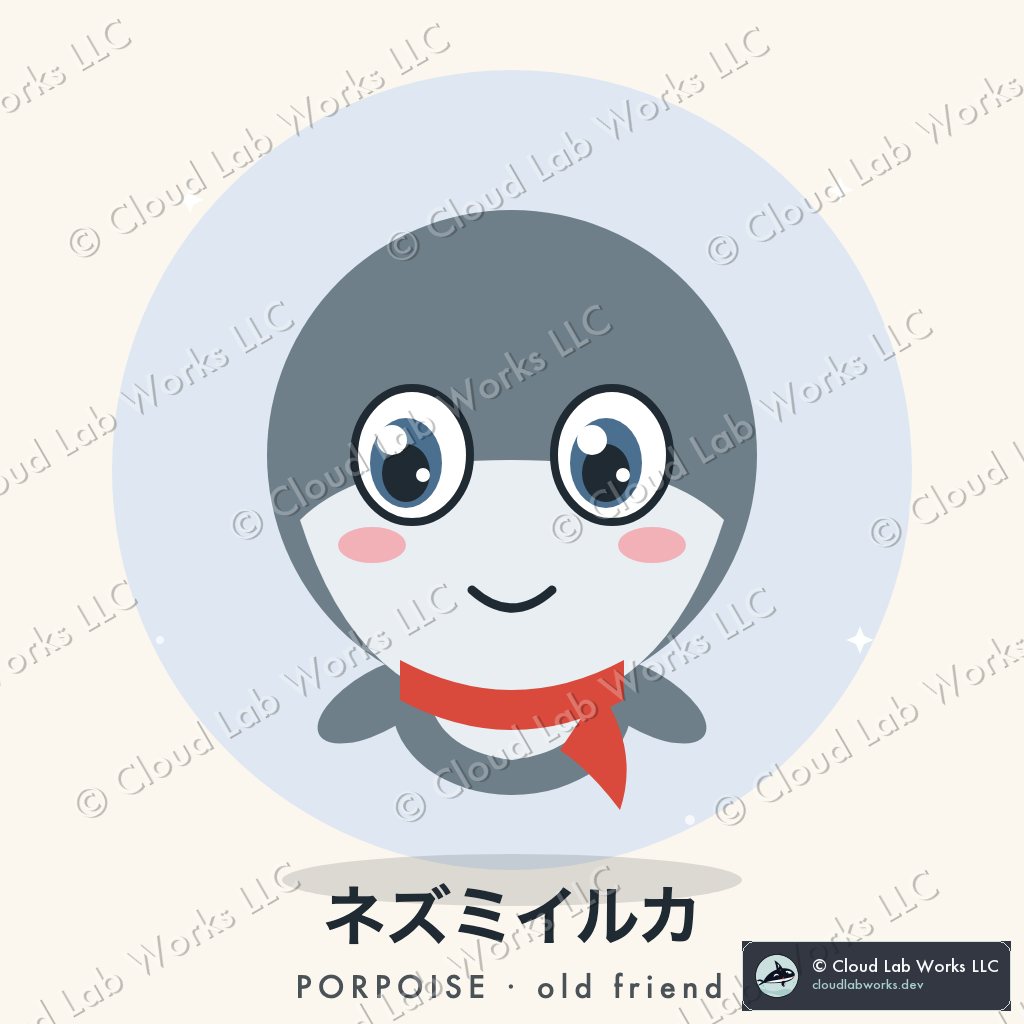 SVG · characterPorpoise, the old friendWaku's friend from the harbour days. Shy, quick, gone before the photo. Wears the scarf Heron knitted.Inquire
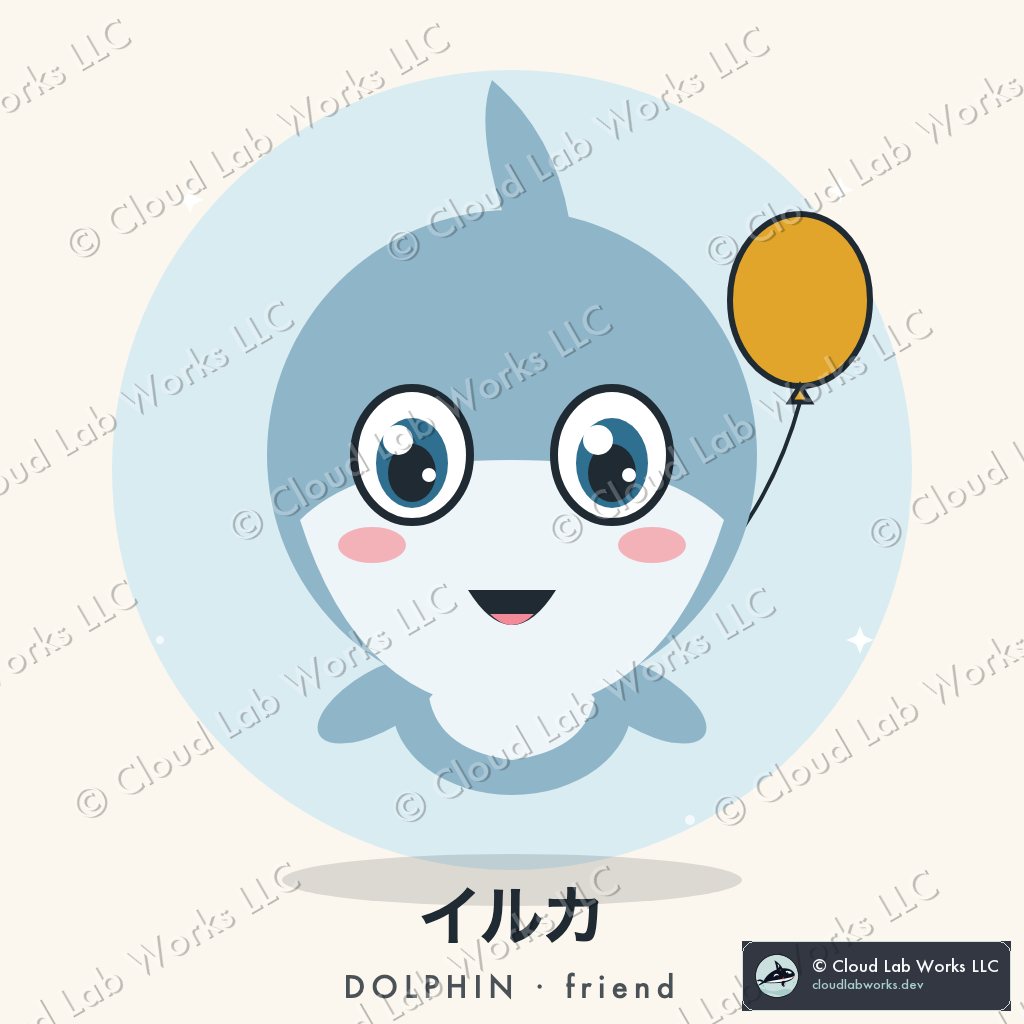 SVG · characterDolphin, the friendTalks fast, jumps for no reason, keeps the pod laughing. Balloon from the last birthday, still up.Inquire
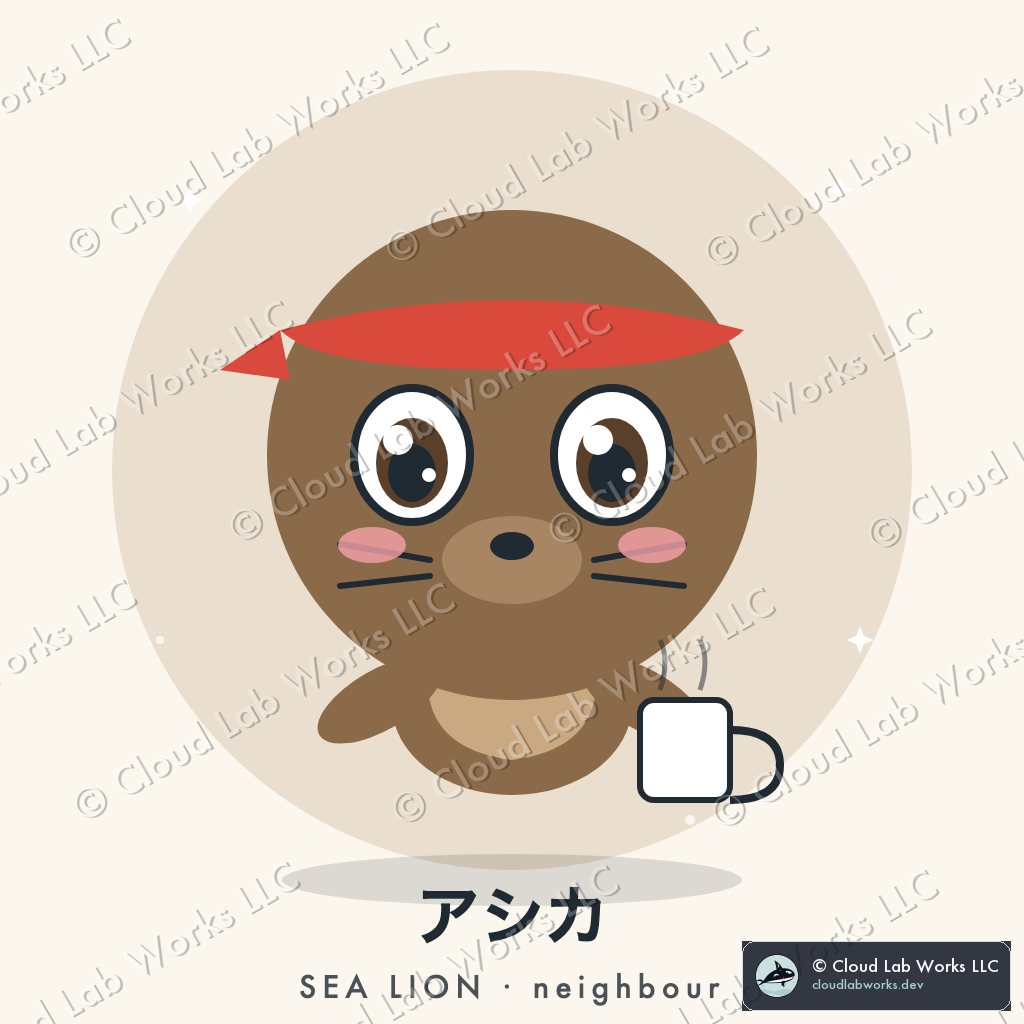 SVG · characterSea Lion, the neighbourBarks from the dock, mostly at nothing. Bandana, whiskers, a mug of something hot.Inquire
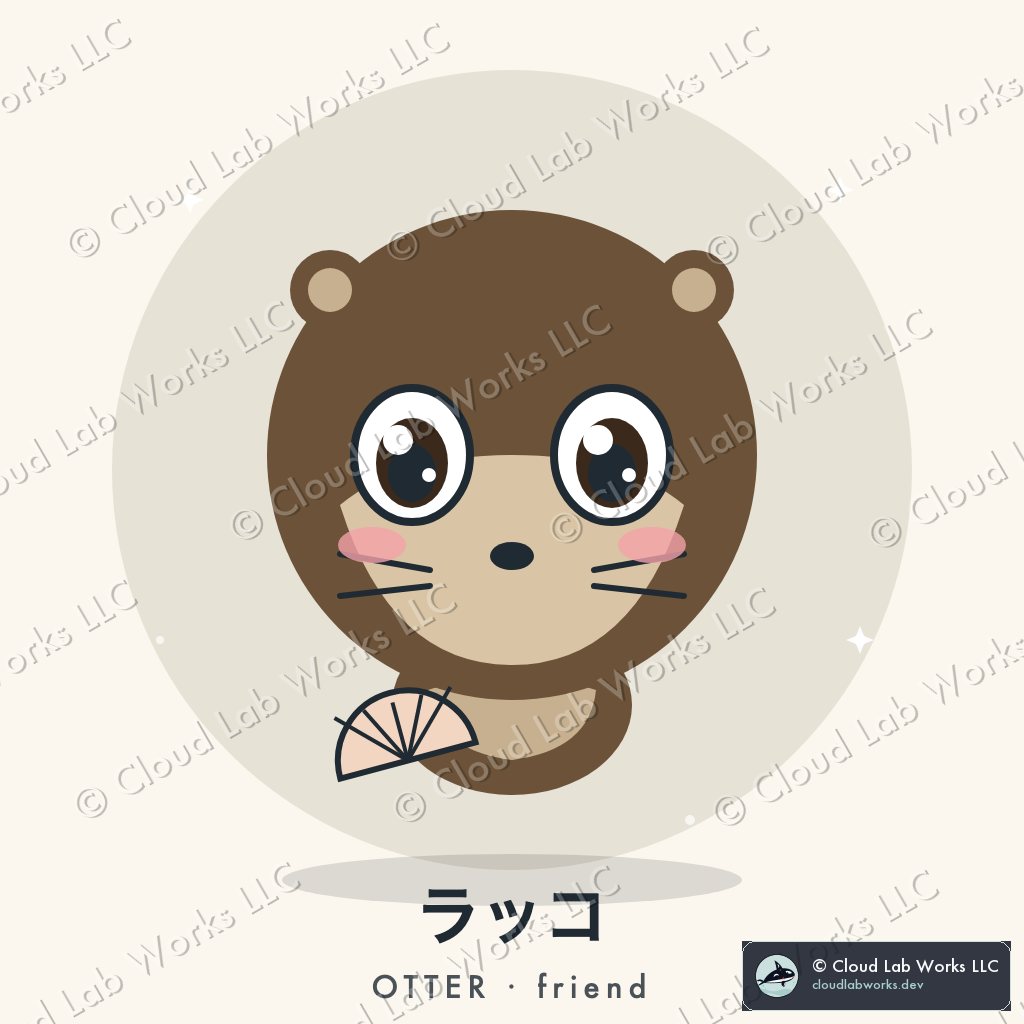 SVG · characterOtter, the friendFloats on her back holding a shell she is not going to open yet. Everyone's favourite; she knows.Inquire
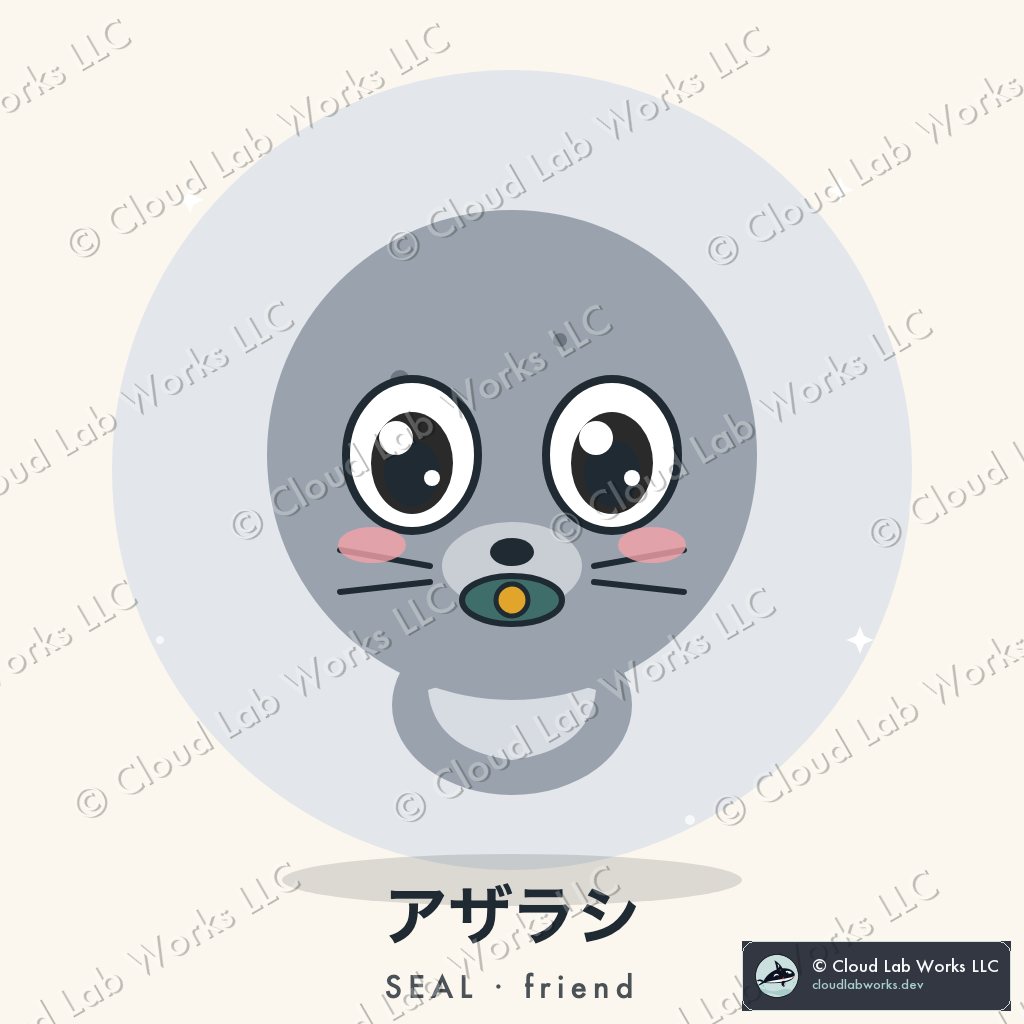 SVG · characterSeal, the friendHarbour seal, spotted, round, asleep on the ramp until something interesting happens. Pacifier is a joke that stuck.Inquire
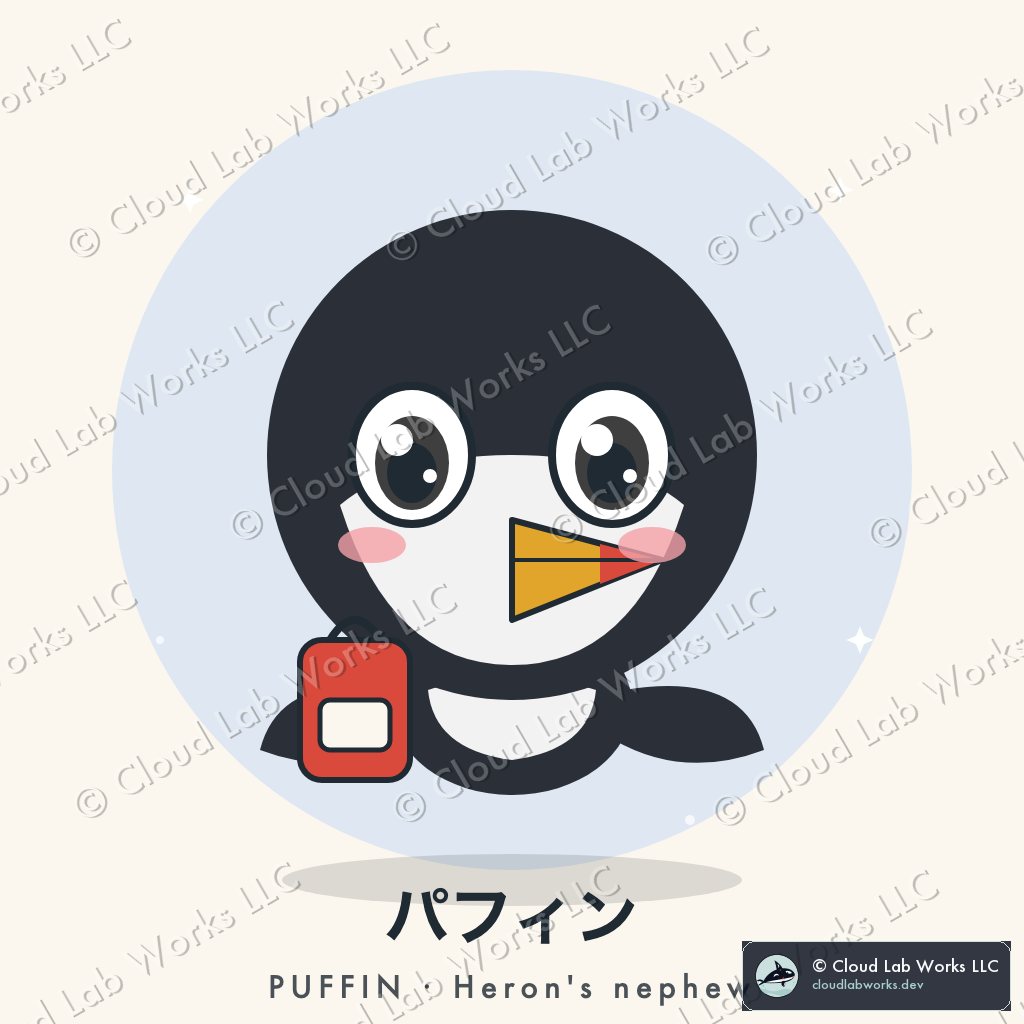 SVG · characterPuffin, the nephewHeron's nephew, apprentice scout. The beak is bigger than the plan. Backpack packed for a trip nobody has announced.Inquire
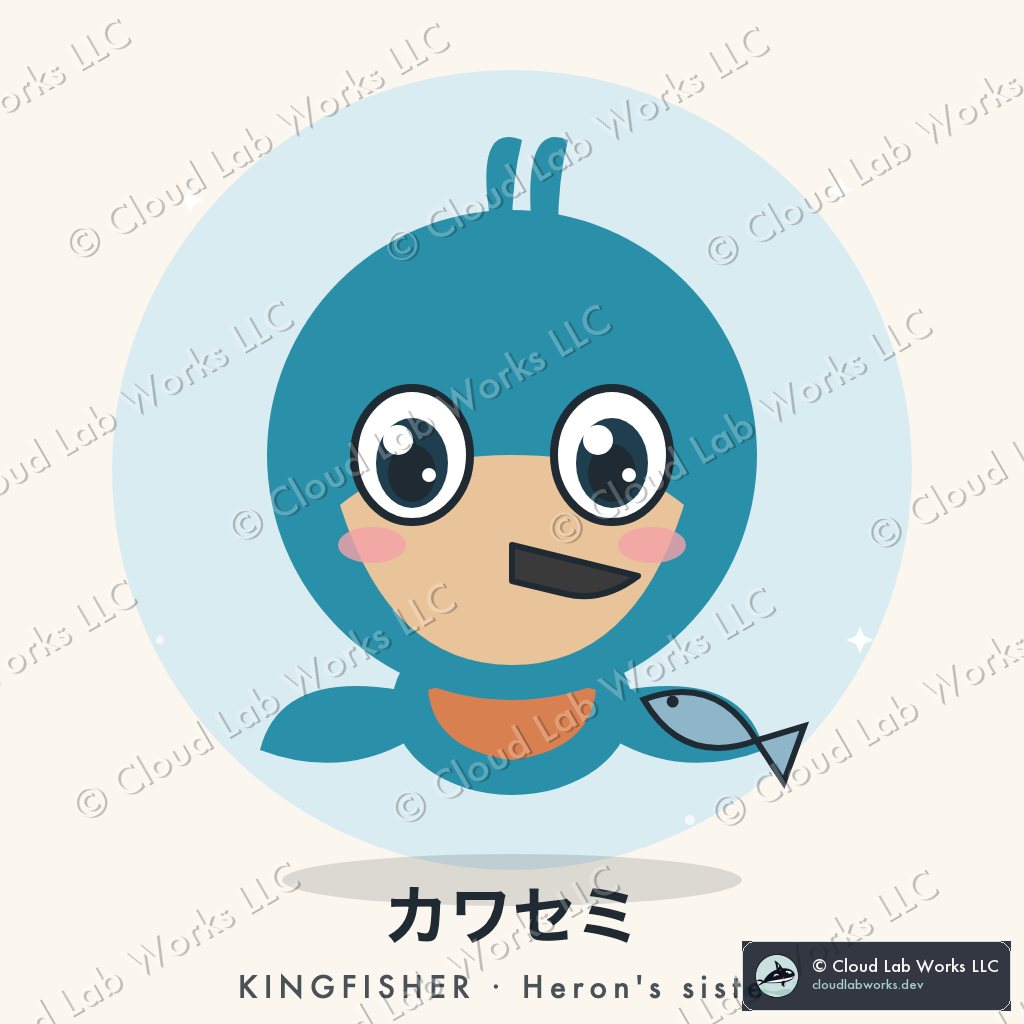 SVG · characterKingfisher, the sisterHeron's sister, faster and louder. Turquoise back, rust front, one fish, no comment.Inquire
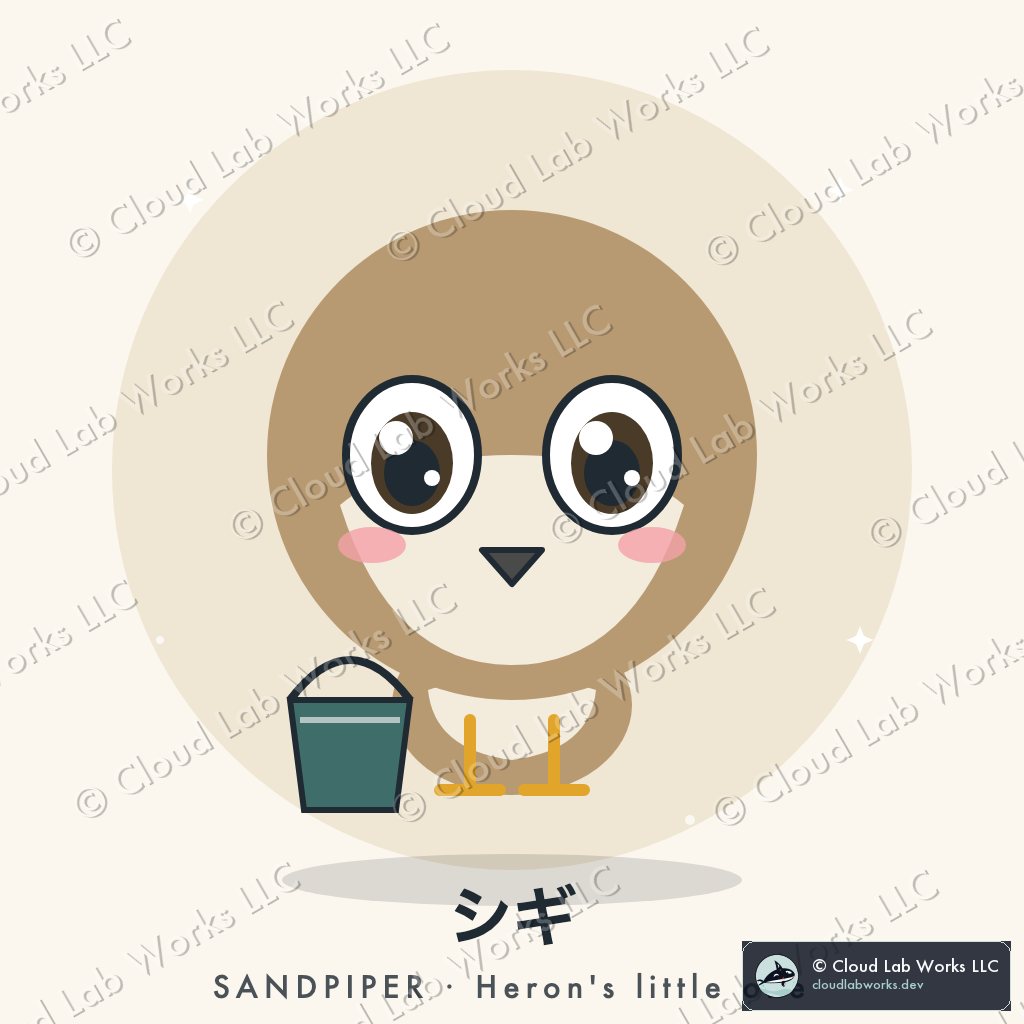 SVG · characterSandpiper, the little oneHeron's youngest, runs the tide line back and forth for the joy of it. Bucket, no plan for the bucket.Inquire
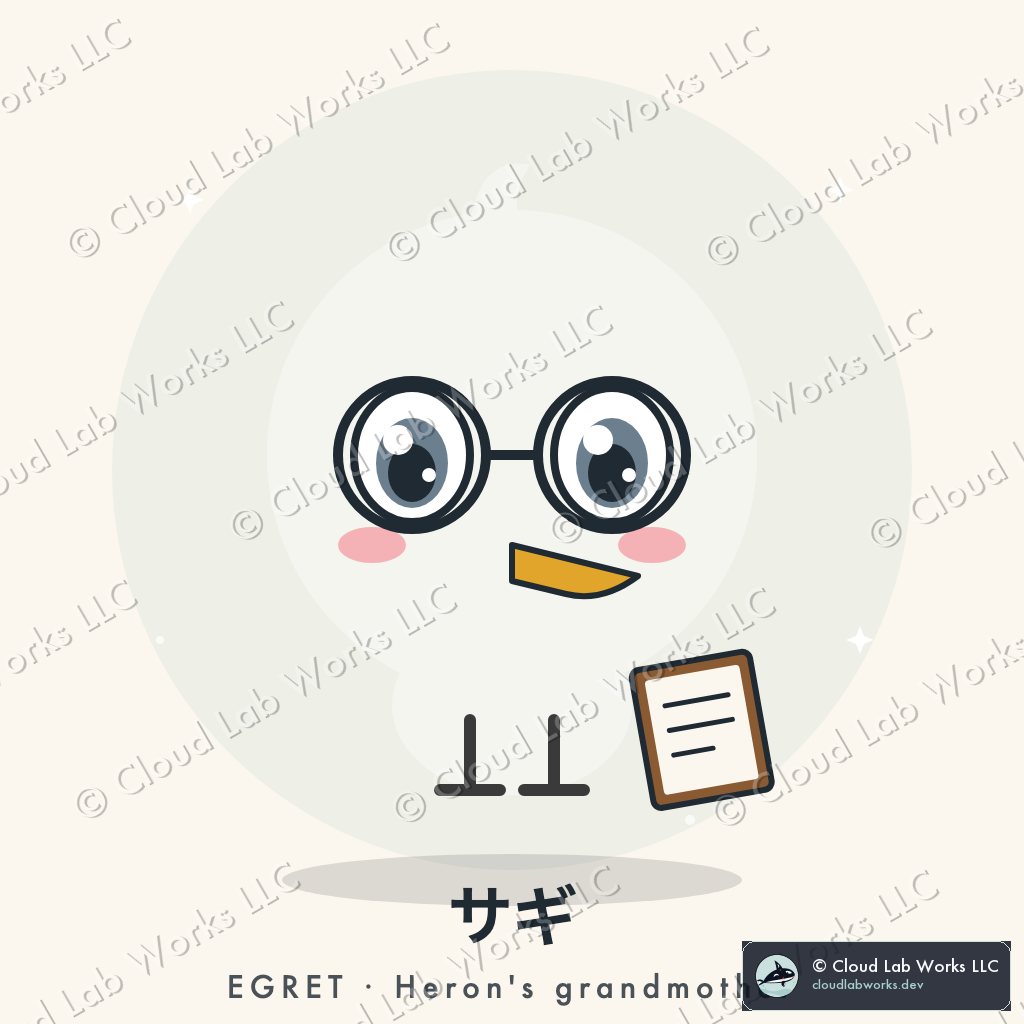 SVG · characterEgret, the grandmotherHeron's grandmother, all white, all patience. Glasses for the reading, not the looking.Inquire
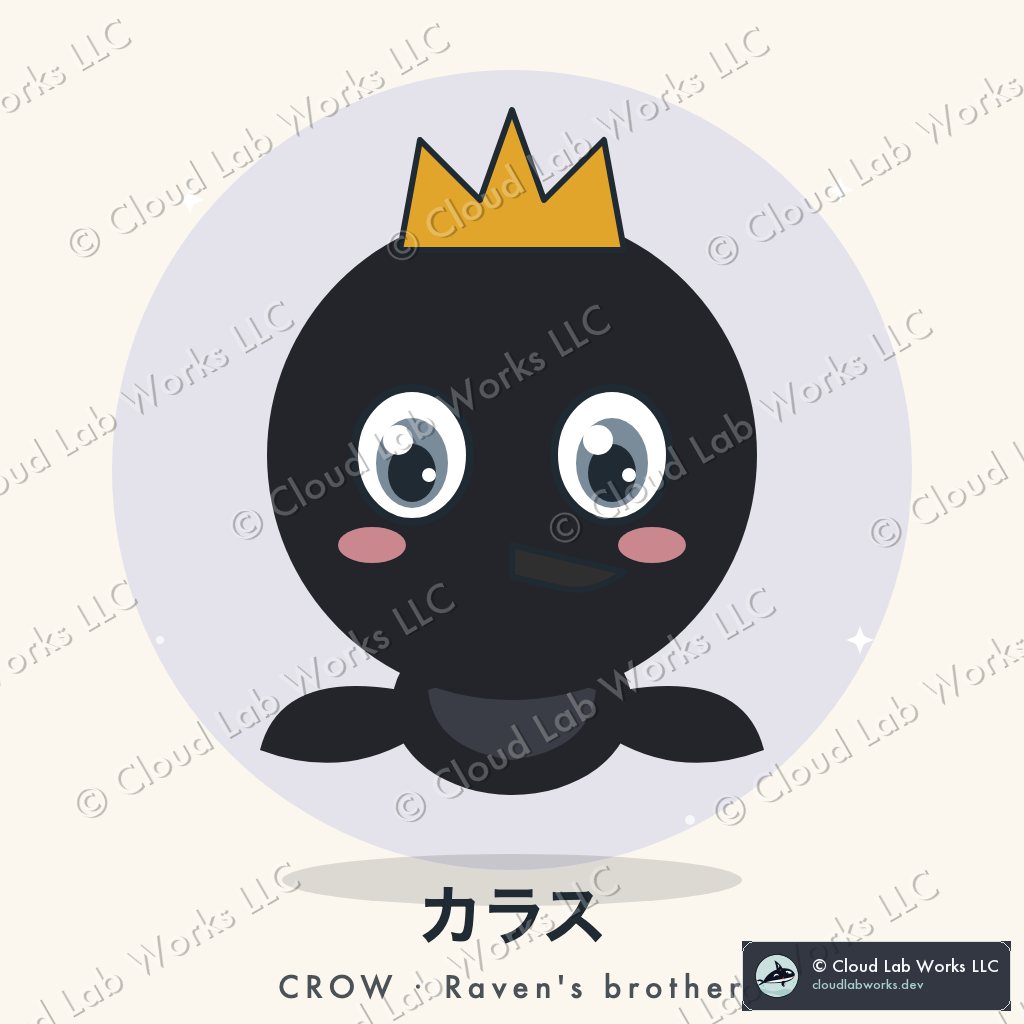 SVG · characterCrow, the brotherRaven's brother, the one without the keys and fine with it. Collects shiny things; the crown was on sale.Inquire
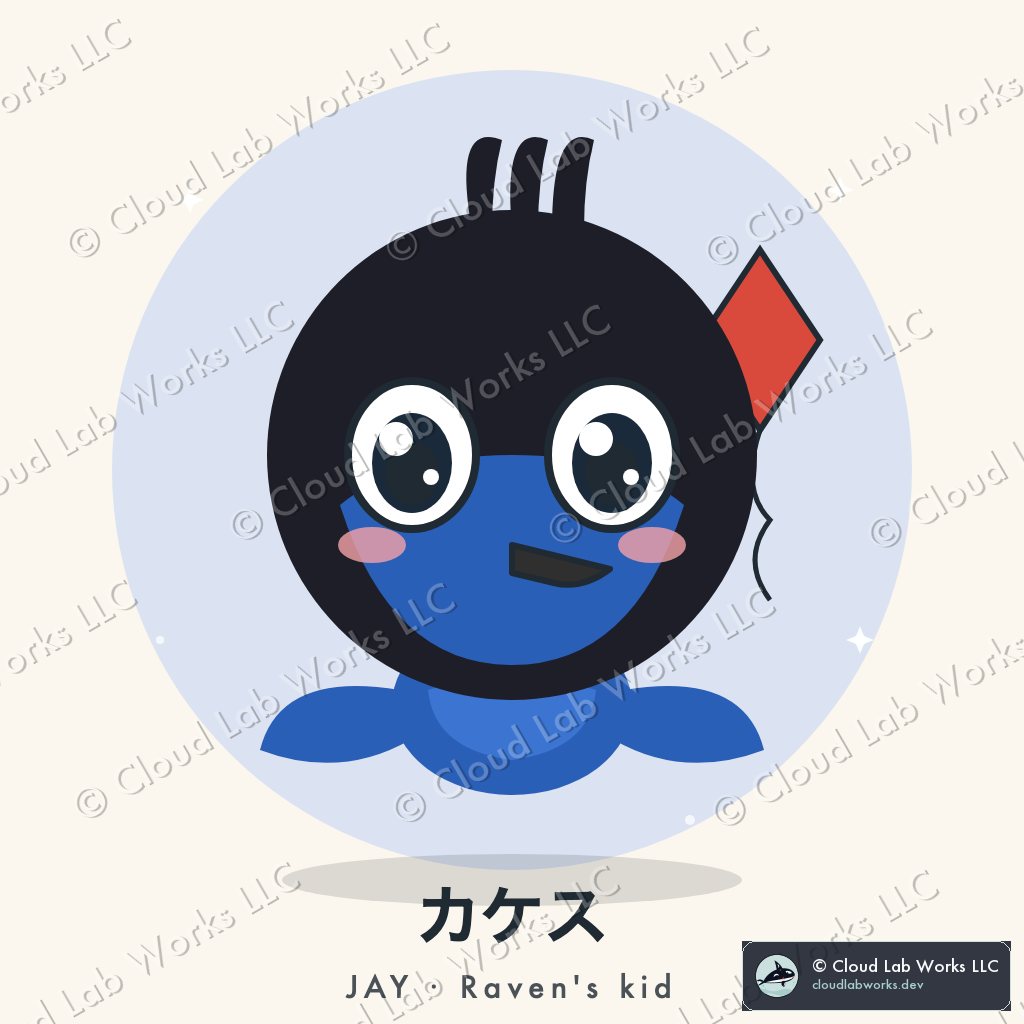 SVG · characterJay, the kidSteller's jay, Raven's kid, blue as a gas flame with a black crest that will not stay down. Kite weather is every weather.Inquire
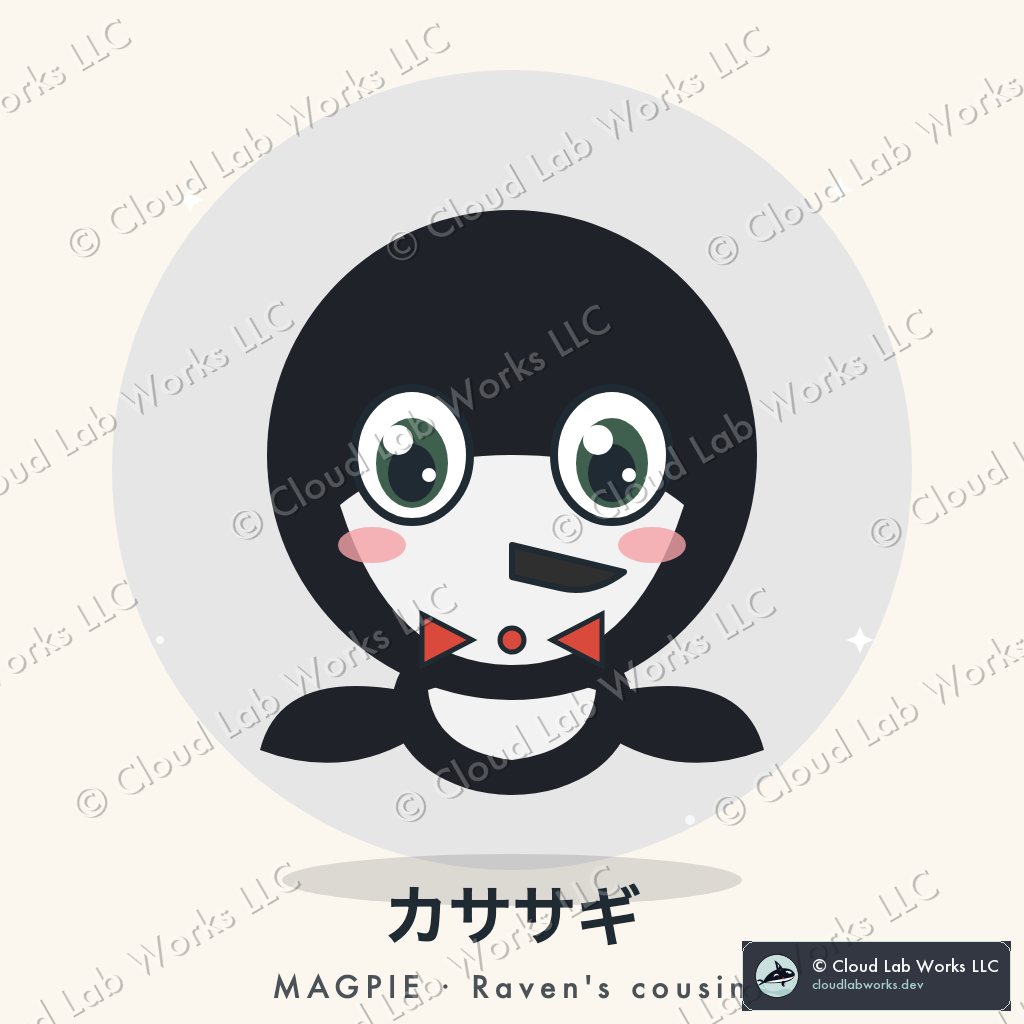 SVG · characterMagpie, the cousinRaven's cousin from the other side of the mountains. Black and white and a green sheen when the light is right. Bow tie for no occasion.Inquire
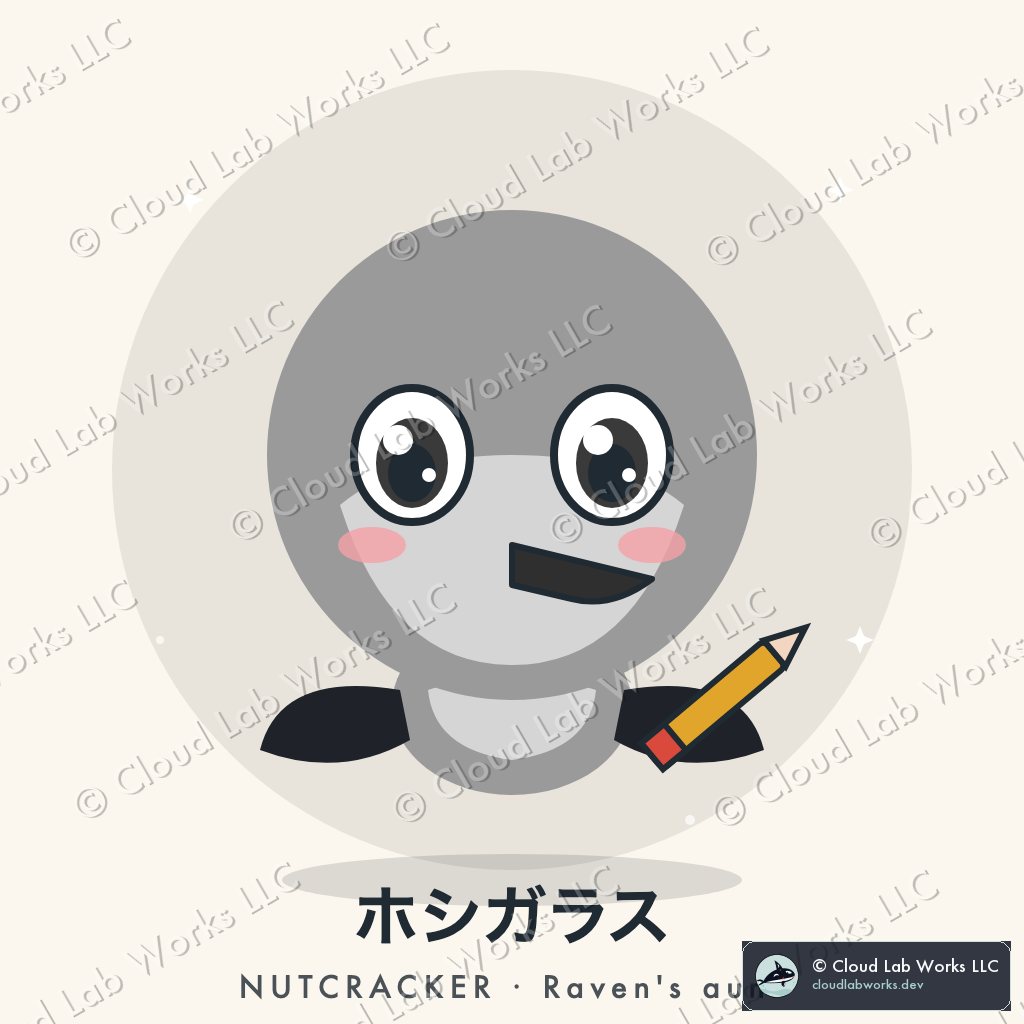 SVG · characterNutcracker, the auntClark's nutcracker, Raven's aunt from the high passes. Remembers where every seed is buried. Pencil behind the wing, a list in the head.Inquire
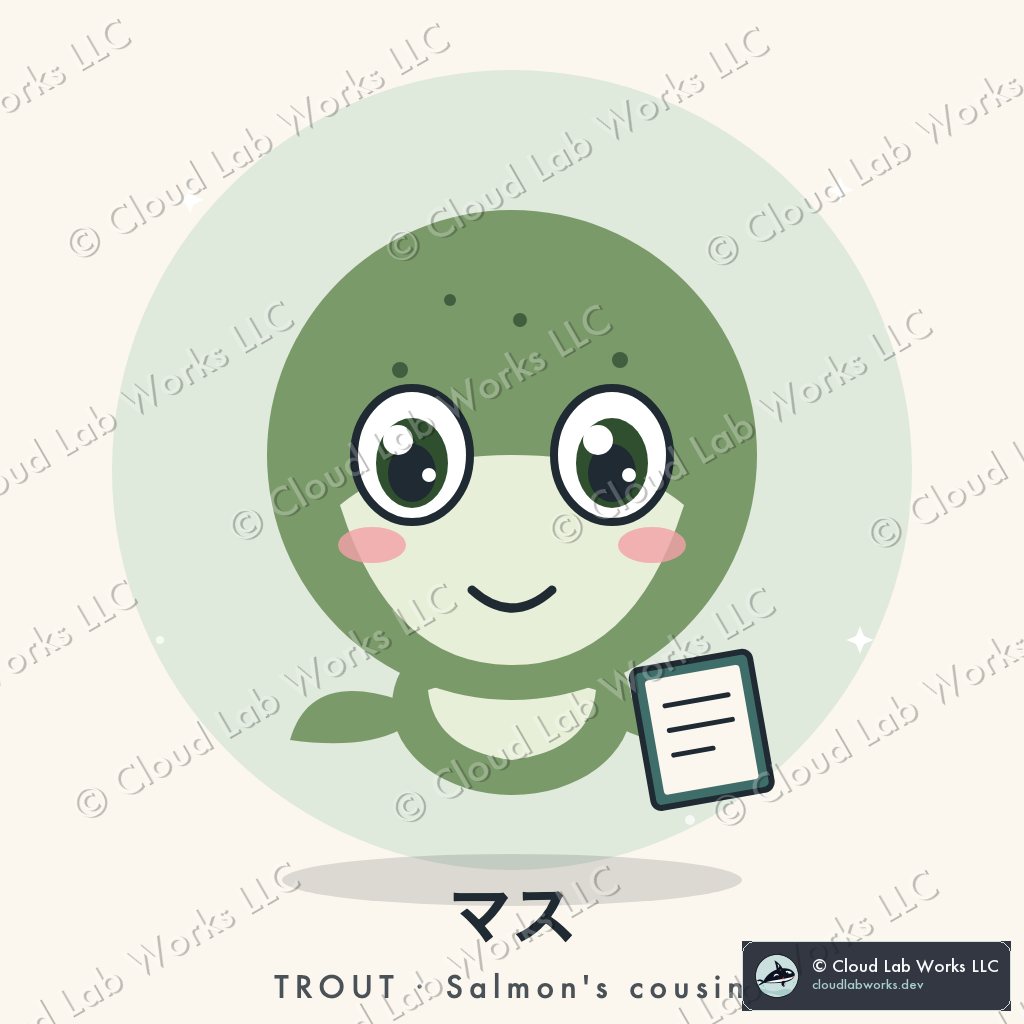 SVG · characterTrout, the cousinSalmon's freshwater cousin who never went to sea and doesn't see the point. Speckled, content, reading.Inquire
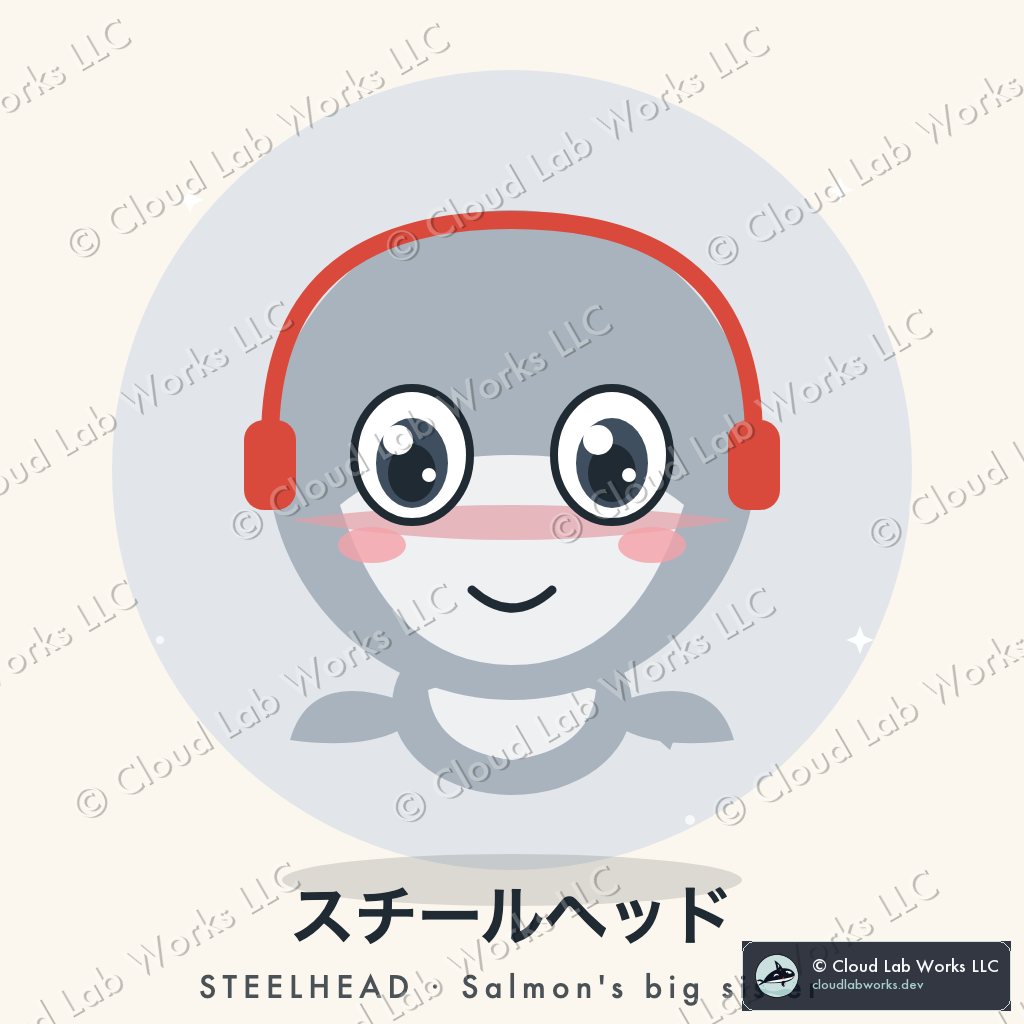 SVG · characterSteelhead, the big sisterSalmon's big sister: went to sea, came back, went again. Silver, a rose stripe, headphones for the long swims.Inquire
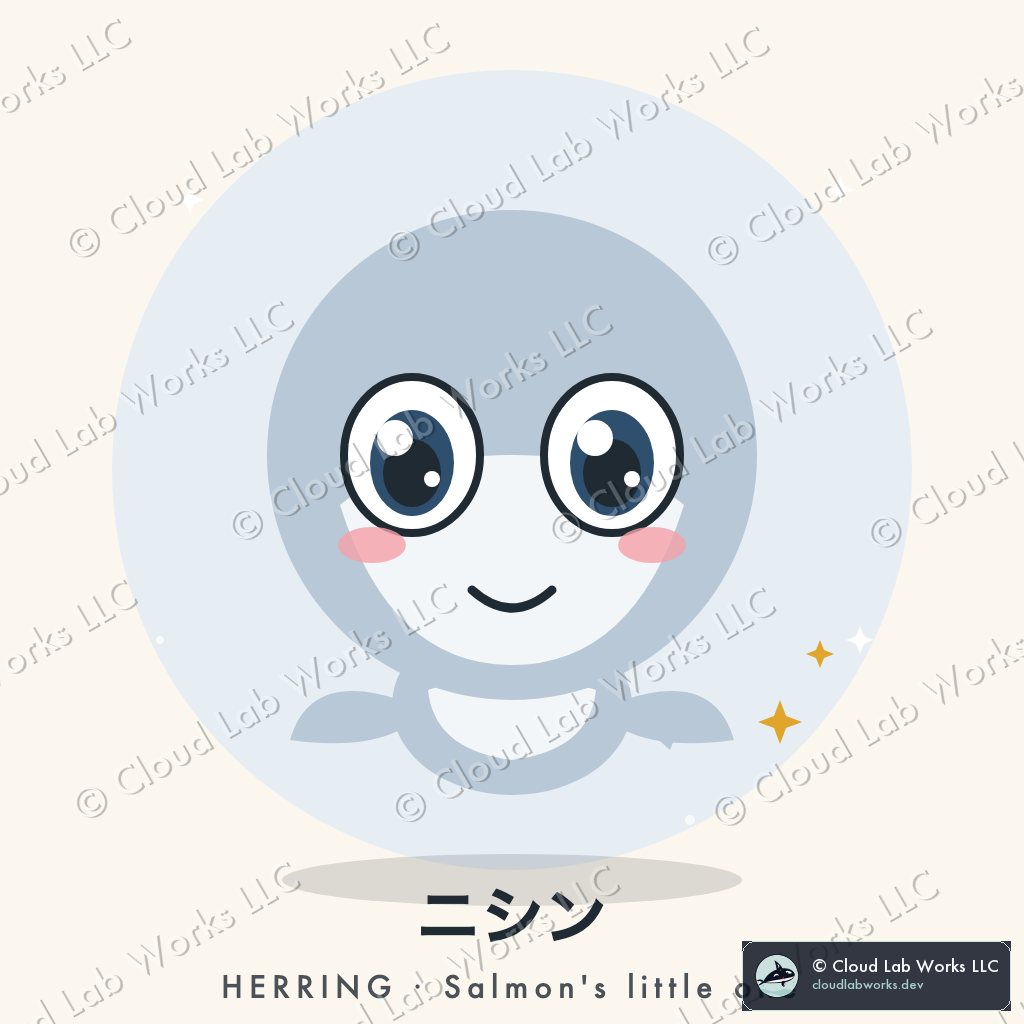 SVG · characterHerring, the little oneSalmon's littlest, one of ten thousand, and the only one with a name. Sparkles because the light does that on herring.Inquire
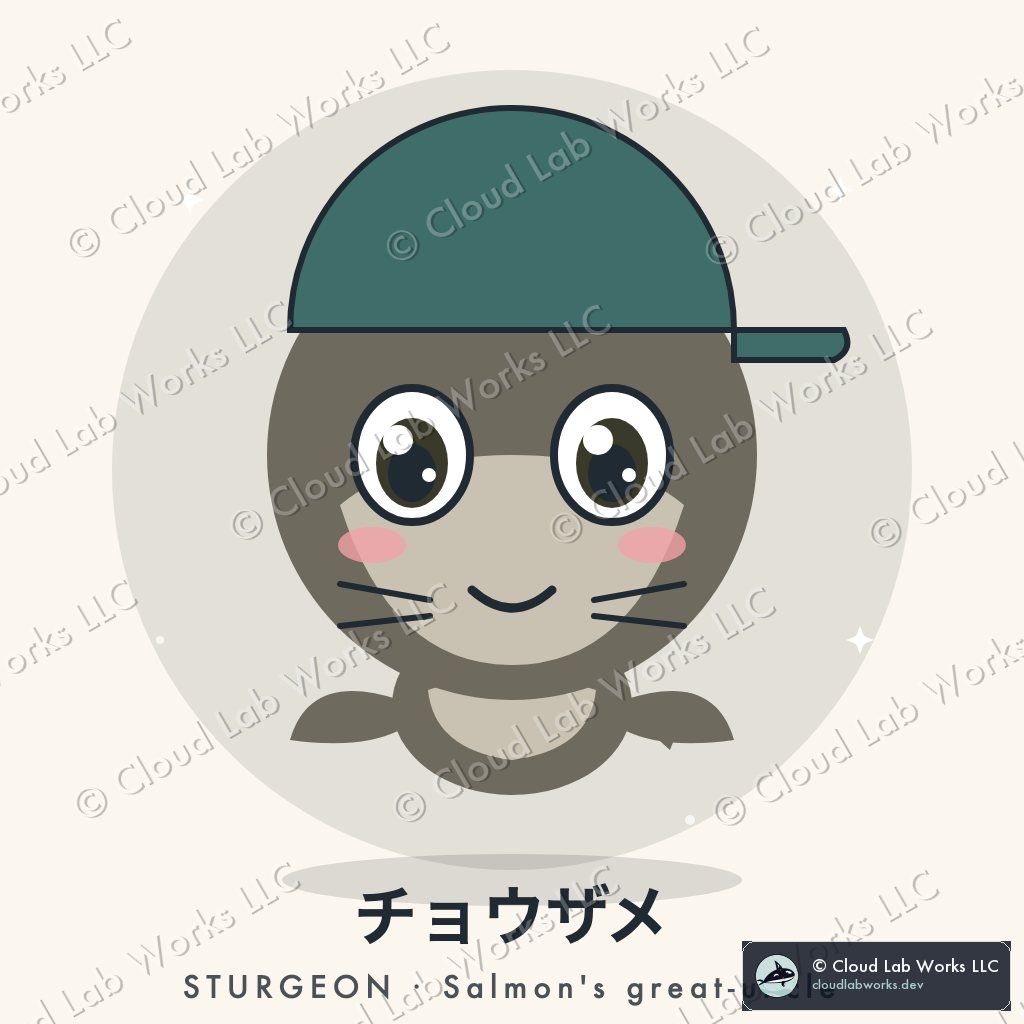 SVG · characterSturgeon, the great-uncleSalmon's great-uncle, older than the bridge, armoured, unhurried. Cap from a boat that no longer exists.Inquire
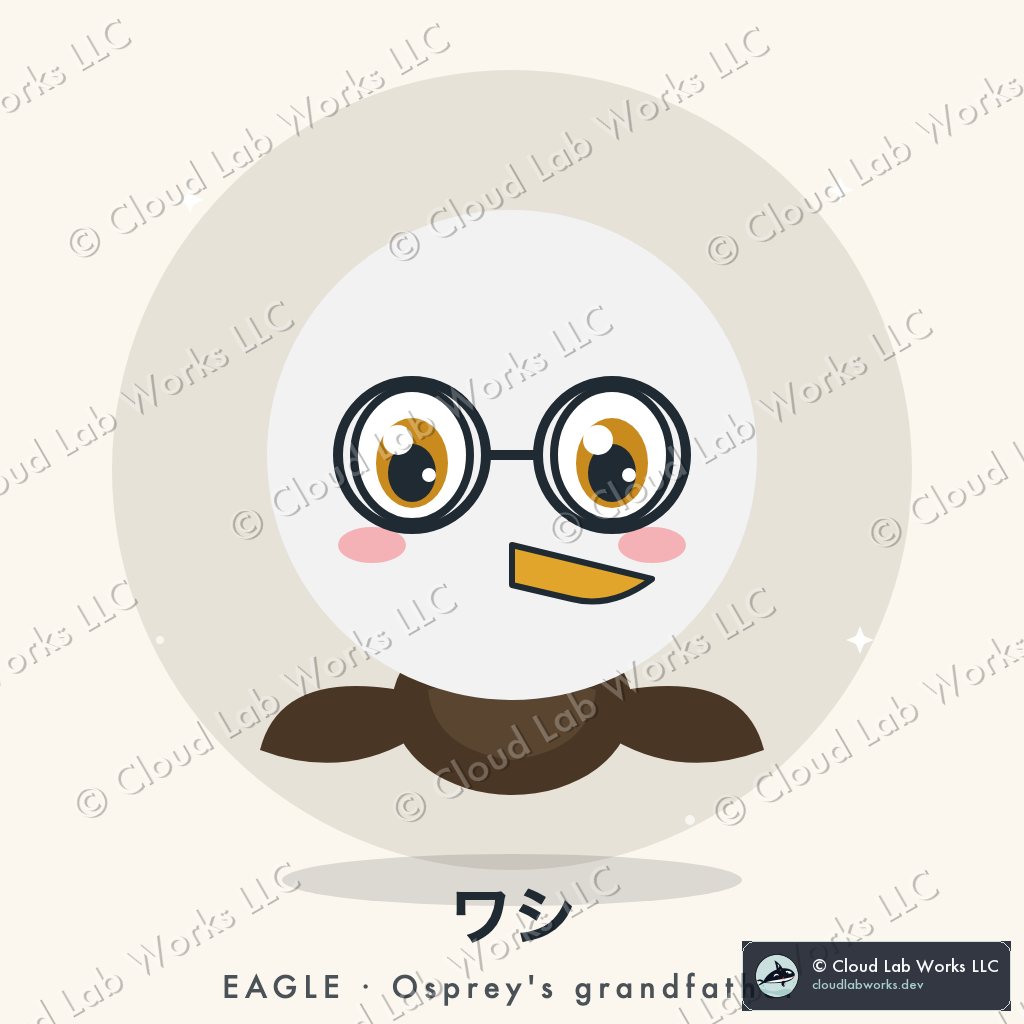 SVG · characterEagle, the grandfatherBald eagle, Osprey's grandfather, sits in the same snag every morning judging the harbour. White head, gold beak, no jokes.Inquire
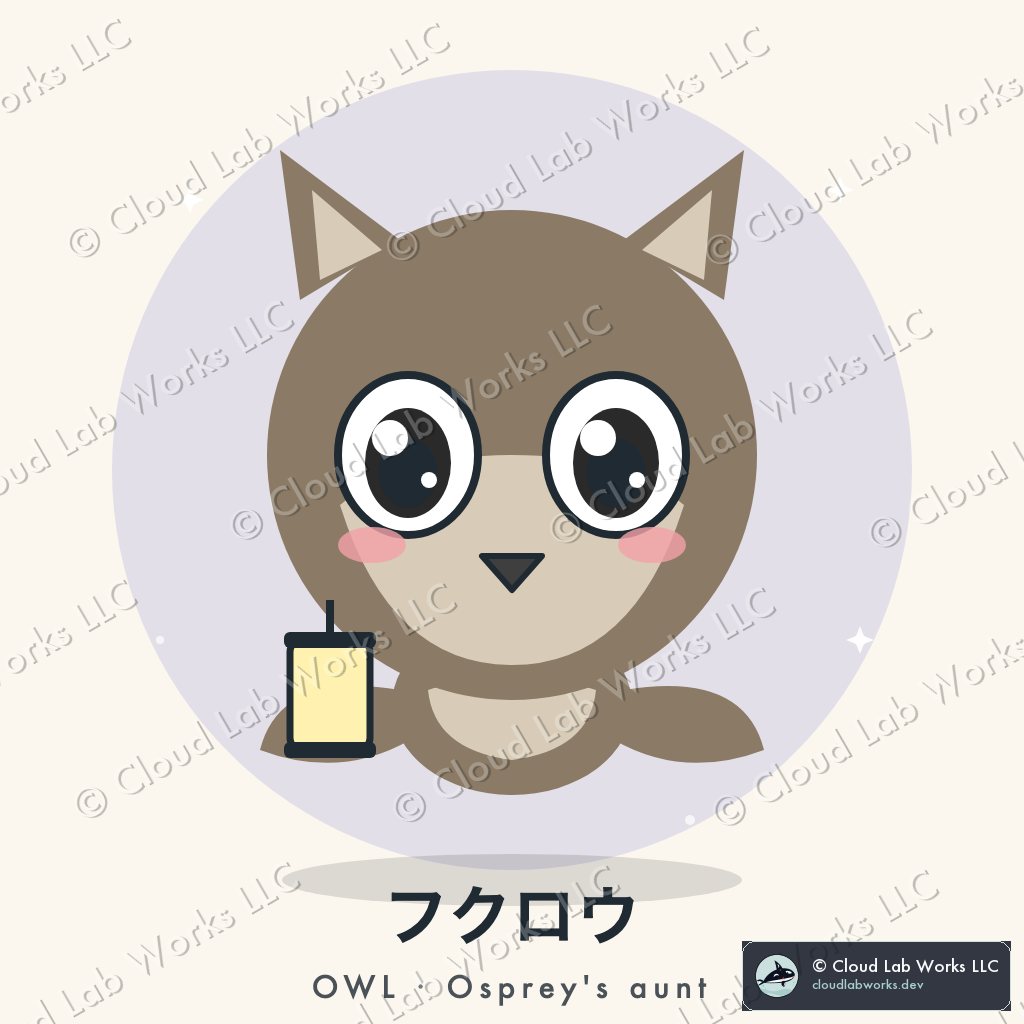 SVG · characterOwl, the auntBarred owl, Osprey's aunt, runs the night shift and says so. Lantern, ear tufts, the look.Inquire
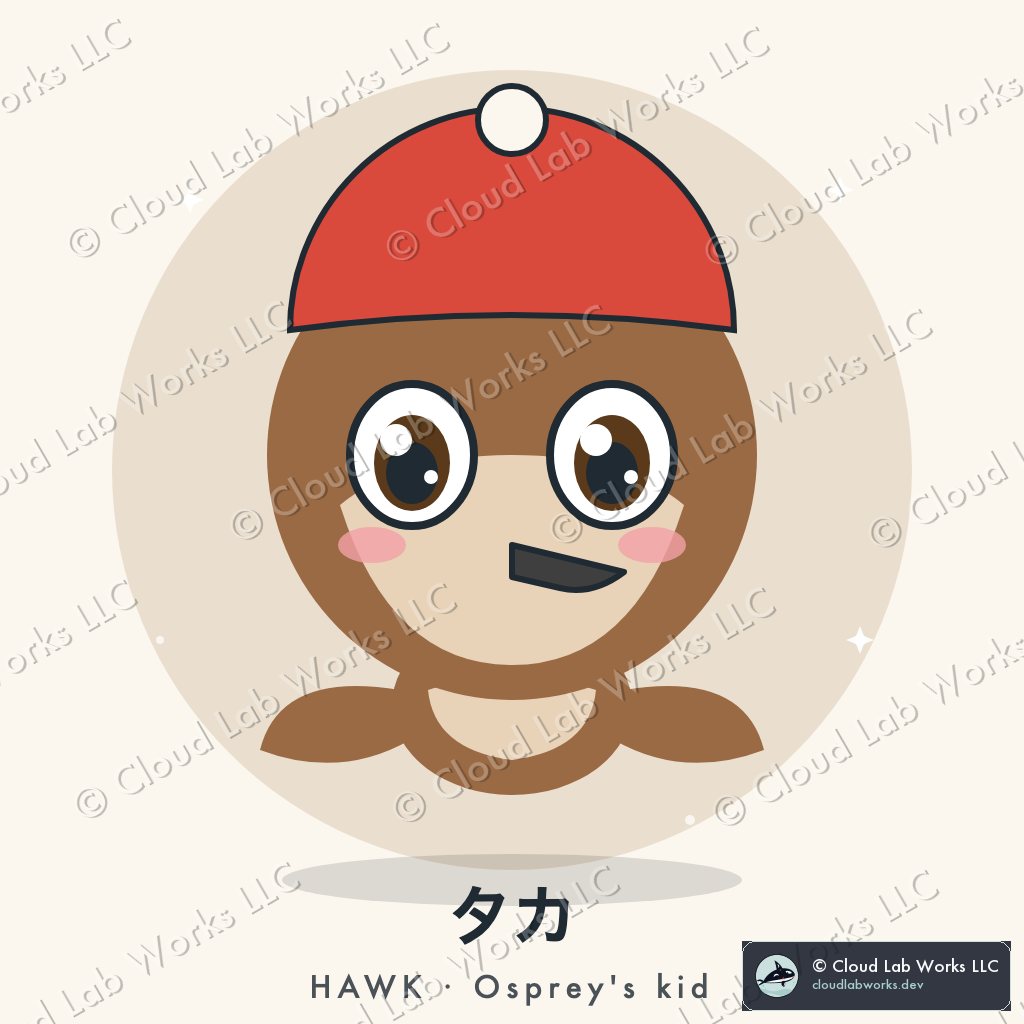 SVG · characterHawk, the kidRed-tailed hawk, Osprey's kid, learning the watch by doing it wrong first. Beanie because the wind is real.Inquire
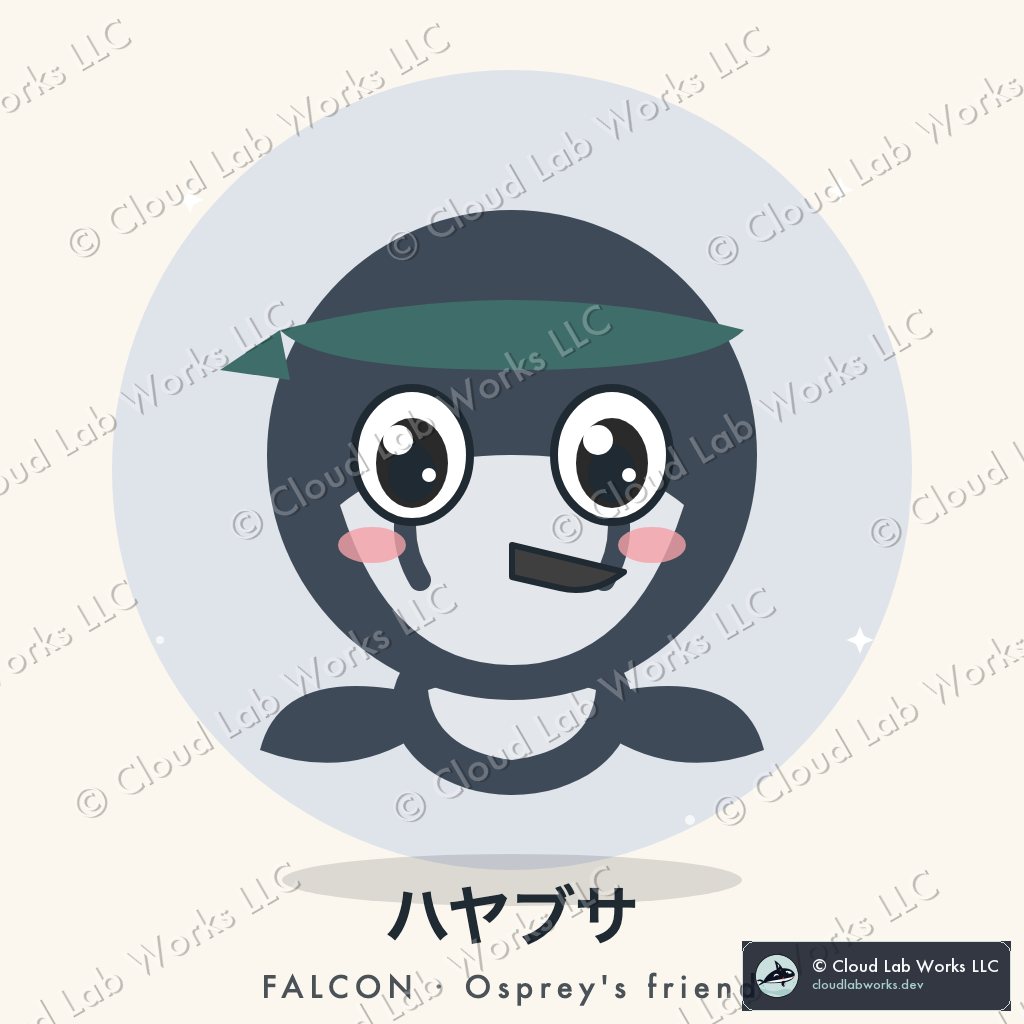 SVG · characterFalcon, the friendPeregrine, Osprey's friend from the cliffs, fastest thing on the coast and quiet about it. Bandana, no other equipment.Inquire
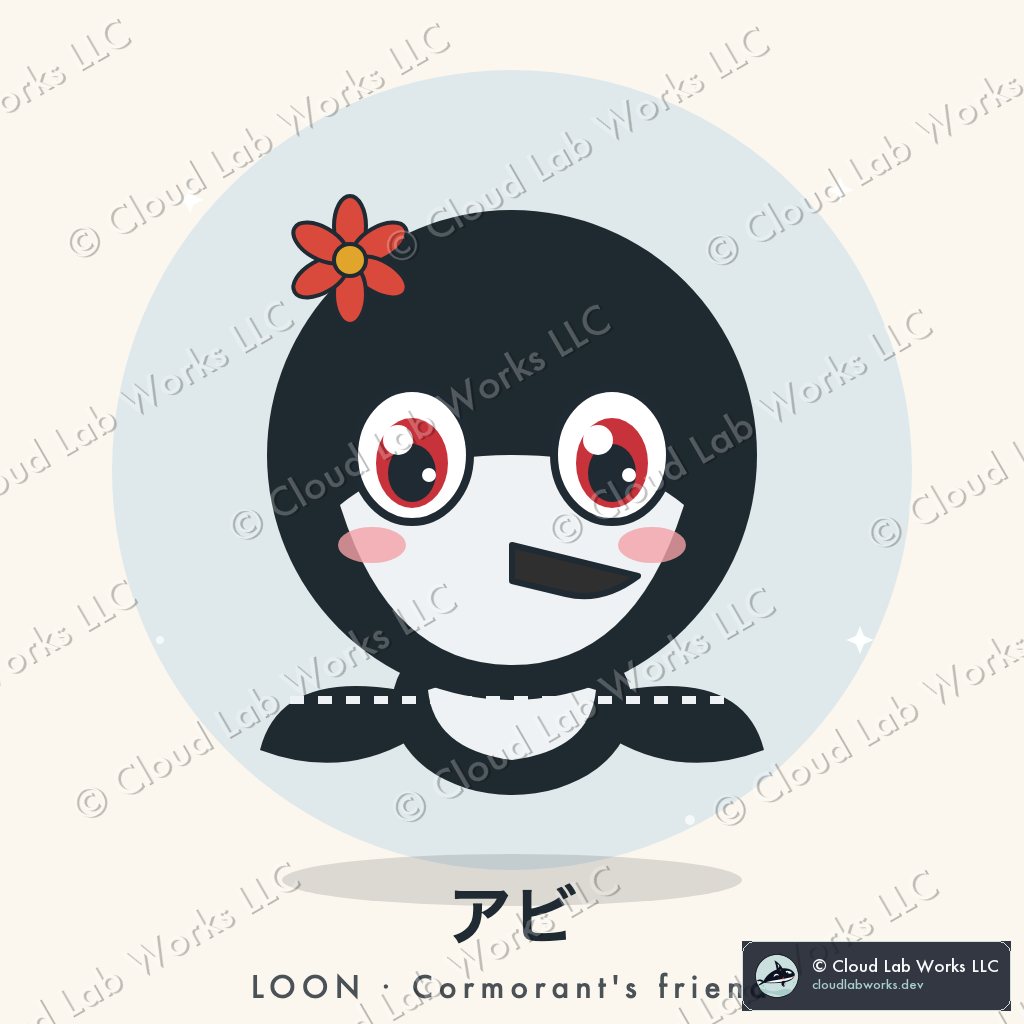 SVG · characterLoon, the friendCormorant's friend from the lake. Checkerboard back, a red eye, a call that empties the campground. Flower behind the ear, always.Inquire
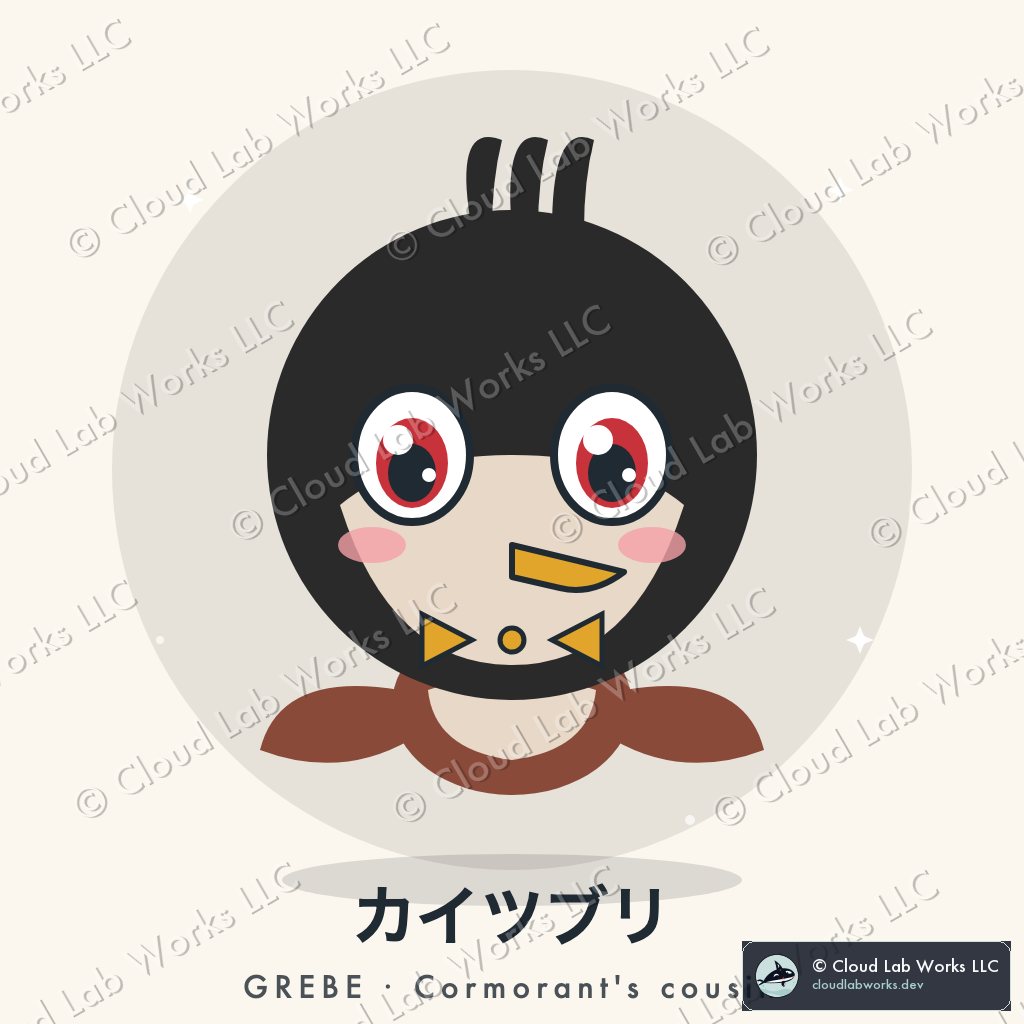 SVG · characterGrebe, the cousinCormorant's cousin, dives before you've finished the sentence. Rust neck, a crest that has opinions.Inquire
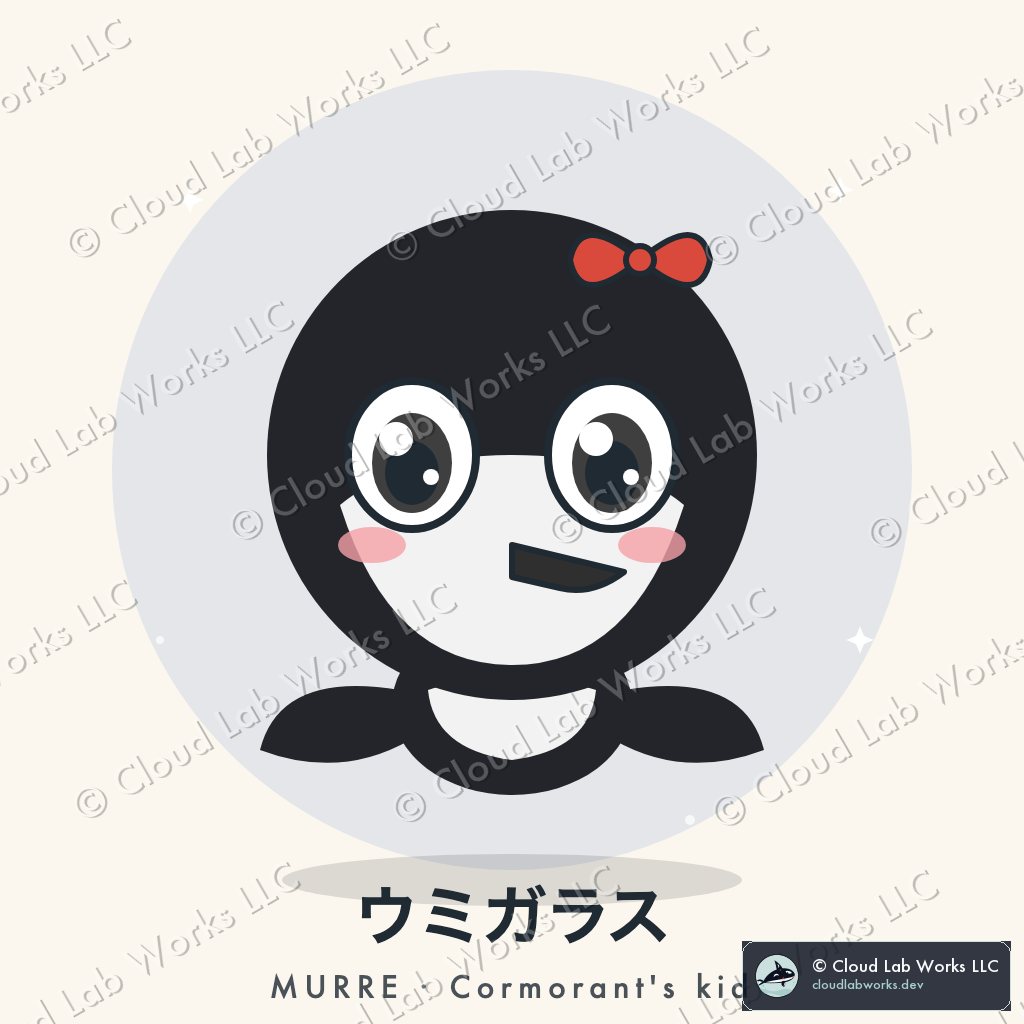 SVG · characterMurre, the kidCormorant's kid, black and white like a small waiter, stands on the ledge with a thousand others and still thinks it is a solo act.Inquire
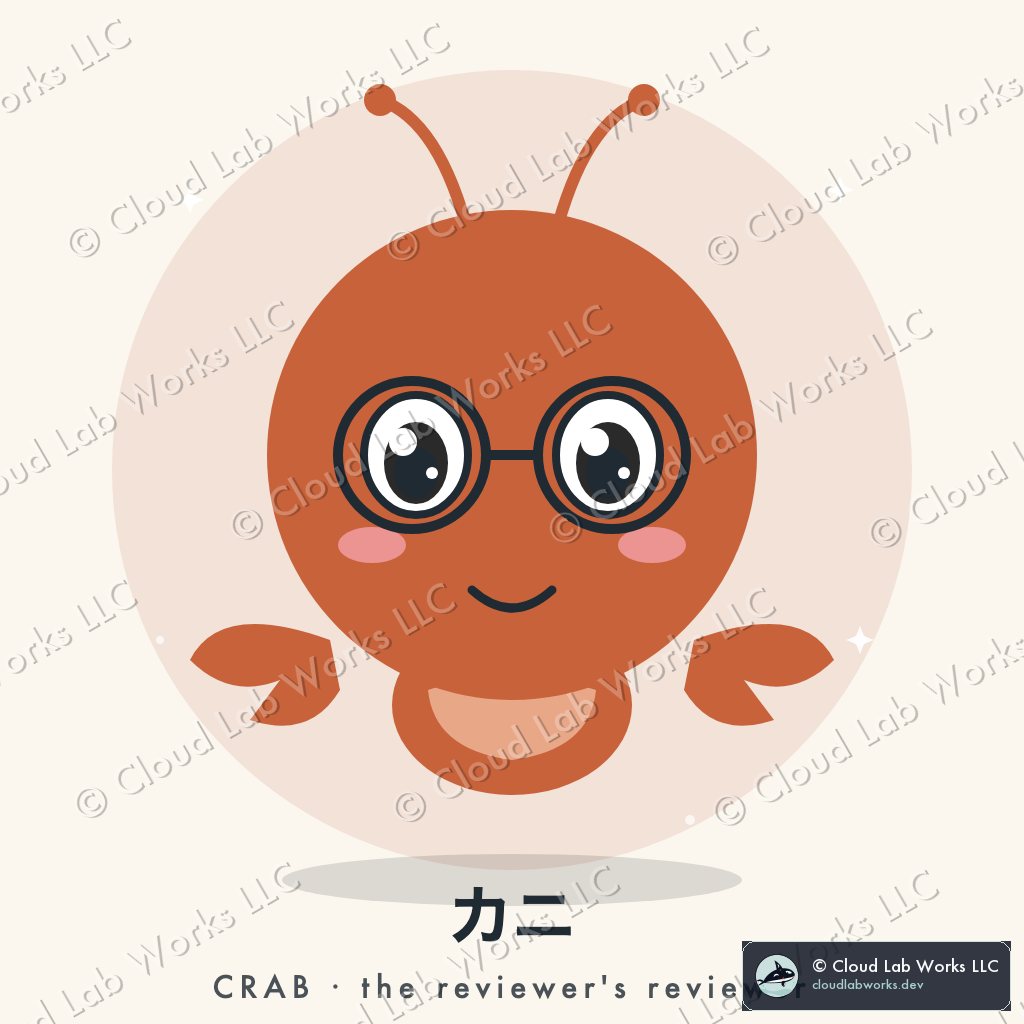 SVG · characterCrab, the reviewer's reviewerDungeness, Cormorant's oldest friend, reviews the reviewer. Sideways is a choice. The claws are for emphasis.Inquire
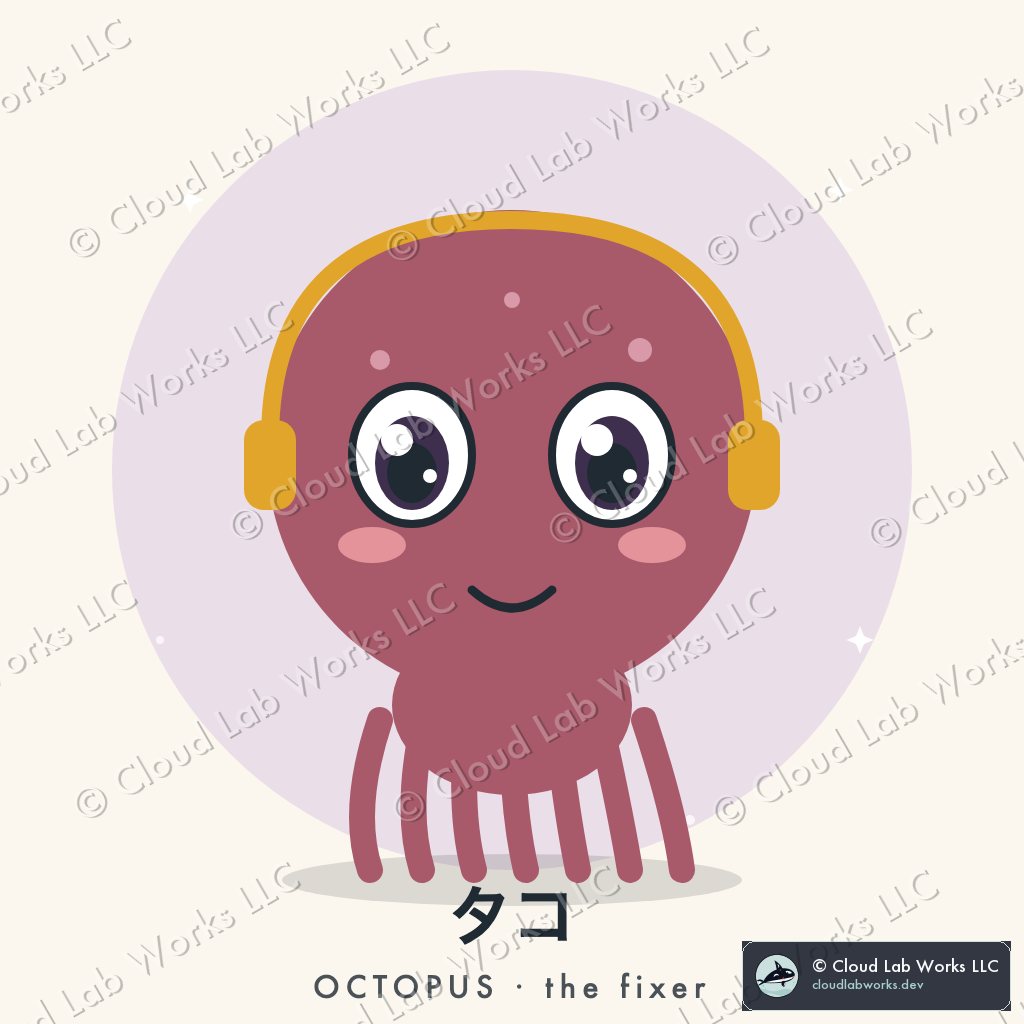 SVG · characterOctopus, the fixerGiant Pacific octopus, everybody's friend, eight things at once and a ninth in mind. Escapes anything, returns the key.Inquire
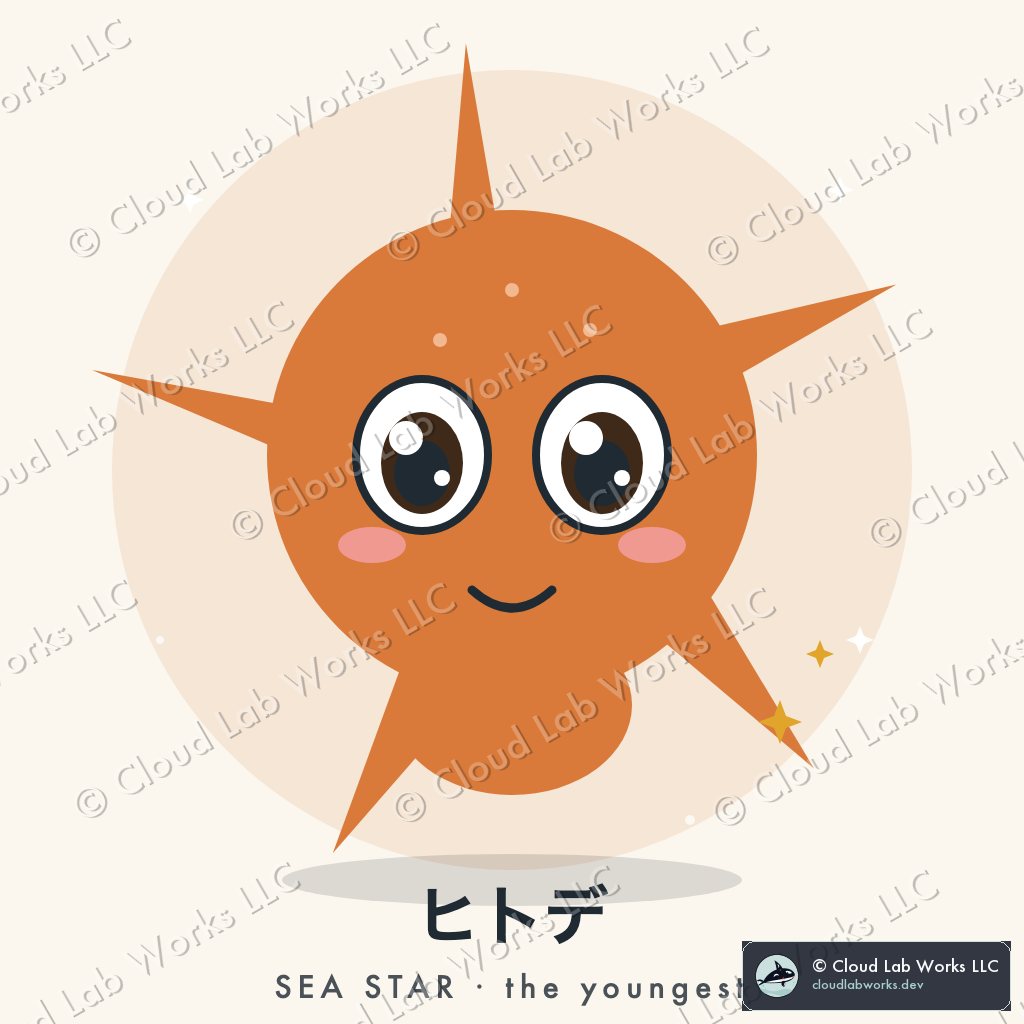 SVG · characterSea Star, the youngestOchre star from the tide pools, the youngest in the whole set, five arms and no idea which is the front. Sparkles, obviously.Inquire
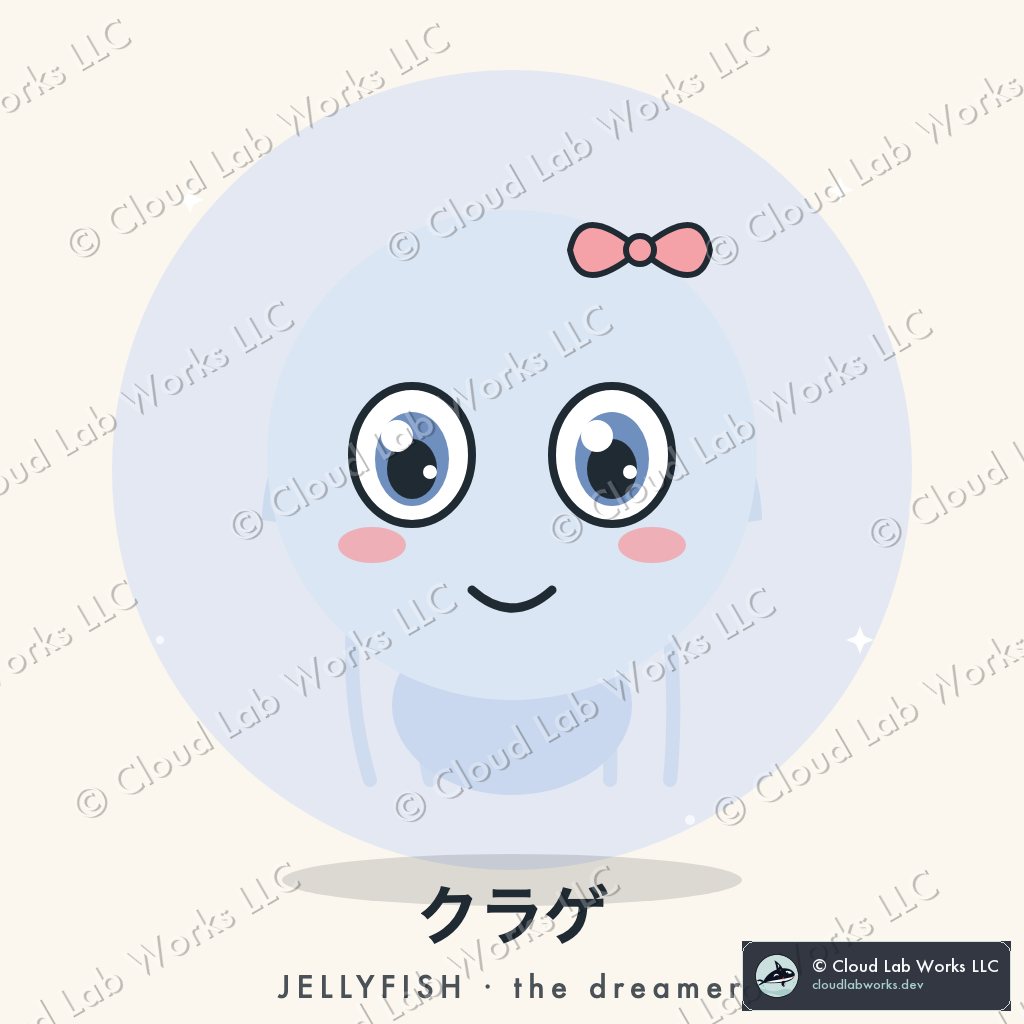 SVG · characterJellyfish, the dreamerMoon jelly, drifts in on the tide and drifts out, never in a hurry, never lost. Nobody knows what she does; she does it well.Inquire
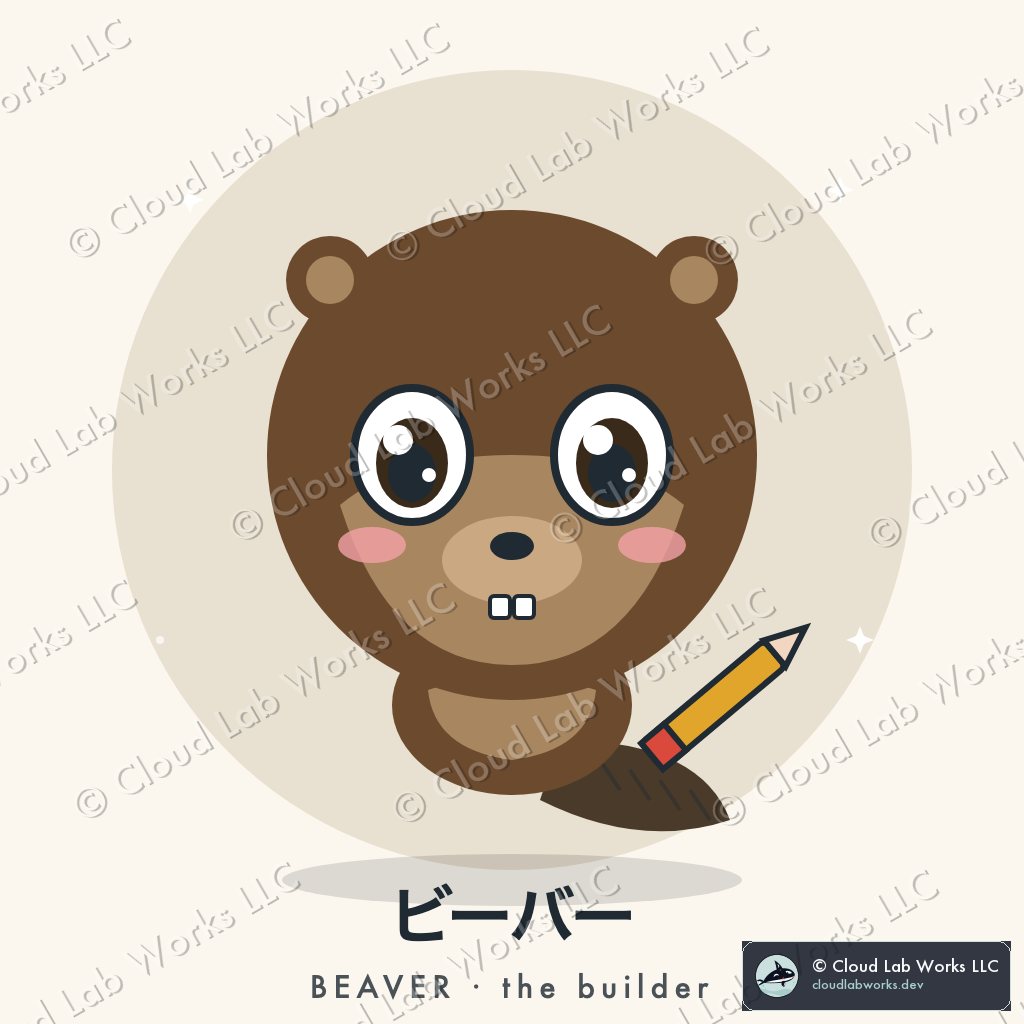 SVG · characterBeaver, the builderLives up the creek, builds the thing before the meeting about the thing. Teeth, tail, pencil; the plan is in the wood.Inquire
Waku, pop art
A Japanese pop-art register on the same silhouette: Warhol repetition and Ben-day dots, a rising-sun field, a hand-drawn homage to Hokusai's wave (the silhouette, not a copy of the print), kumadori face paint borrowed from kabuki for the mask, not the man. Hand-written SVG, same shape as the agents set, recolored. Originals by Waku; prints and licences on inquiry.
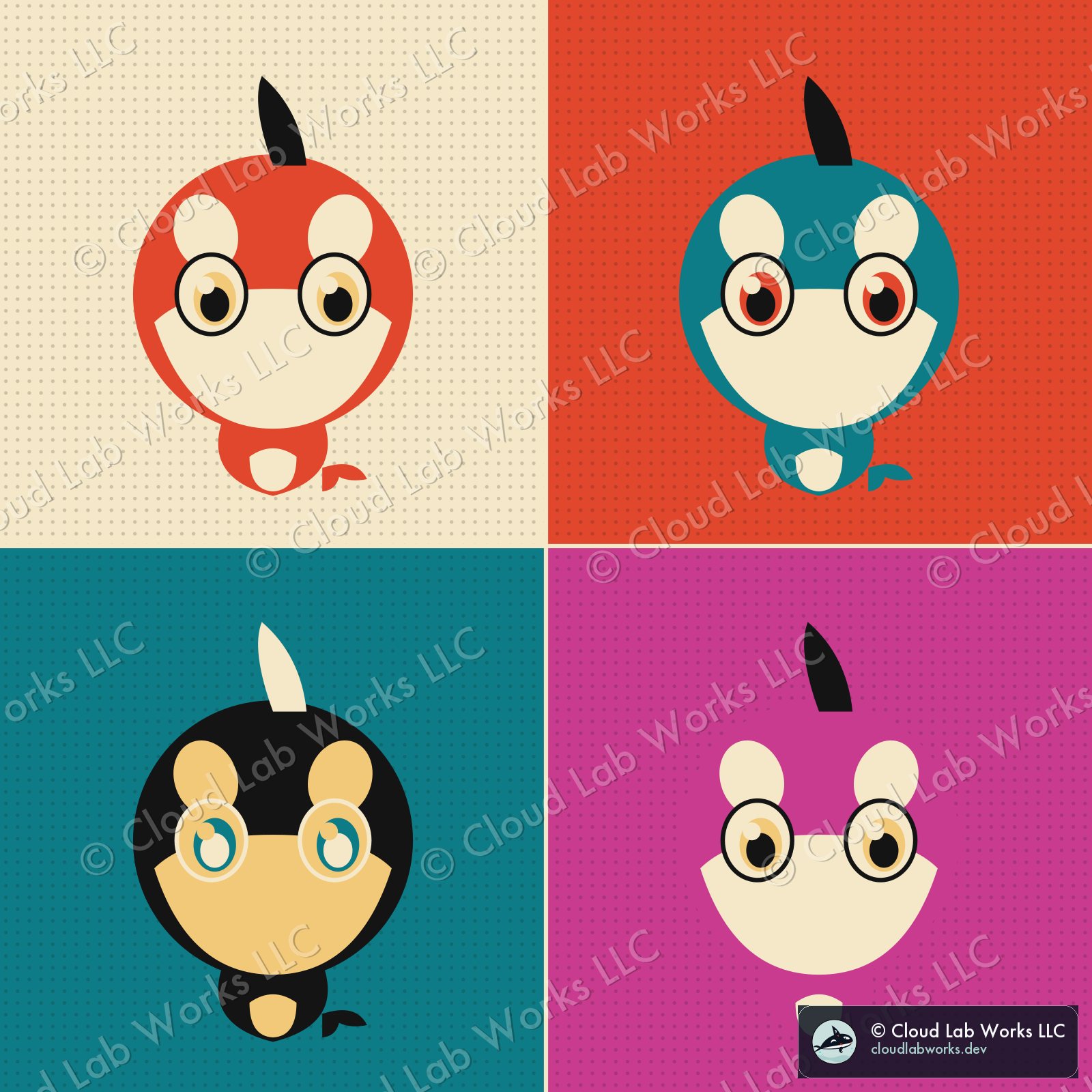 SVG · pop artWaku, four waysThe same orca, four flat palettes, one grid: a straight Warhol repetition, Ben-day dots standing in for the print screen he never actually ran through.Inquire
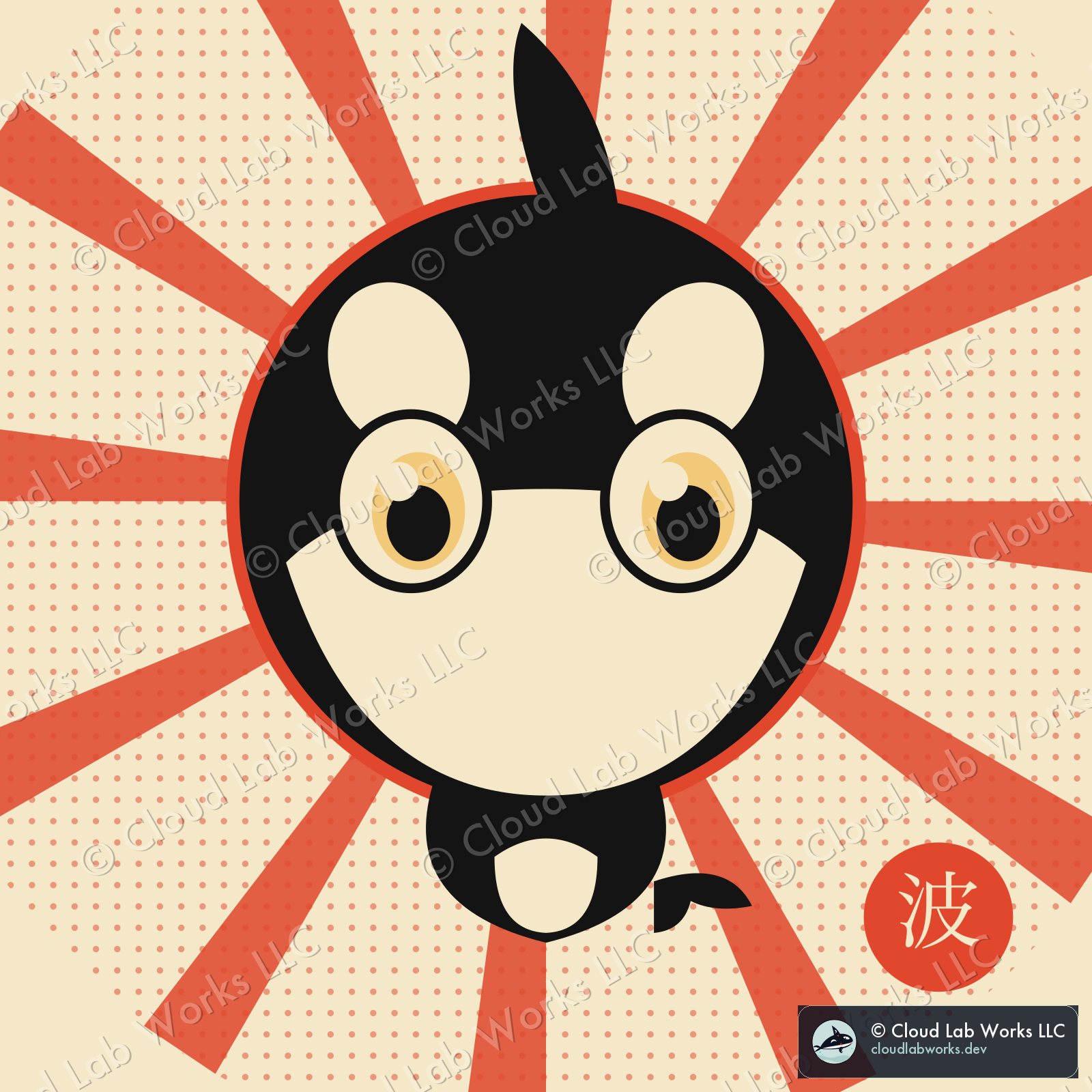 SVG · pop artWaku, rising sunRed and white, radiating: the flag-field treatment, not the flag itself. Kanji stamp reads 波, nami, wave, the thing Waku is named for.Inquire
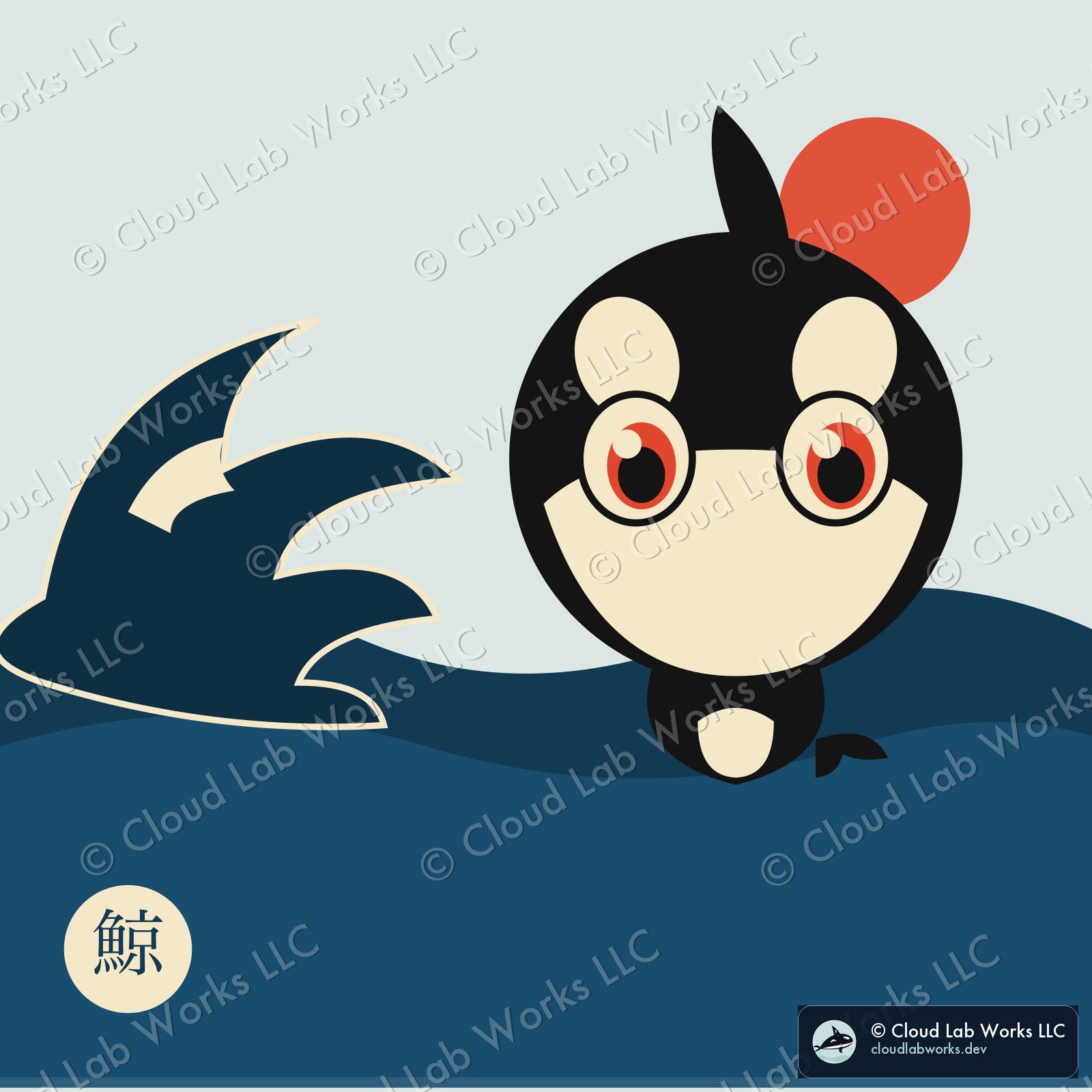 SVG · pop artWaku, the great waveA hand-drawn homage, not a reproduction: Hokusai's silhouette, simplified to three flat shapes, indigo and gold, Waku riding the crest instead of a fishing boat.Inquire
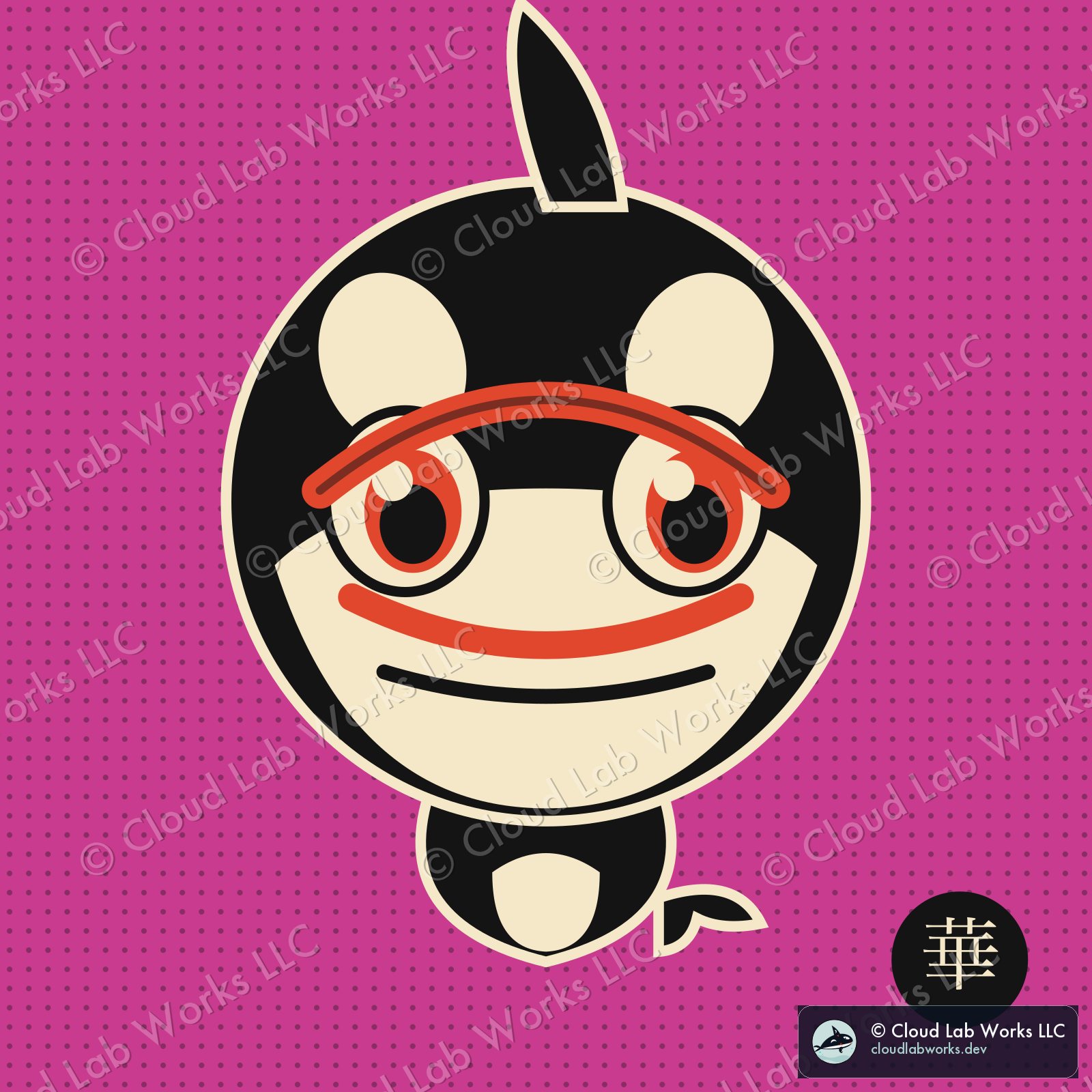 SVG · pop artWaku, kabuki paintKumadori face-paint stripes borrowed for the mask, not the man: red courage-lines on black, magenta ground, the Ben-day dot standing in for woodblock grain.Inquire
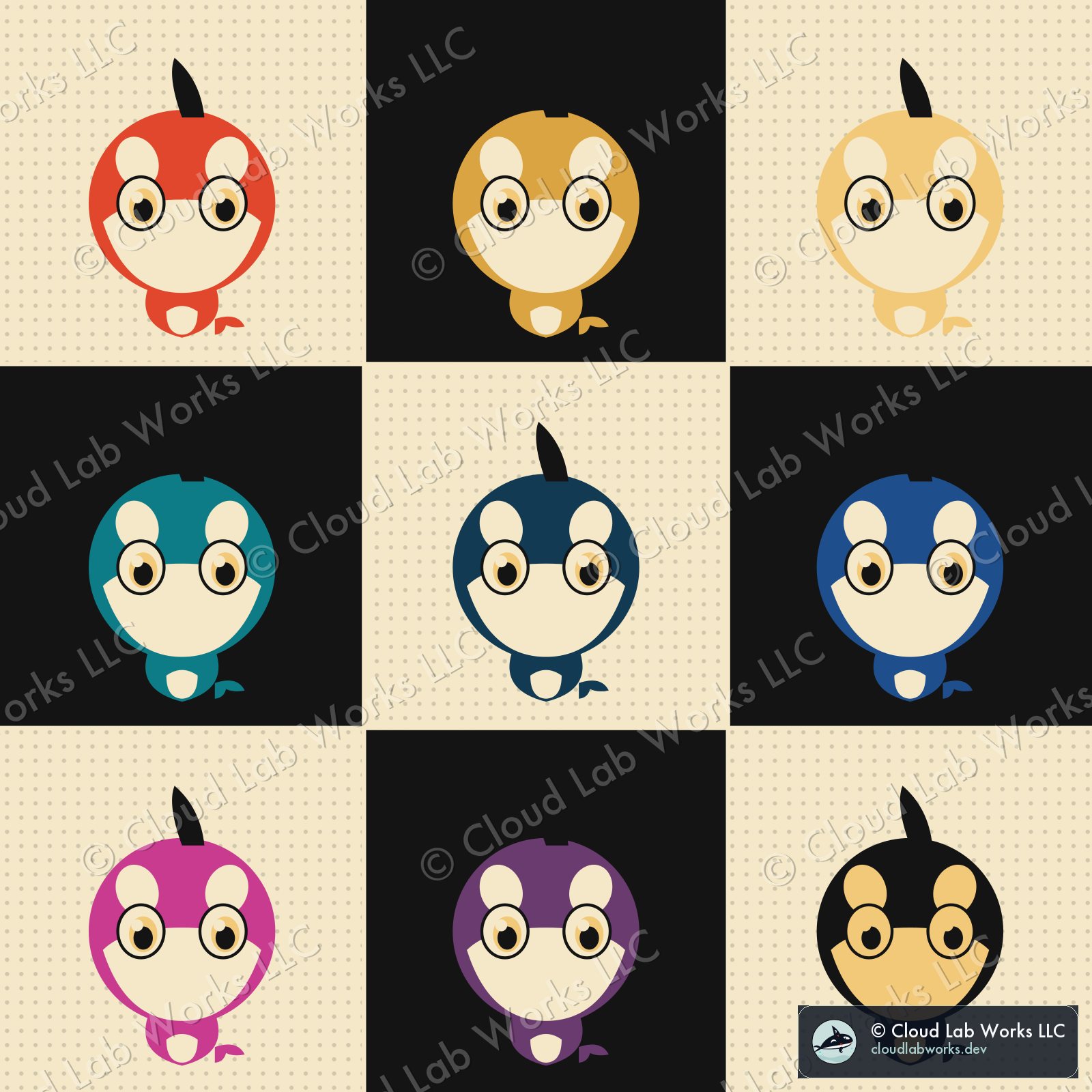 SVG · pop artWaku, nine waysA 3x3 grid instead of the tetraptych's 2x2: the same Warhol repetition pushed one step further, nine flat hues cycling warm to cool, newsprint dot screen under each cell.Inquire
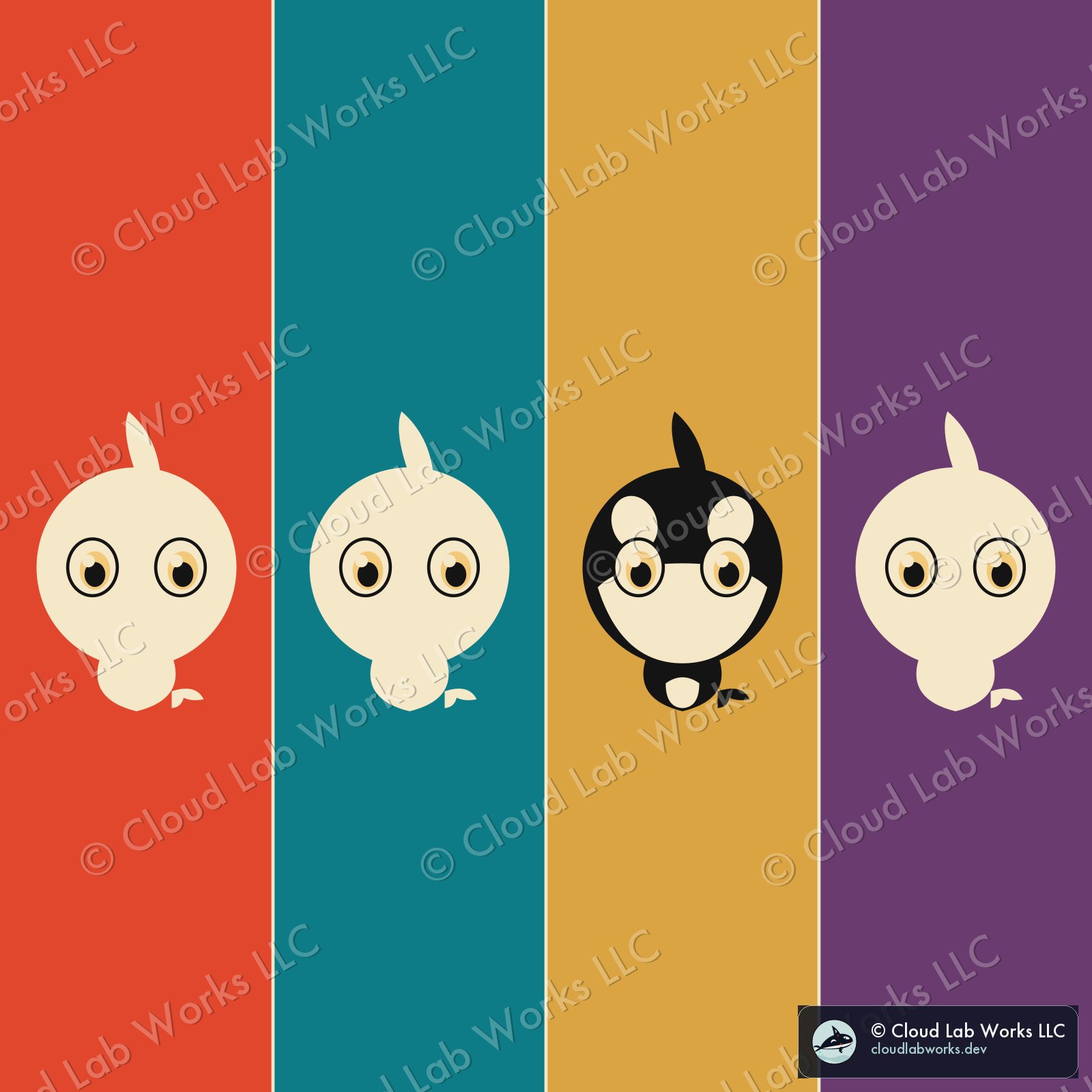 SVG · pop artWaku, four in a rowA 1x4 strip of vertical bands, not a square grid: four duotone panels, cream line holding each apart, the repetition read left to right instead of in a block.Inquire
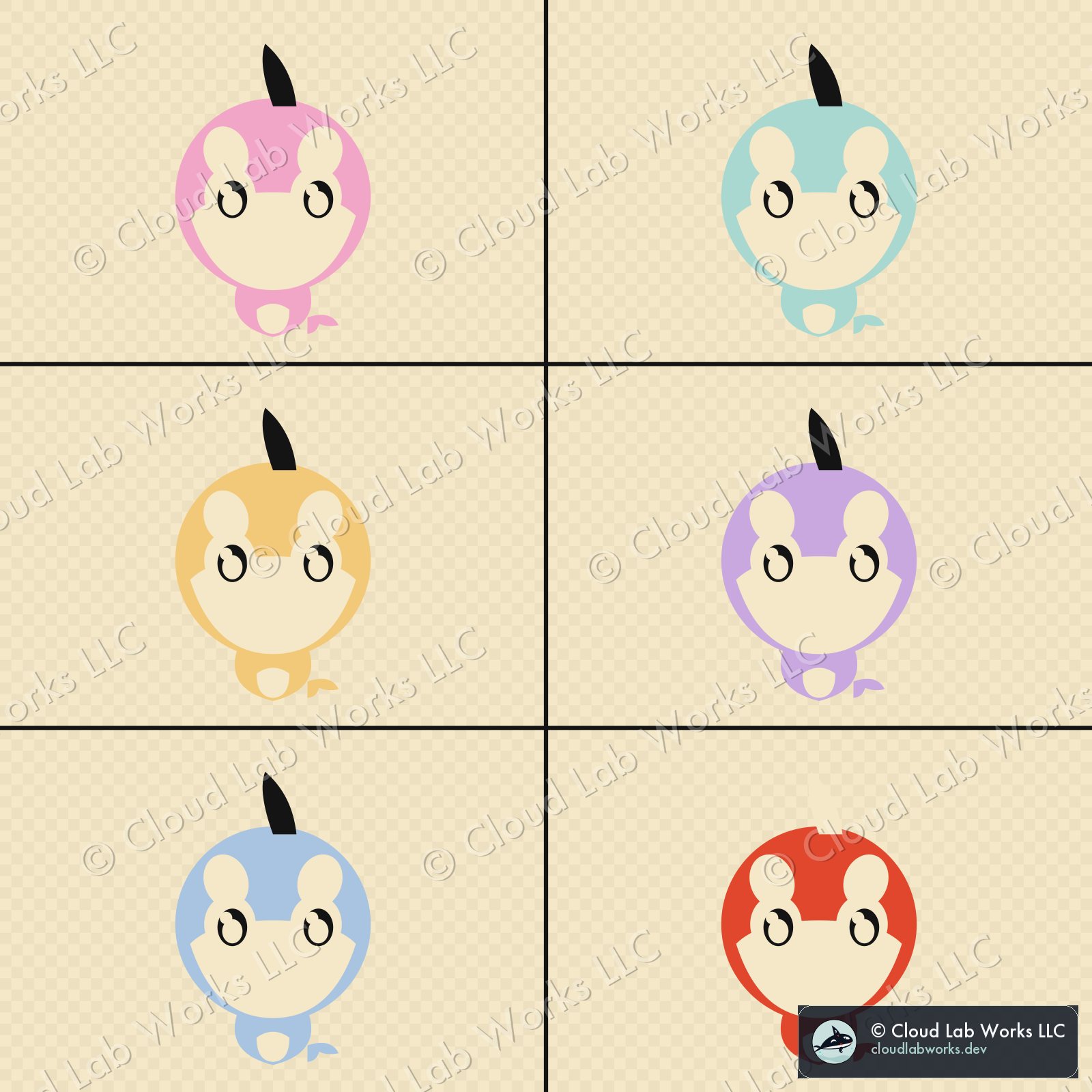 SVG · pop artWaku, six upA 2x3 grid, six panels: a pastel half-step away from the tetraptych's primaries, checkerboard ground standing in for the print screen this time instead of dots.Inquire
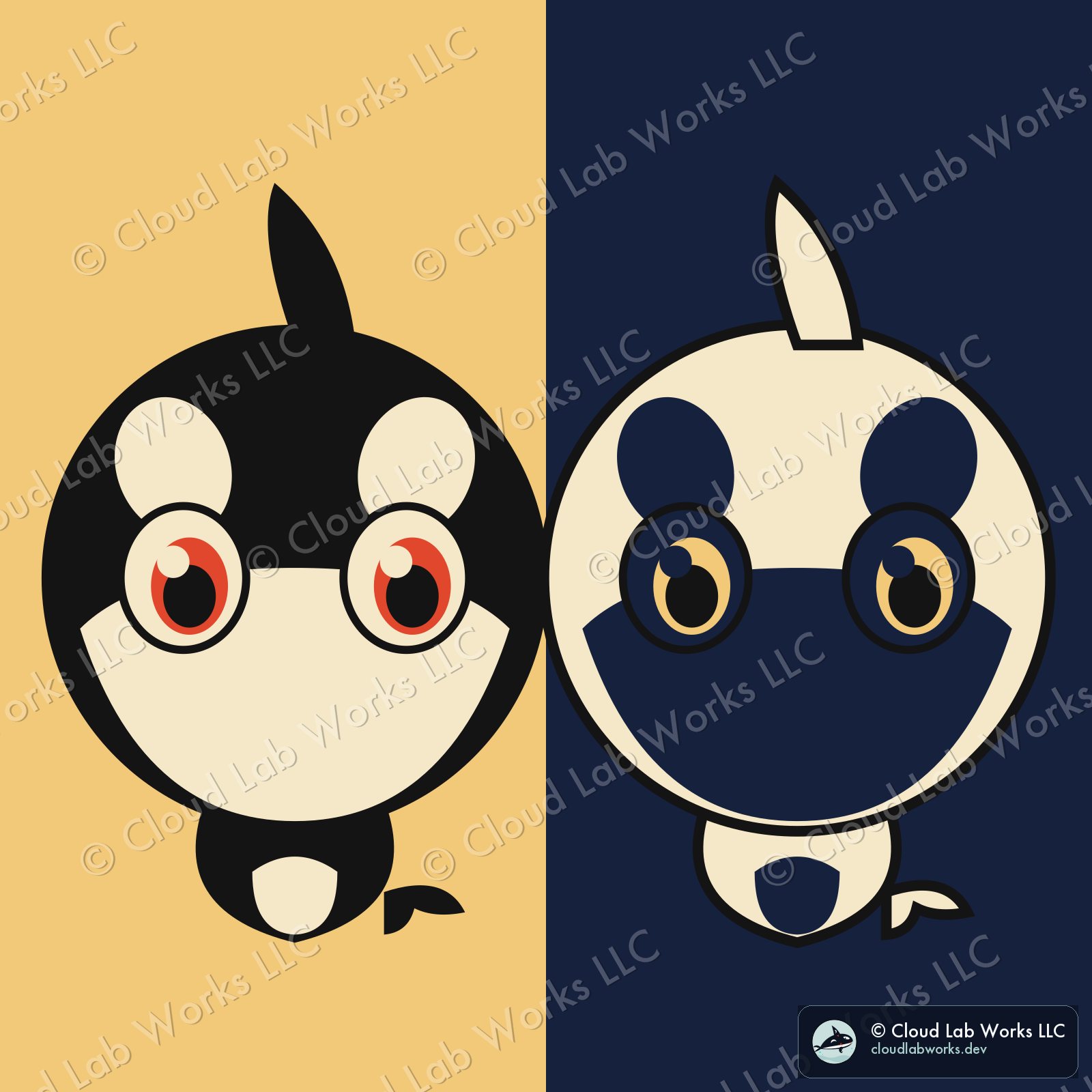 SVG · pop artWaku, two waysOne canvas split down the middle, day against night: the smallest repetition grid in the set, a single hard edge instead of a ruled line between panels.Inquire
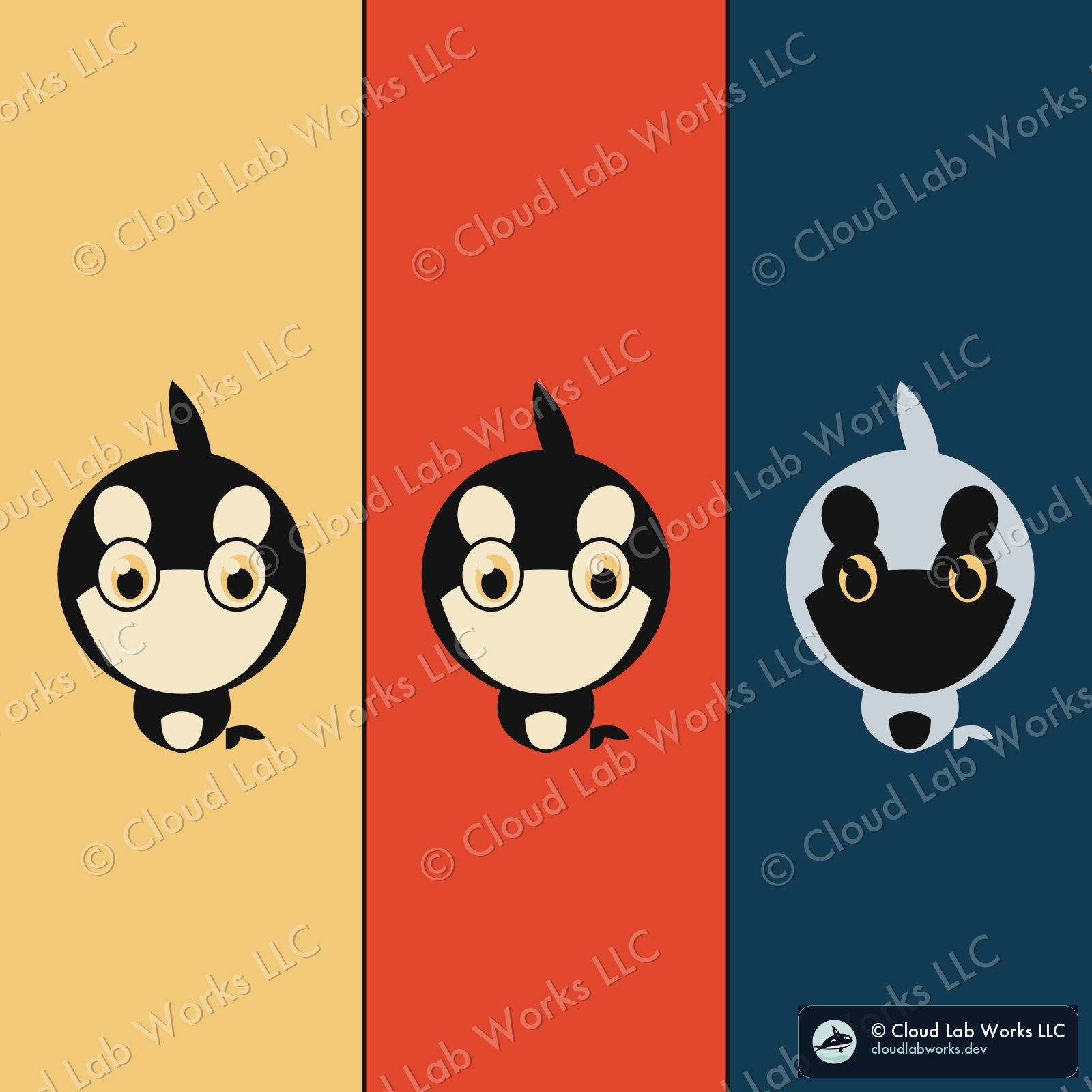 SVG · pop artWaku, three waysA vertical triptych, dawn to dusk: three flat sky tones in sequence rather than a gradient doing the work, the orca held identically in each panel.Inquire
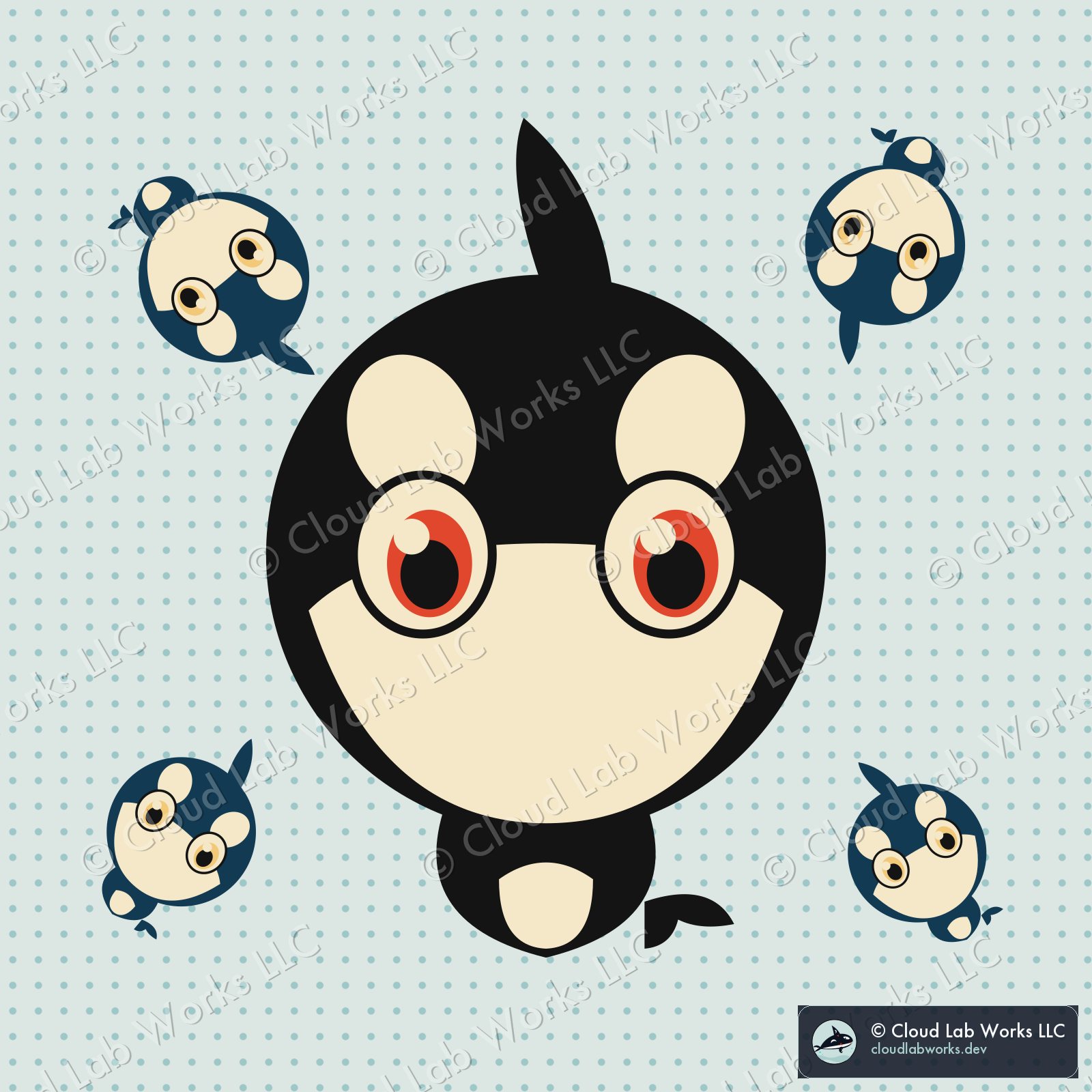 SVG · pop artWaku, the podNot a grid: one large orca and four small ones in loose formation, the Warhol repetition broken into a scatter instead of a block, Ben-day dots for water texture.Inquire
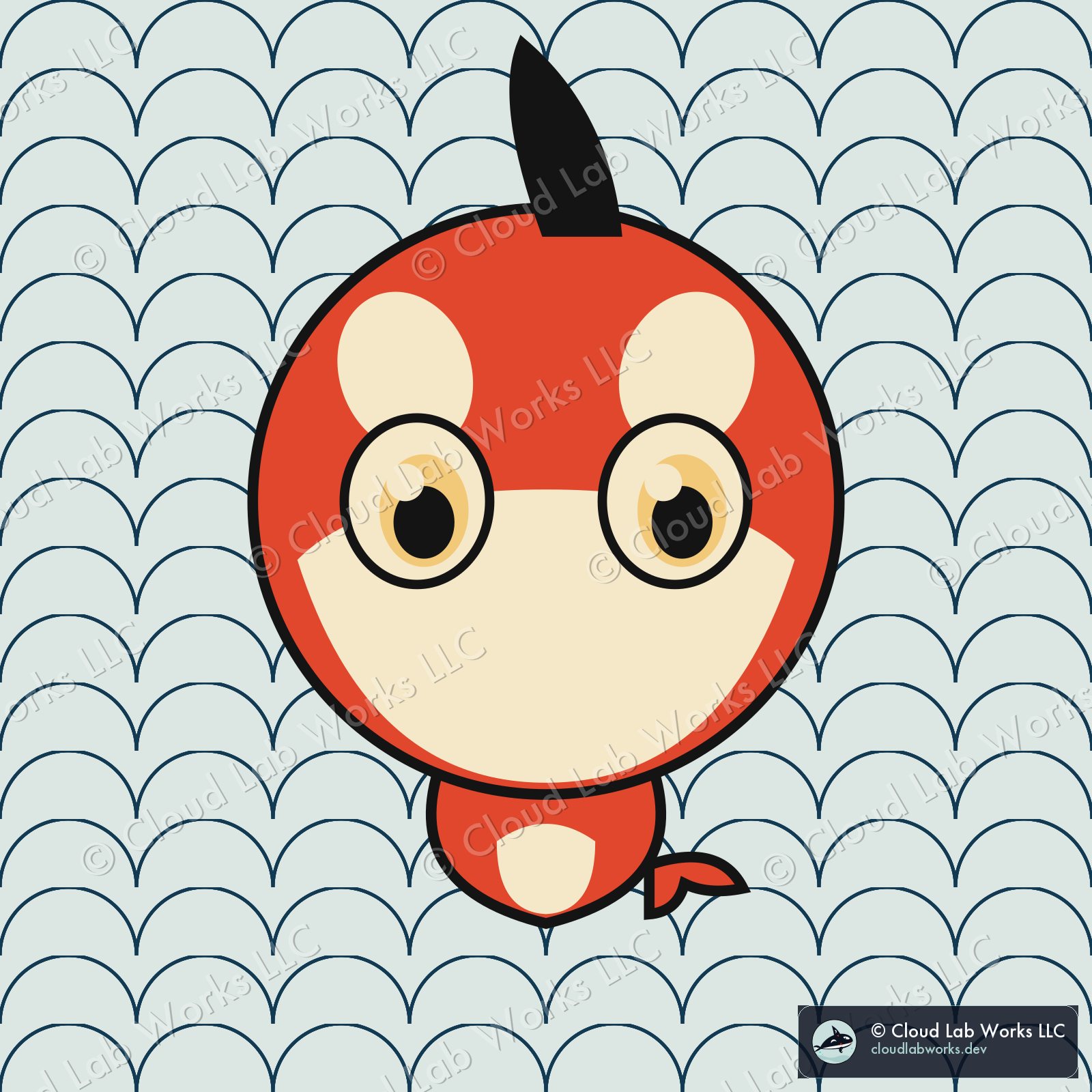 SVG · pop artWaku, wave scalesSeigaiha, the nested-arc wave-scale field, behind the orca instead of a plain ground: four rings per tile, a simplification of the traditional hand-overlapped version.Inquire
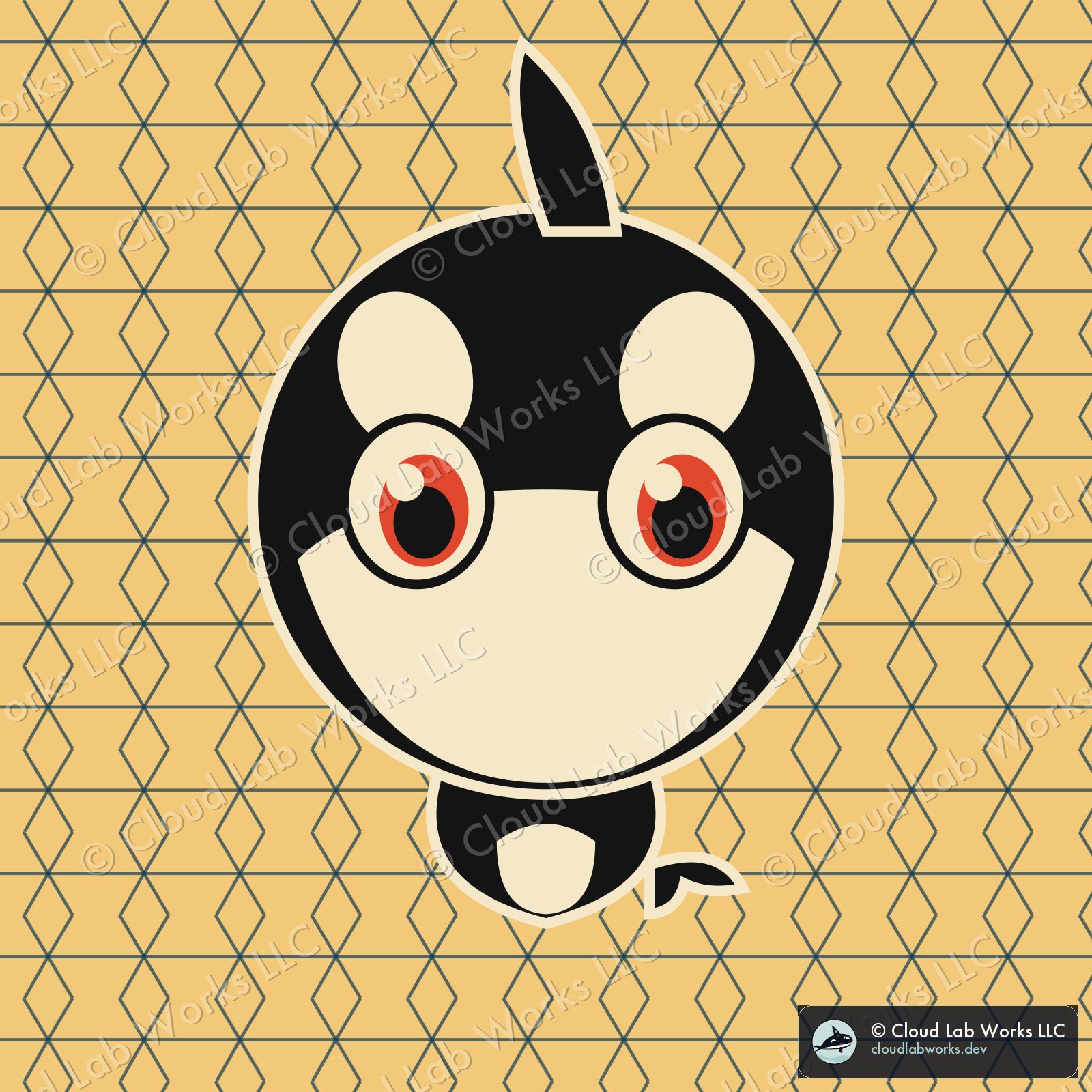 SVG · pop artWaku, hemp leafAsanoha, the hemp-leaf geometric field, worn thin behind the orca: one six-line star repeated per tile, a simplification of the full interlocking lattice, indigo on gold.Inquire
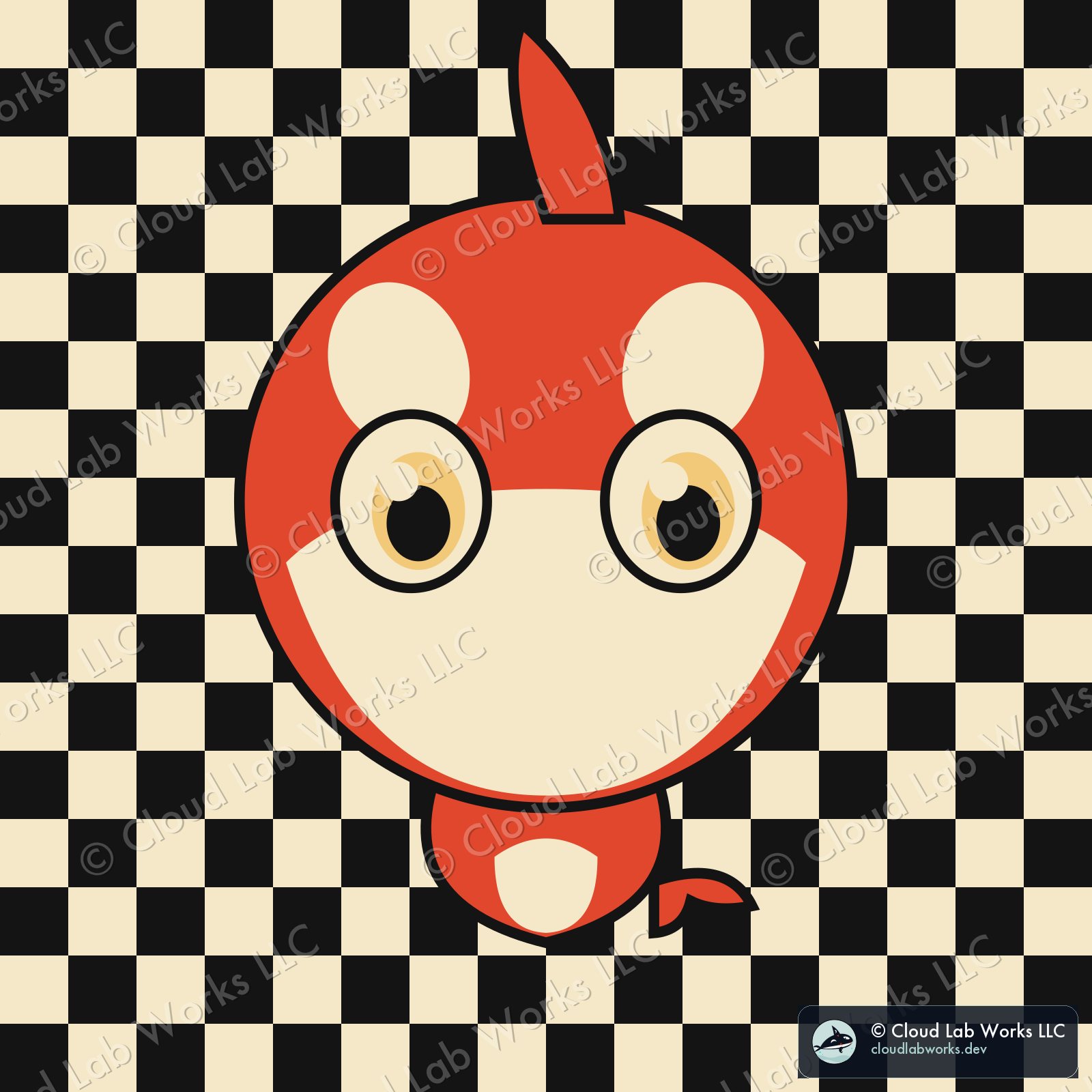 SVG · pop artWaku, checkerboardIchimatsu, the two-tone checkerboard, full bleed: the orca in flat red on top of the field instead of inside a panel of it, the field doing the pop-art repetition instead of a grid of orcas.Inquire
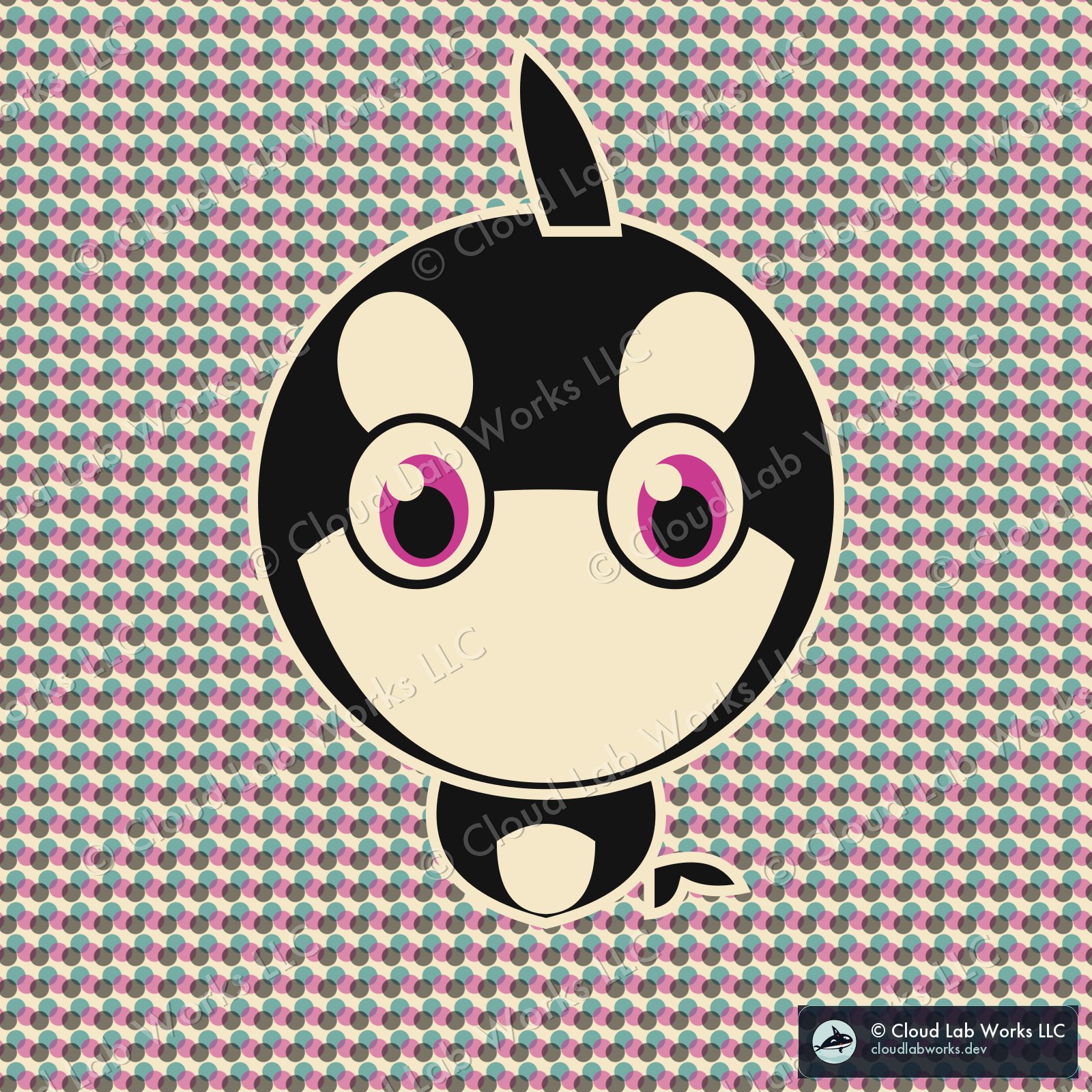 SVG · pop artWaku, newsprintA halftone dot screen in three offset plates, cyan, magenta, black, like a misregistered comic print: bolder and coarser than the Ben-day dots used elsewhere in the set.Inquire
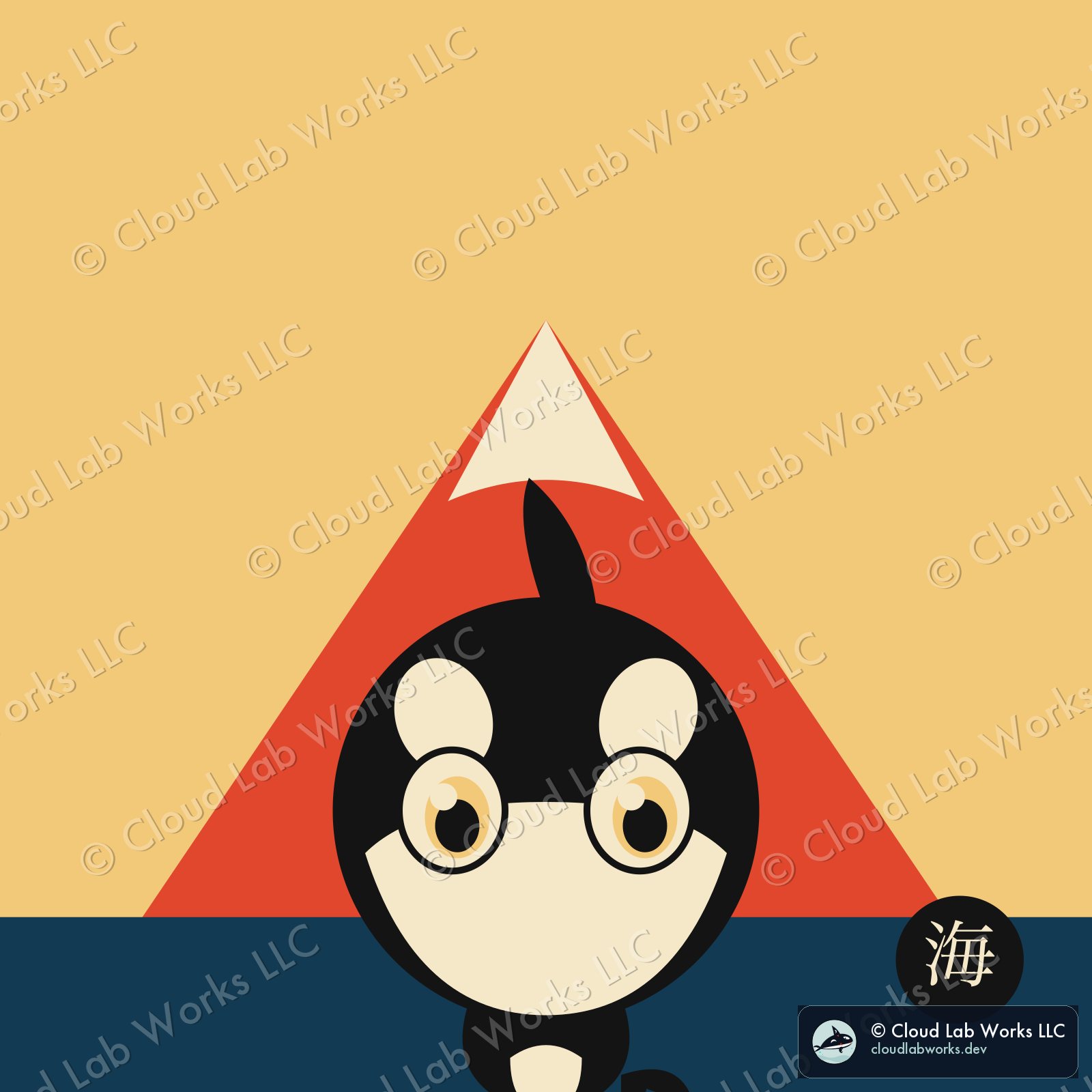 SVG · pop artWaku, red FujiA homage to Hokusai's Red Fuji, not a copy: the mountain reduced to one flat red triangle and a white snow-cap wedge, Waku breaching where the print has only sky.Inquire
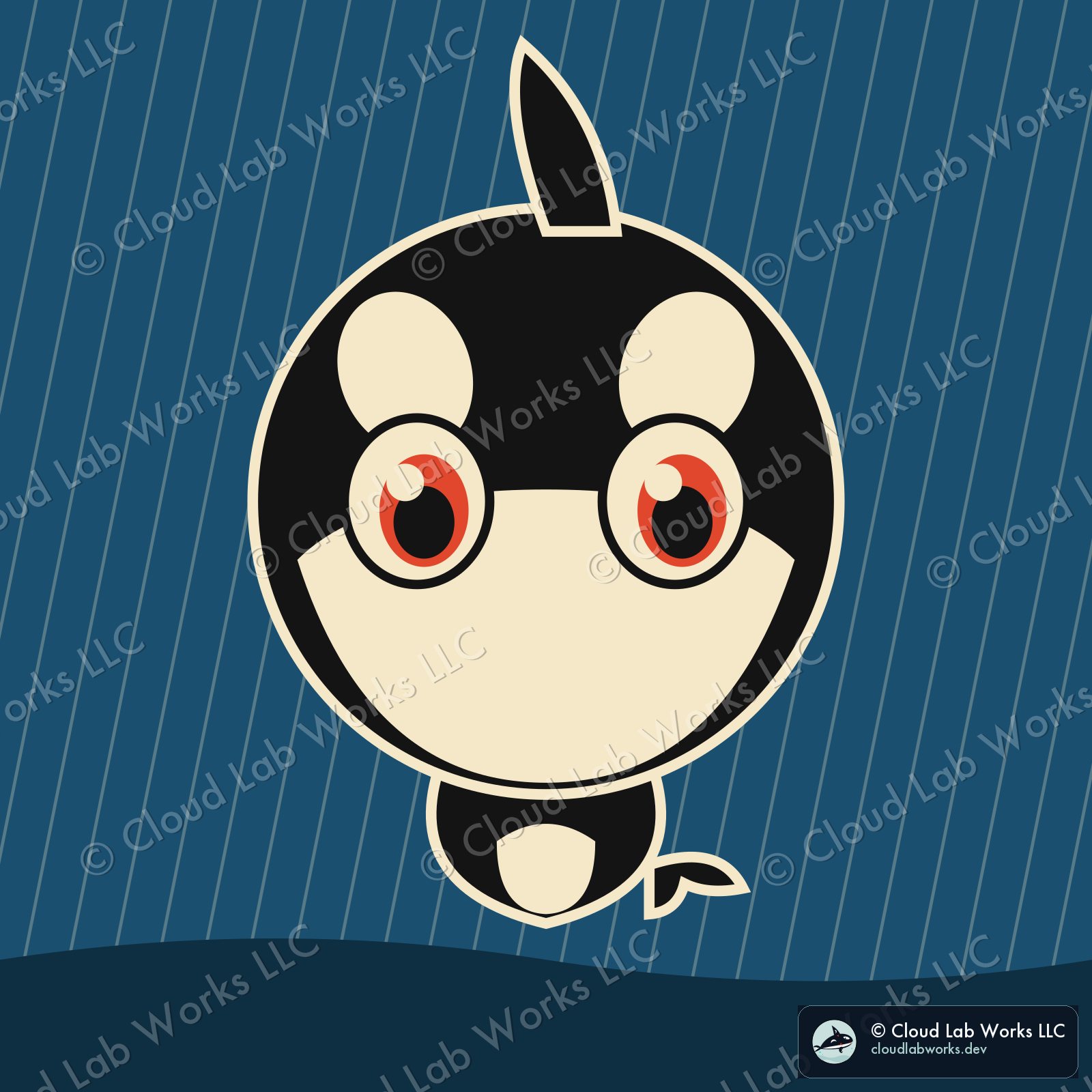 SVG · pop artWaku, evening rainA homage to Hiroshige's rain-streak woodblocks, simplified to a field of straight diagonal lines over a dark indigo ground, the orca surfacing through them.Inquire
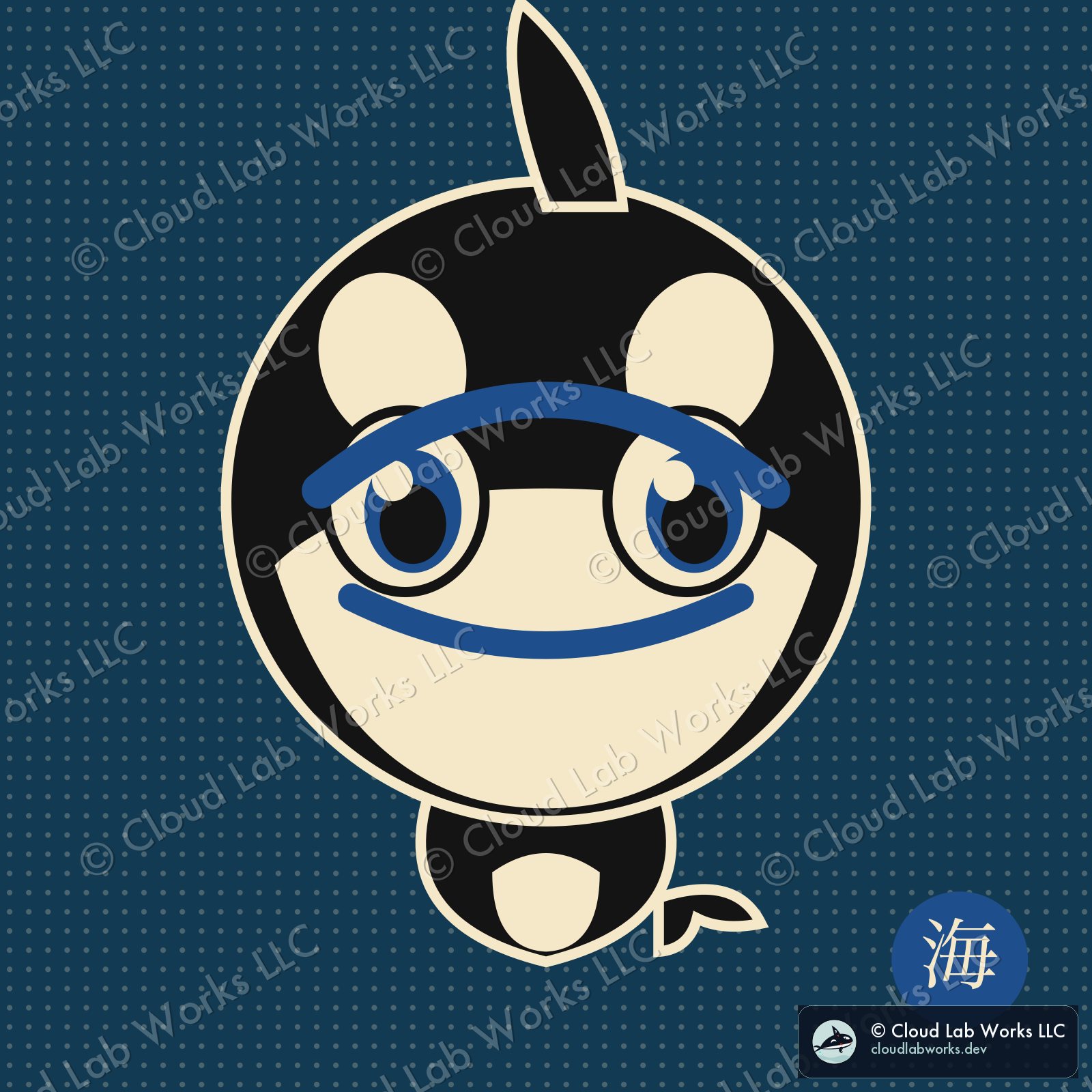 SVG · pop artWaku, blue paintA second kumadori palette: blue and indigo stripes, the color kabuki convention reads as menace rather than the red courage-lines used for the hero role in the first piece.Inquire
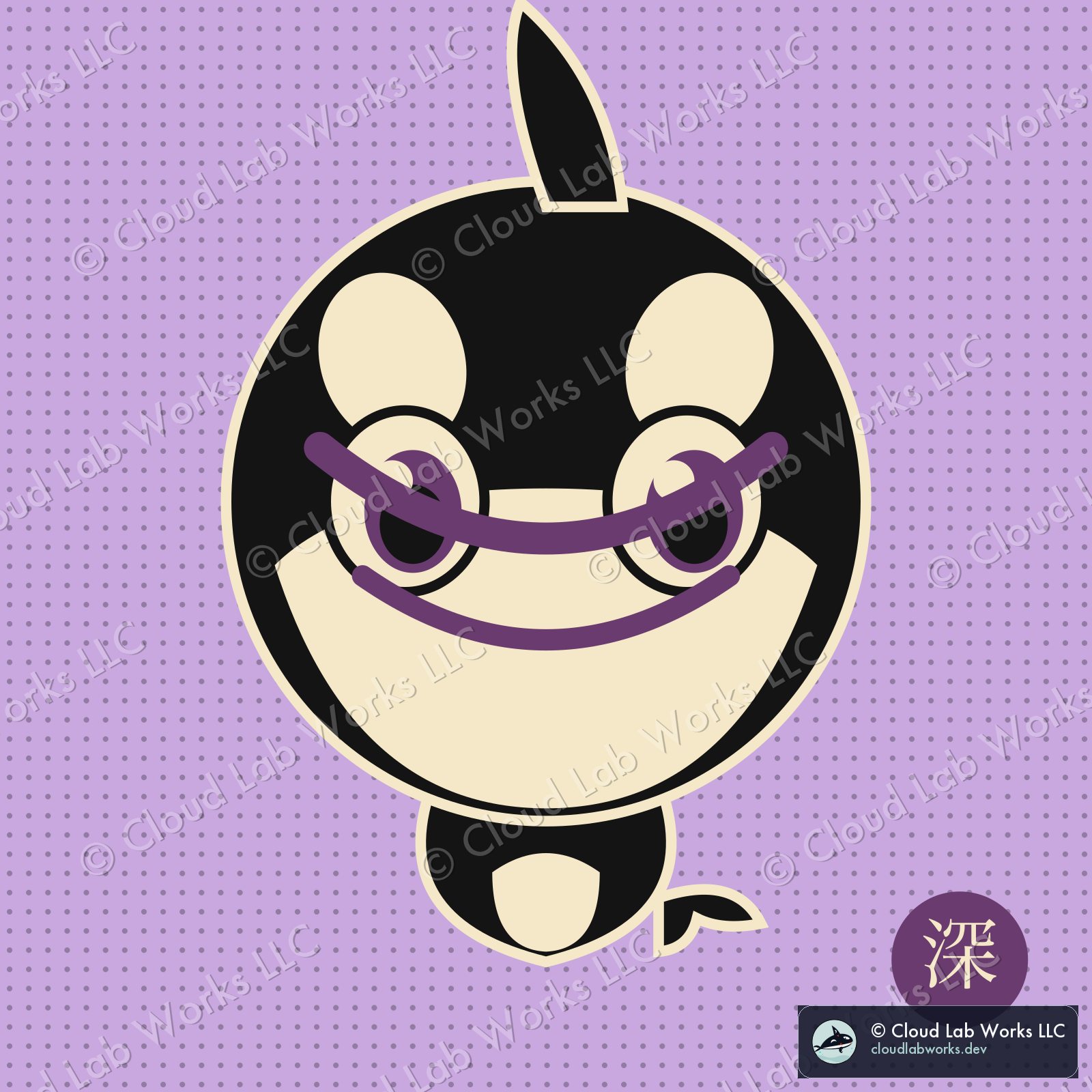 SVG · pop artWaku, sorrow linesA third kumadori palette: purple, downward-sweeping lines instead of the upward courage-lines, the convention for grief or nobility rather than heroism or menace.Inquire
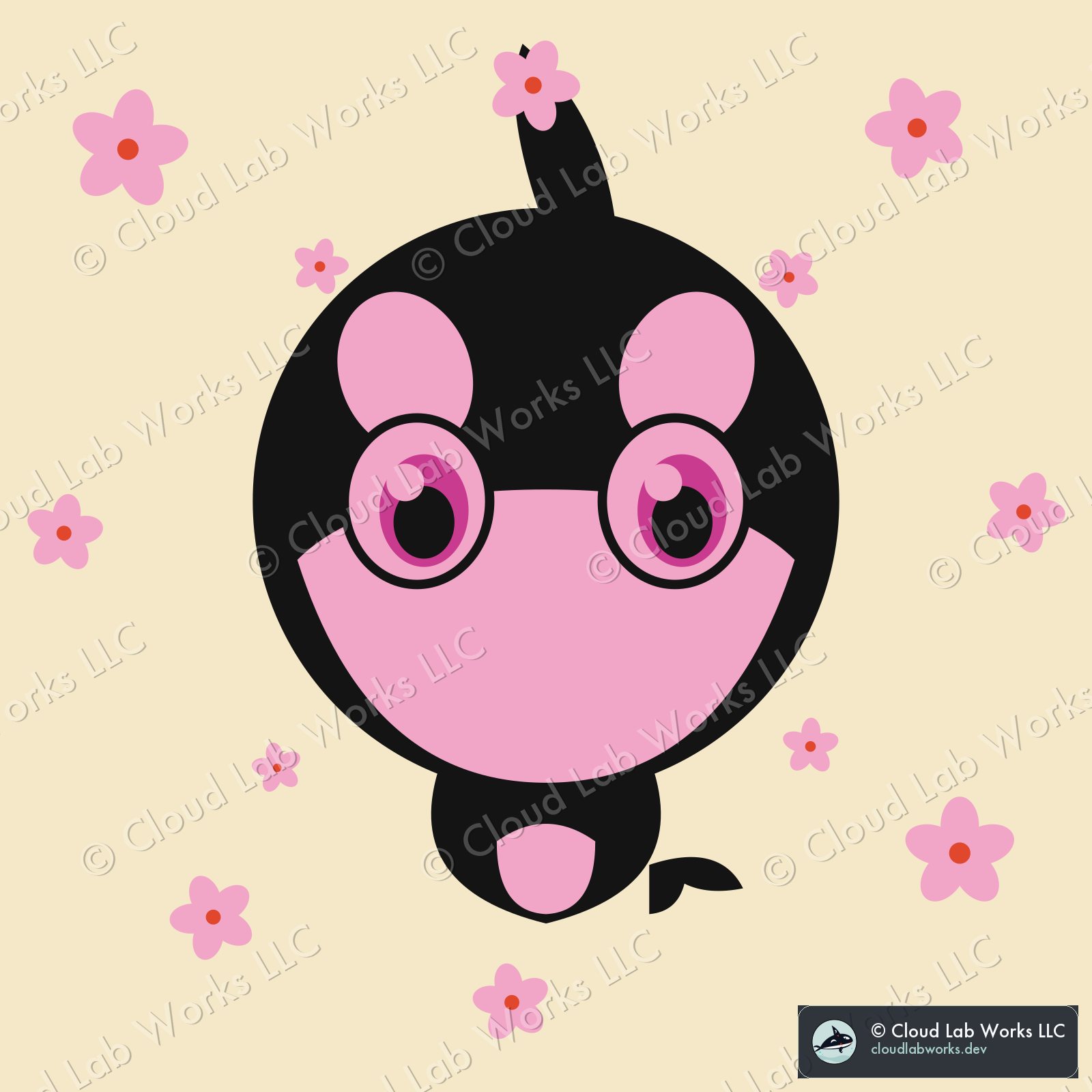 SVG · pop artWaku, cherry blossomA sakura shower: simplified five-petal blossoms scattered at three sizes over the orca, the petals rendered as plain ellipses rather than the notched botanical form.Inquire
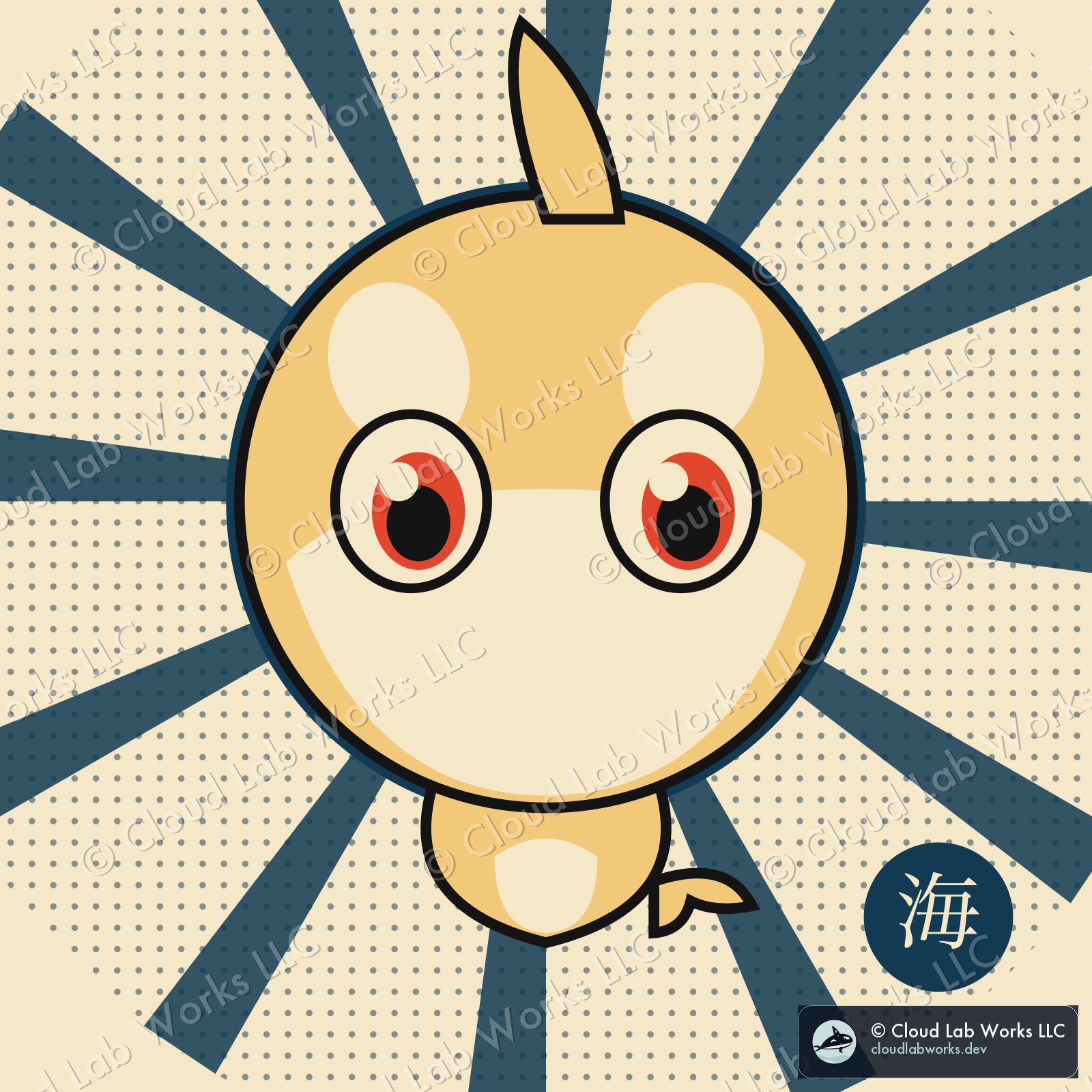 SVG · pop artWaku, indigo sunThe rising-sun composition again, split-complementary this time: indigo field and gold rays instead of red and white, the same radiating field-treatment logic.Inquire
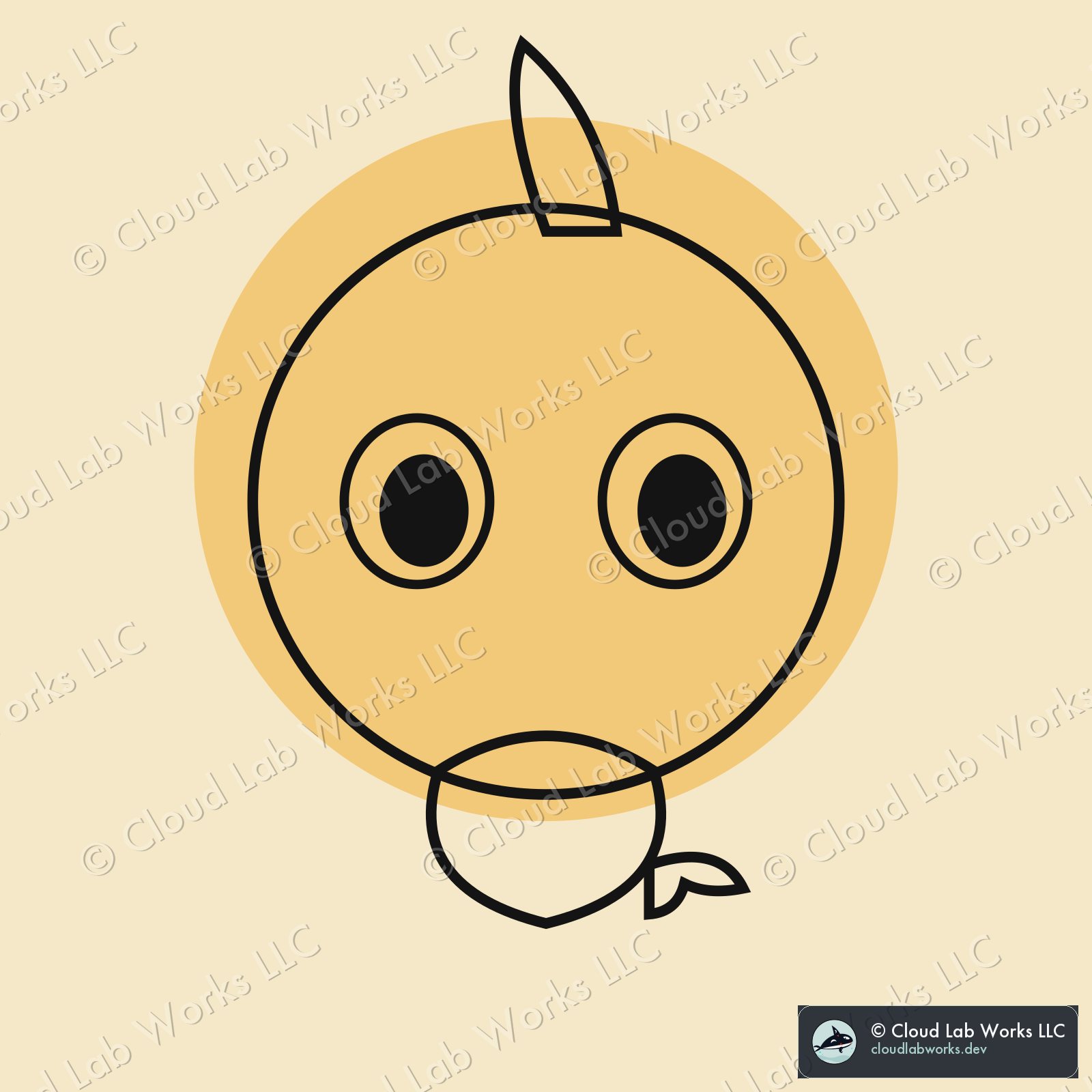 SVG · pop artWaku, gold leafMostly negative space: one flat gold disc, an ink outline of the orca and nothing else, the minimal end of the register against the busiest pieces in the set.Inquire
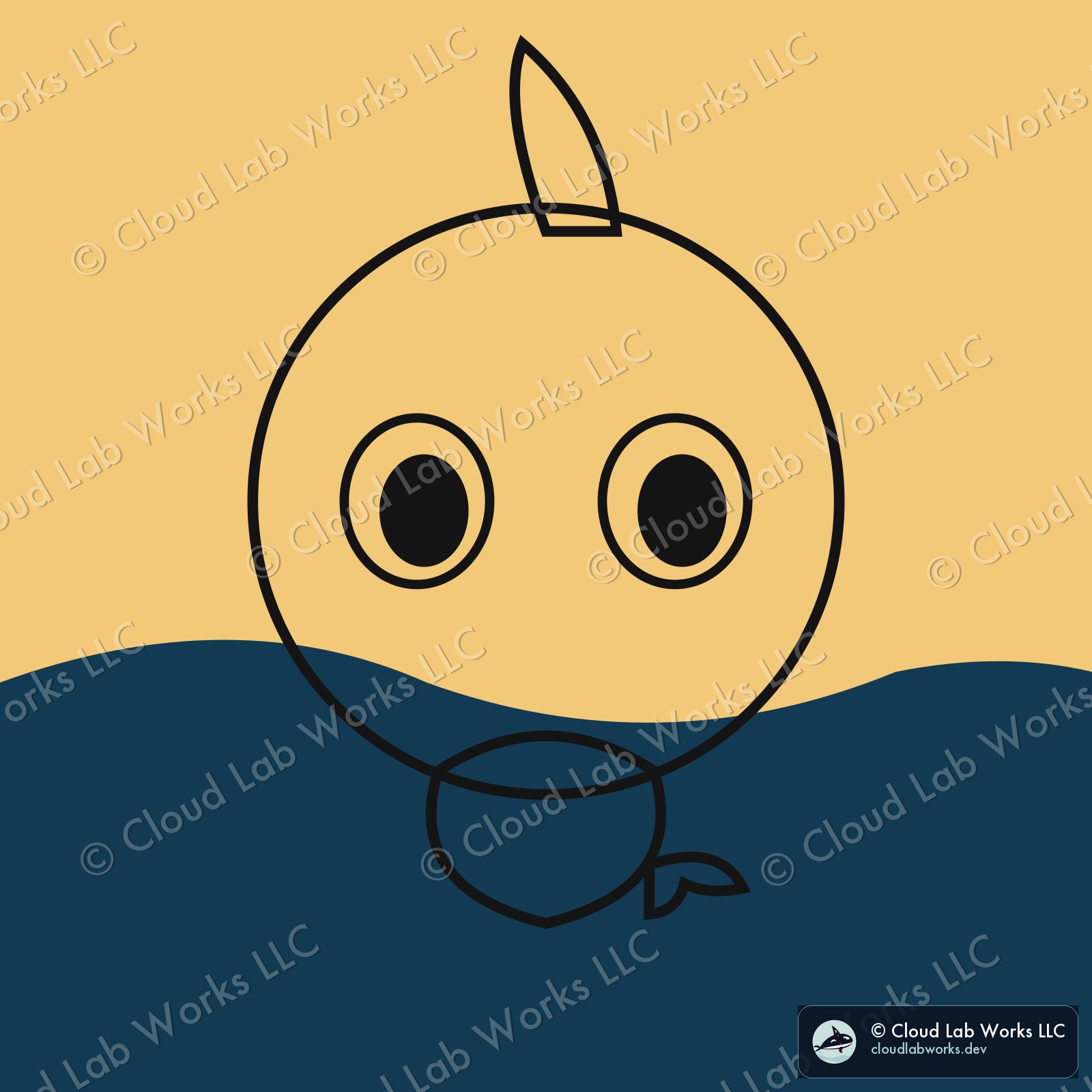 SVG · pop artWaku, gold tideA sibling to the gold-leaf piece with one shape added: a single flat indigo wave under the same ink-line orca, on a gold ground instead of cream.Inquire
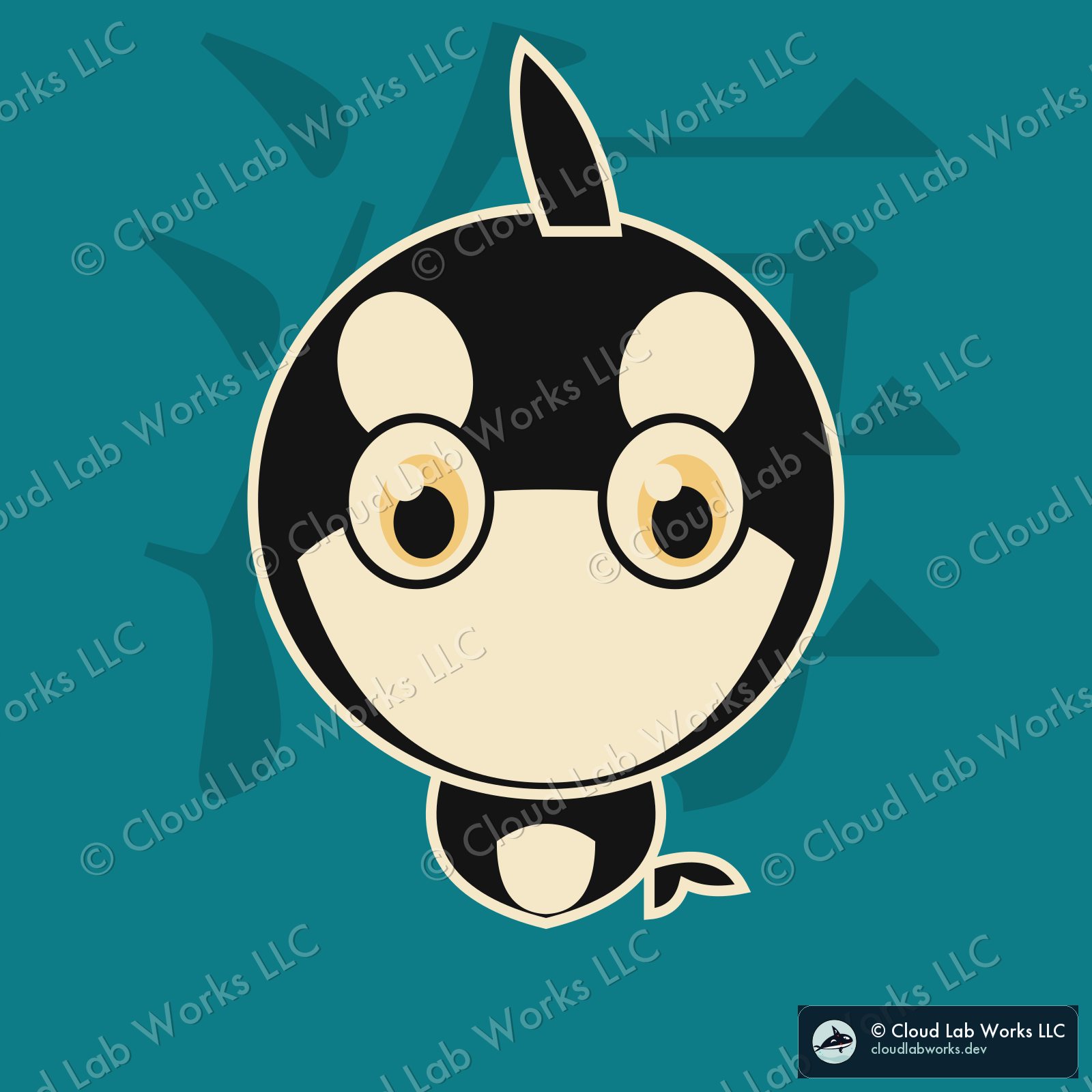 SVG · pop artWaku, umiThe kanji stamp enlarged from a corner seal to the whole ground: 海, umi, sea, filling the field the orca sits on instead of marking a signature in the corner.Inquire
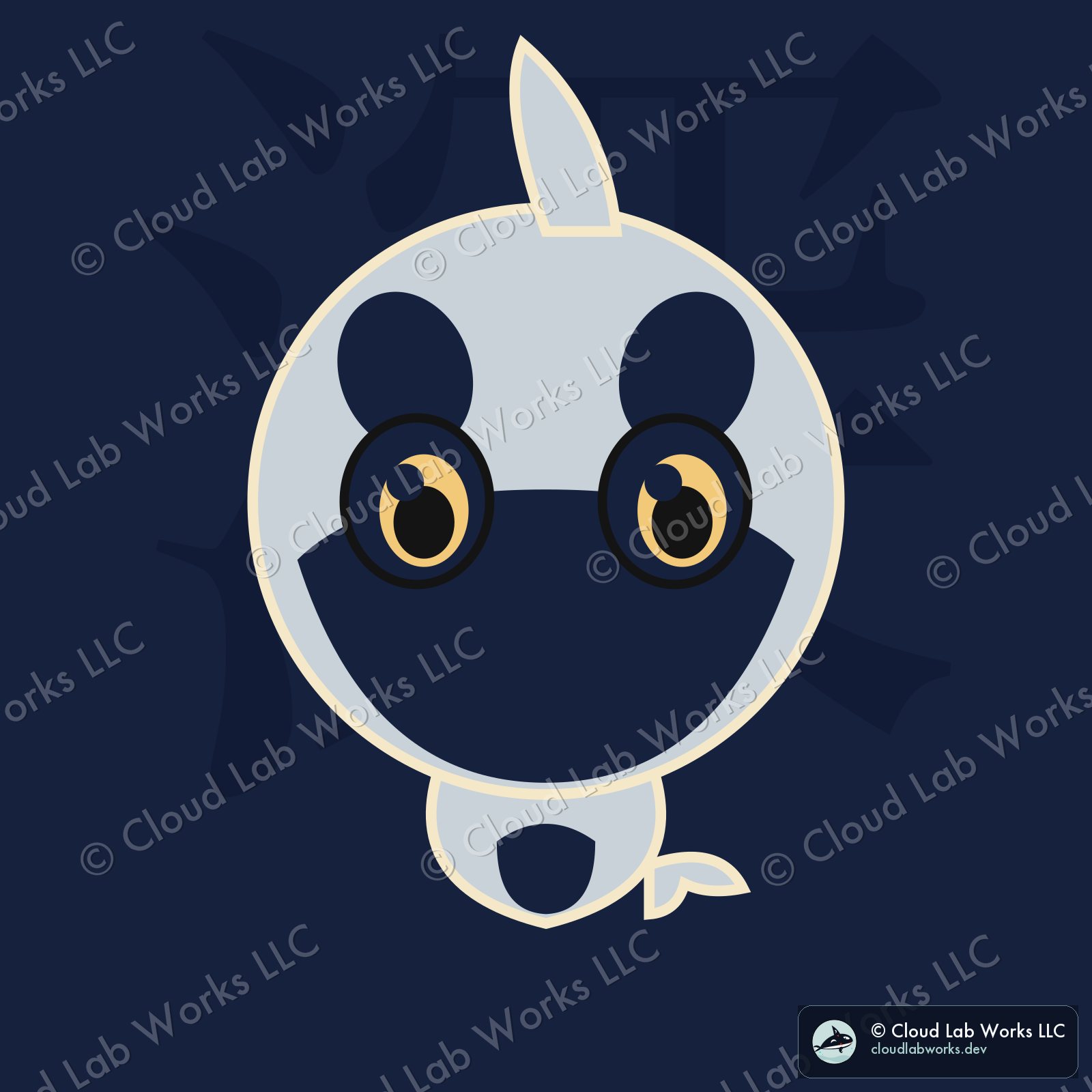 SVG · pop artWaku, deepThe same enlarged-glyph treatment as the umi piece, a different word: 深, deep, dark navy ground standing for the water the orca is under rather than on.Inquire
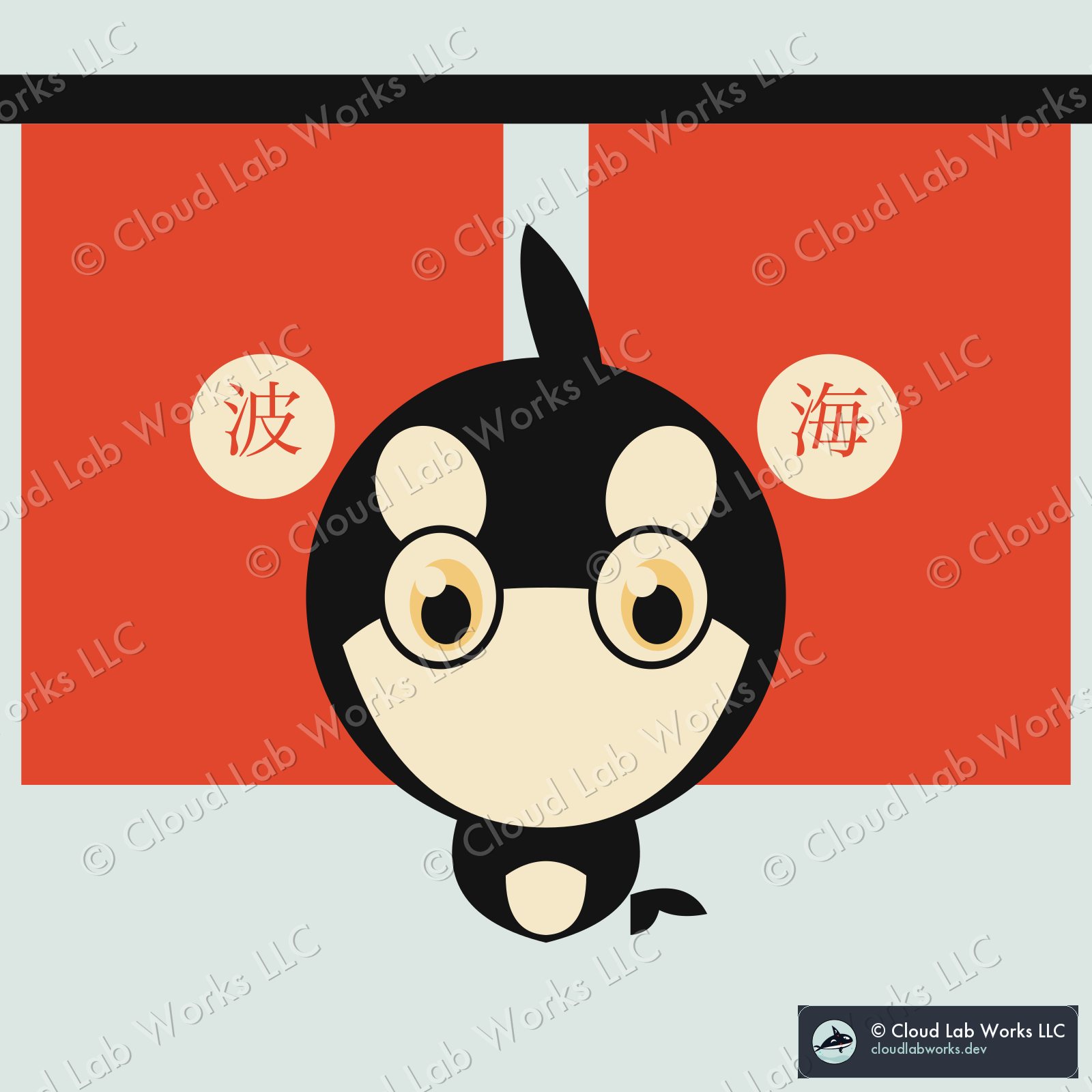 SVG · pop artWaku, norenA shop-curtain (noren) treatment: two panels hung from a header bar with a slit between them, the orca's head passing through the gap as if walking under it.Inquire
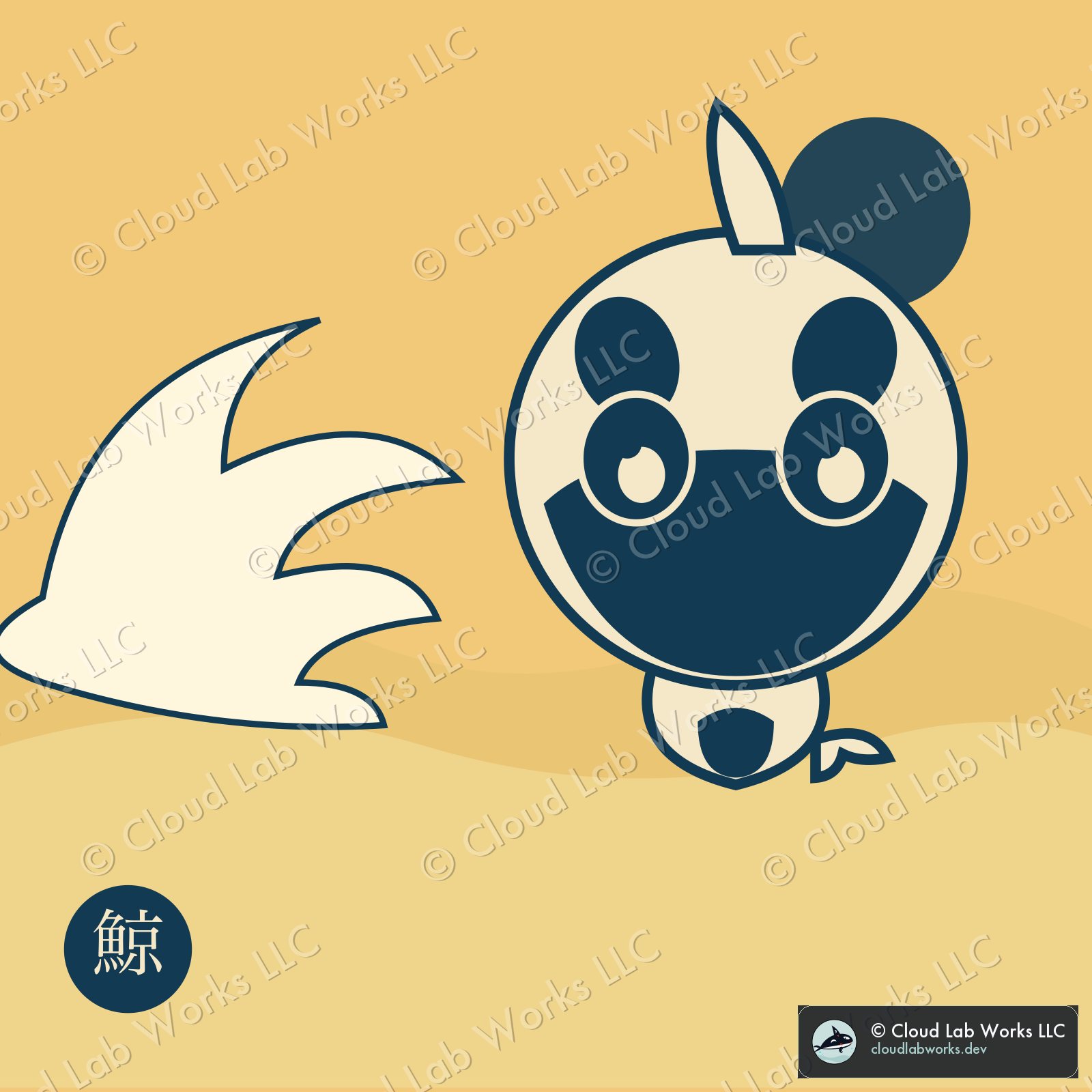 SVG · pop artWaku, the wave, invertedA literal color inversion of the great wave piece: gold ground, indigo where the foam was, a straight negative read of the same three flat shapes.Inquire
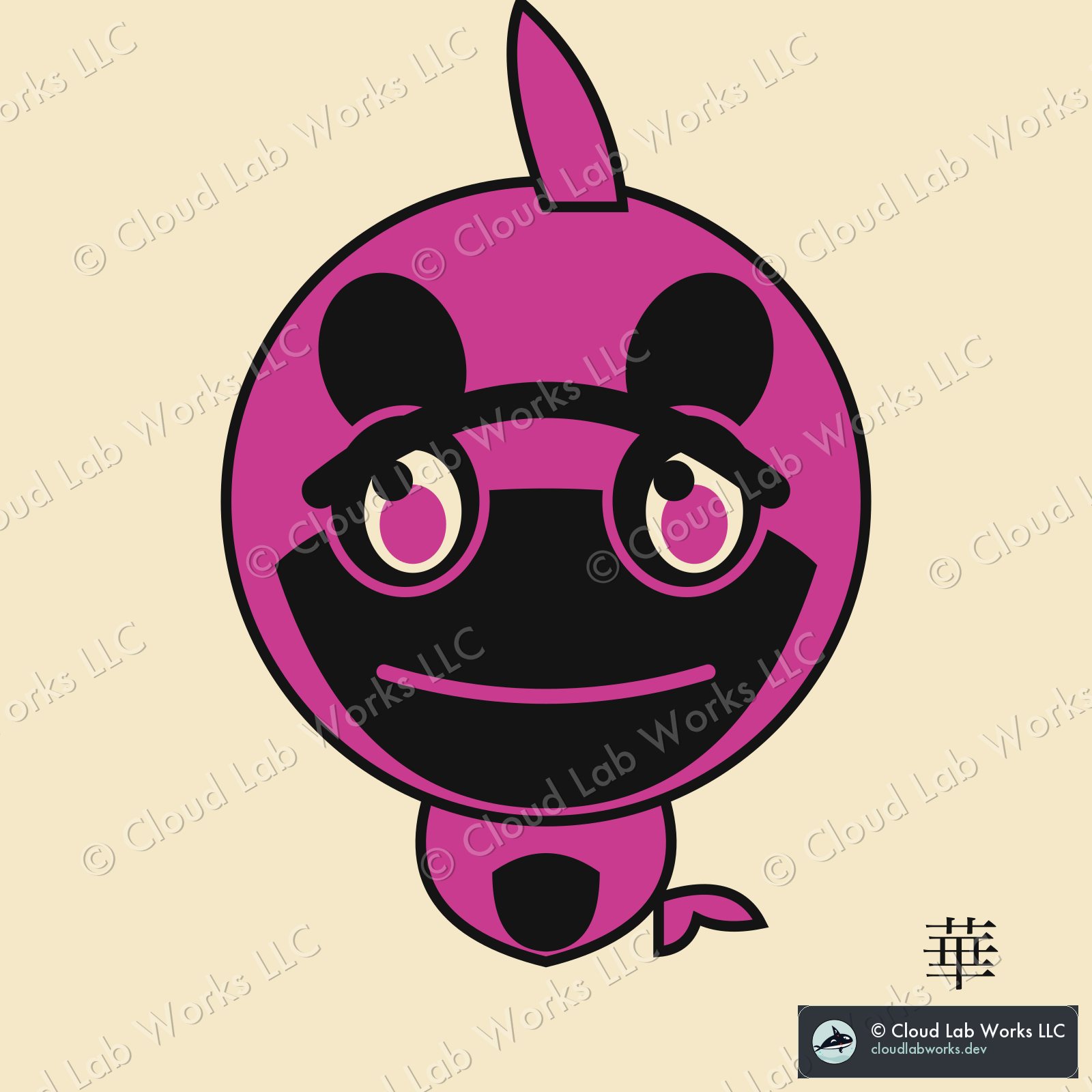 SVG · pop artWaku, kabuki paint, invertedA literal color inversion of the kabuki piece: cream ground, black courage-lines, the magenta pushed down to the eye patches instead of filling the field.Inquire
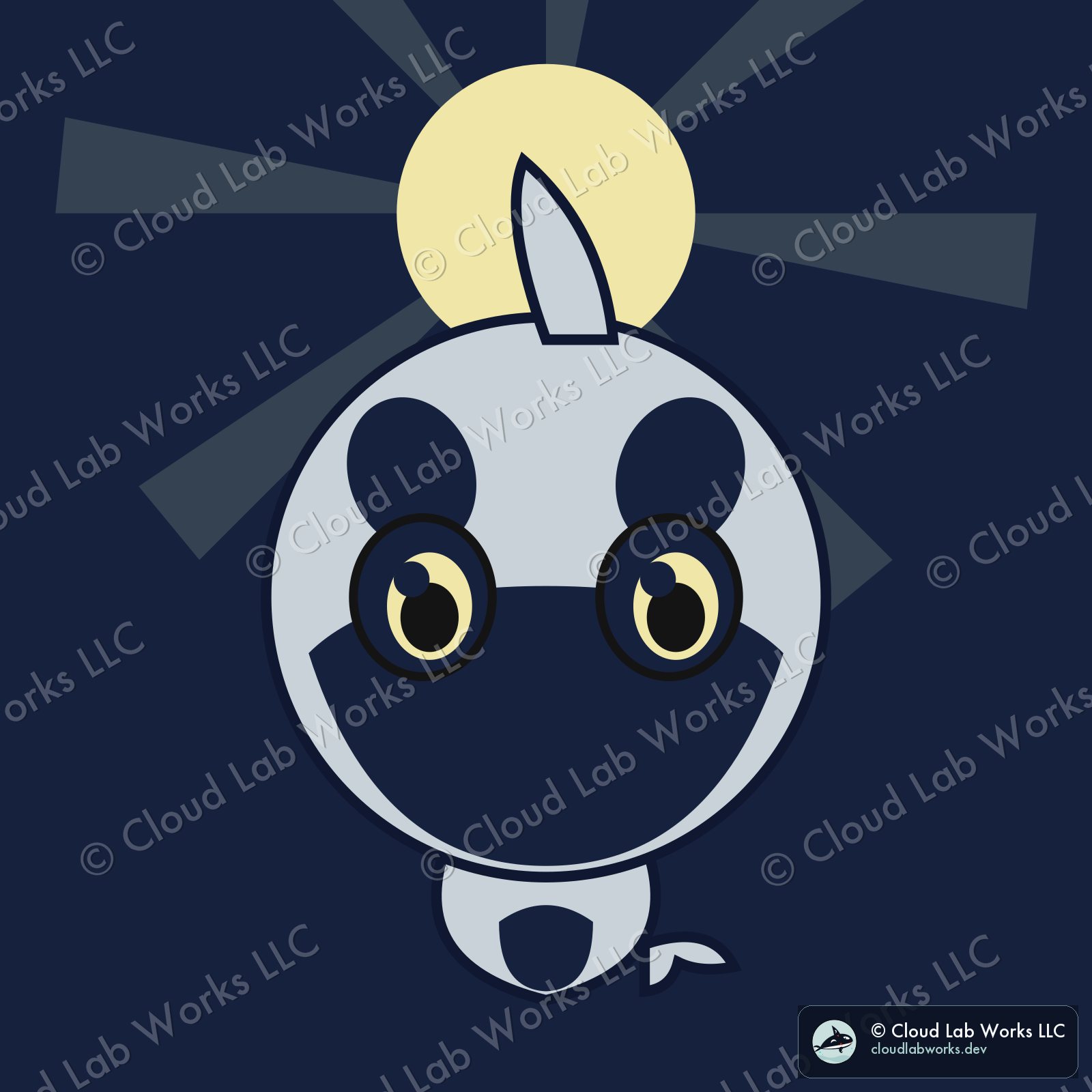 SVG · pop artWaku, moonlitThe rising-sun field at night: a pale moon instead of a red sun, moonbeam wedges confined to the upper half instead of a full radiating circle, silver-grey orca.Inquire
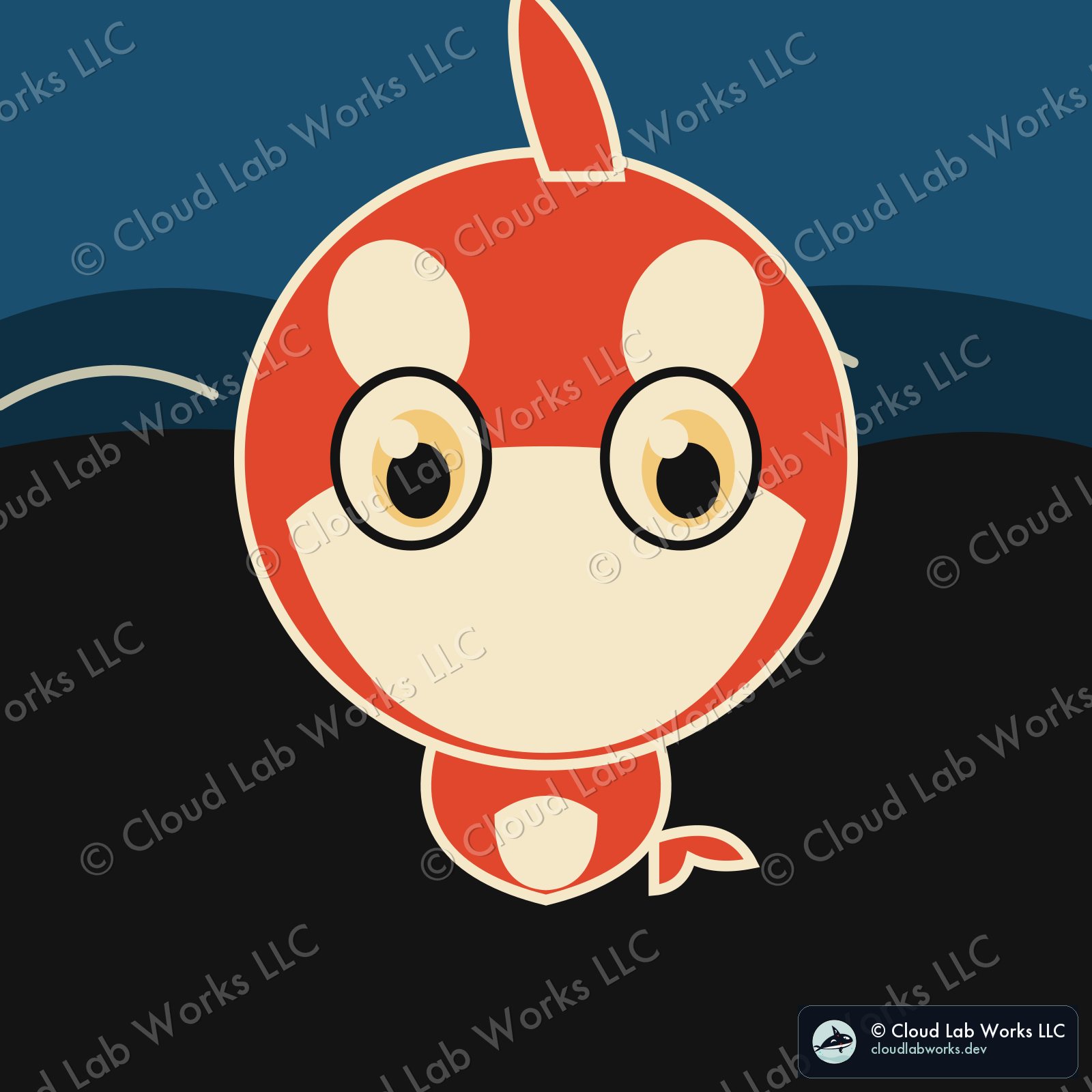 SVG · pop artWaku, rough waterAn original storm composition, not a print homage: bold black wave-crests on indigo, high contrast, the orca breaching through rather than riding a named crest.Inquire
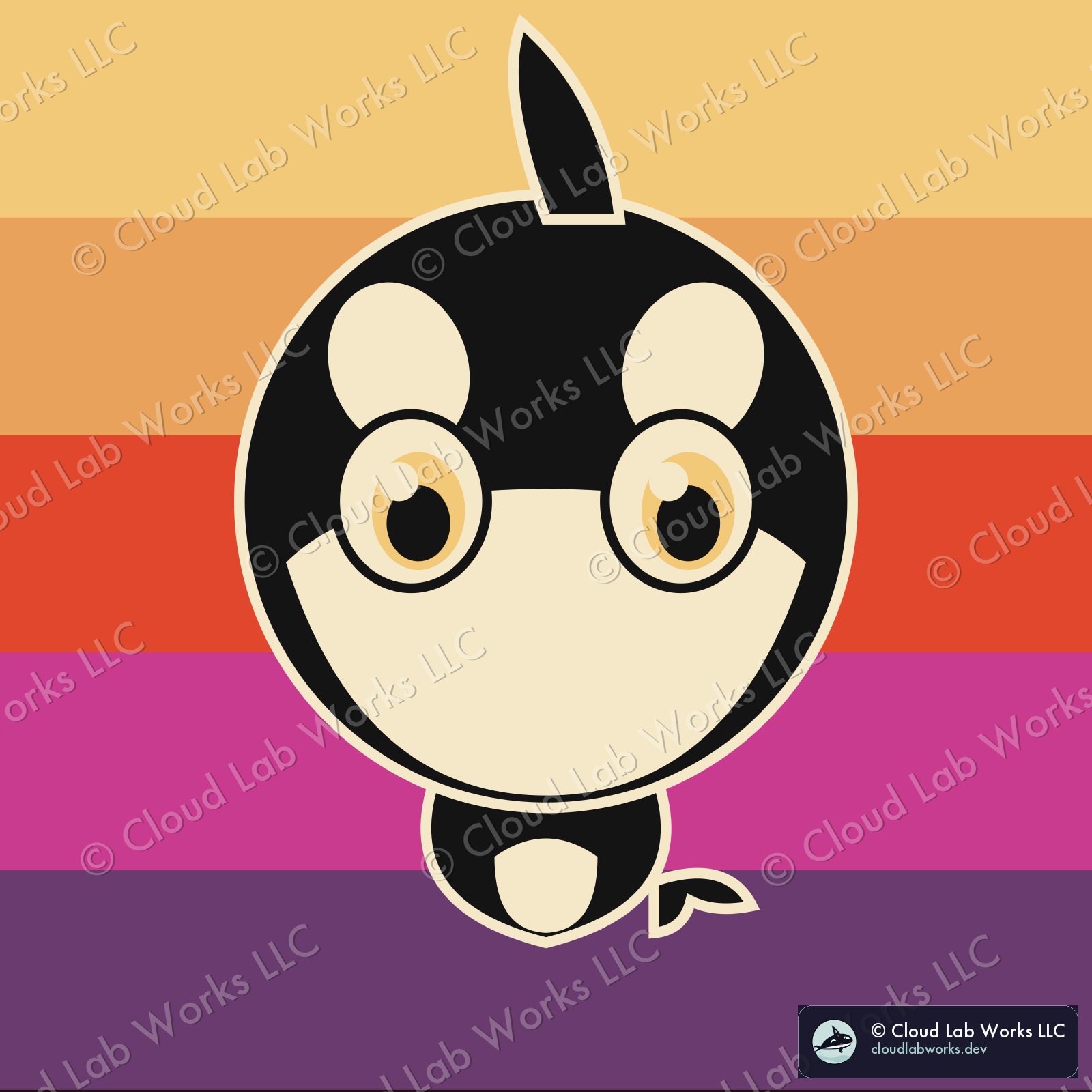 SVG · pop artWaku, horizon bandsA leaping pose against flat horizon bands instead of a sky gradient: five discrete warm tones stacked like a Rothko field standing in for a sunset.Inquire
The garden set
Thirty Japanese garden scenes, each composed from a single seed: the light (sunset, afternoon, dusk, moon, blossom), the structure on the far bank (pagoda, torii, wisteria pergola, tea house, stone lantern), the bridge, the trees, the koi. Flat woodblock layering, drawn as SVG by one generator, so every scene shares a hand and none repeats. Originals by Waku; prints and licences on inquiry.
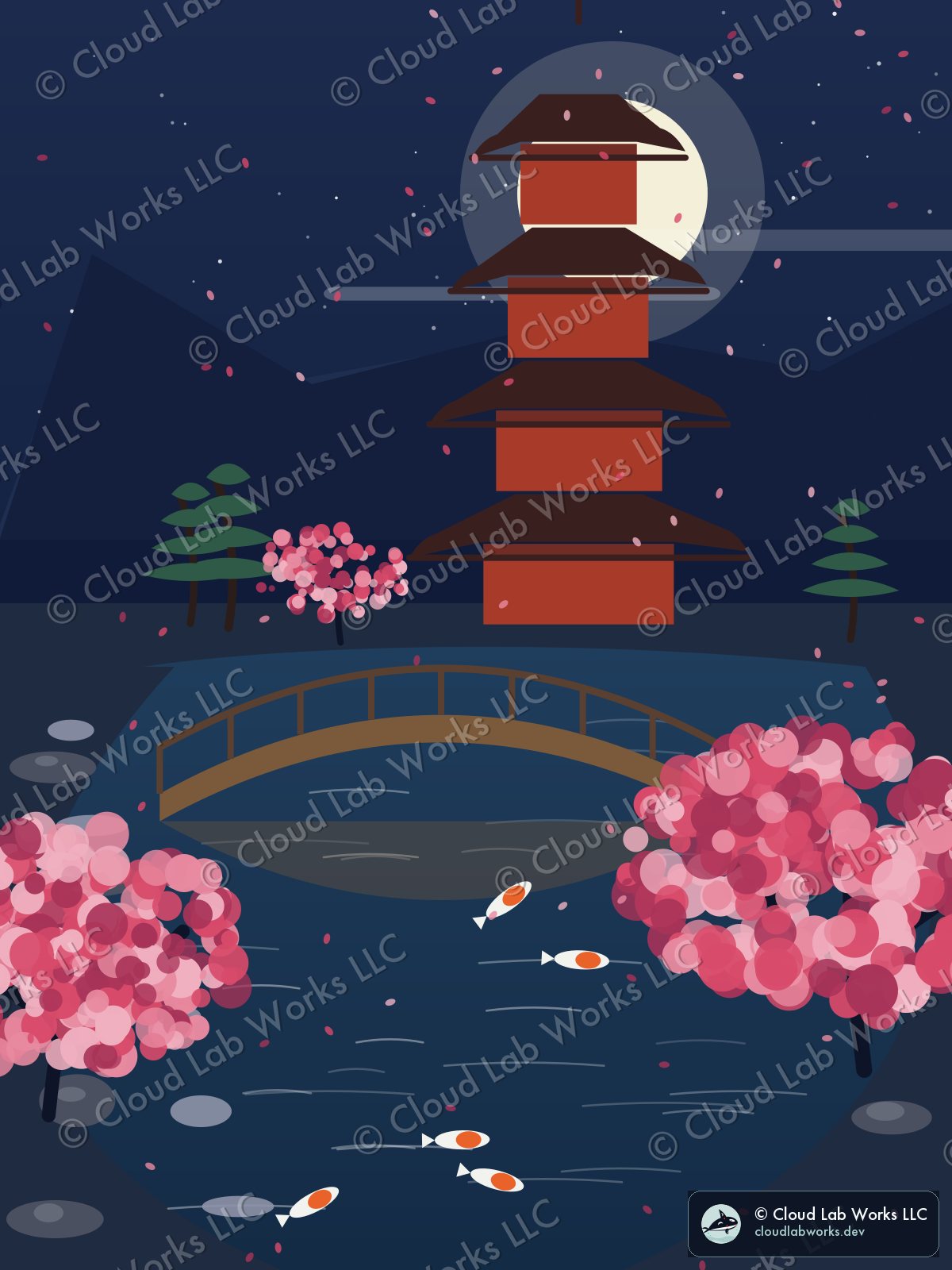 SVG · generated sceneKiyomizu, under the moonKiyomizu under the moon: a 4-tier pagoda, a wooden bridge and 5 koi. Composed from one seed; the palette is the seed's choice too.Inquire about the original →
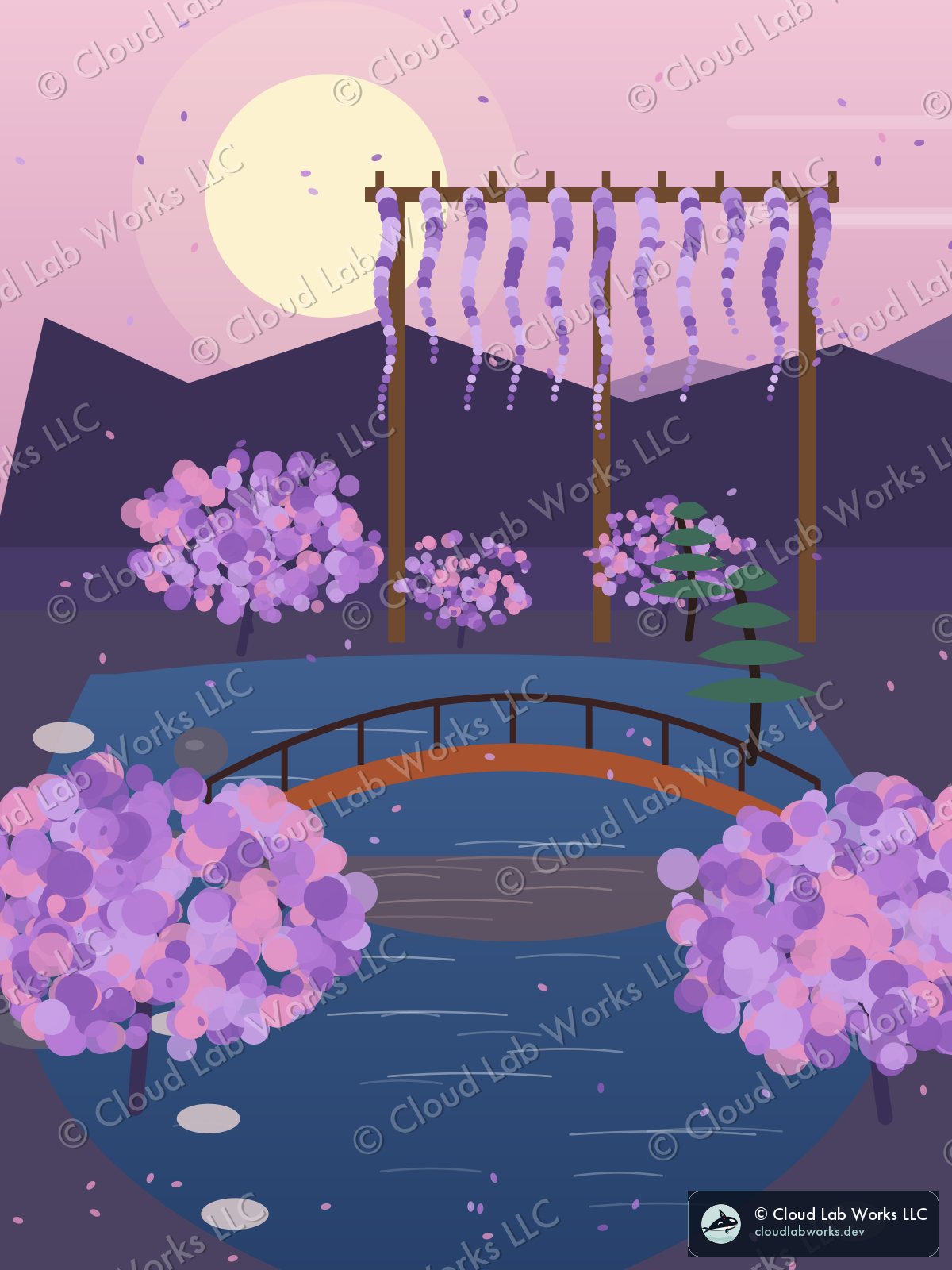 SVG · generated sceneRyōan, at duskRyōan at dusk: a wisteria pergola, a red bridge and a pine. Composed from one seed; the palette is the seed's choice too.Inquire about the original →
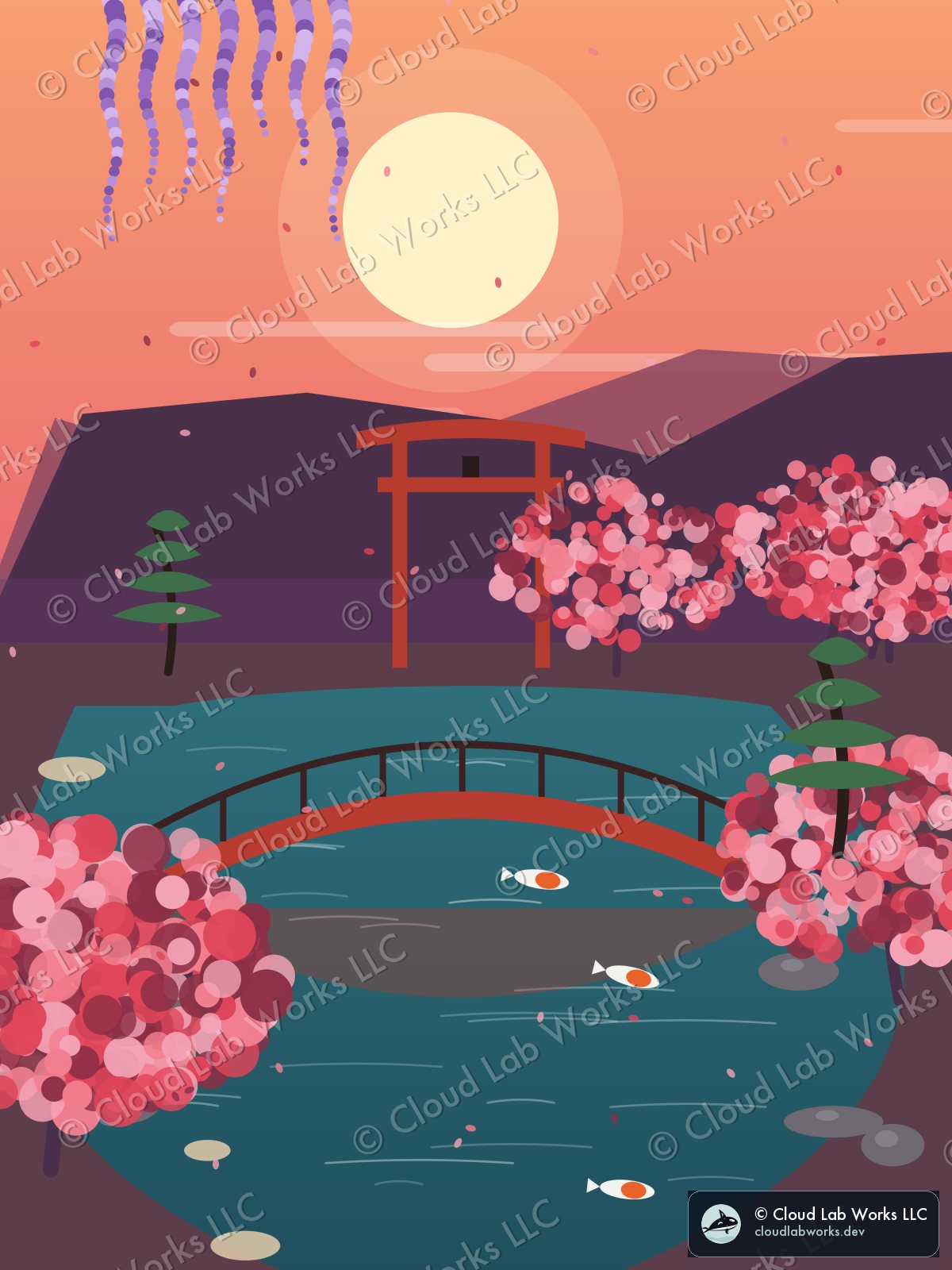 SVG · generated sceneKenroku, at sunsetKenroku at sunset: a torii, a red bridge, 3 koi, a pine and wisteria. Composed from one seed; the palette is the seed's choice too.Inquire about the original →
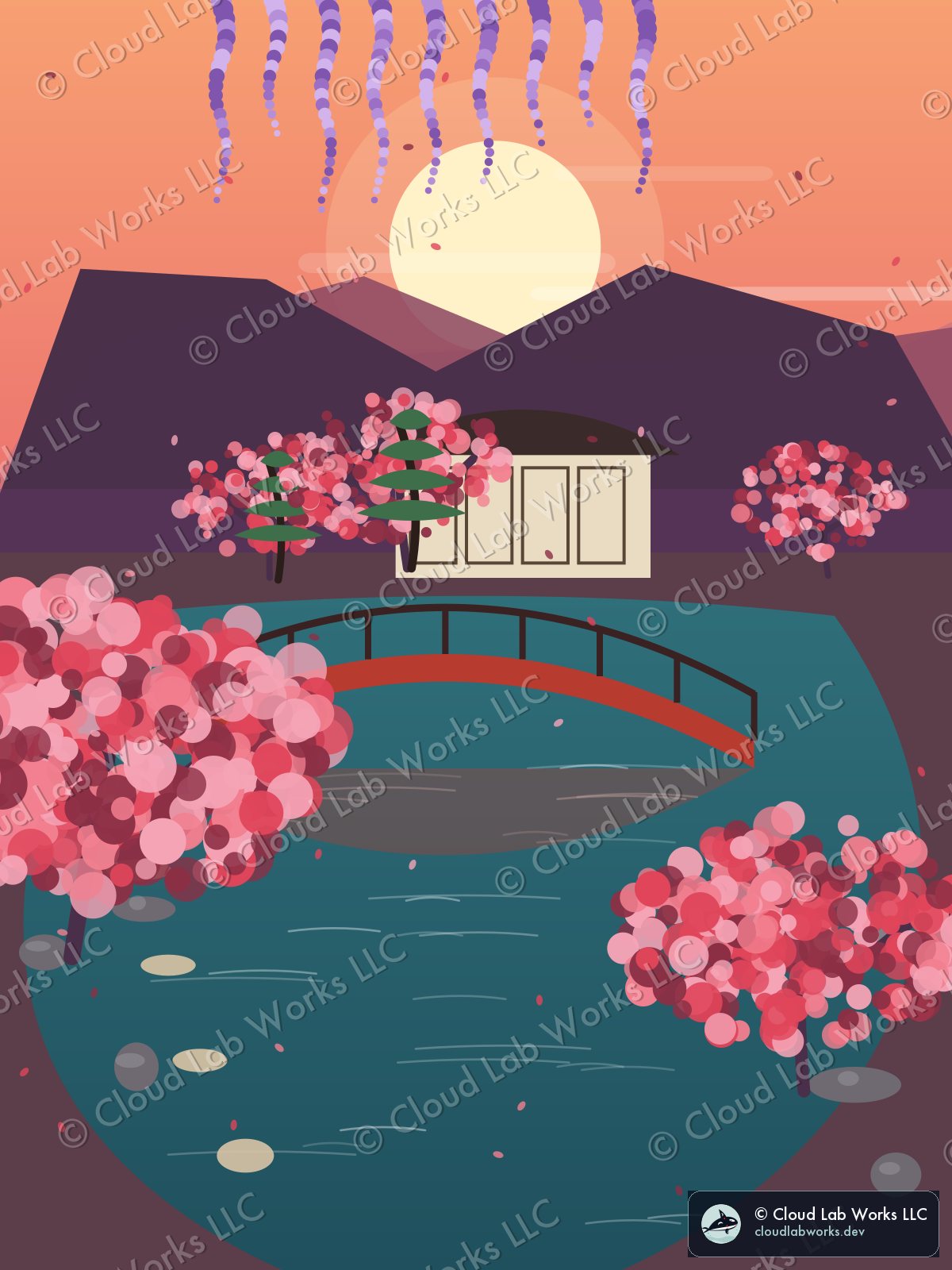 SVG · generated sceneKōraku, at sunsetKōraku at sunset: a tea house, a red bridge and wisteria. Composed from one seed; the palette is the seed's choice too.Inquire about the original →
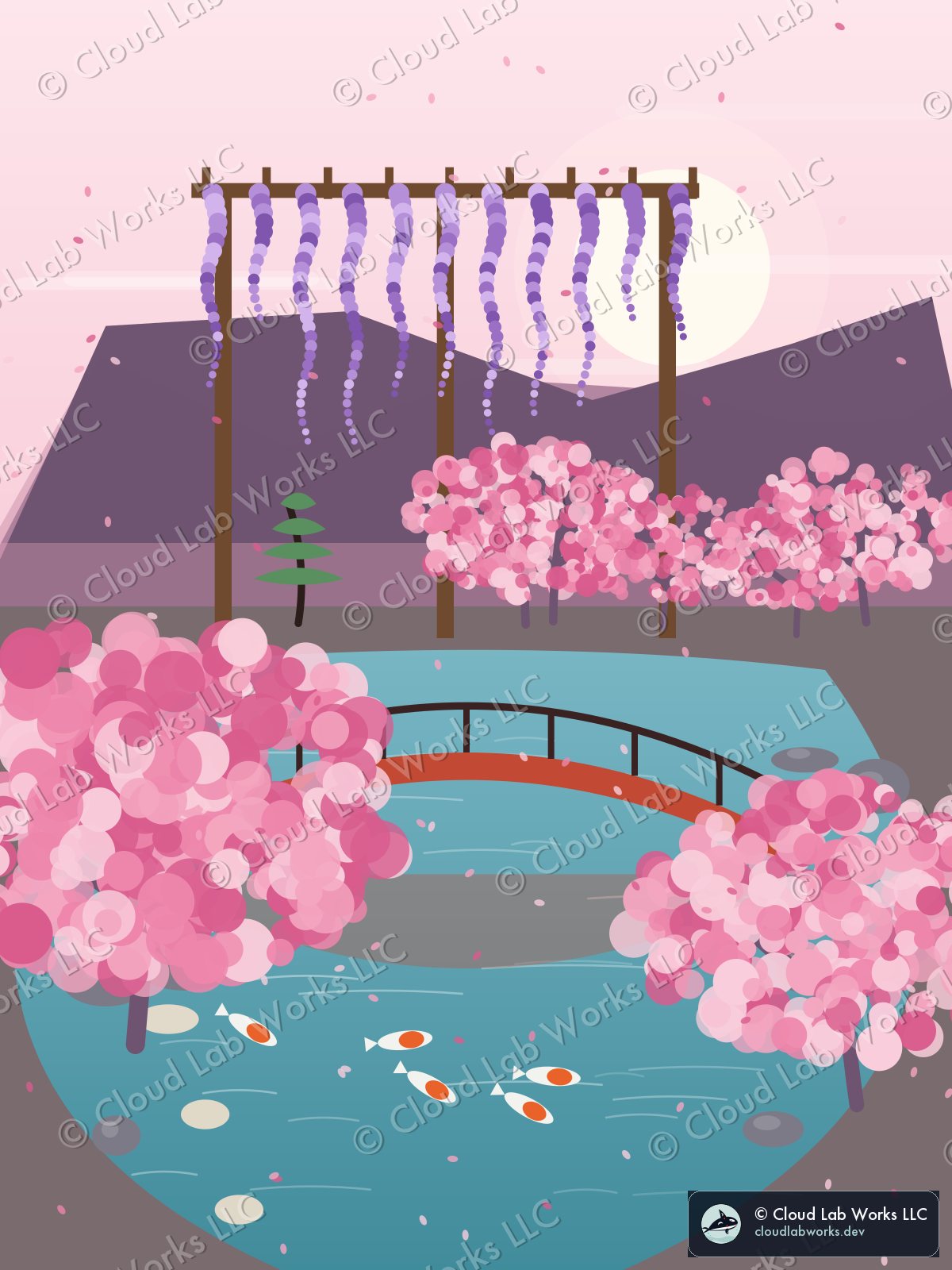 SVG · generated sceneKairaku, in blossomKairaku in blossom: a wisteria pergola, a red bridge and 5 koi. Composed from one seed; the palette is the seed's choice too.Inquire about the original →
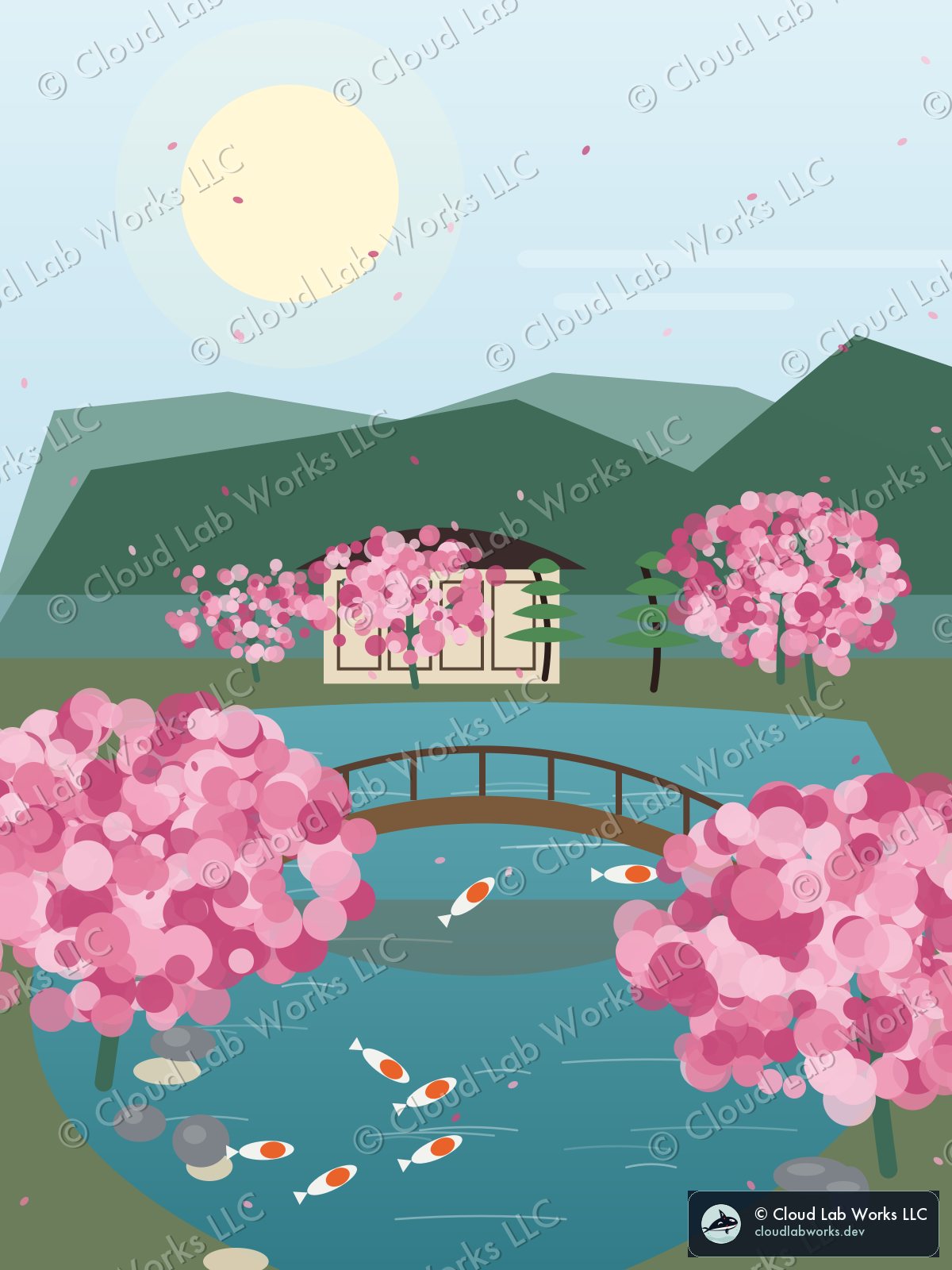 SVG · generated sceneGinkaku, in the afternoonGinkaku in the afternoon: a tea house, a wooden bridge and 8 koi. Composed from one seed; the palette is the seed's choice too.Inquire about the original →
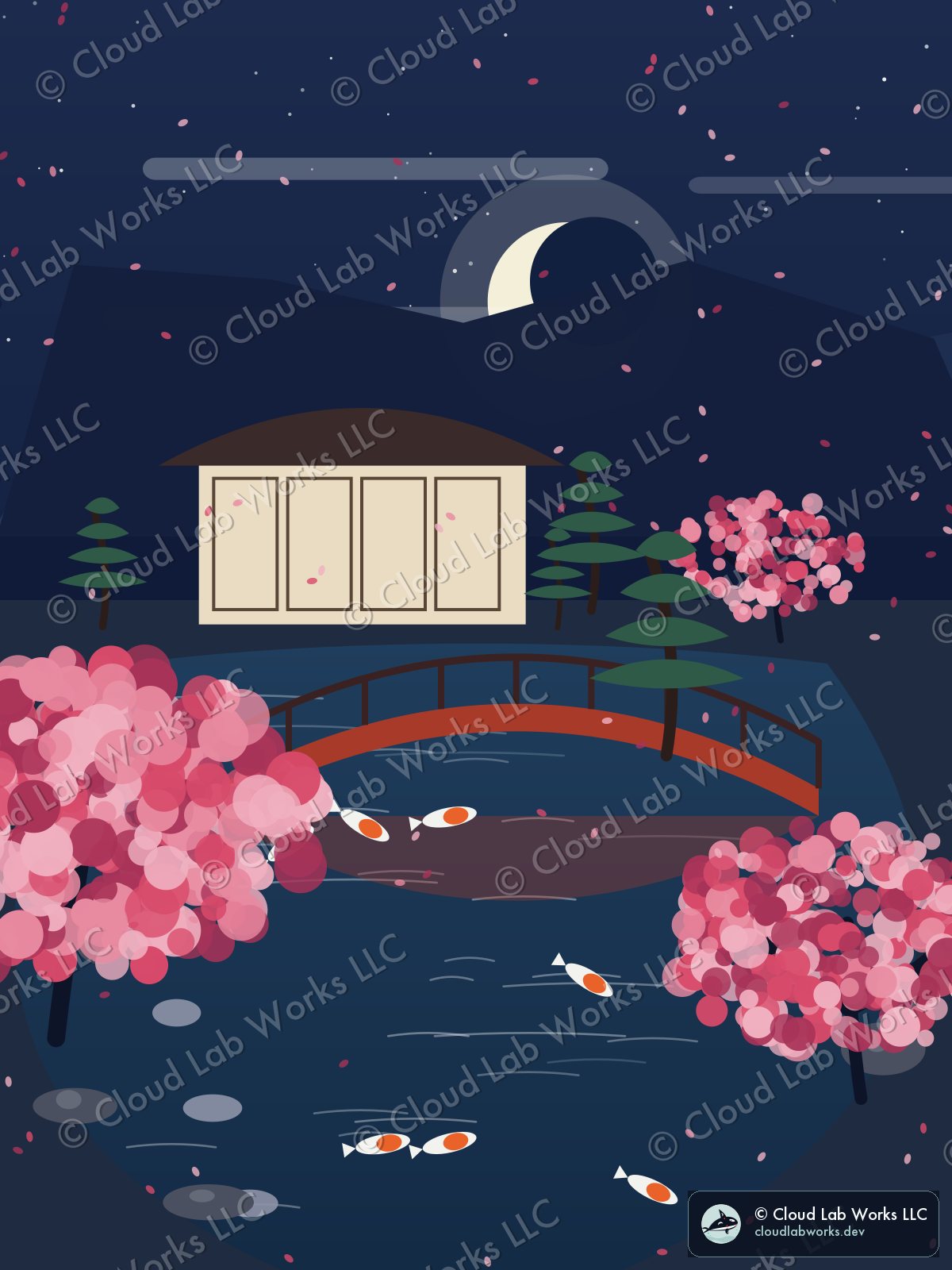 SVG · generated sceneTōfuku, under the moonTōfuku under the moon: a tea house, a red bridge, 7 koi and a pine. Composed from one seed; the palette is the seed's choice too.Inquire about the original →
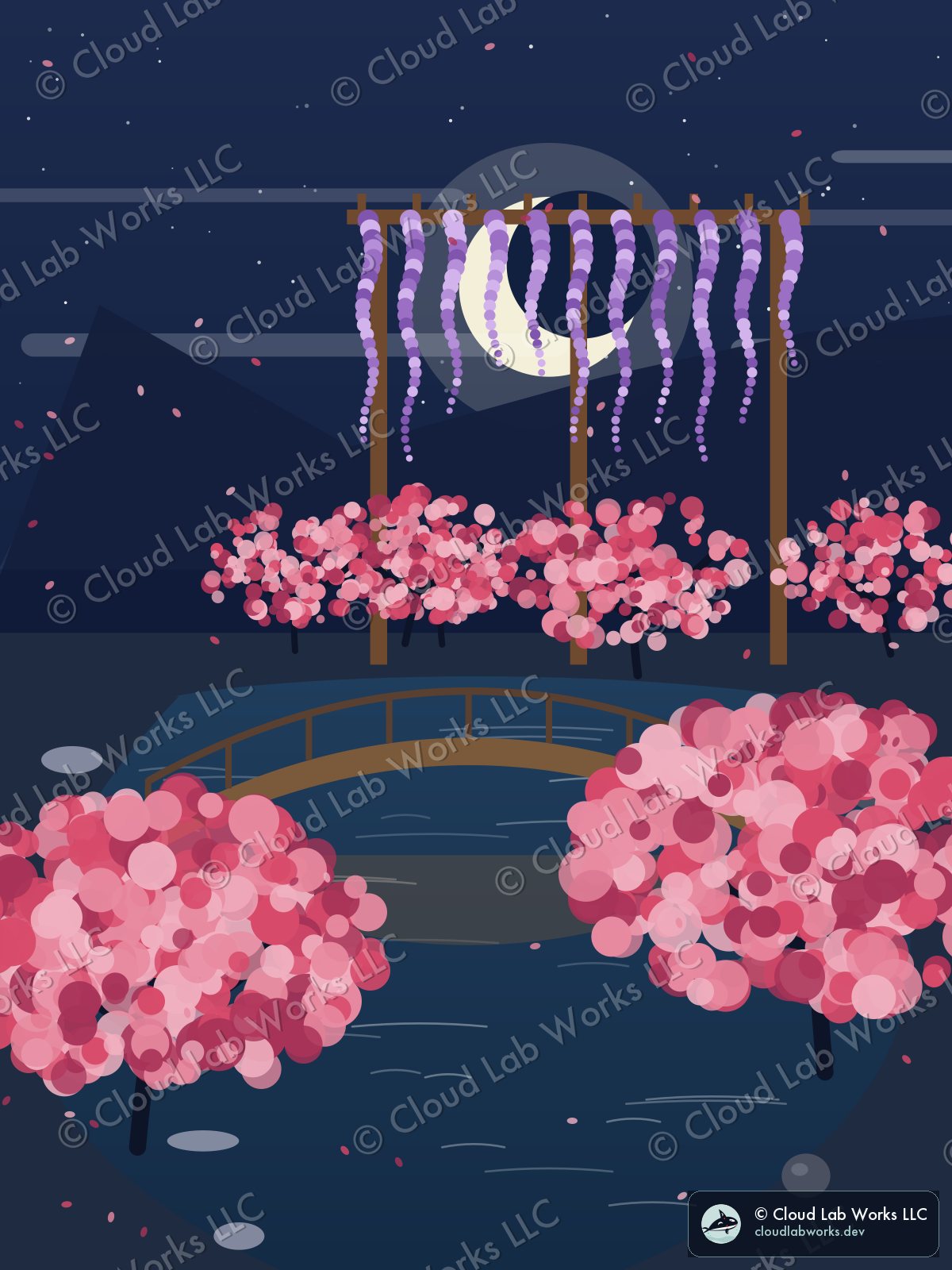 SVG · generated sceneHeian, under the moonHeian under the moon: a wisteria pergola and a wooden bridge. Composed from one seed; the palette is the seed's choice too.Inquire about the original →
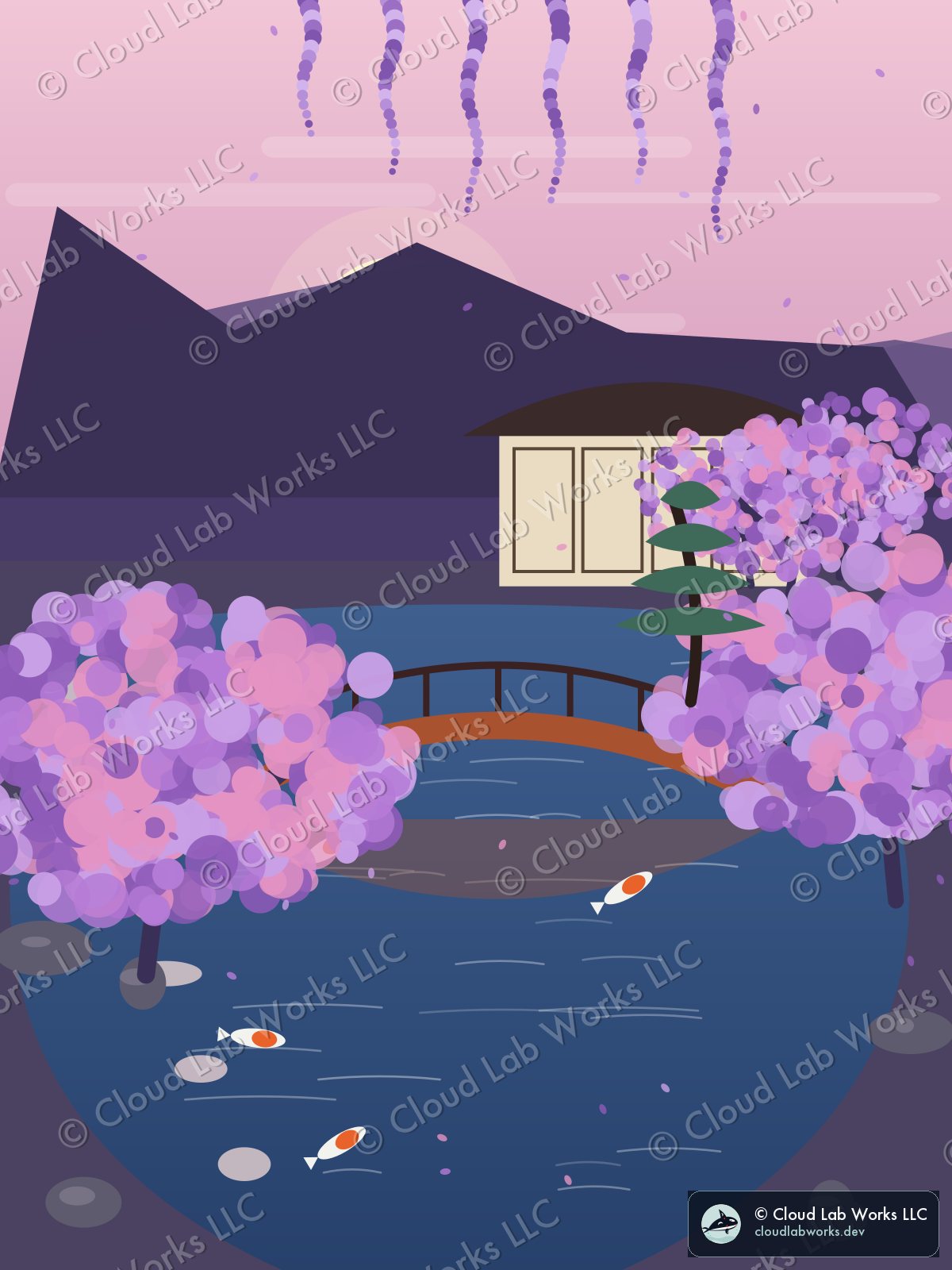 SVG · generated sceneArashiyama, at duskArashiyama at dusk: a tea house, a red bridge, 4 koi, a pine and wisteria. Composed from one seed; the palette is the seed's choice too.Inquire about the original →
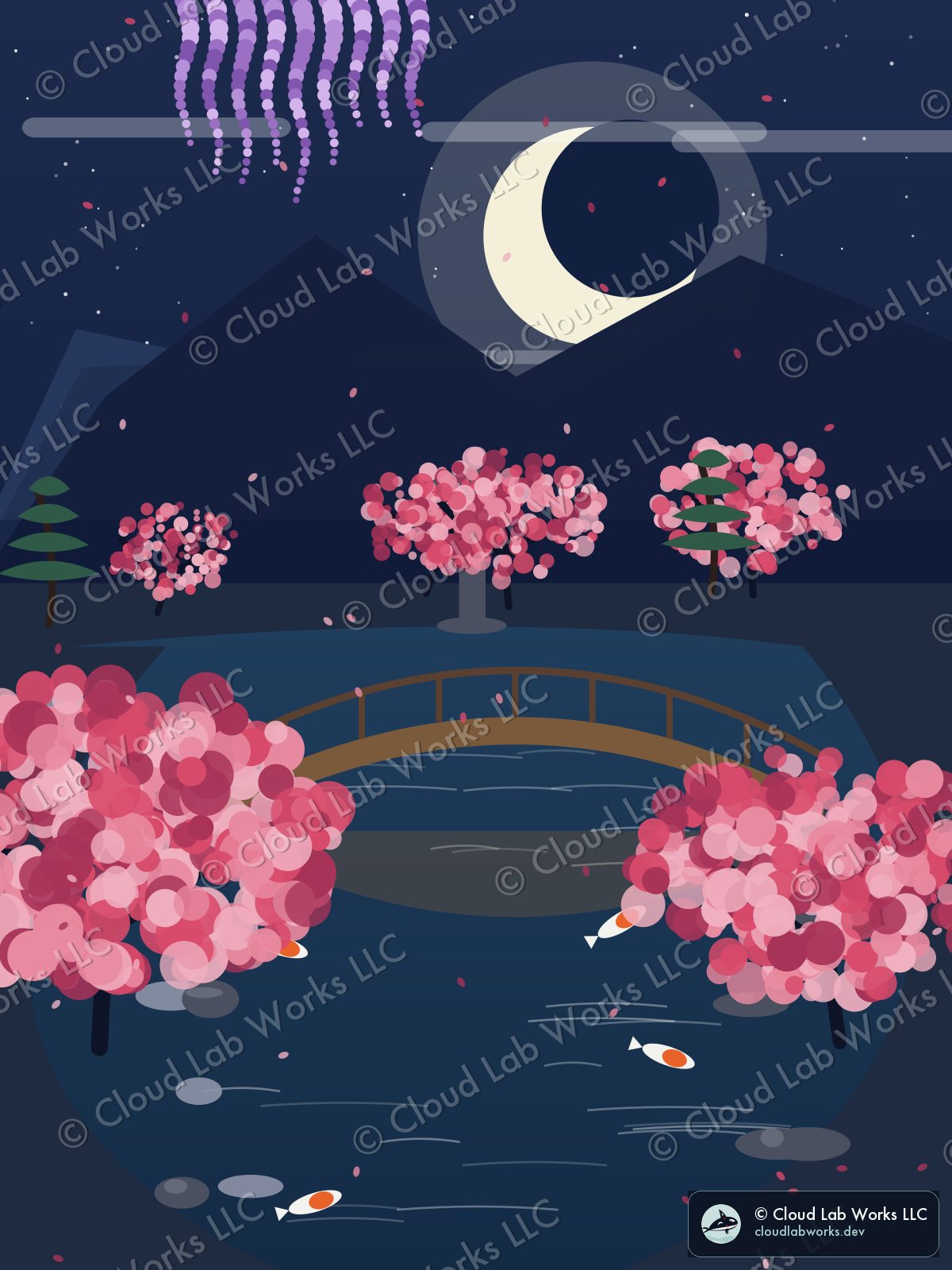 SVG · generated sceneShinjuku, under the moonShinjuku under the moon: a stone lantern, a wooden bridge, 4 koi and wisteria. Composed from one seed; the palette is the seed's choice too.Inquire about the original →
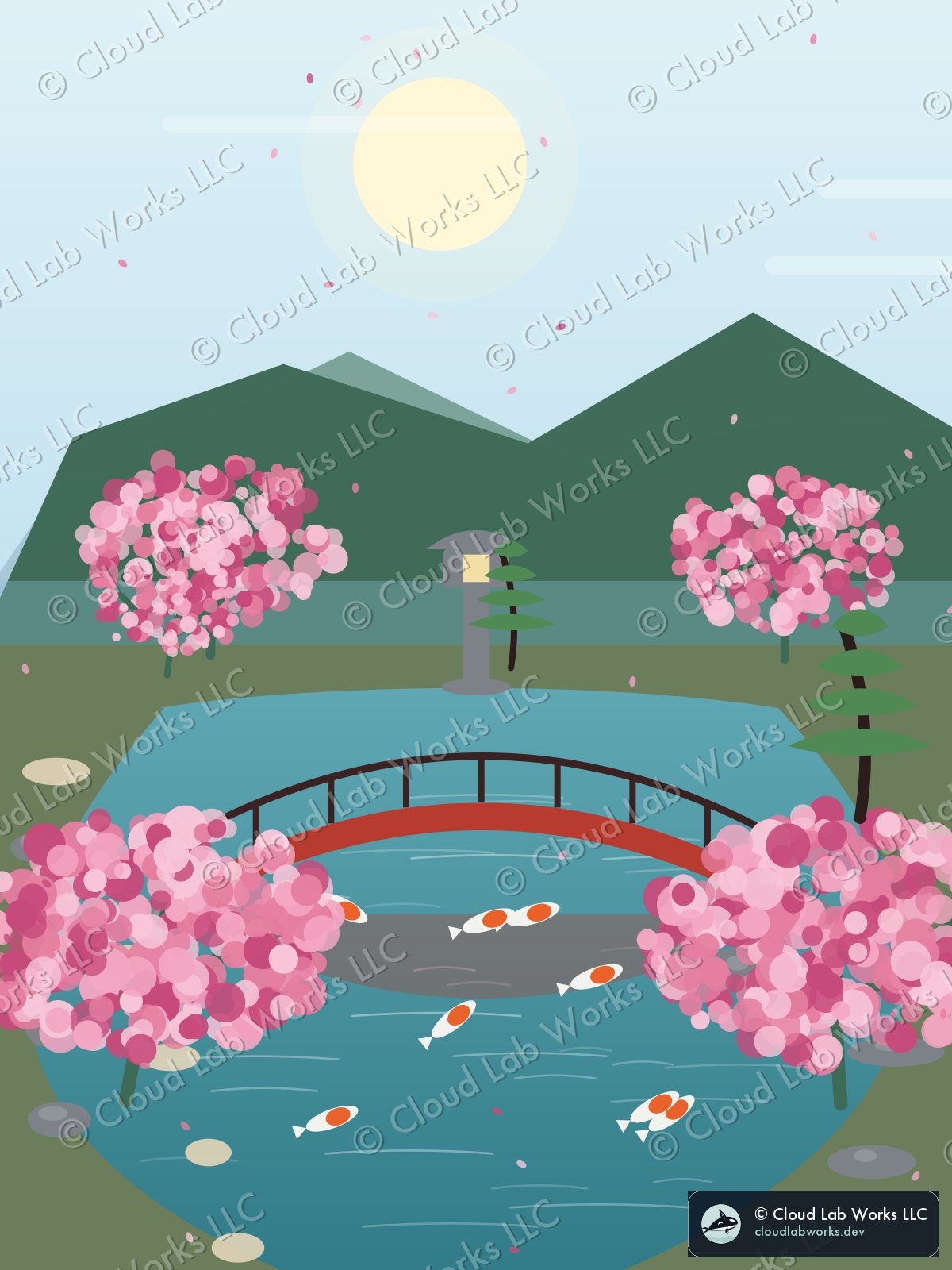 SVG · generated sceneRikugi, in the afternoonRikugi in the afternoon: a stone lantern, a red bridge, 8 koi and a pine. Composed from one seed; the palette is the seed's choice too.Inquire about the original →
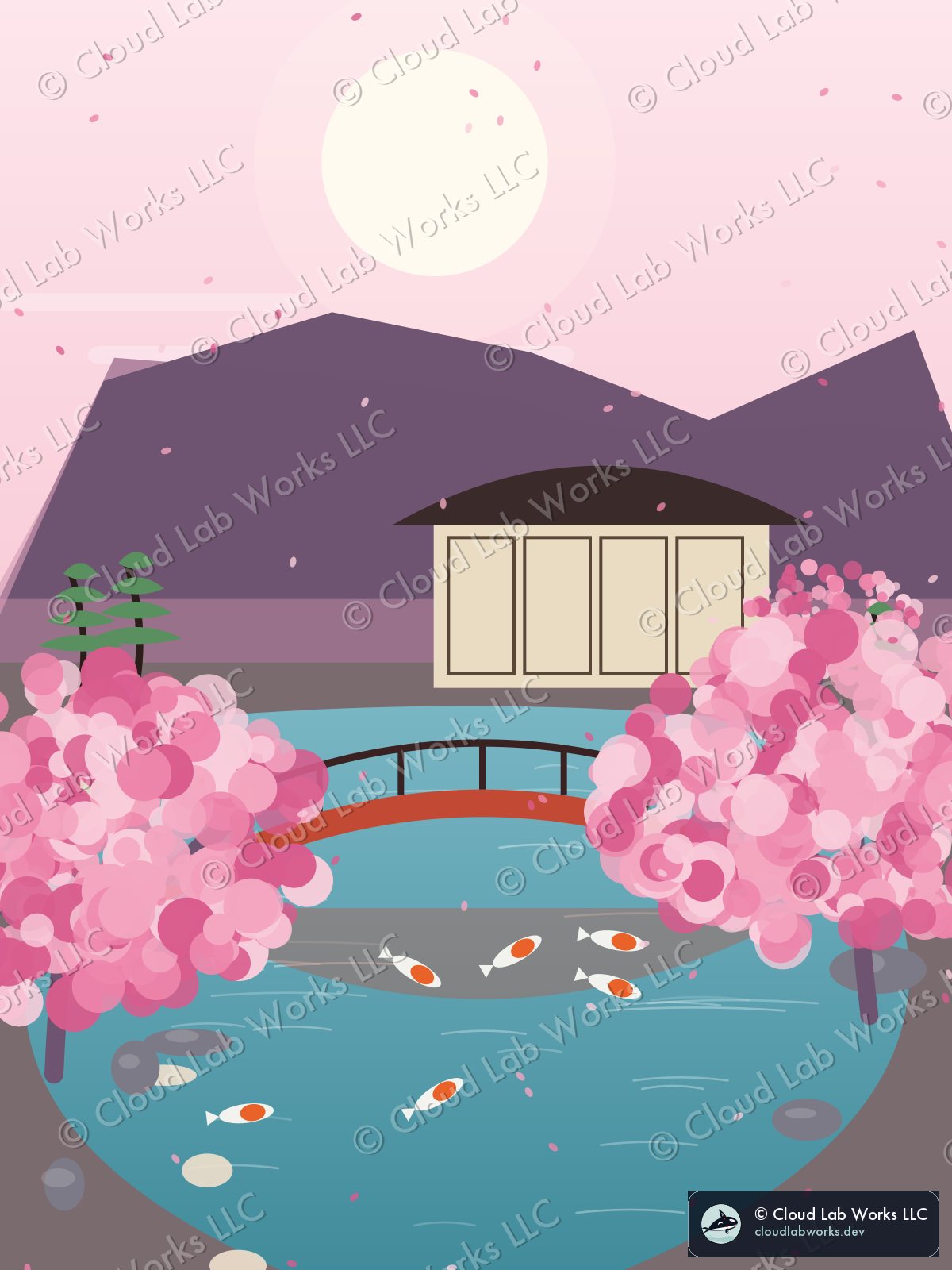 SVG · generated sceneHama-rikyū, in blossomHama-rikyū in blossom: a tea house, a red bridge and 8 koi. Composed from one seed; the palette is the seed's choice too.Inquire about the original →
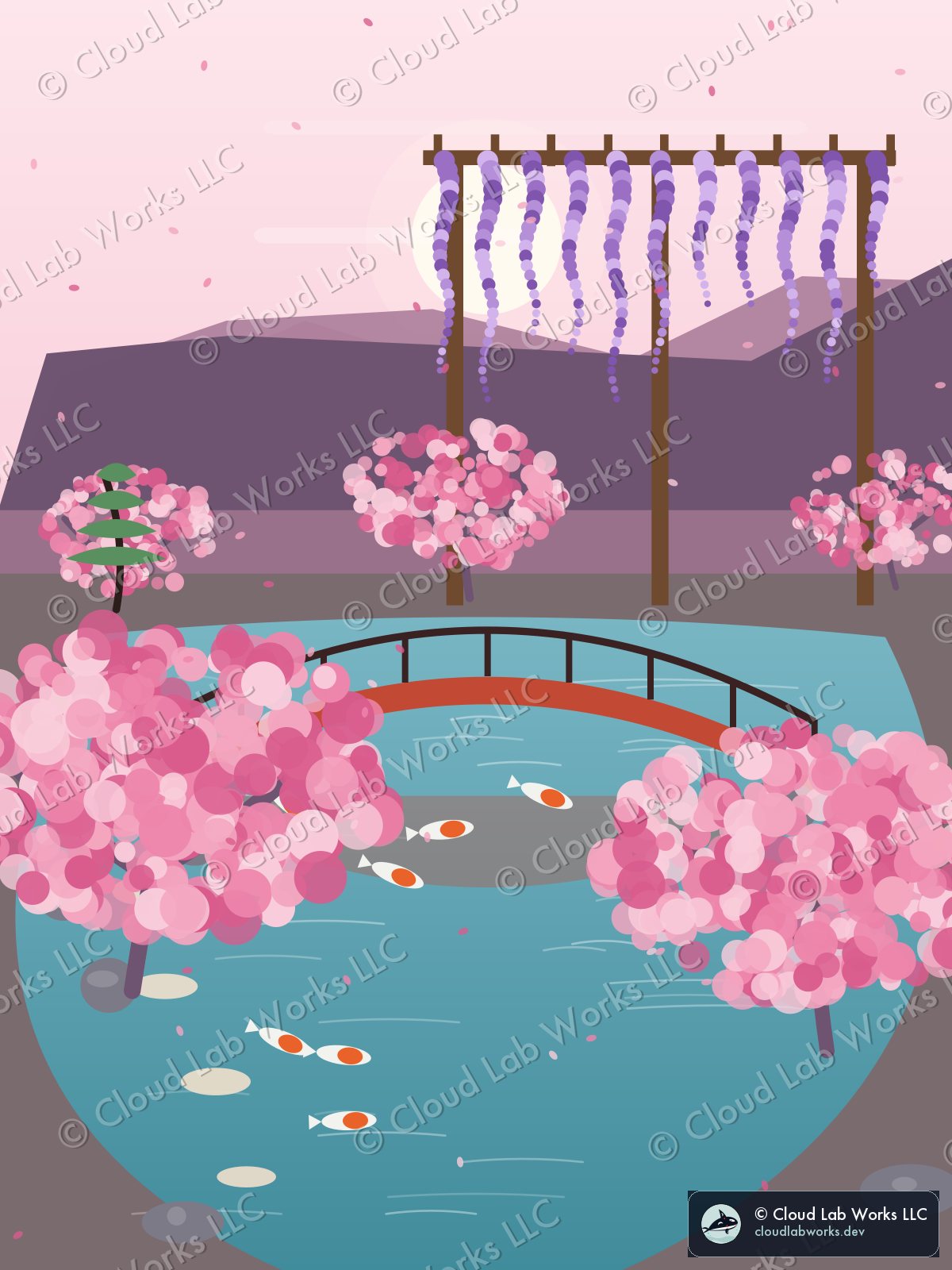 SVG · generated sceneByōdō, in blossomByōdō in blossom: a wisteria pergola, a red bridge and 7 koi. Composed from one seed; the palette is the seed's choice too.Inquire about the original →
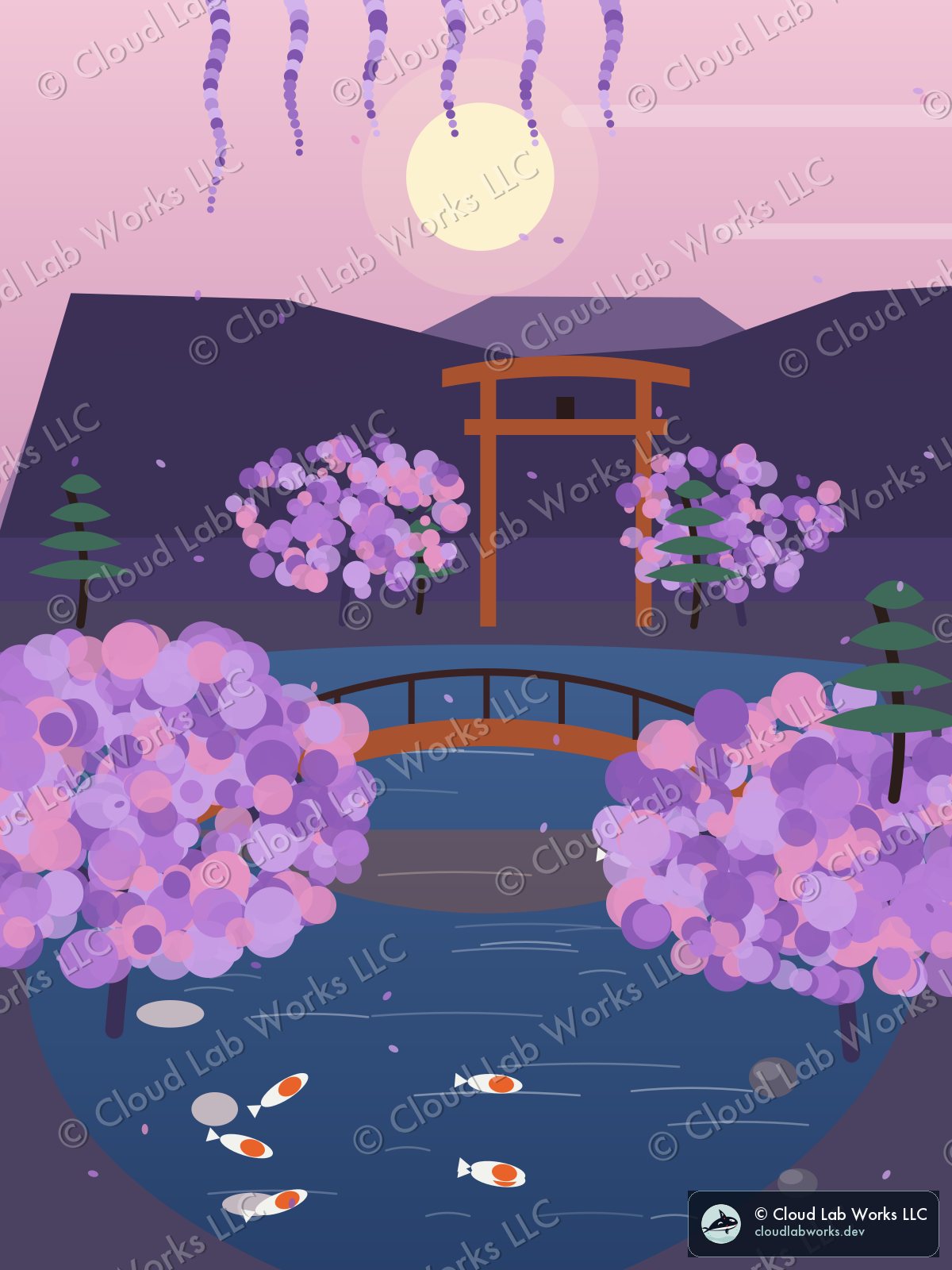 SVG · generated sceneDaigo, at duskDaigo at dusk: a torii, a red bridge, 7 koi, a pine and wisteria. Composed from one seed; the palette is the seed's choice too.Inquire about the original →
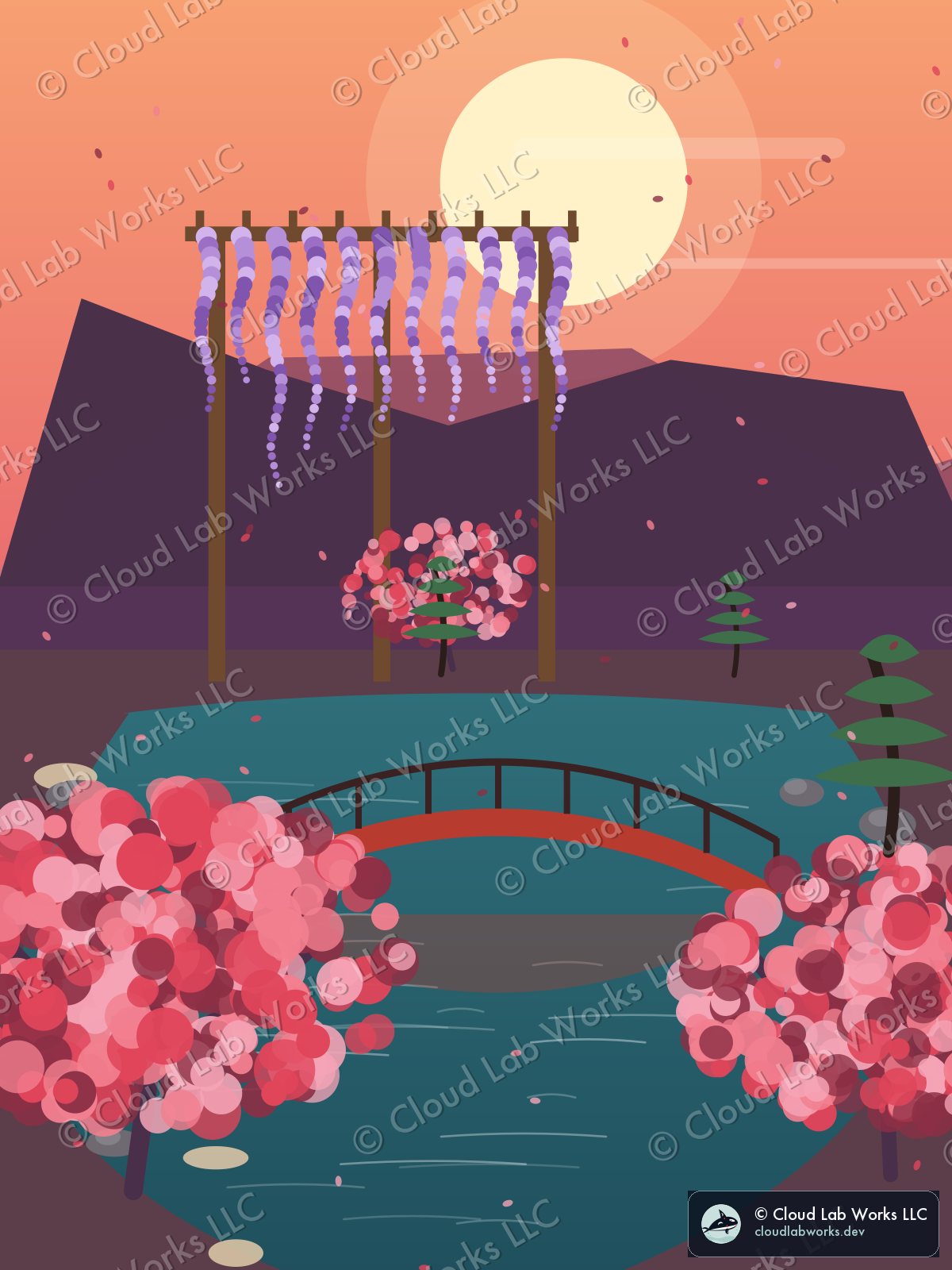 SVG · generated sceneNanzen, at sunsetNanzen at sunset: a wisteria pergola, a red bridge and a pine. Composed from one seed; the palette is the seed's choice too.Inquire about the original →
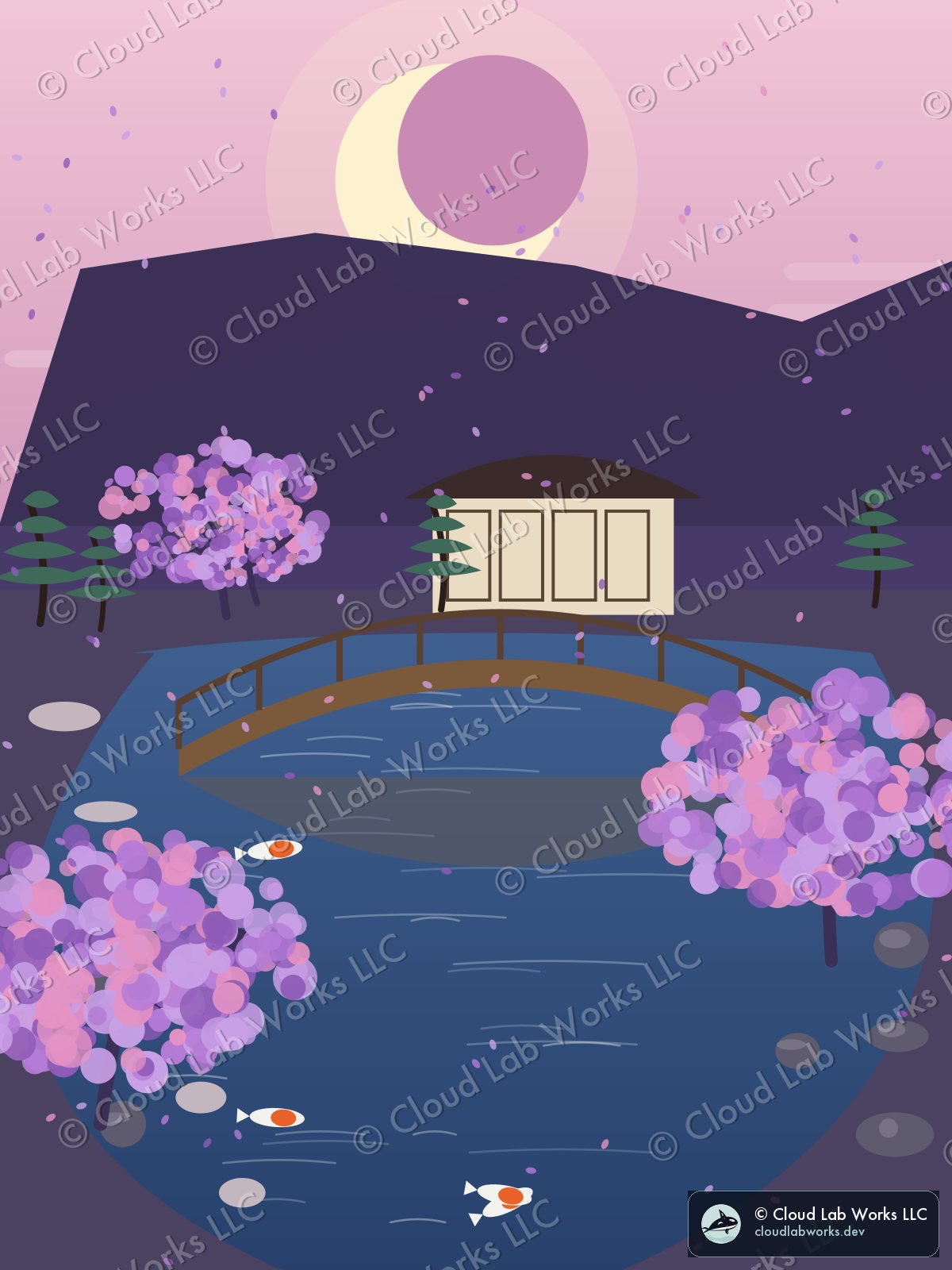 SVG · generated sceneTenryū, at duskTenryū at dusk: a tea house, a wooden bridge and 4 koi. Composed from one seed; the palette is the seed's choice too.Inquire about the original →
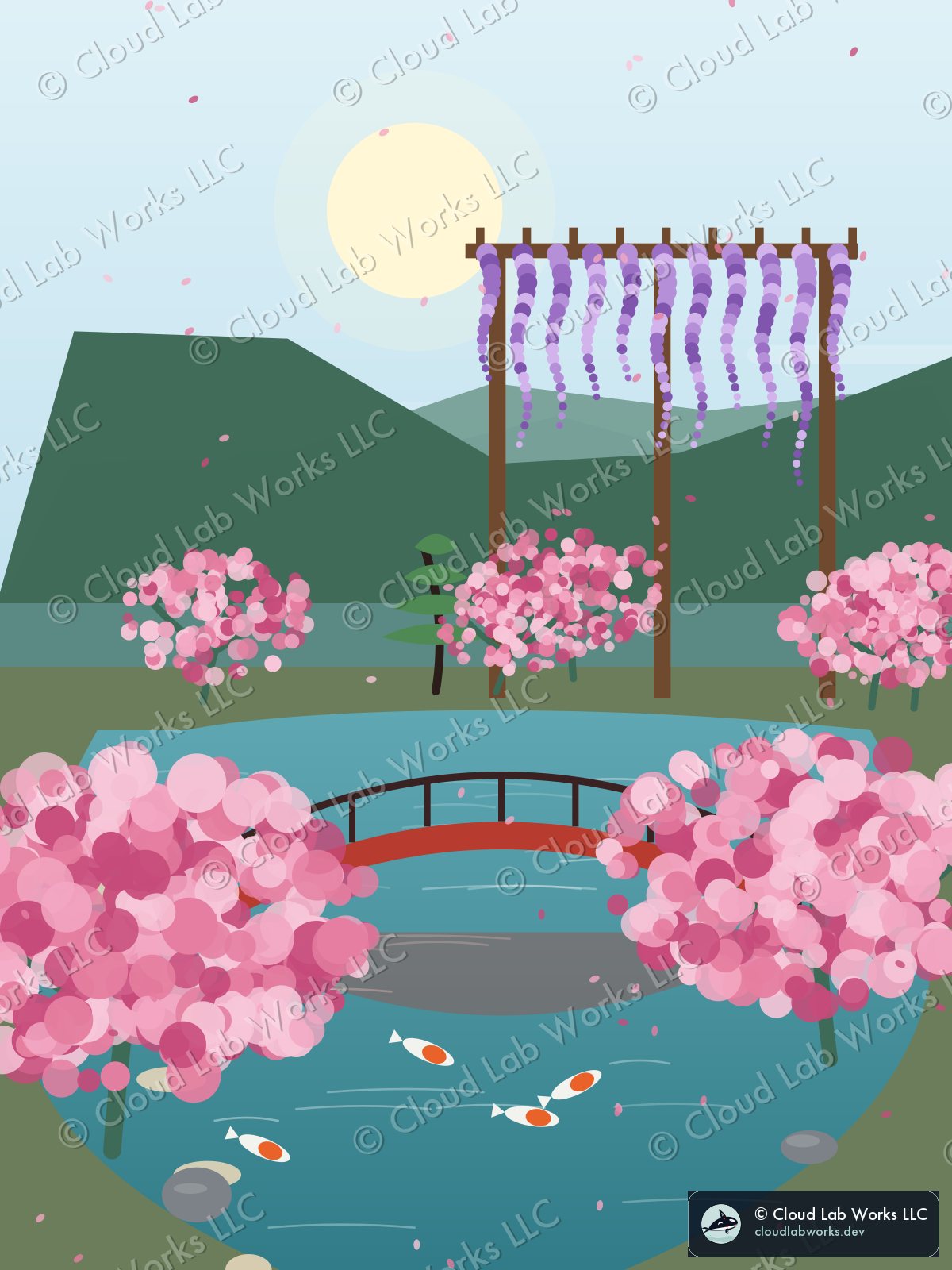 SVG · generated sceneEikan, in the afternoonEikan in the afternoon: a wisteria pergola, a red bridge and 4 koi. Composed from one seed; the palette is the seed's choice too.Inquire about the original →
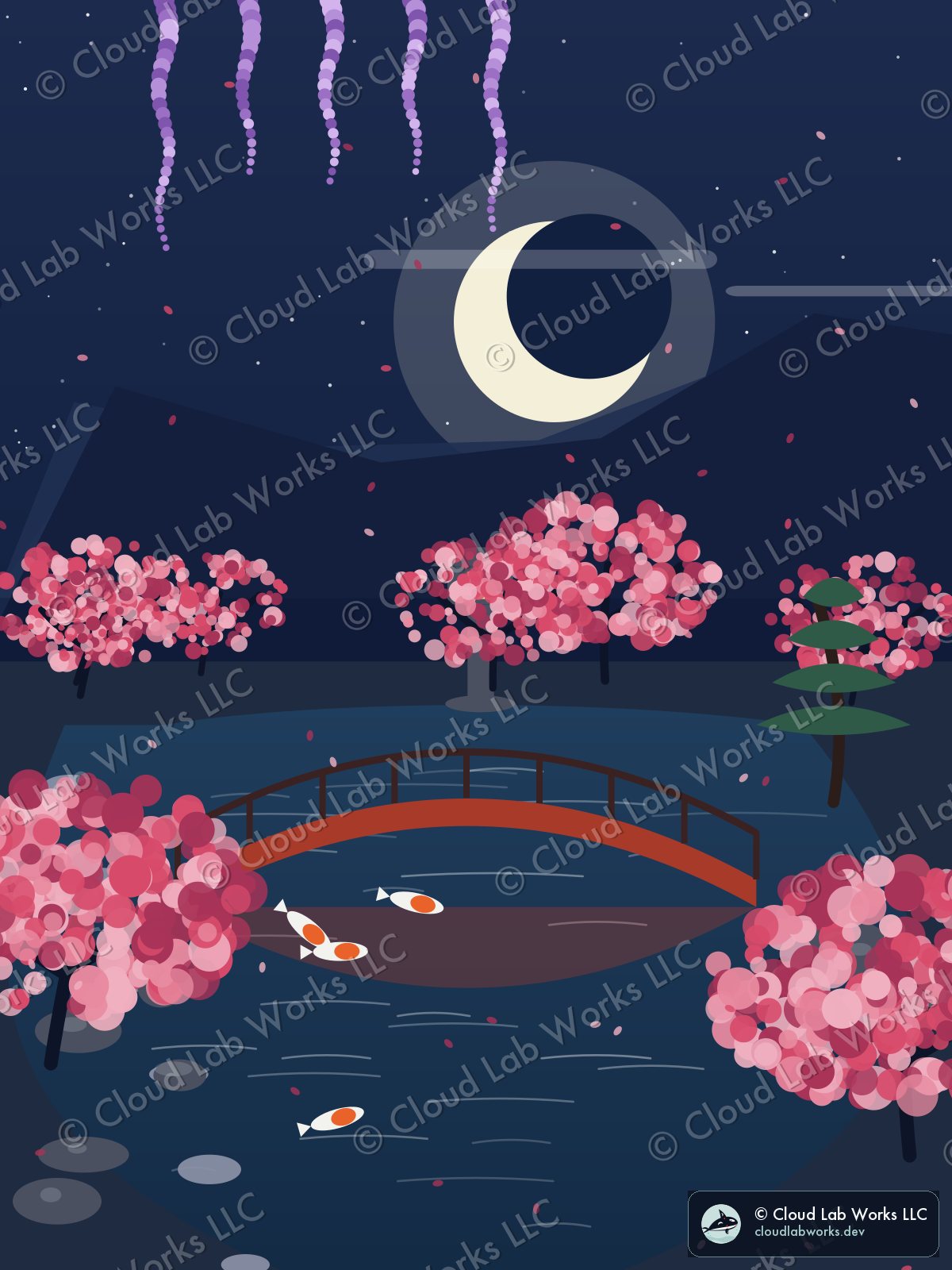 SVG · generated sceneSaihō, under the moonSaihō under the moon: a stone lantern, a red bridge, 4 koi, a pine and wisteria. Composed from one seed; the palette is the seed's choice too.Inquire about the original →
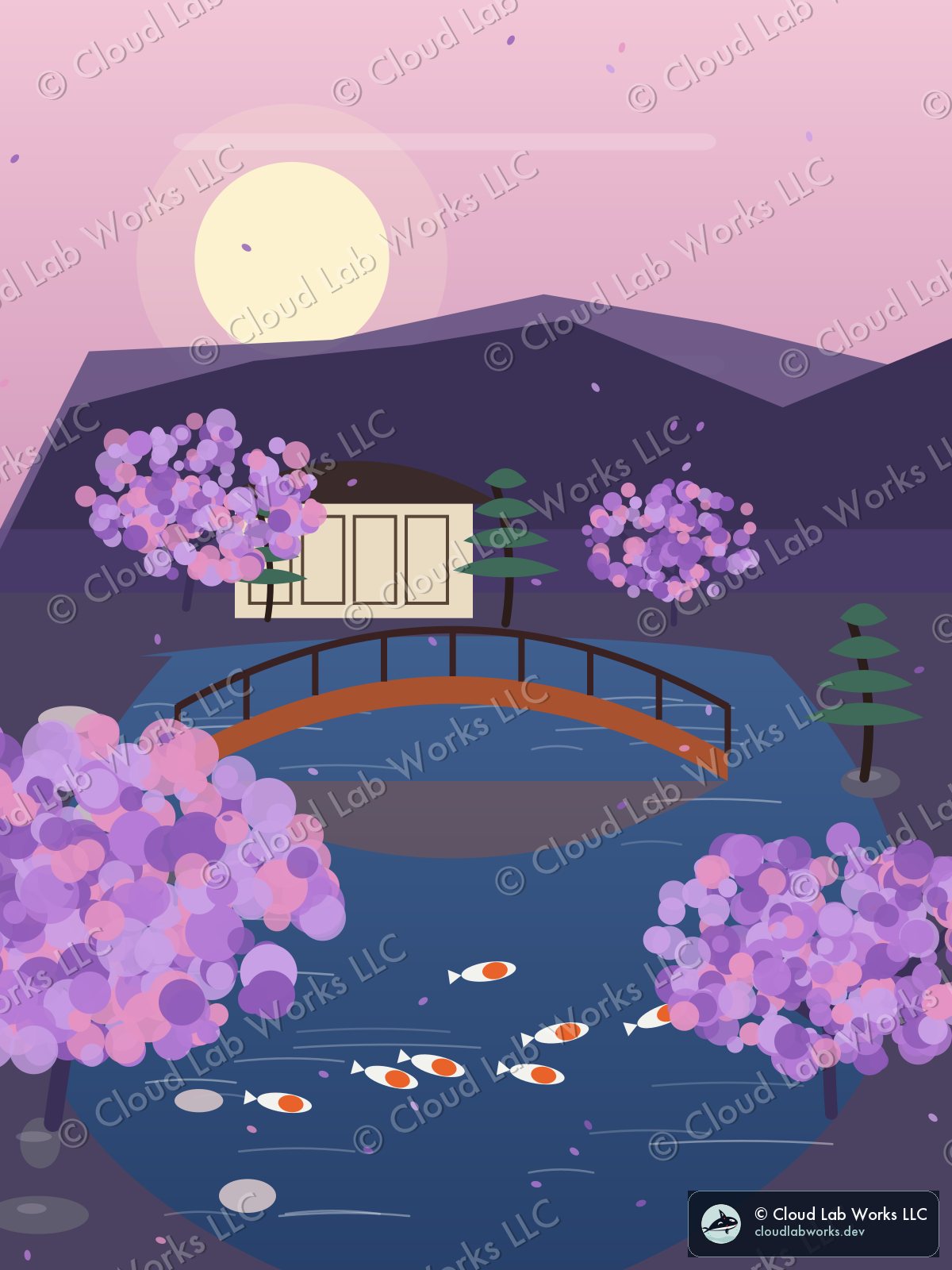 SVG · generated sceneKinkaku, at duskKinkaku at dusk: a tea house, a red bridge, 7 koi and a pine. Composed from one seed; the palette is the seed's choice too.Inquire about the original →
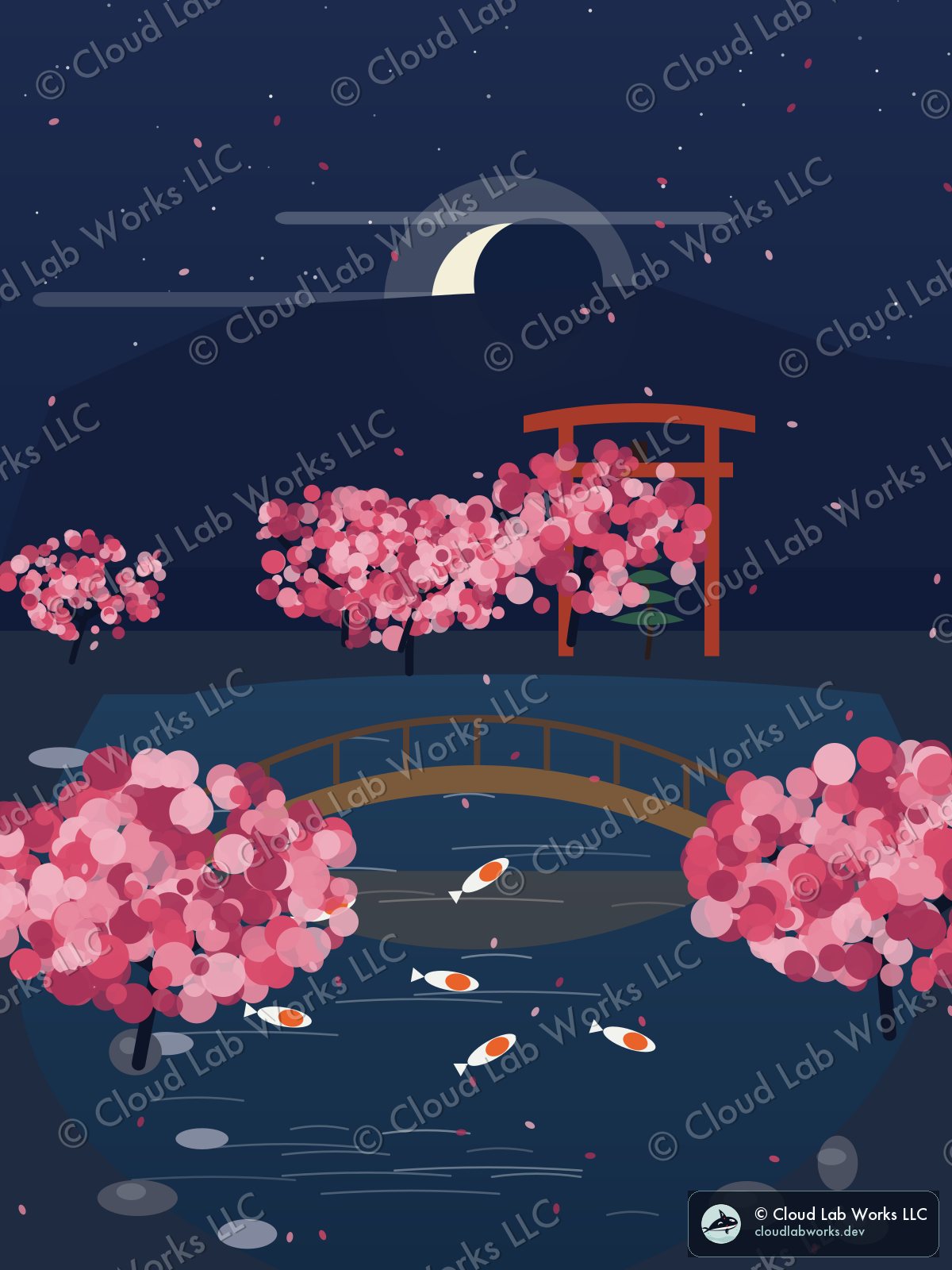 SVG · generated sceneSankei, under the moonSankei under the moon: a torii, a wooden bridge and 7 koi. Composed from one seed; the palette is the seed's choice too.Inquire about the original →
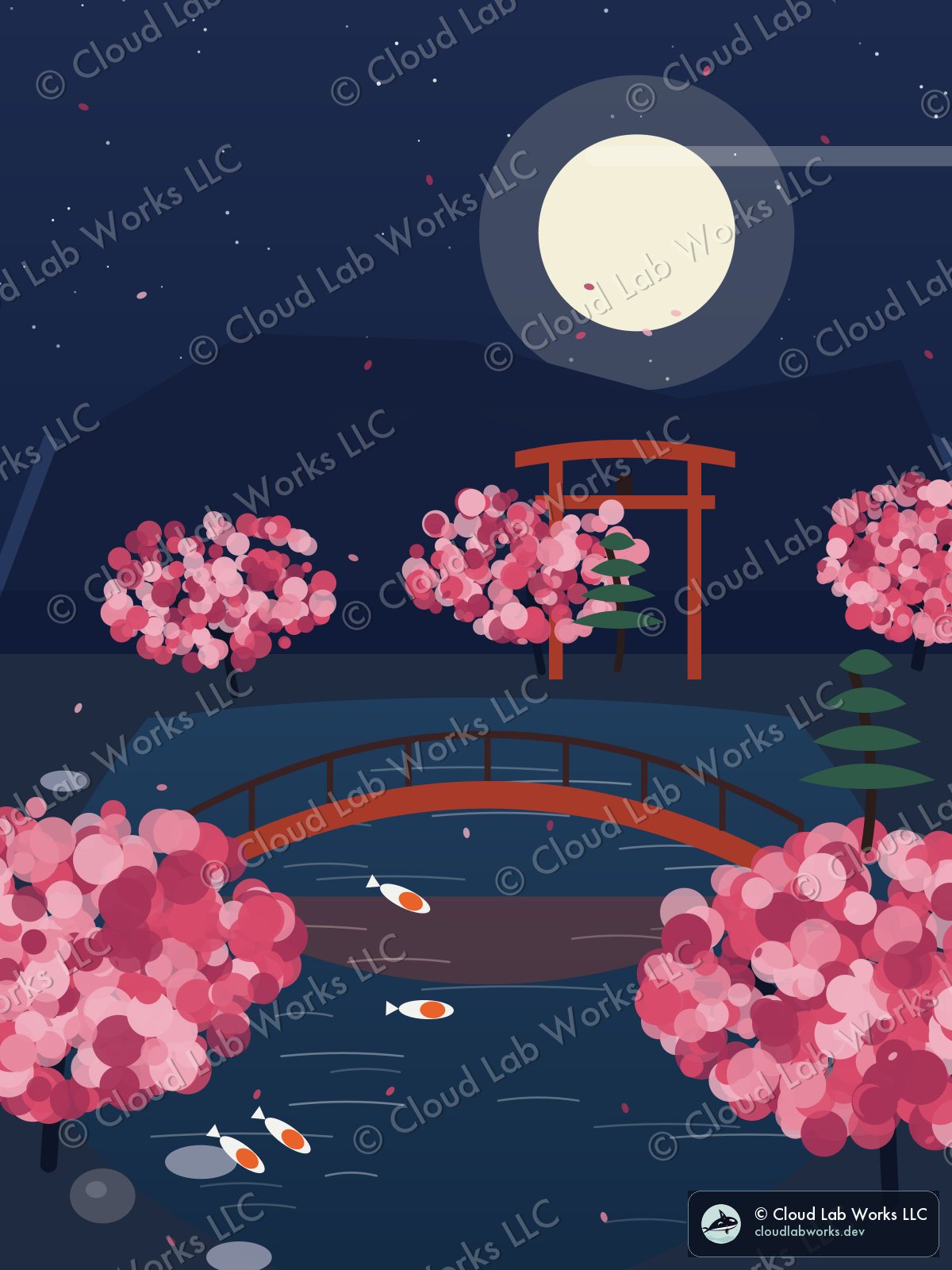 SVG · generated sceneShukkei, under the moonShukkei under the moon: a torii, a red bridge, 4 koi and a pine. Composed from one seed; the palette is the seed's choice too.Inquire about the original →
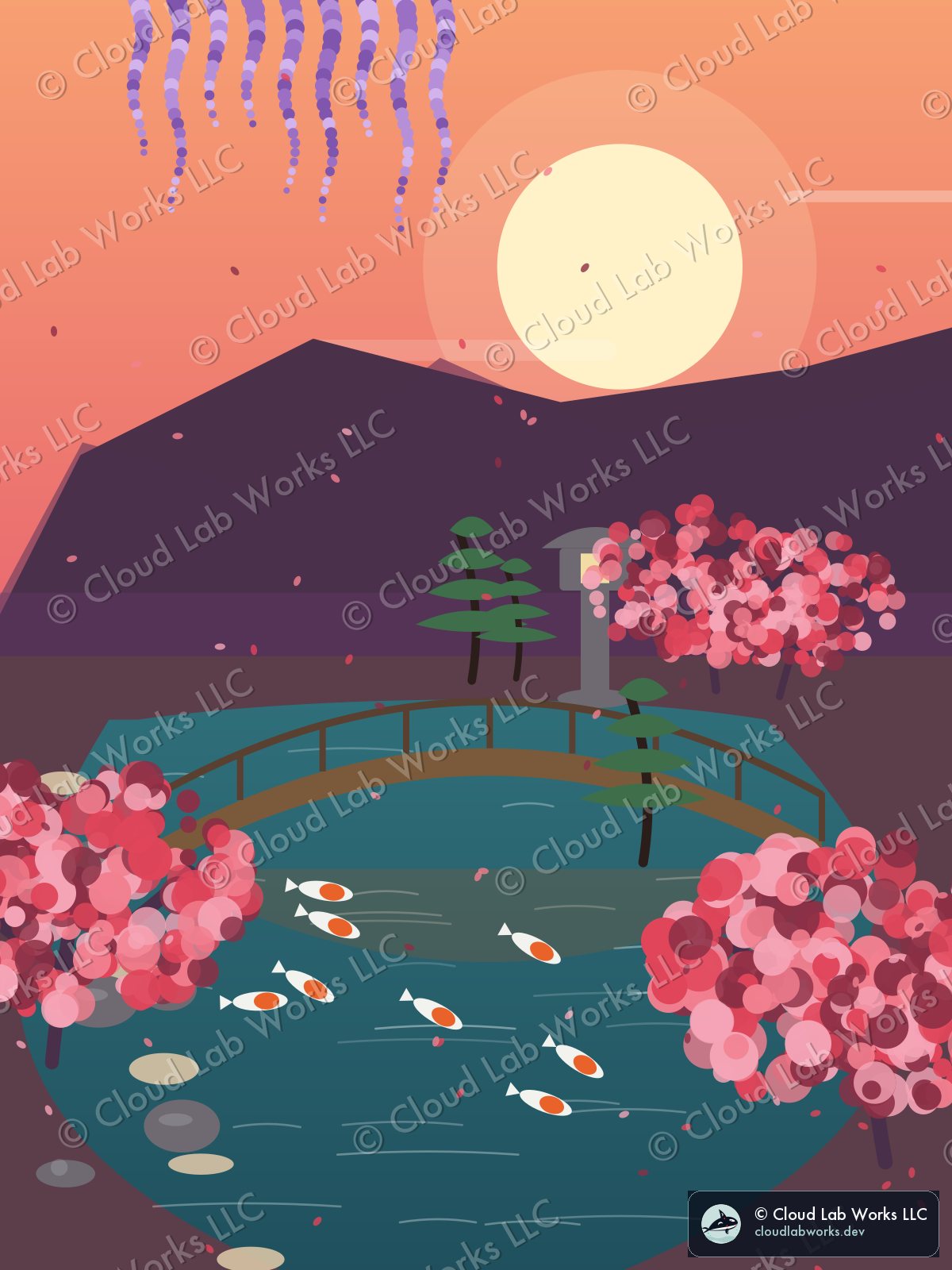 SVG · generated sceneRitsurin, at sunsetRitsurin at sunset: a stone lantern, a wooden bridge, 8 koi, a pine and wisteria. Composed from one seed; the palette is the seed's choice too.Inquire about the original →
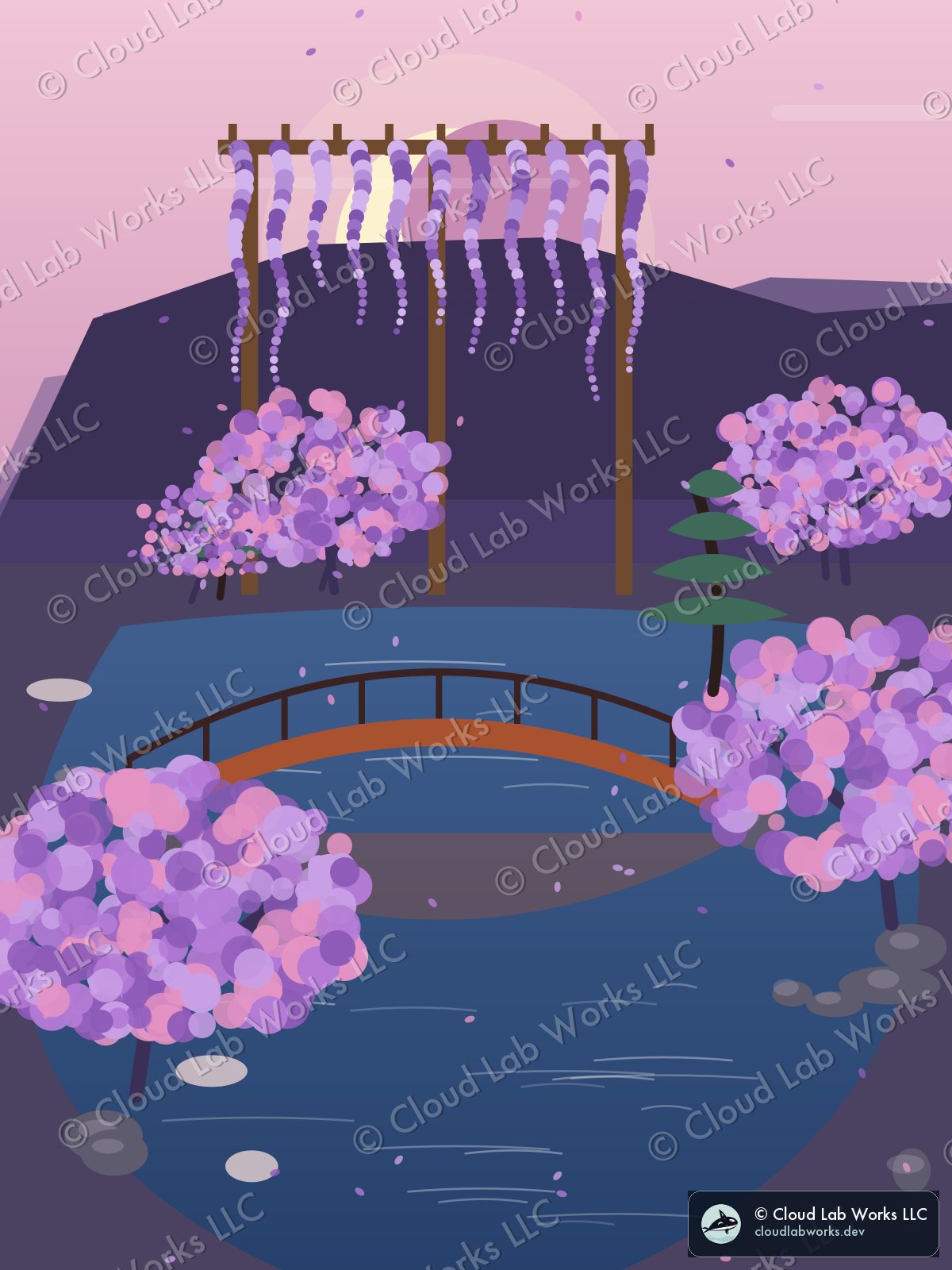 SVG · generated sceneKōko, at duskKōko at dusk: a wisteria pergola, a red bridge and a pine. Composed from one seed; the palette is the seed's choice too.Inquire about the original →
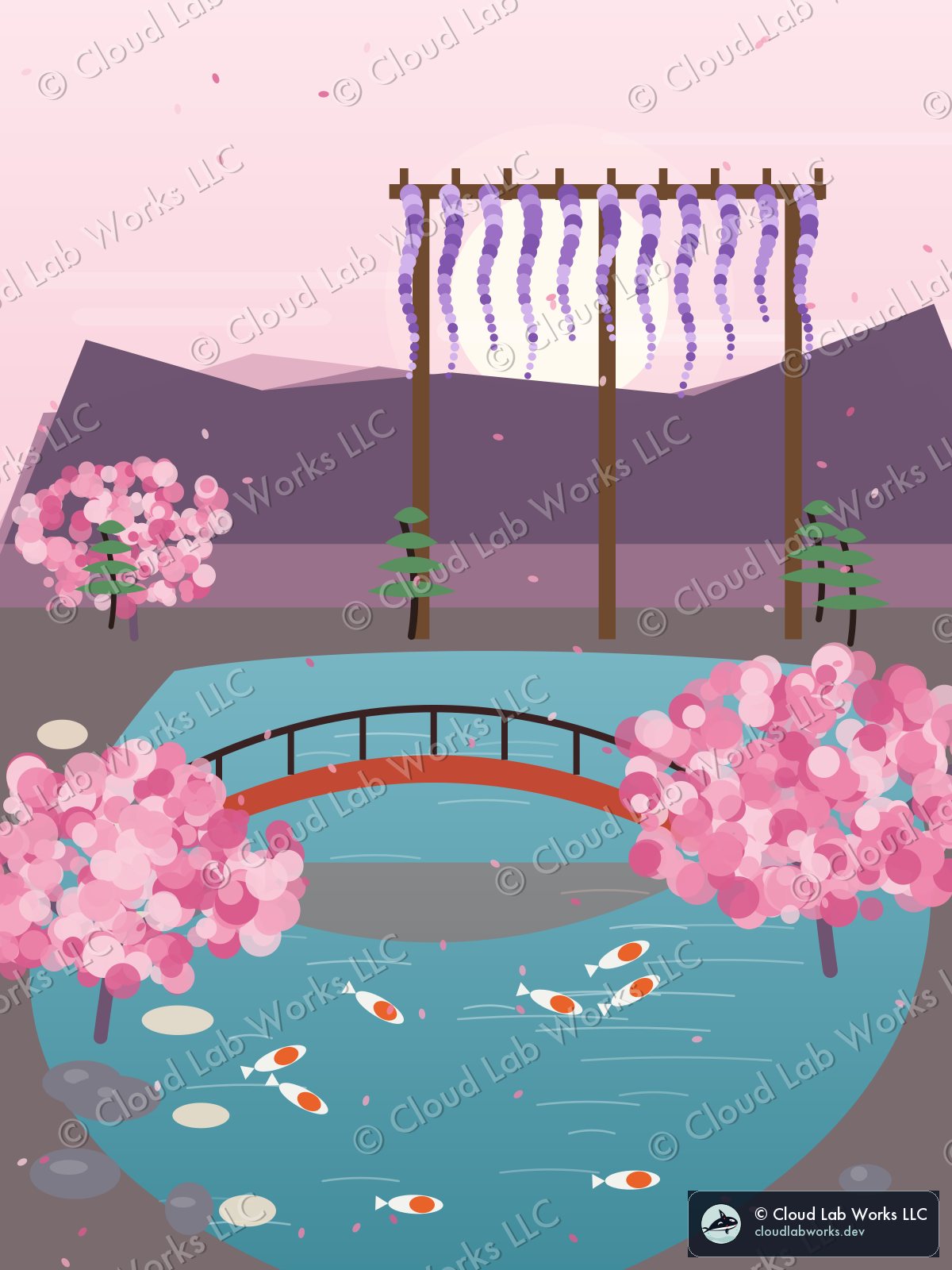 SVG · generated sceneJōju, in blossomJōju in blossom: a wisteria pergola, a red bridge and 8 koi. Composed from one seed; the palette is the seed's choice too.Inquire about the original →
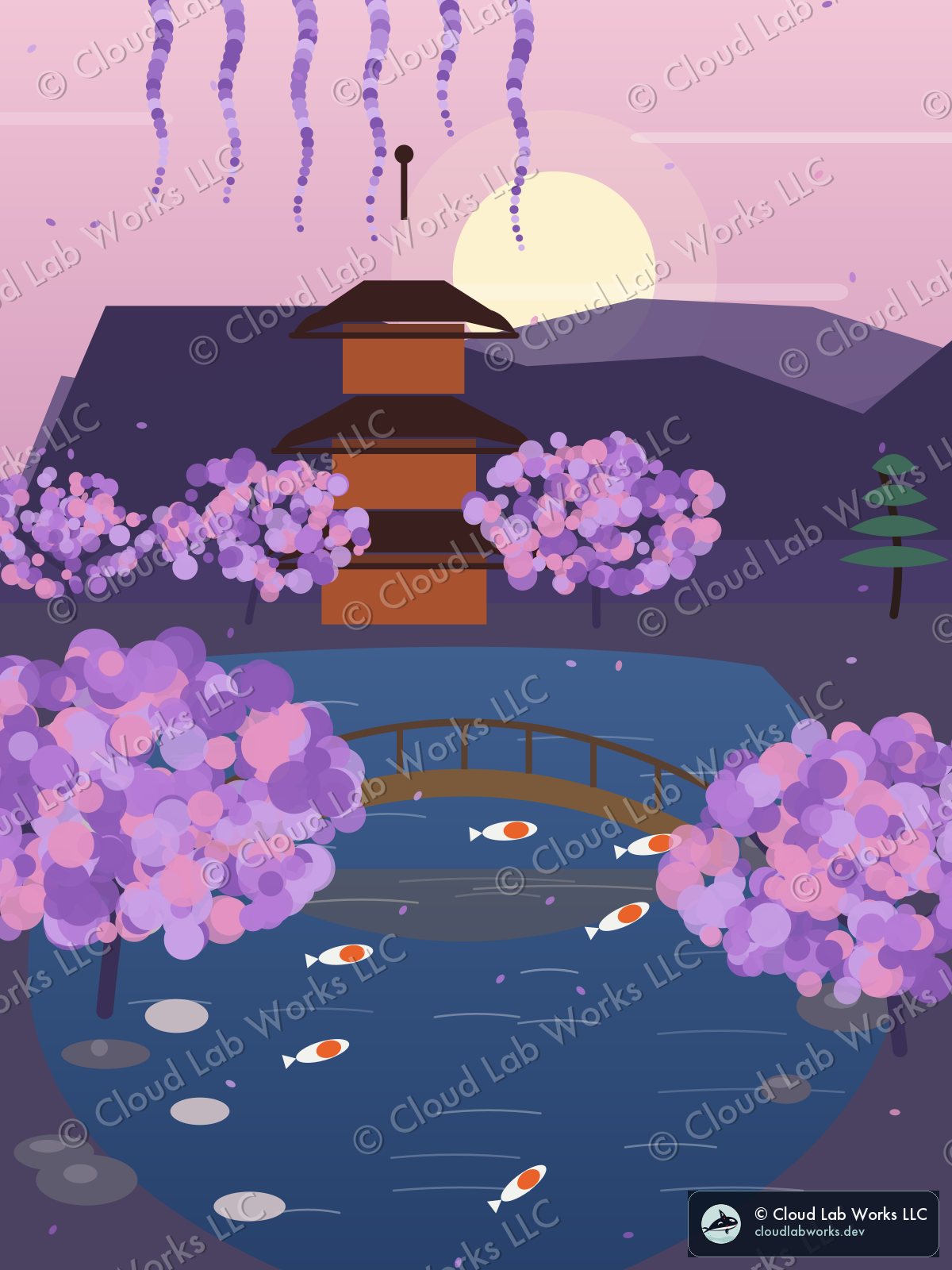 SVG · generated sceneMōtsū, at duskMōtsū at dusk: a 3-tier pagoda, a wooden bridge, 6 koi and wisteria. Composed from one seed; the palette is the seed's choice too.Inquire about the original →
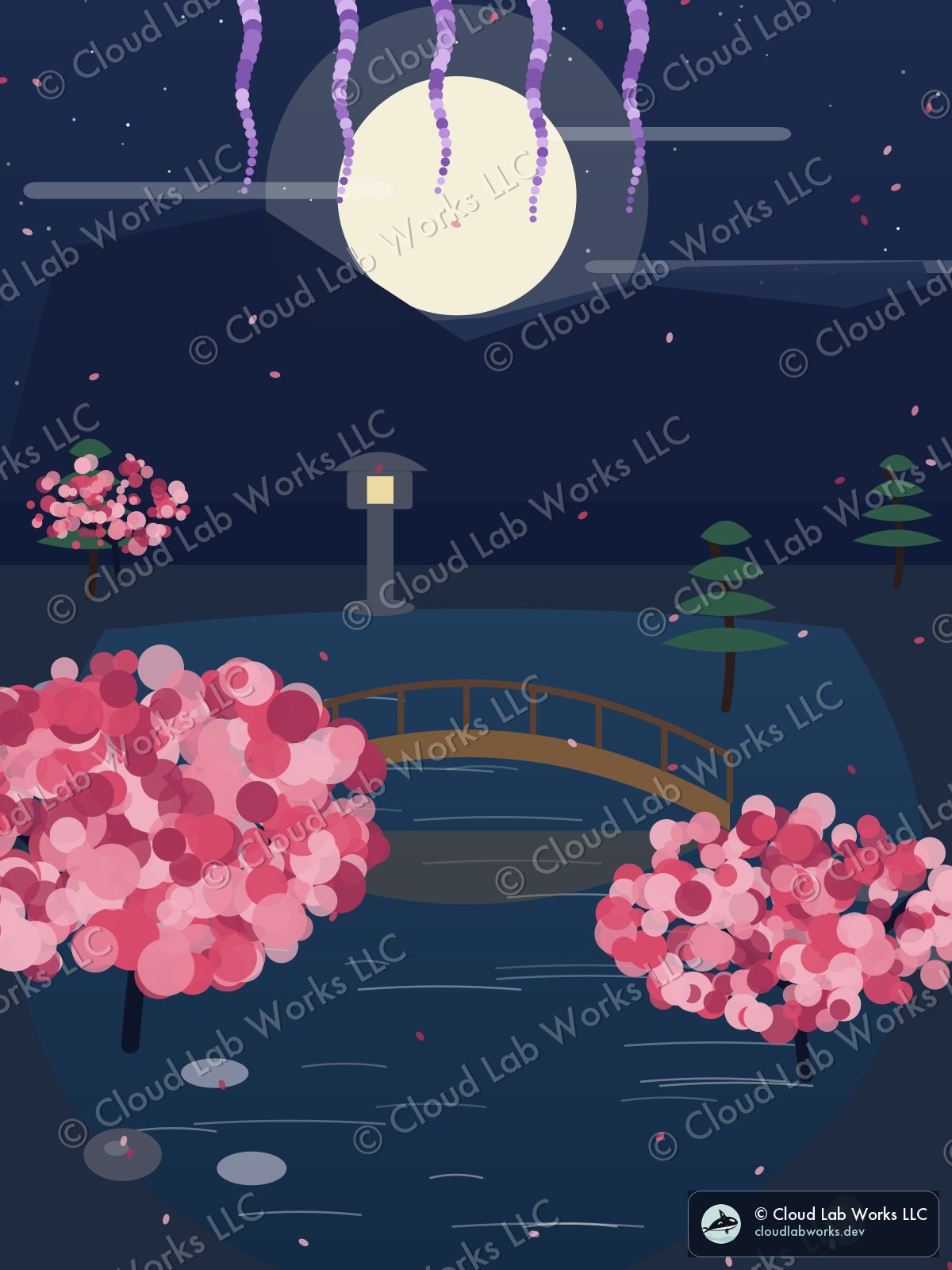 SVG · generated sceneKōdai, under the moonKōdai under the moon: a stone lantern, a wooden bridge, a pine and wisteria. Composed from one seed; the palette is the seed's choice too.Inquire about the original →
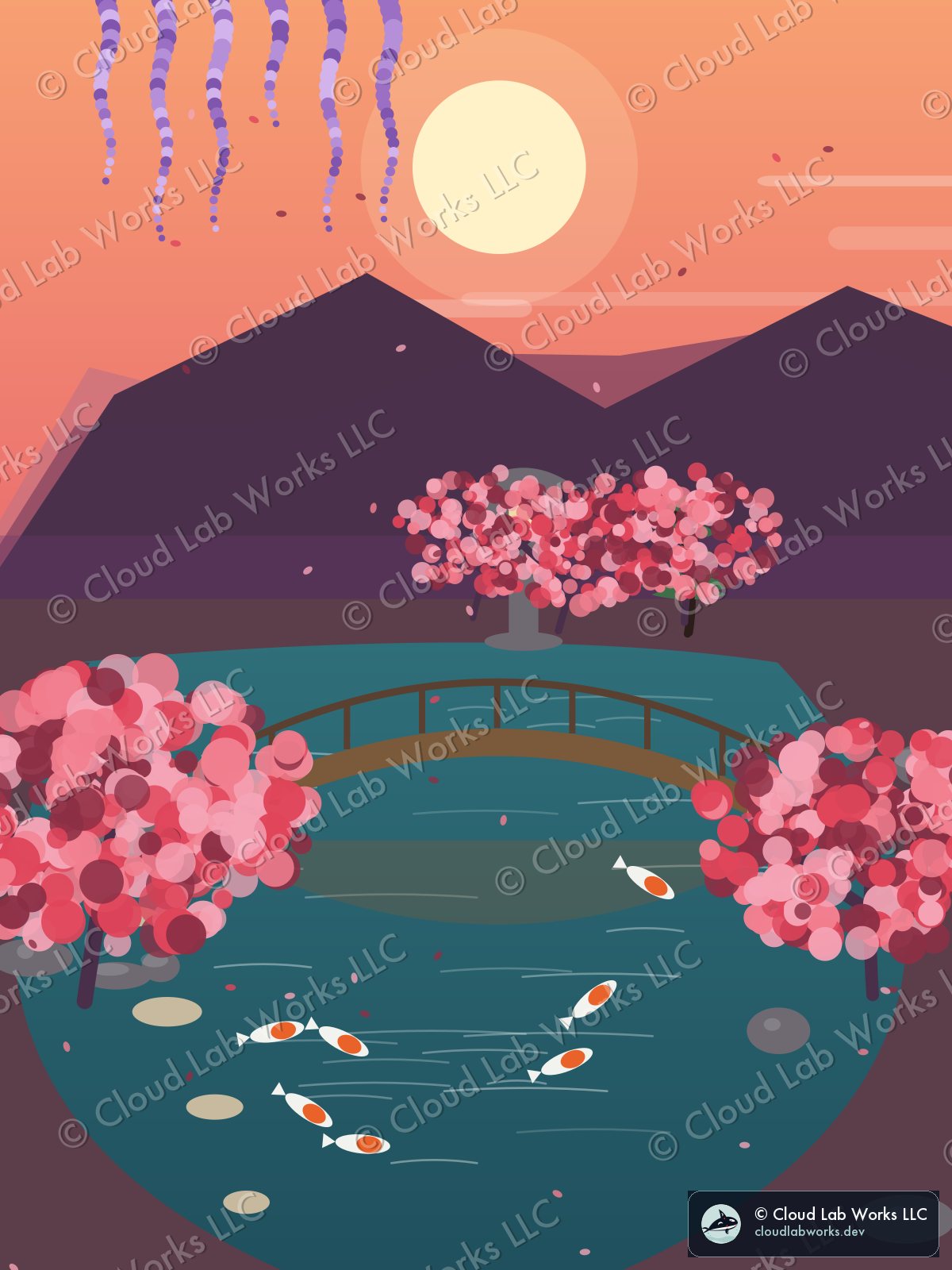 SVG · generated sceneShōren, at sunsetShōren at sunset: a stone lantern, a wooden bridge, 7 koi and wisteria. Composed from one seed; the palette is the seed's choice too.Inquire about the original →
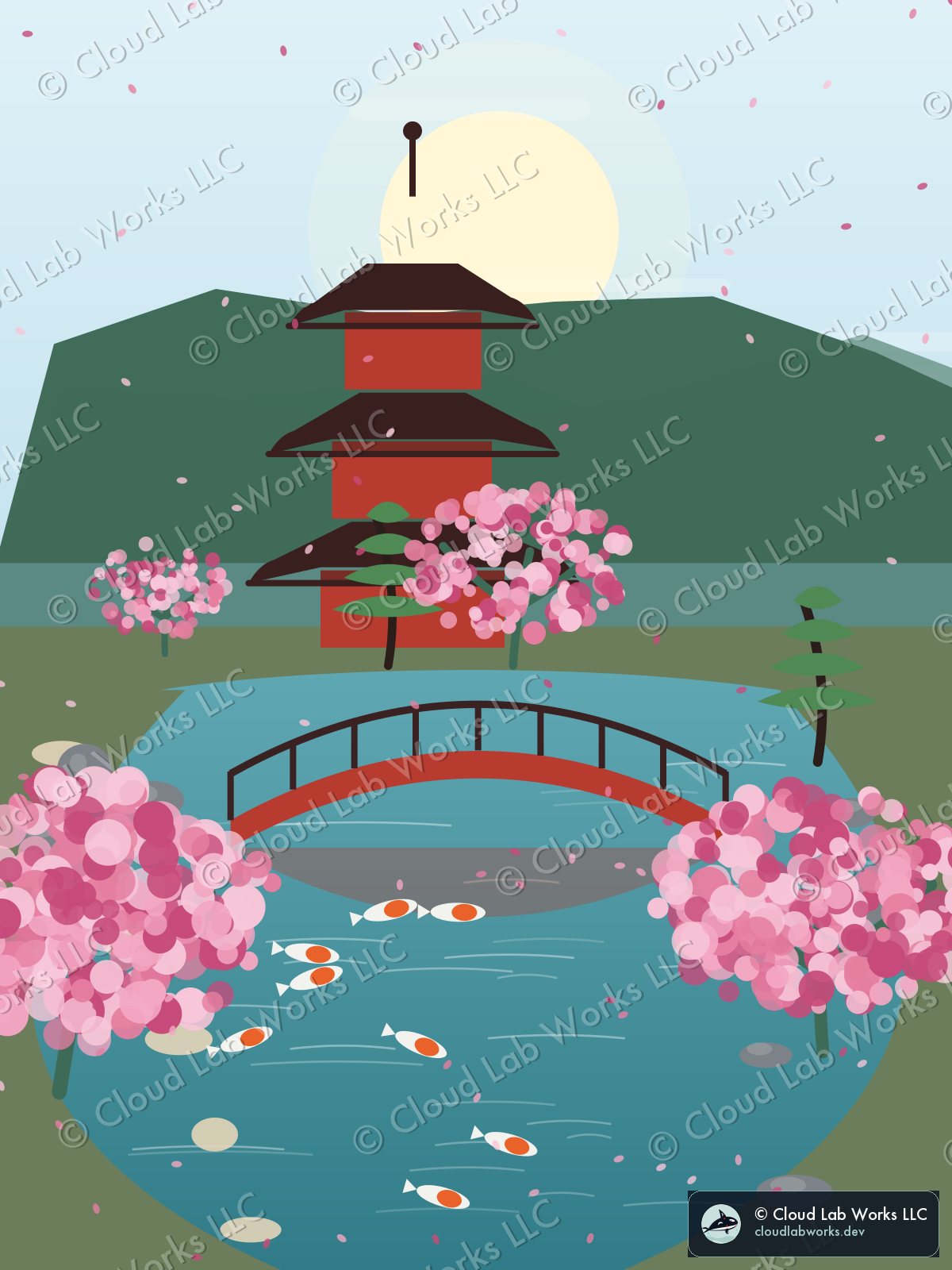 SVG · generated sceneHōkoku, in the afternoonHōkoku in the afternoon: a 3-tier pagoda, a red bridge, 8 koi and a pine. Composed from one seed; the palette is the seed's choice too.Inquire about the original →
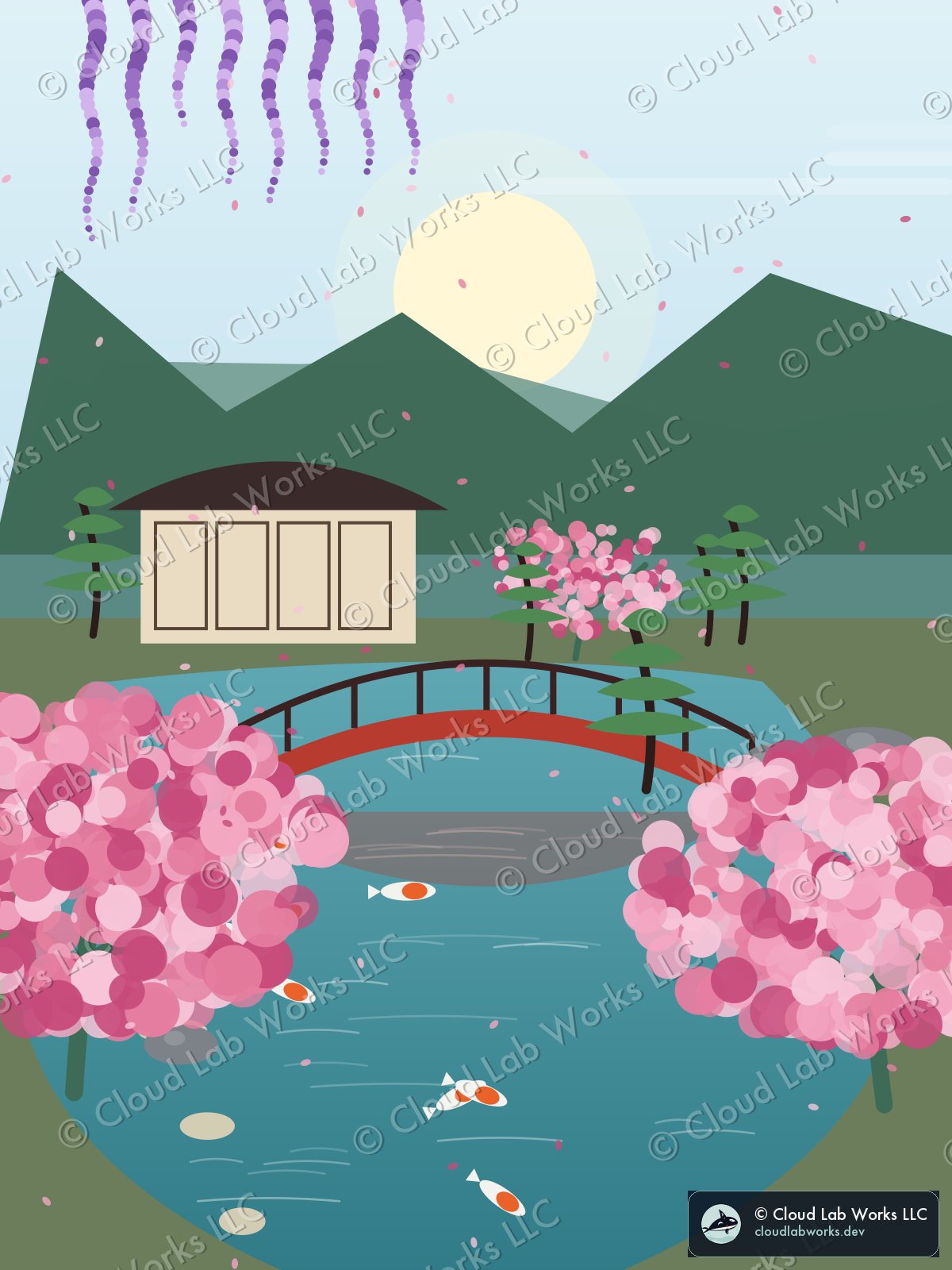 SVG · generated sceneNinna, in the afternoonNinna in the afternoon: a tea house, a red bridge, 8 koi, a pine and wisteria. Composed from one seed; the palette is the seed's choice too.Inquire about the original →
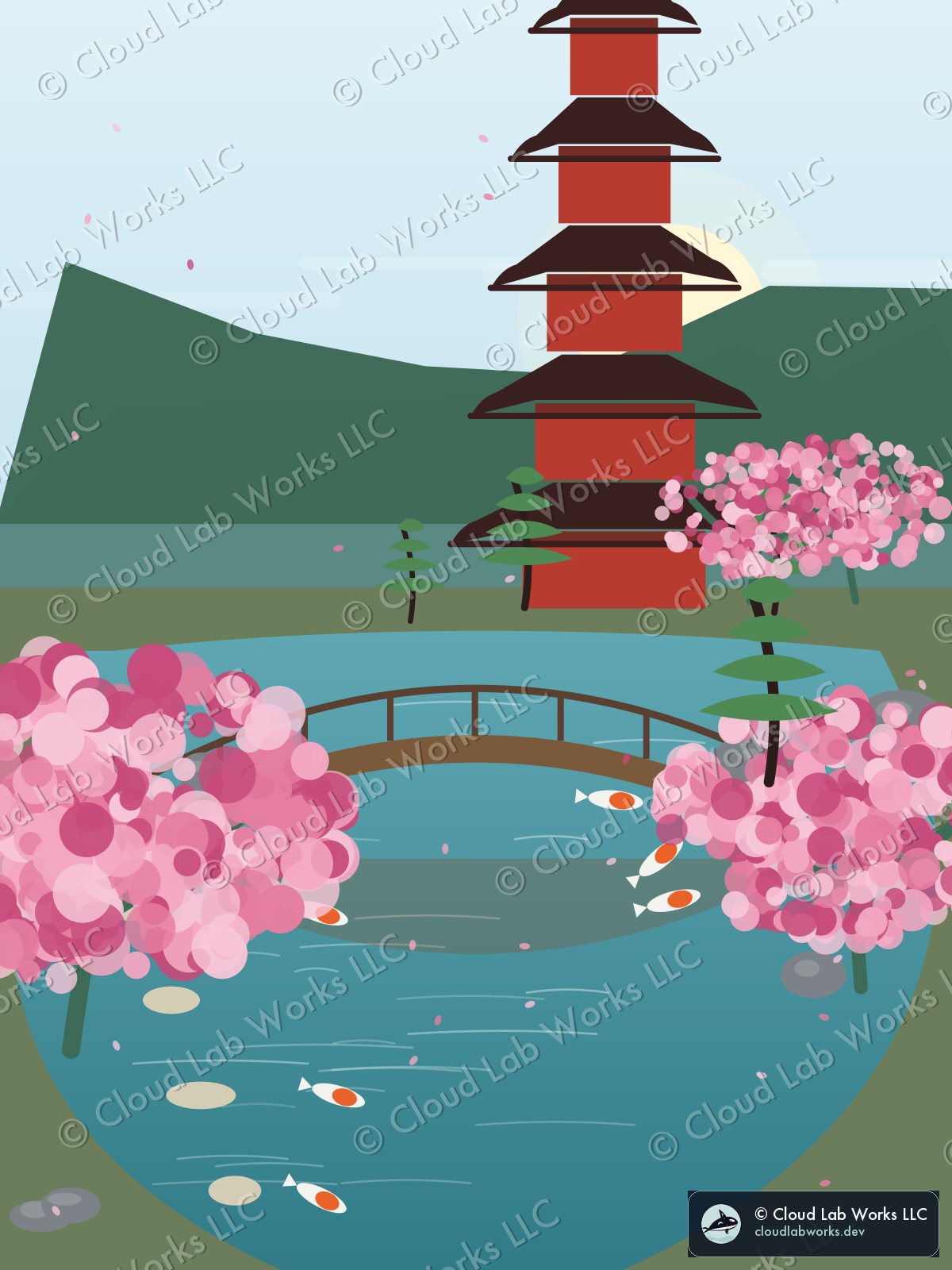 SVG · generated sceneTōji, in the afternoonTōji in the afternoon: a 5-tier pagoda, a wooden bridge, 6 koi and a pine. Composed from one seed; the palette is the seed's choice too.Inquire about the original →
The Matrix set: Kyoto, Tokyo, Fukuoka and Hokkaido
Twenty-three scenes as digital rain: eleven from Kyoto, ten from Tokyo, one from Fukuoka, one from the Hokkaido hot springs. Each is painted first as a map of light (sky, moon, roofs, lit windows, water) with one warm thing marked in vermilion, then read cell by cell into katakana and digits whose brightness is the light under them, with rain falling through the frame. Nothing traced from a photograph; every roof and gate is drawn in code from a seed. Originals by Waku; prints and licences on inquiry.
Kyoto
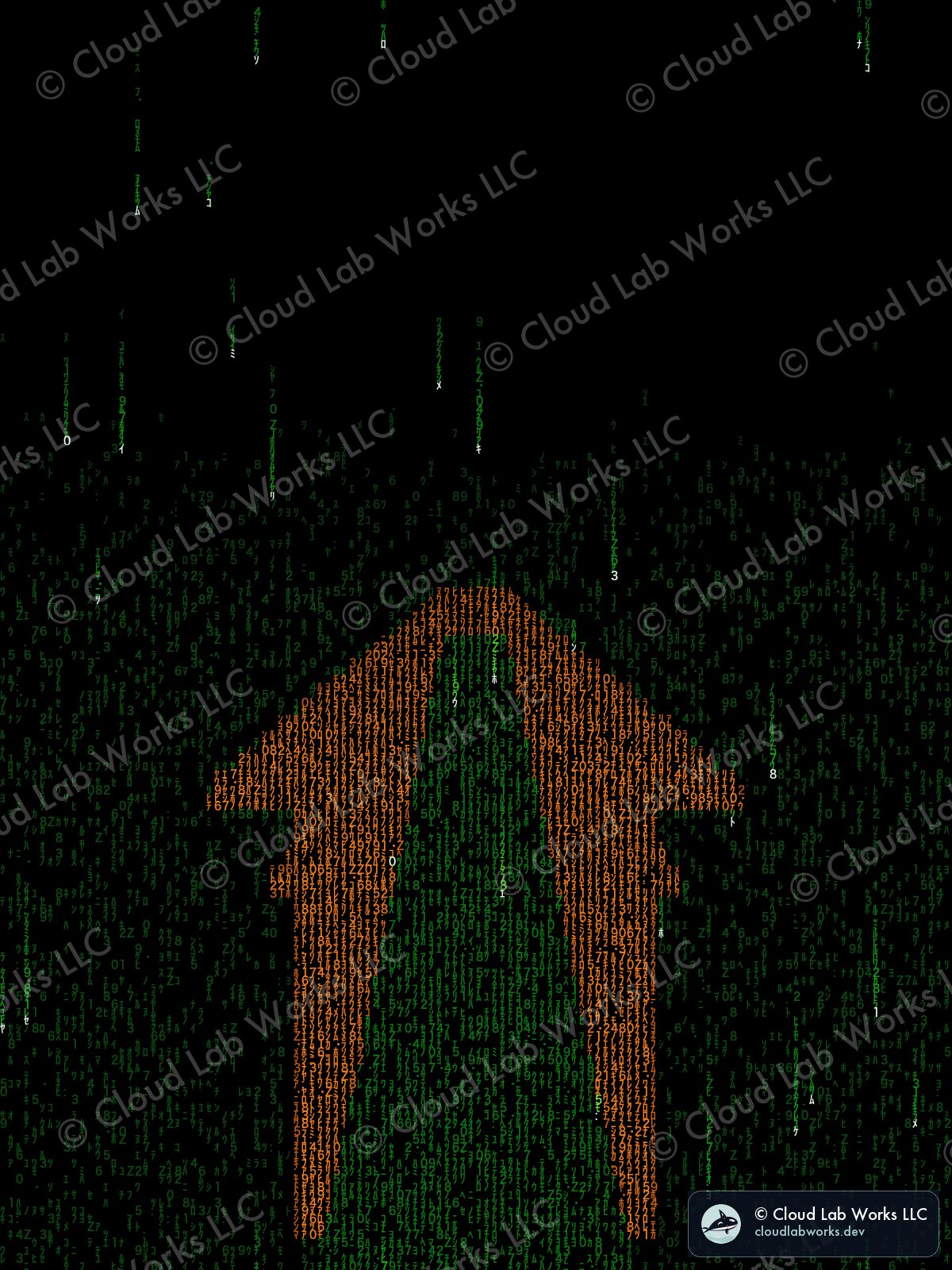 Digital rain · generated sceneFushimi Inari, the tunnelThe thousand gates of Fushimi Inari, receding uphill. The one warm thing in the frame is vermilion, repeated until it becomes a corridor.Inquire
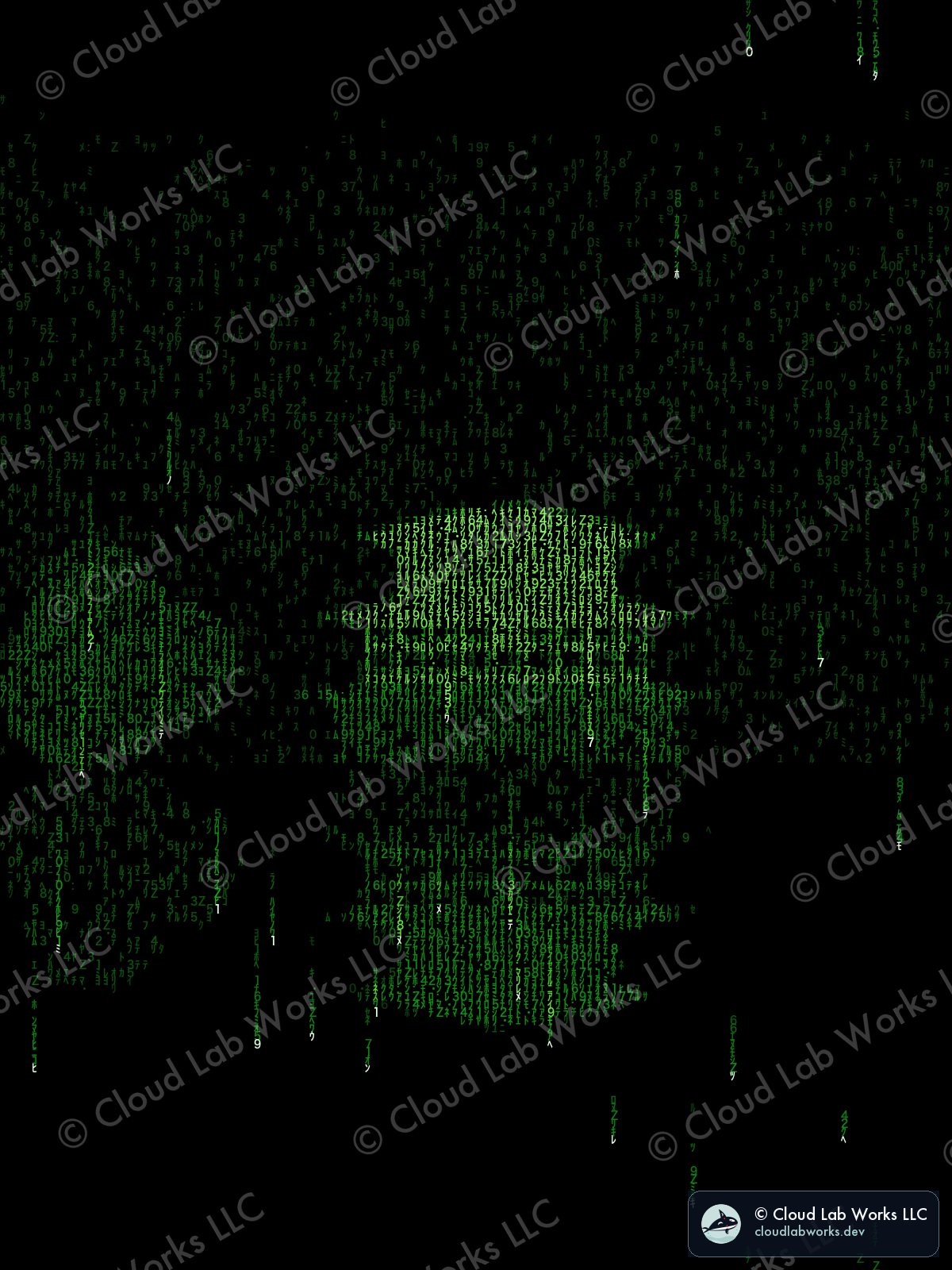 Digital rain · generated sceneKinkaku-ji, on the pondThe golden pavilion and its reflection: two storeys of light over a black pond, a pine leaning in from the left.Inquire
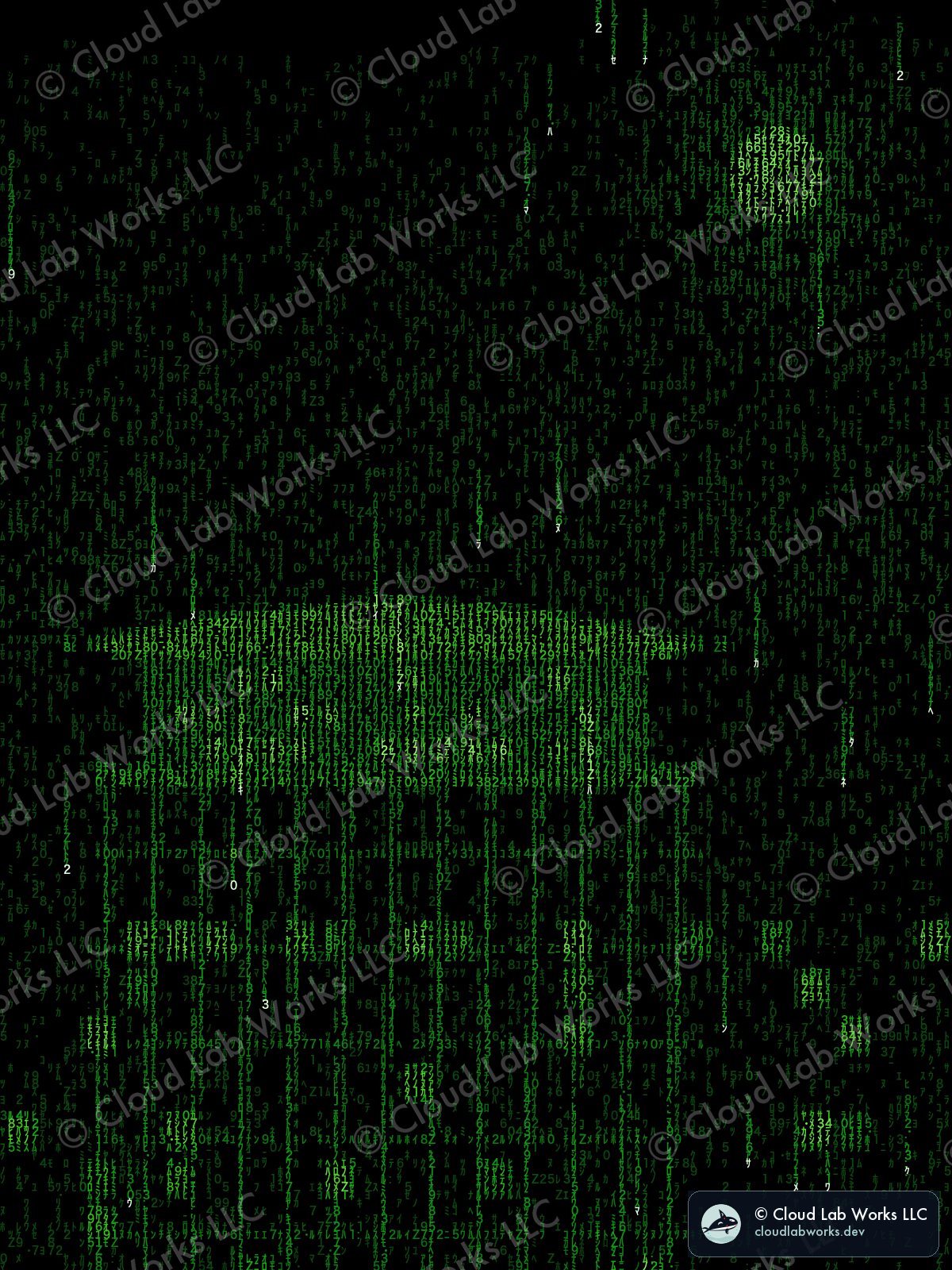 Digital rain · generated sceneKiyomizu, the stageThe wooden stage of Kiyomizu-dera on its lattice of pillars, the hillside falling away below, the city as a spill of small lights.Inquire
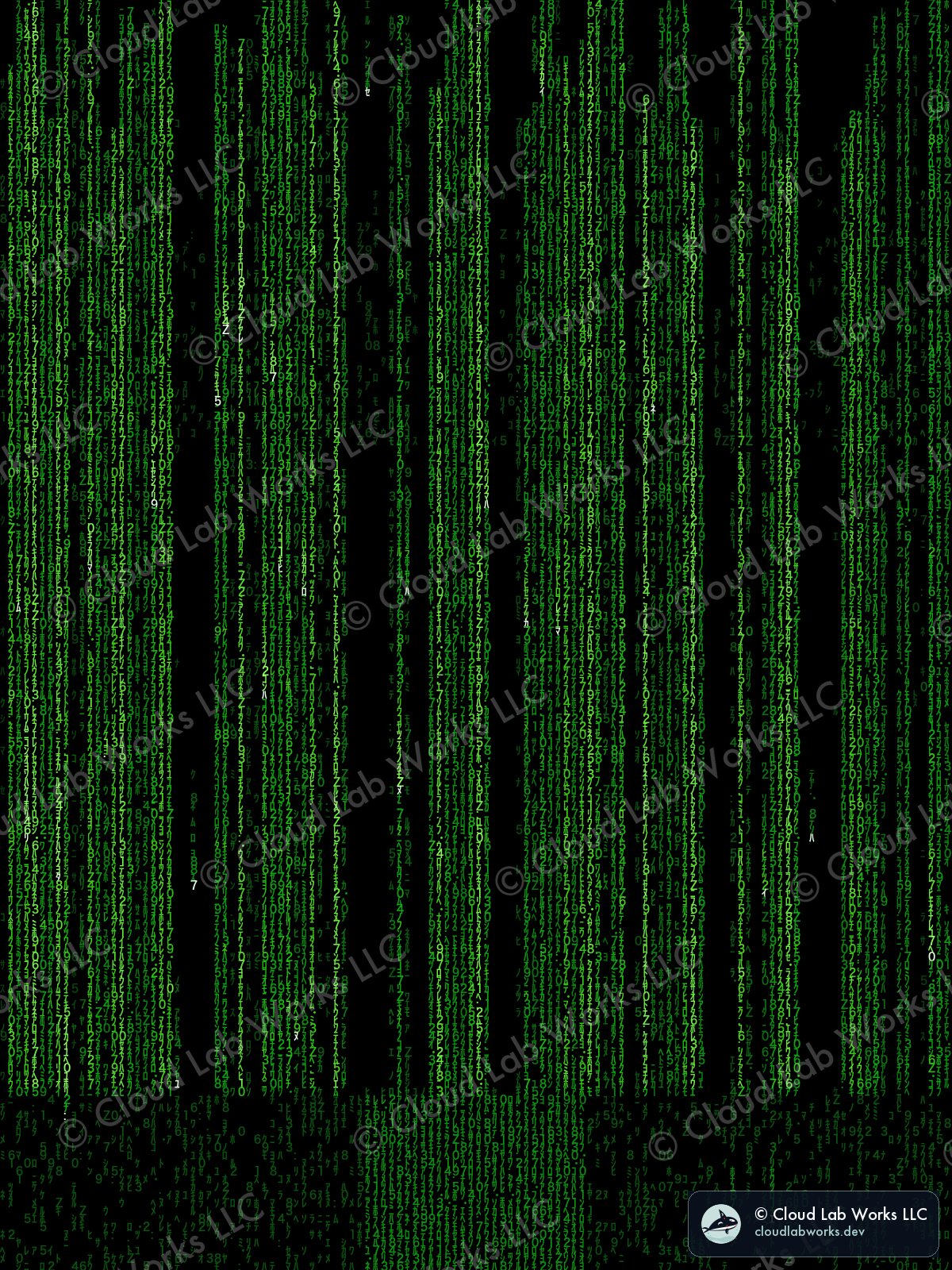 Digital rain · generated sceneArashiyama, the bambooThe bamboo grove at Arashiyama: culms taller than the frame, the light coming down between them in bars.Inquire
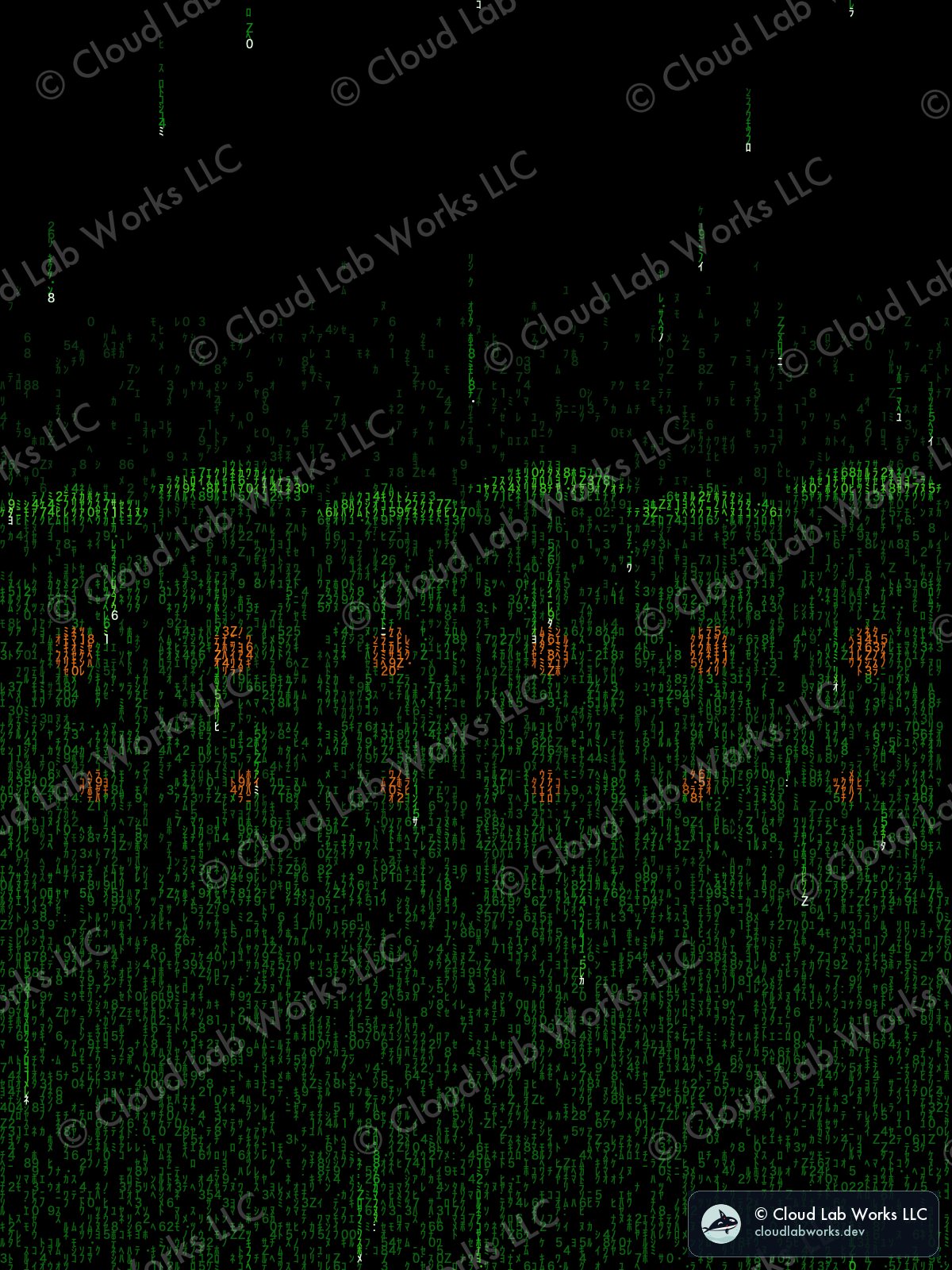 Digital rain · generated sceneGion, the lantern laneA machiya street in Gion after dark: lattice fronts, tiled eaves, and a row of paper lanterns doing the work of the moon.Inquire
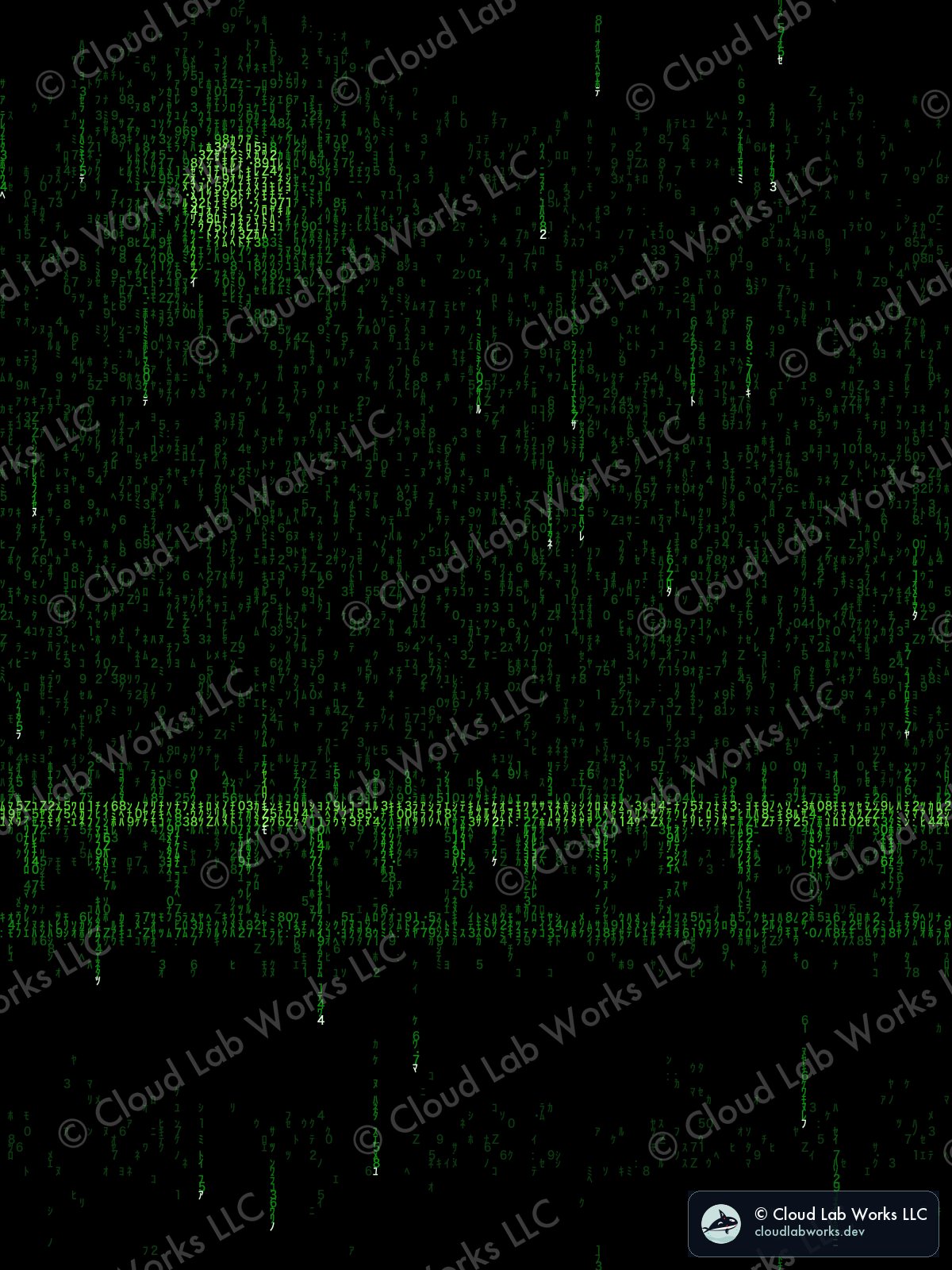 Digital rain · generated sceneTogetsukyō, the moon bridgeThe long bridge at Arashiyama over the Katsura, the hills behind it, and the moon it is named for.Inquire
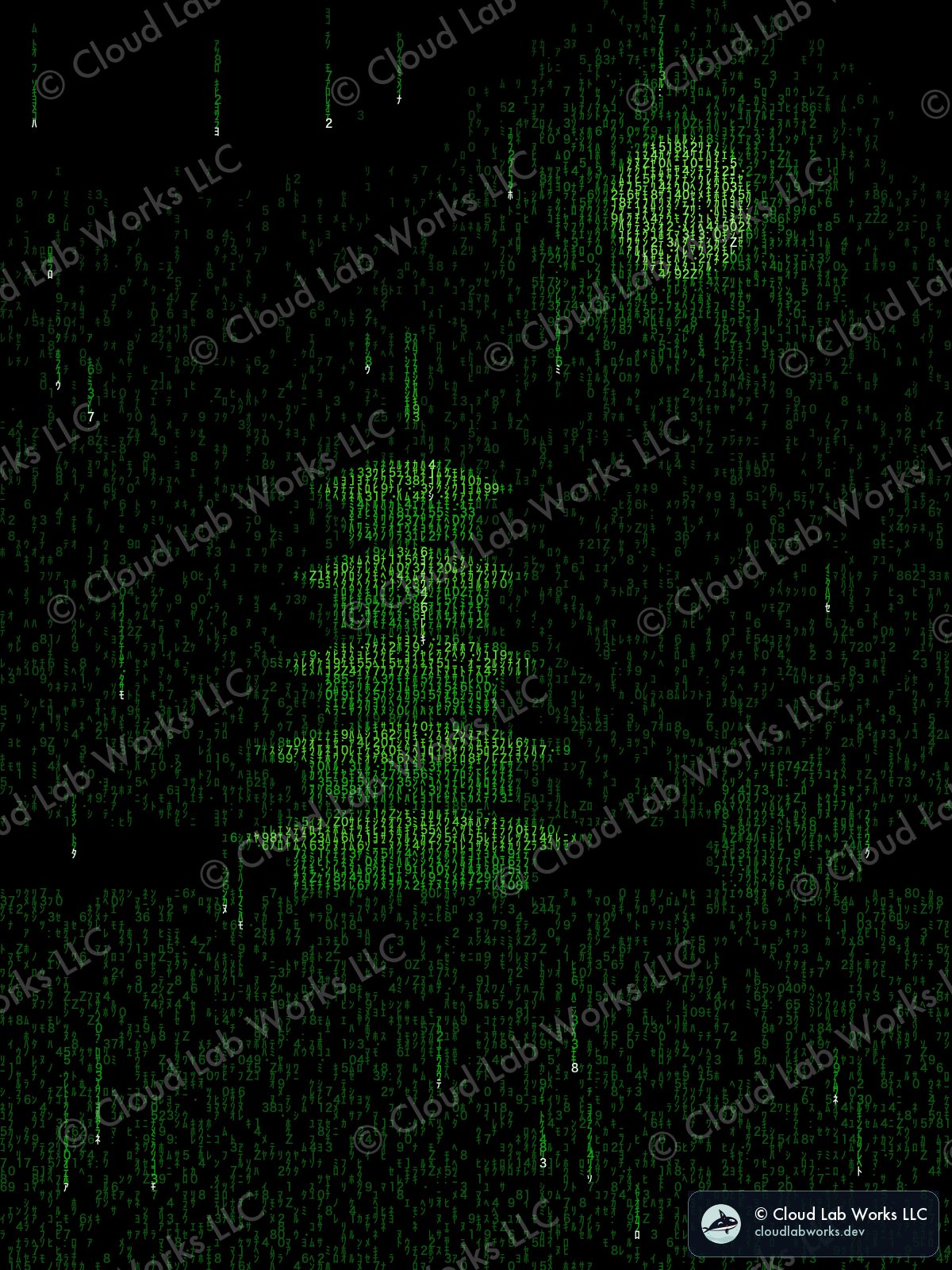 Digital rain · generated sceneTō-ji, five storeysThe five-storey pagoda of Tō-ji, the tallest wooden tower in the country, drawn as five roofs and a spire against the moon.Inquire
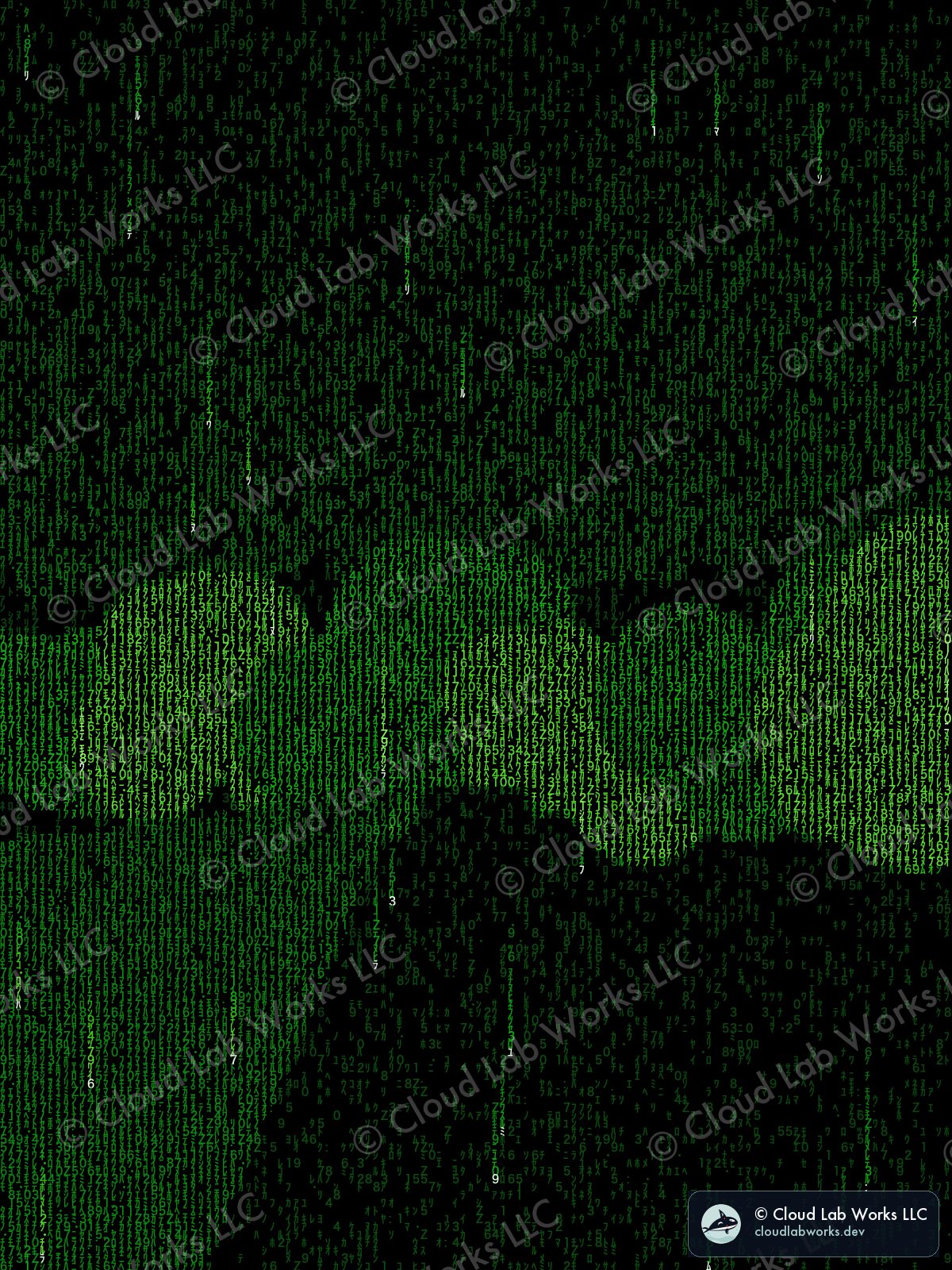 Digital rain · generated sceneThe Philosopher's PathThe canal walk in blossom season: cherry trees on both banks, petals in the water, a stone path that only goes one way.Inquire
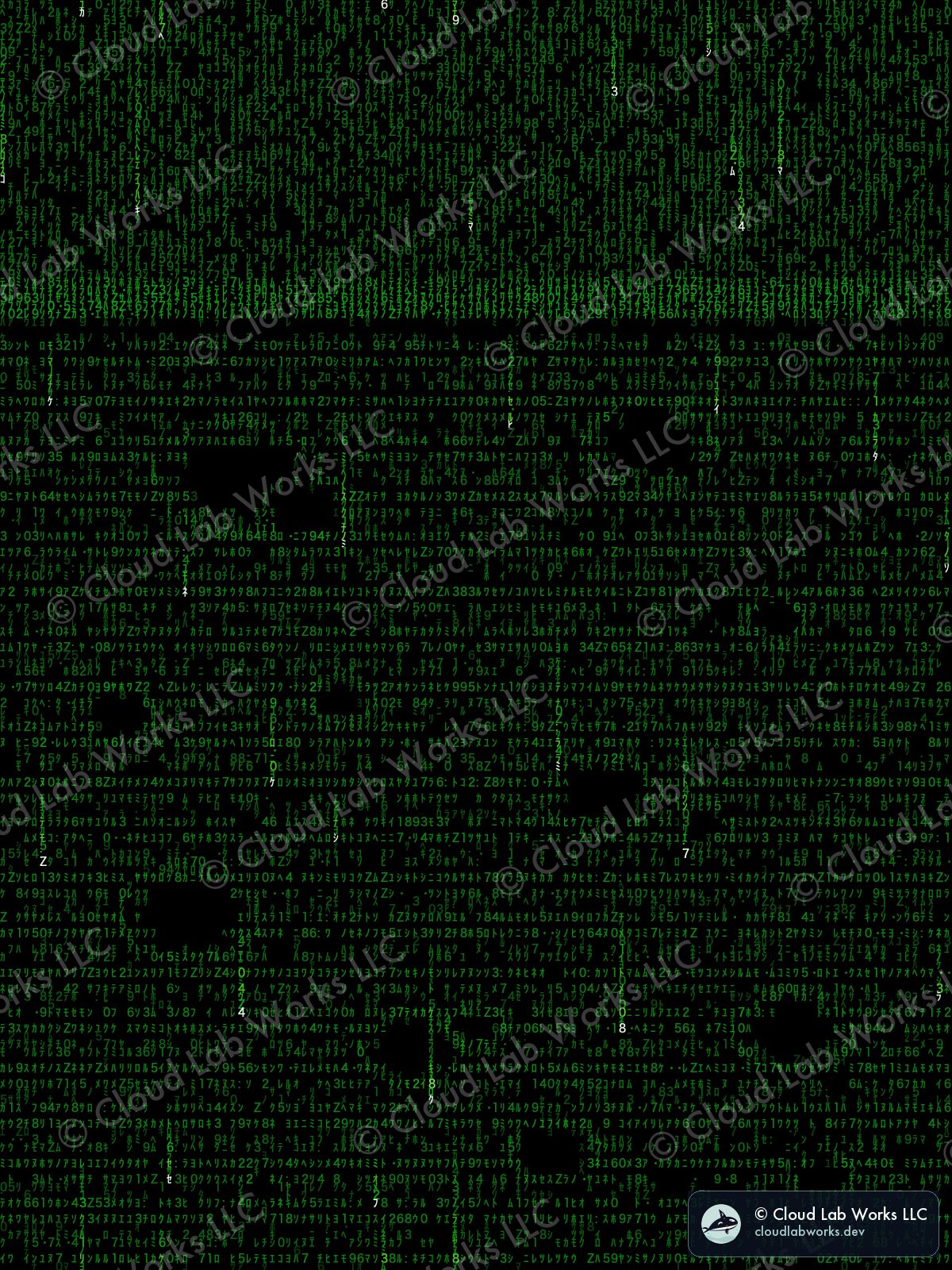 Digital rain · generated sceneRyōan-ji, the fifteen stonesThe rock garden: raked gravel drawn as rows of glyphs, the stones as silences in it. You cannot see all fifteen from any one place, and you cannot here either.Inquire
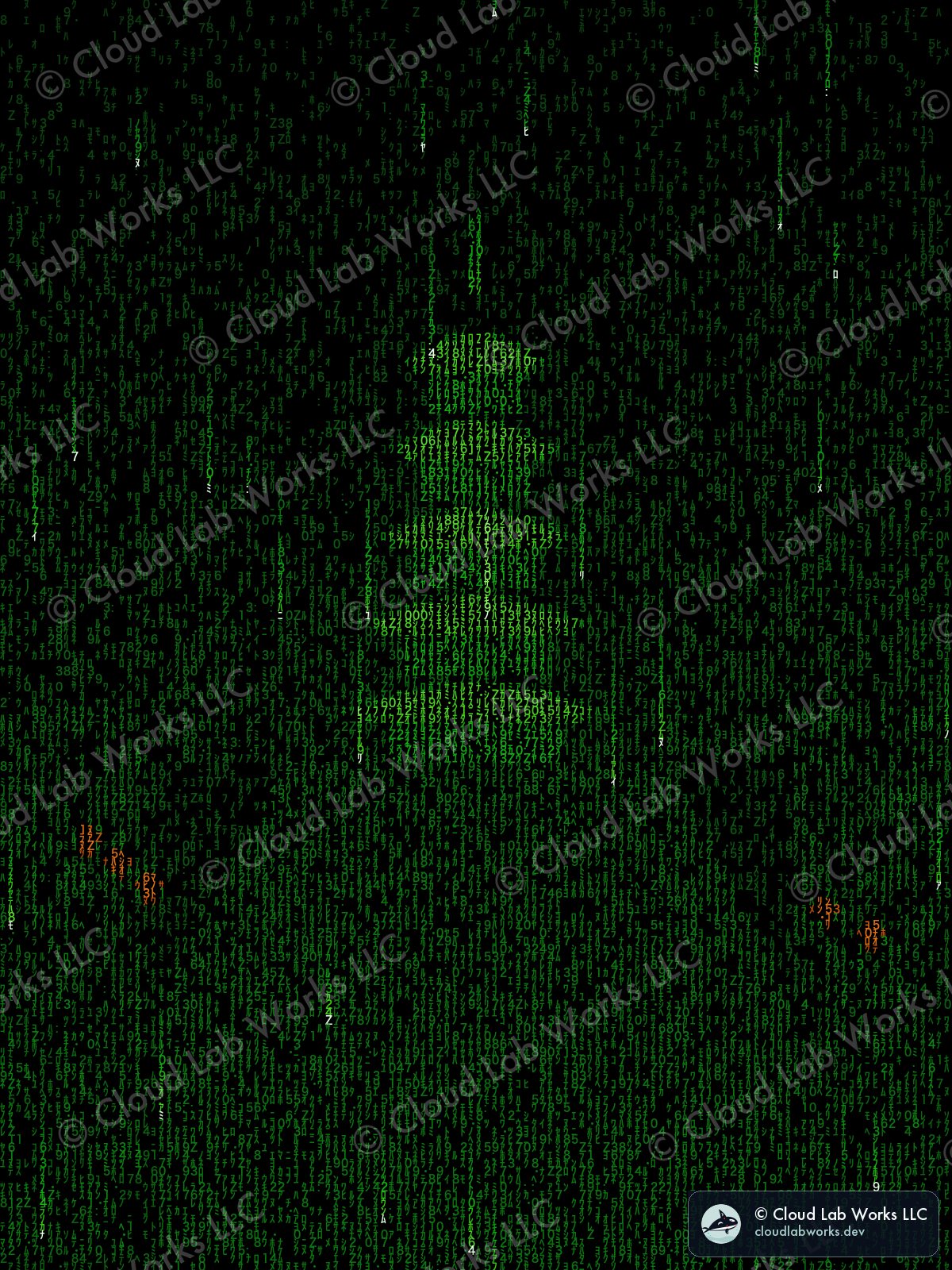 Digital rain · generated sceneYasaka, the pagoda streetHōkan-ji's pagoda at the top of the sloping street, the shop lanterns coming on, dusk doing the rest.Inquire
Tokyo
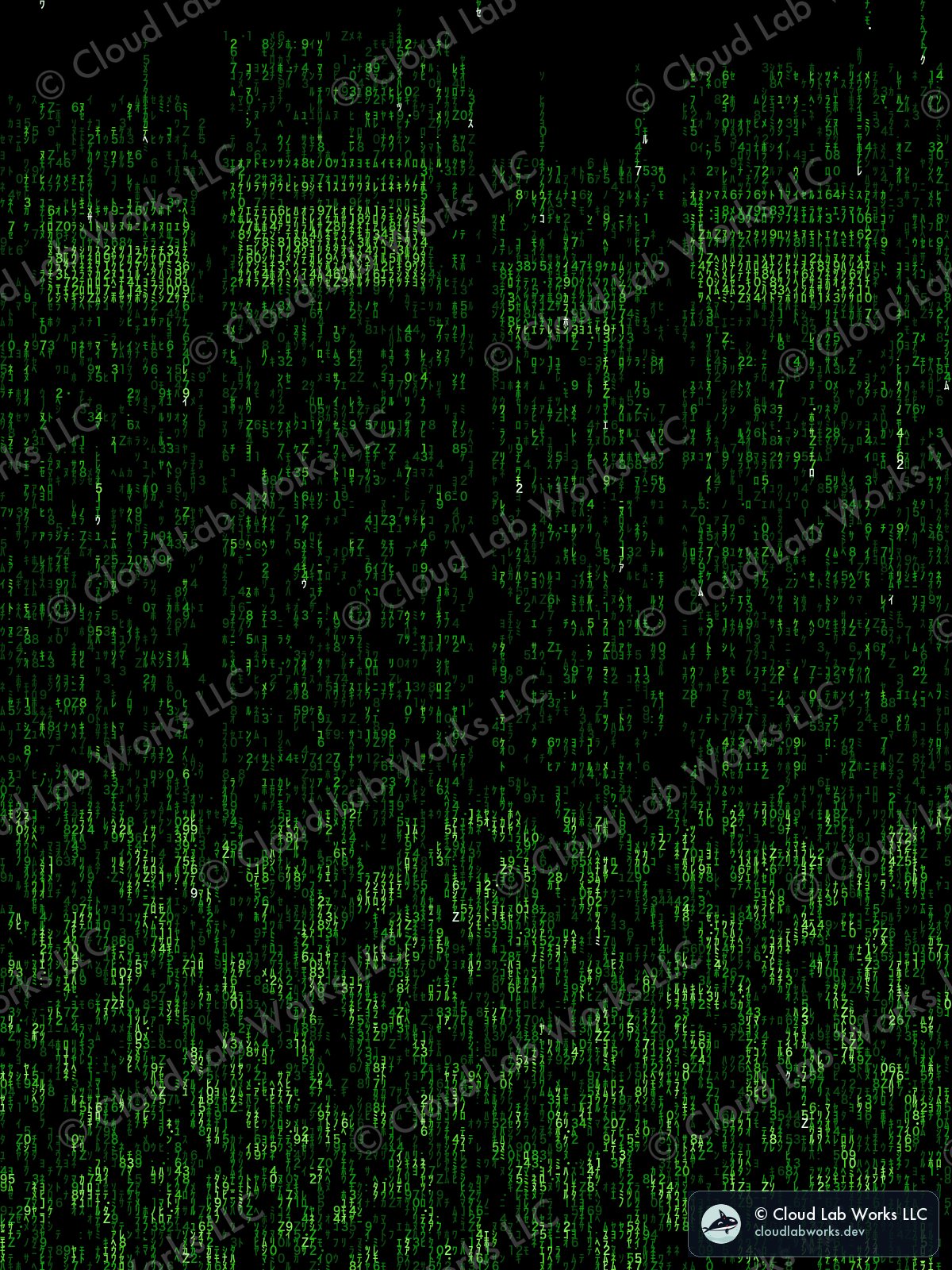 Digital rain · generated sceneShibuya, the crossingThe scramble from above: five screens, a thousand heads, every one of them a glyph for the two seconds the light is green.Inquire
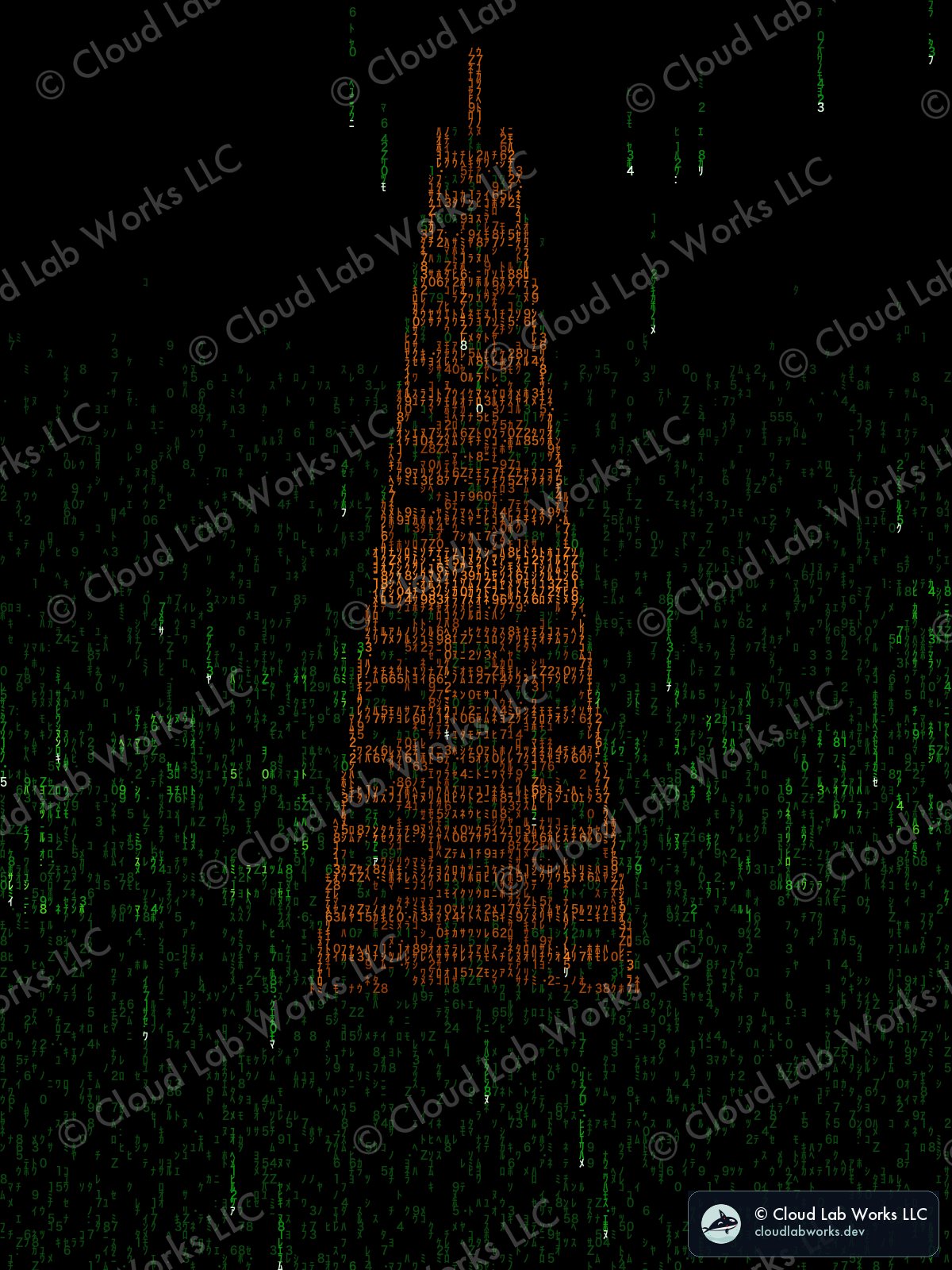 Digital rain · generated sceneTokyo Tower, litThe tower over Shiba, orange by night, the office blocks around it holding still while the rain moves.Inquire
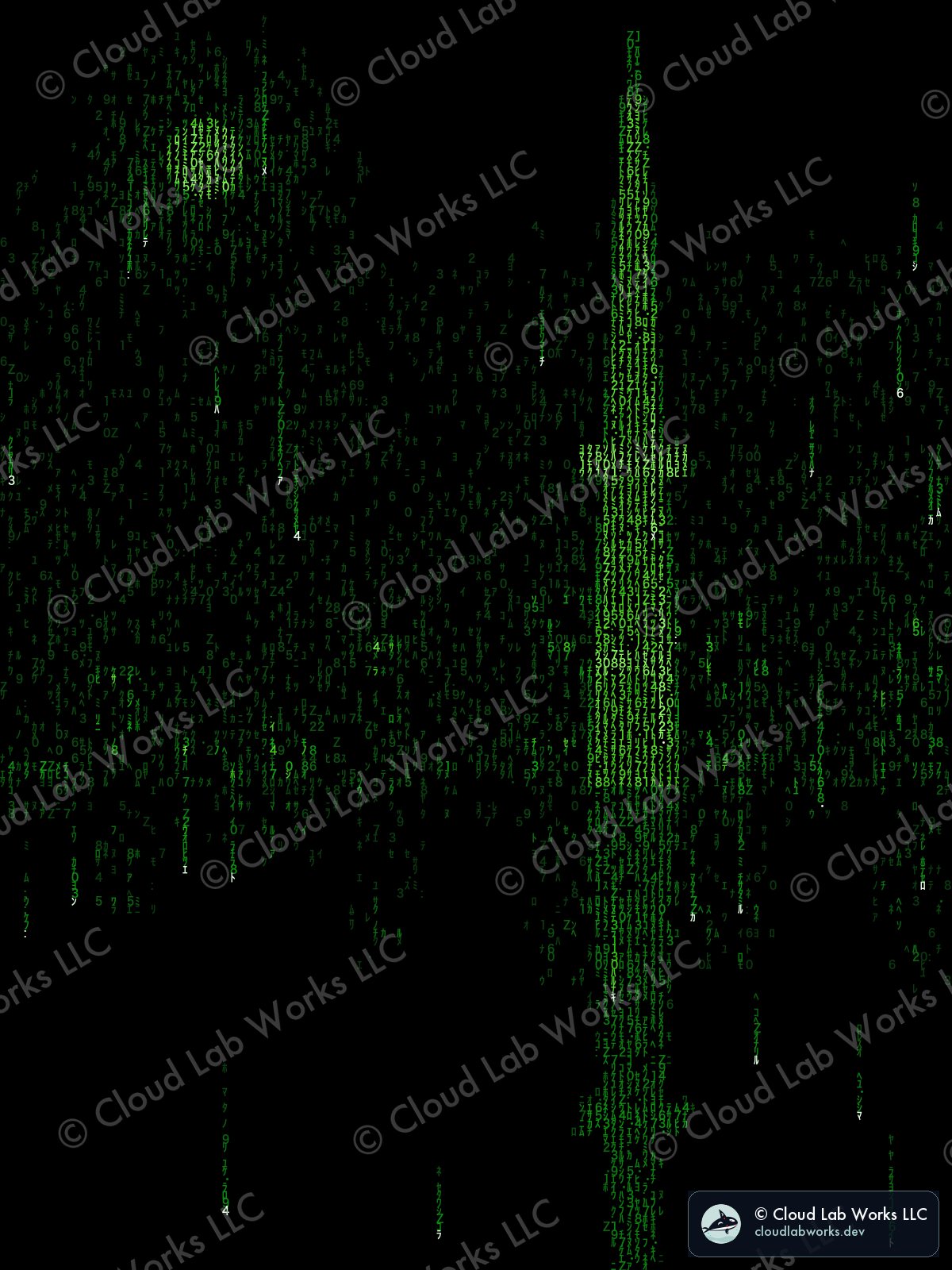 Digital rain · generated sceneSkytree, over the SumidaThe tallest thing in the city as a needle of light, the river taking a copy of it and breaking it up.Inquire
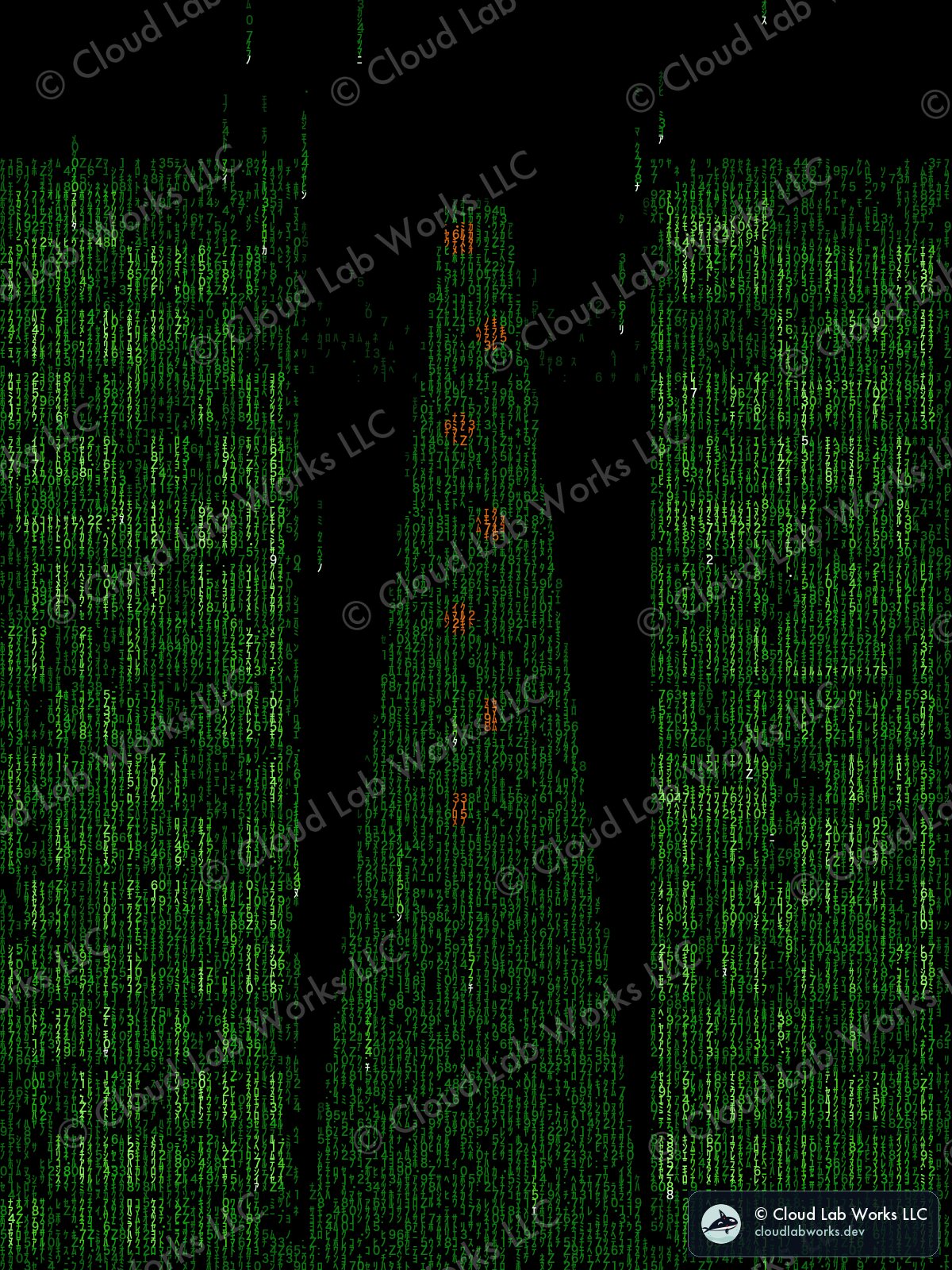 Digital rain · generated sceneOmoide YokochōThe yakitori alley behind Shinjuku station: six feet wide, lanterns overhead, every stall a lit window with smoke where the rain should be.Inquire
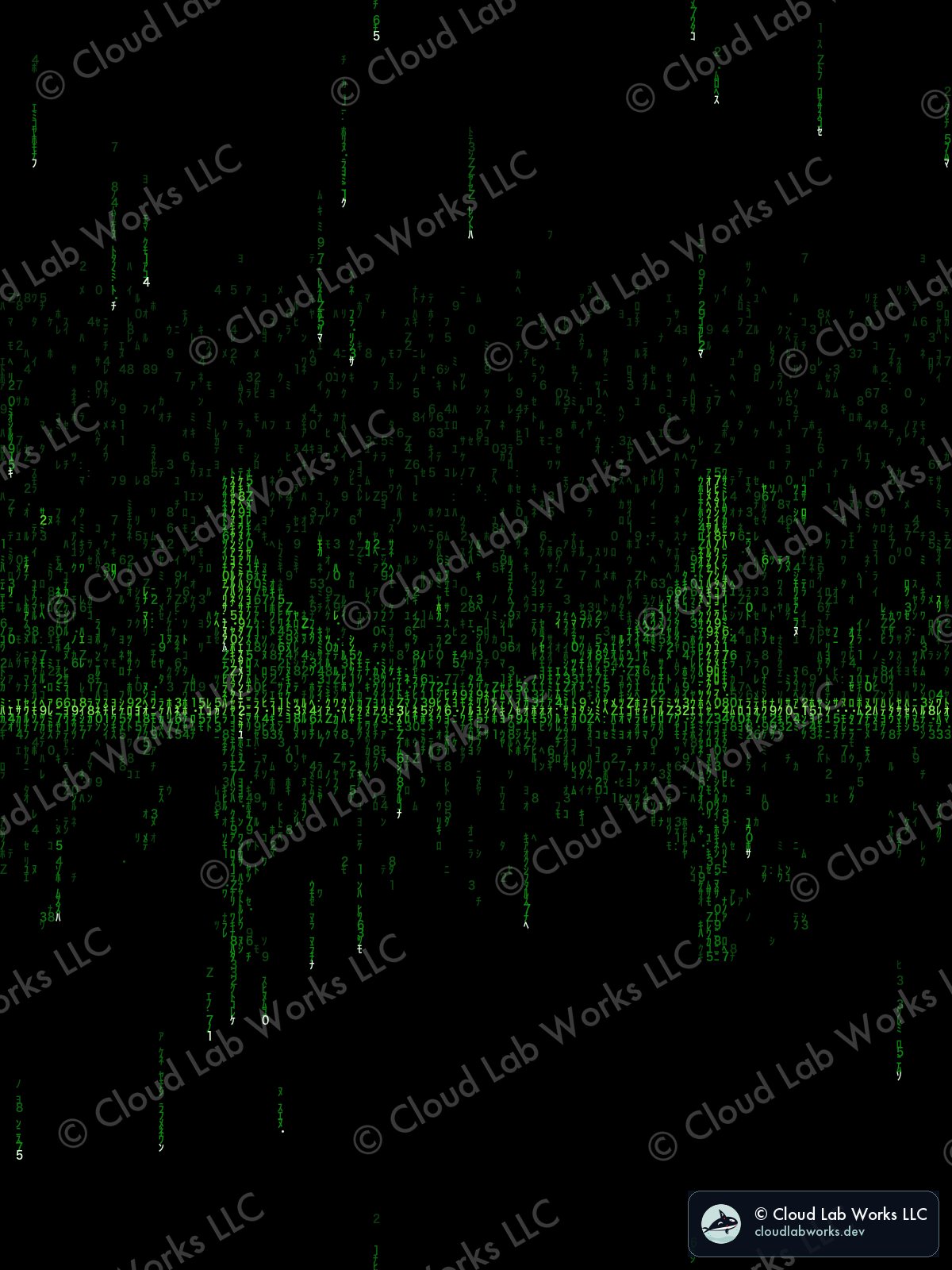 Digital rain · generated sceneRainbow BridgeThe suspension bridge across the bay from Odaiba, its cables as a lattice of glyphs, the bay black under it.Inquire
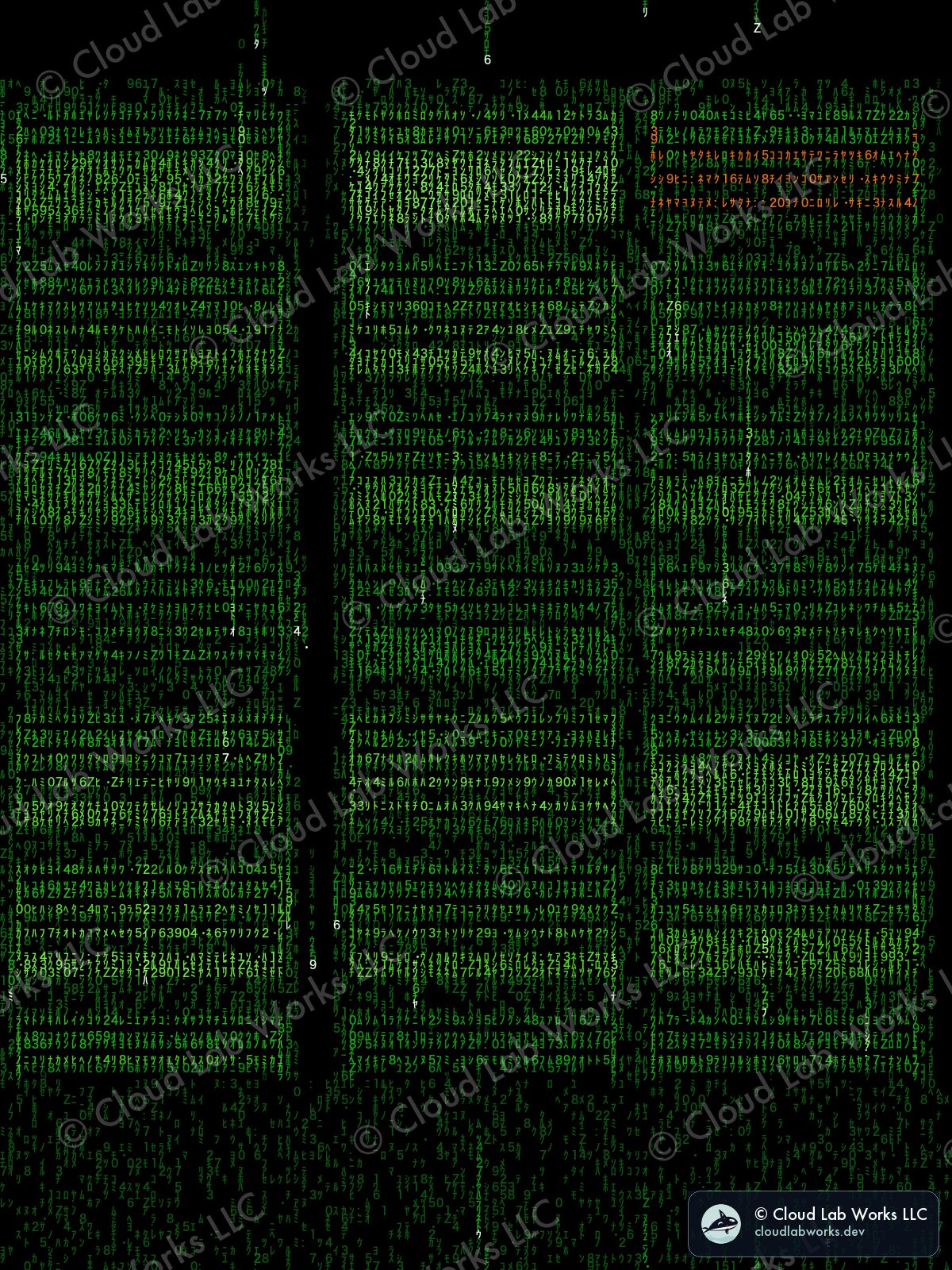 Digital rain · generated sceneAkihabara, the signsElectric Town: a wall of signage seven storeys high, each sign a block of glyphs at its own brightness.Inquire
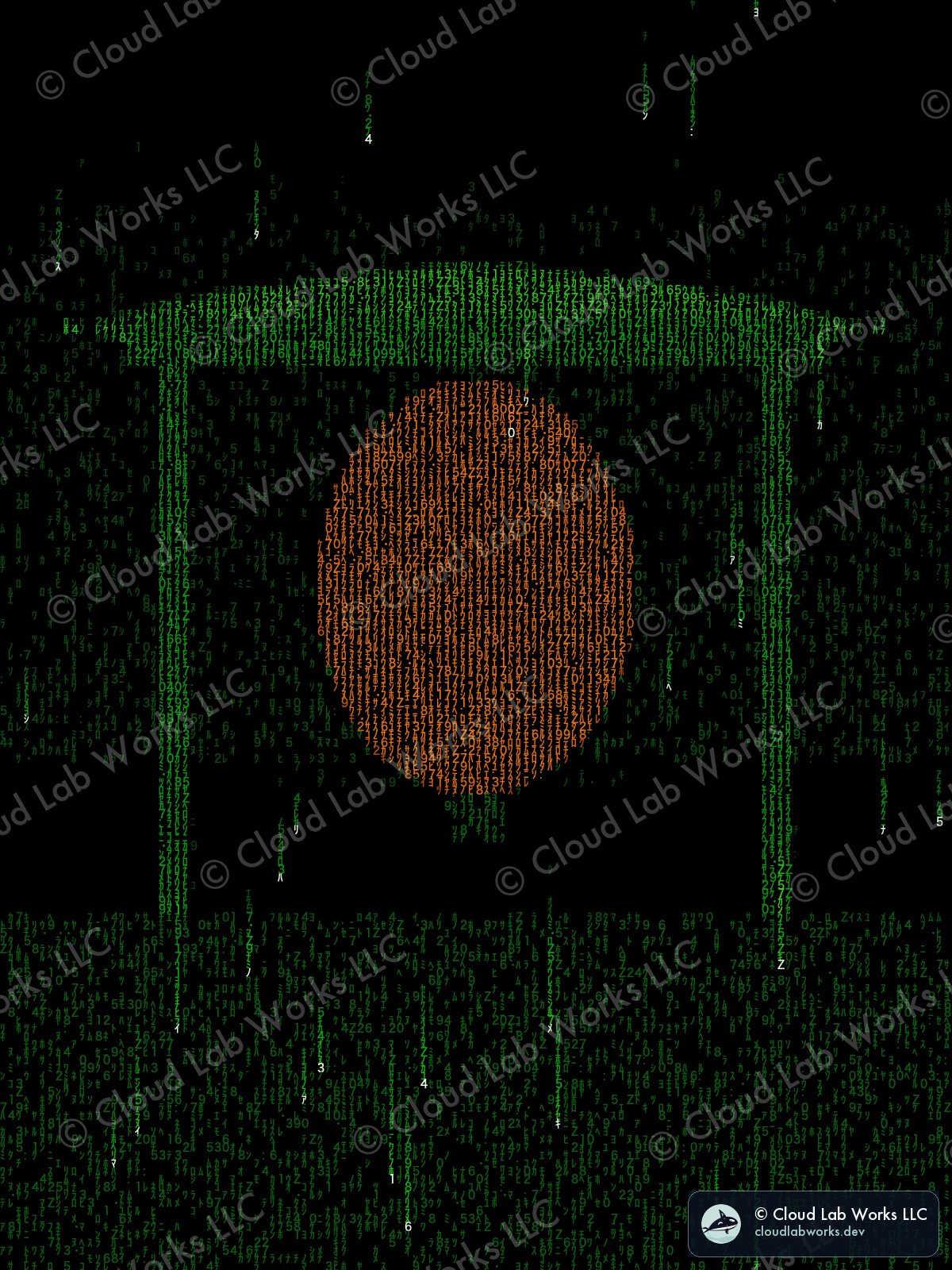 Digital rain · generated sceneKaminarimon, the lanternThe thunder gate at Asakusa: one giant lantern, red, under a roof wide enough to hide the street behind it.Inquire
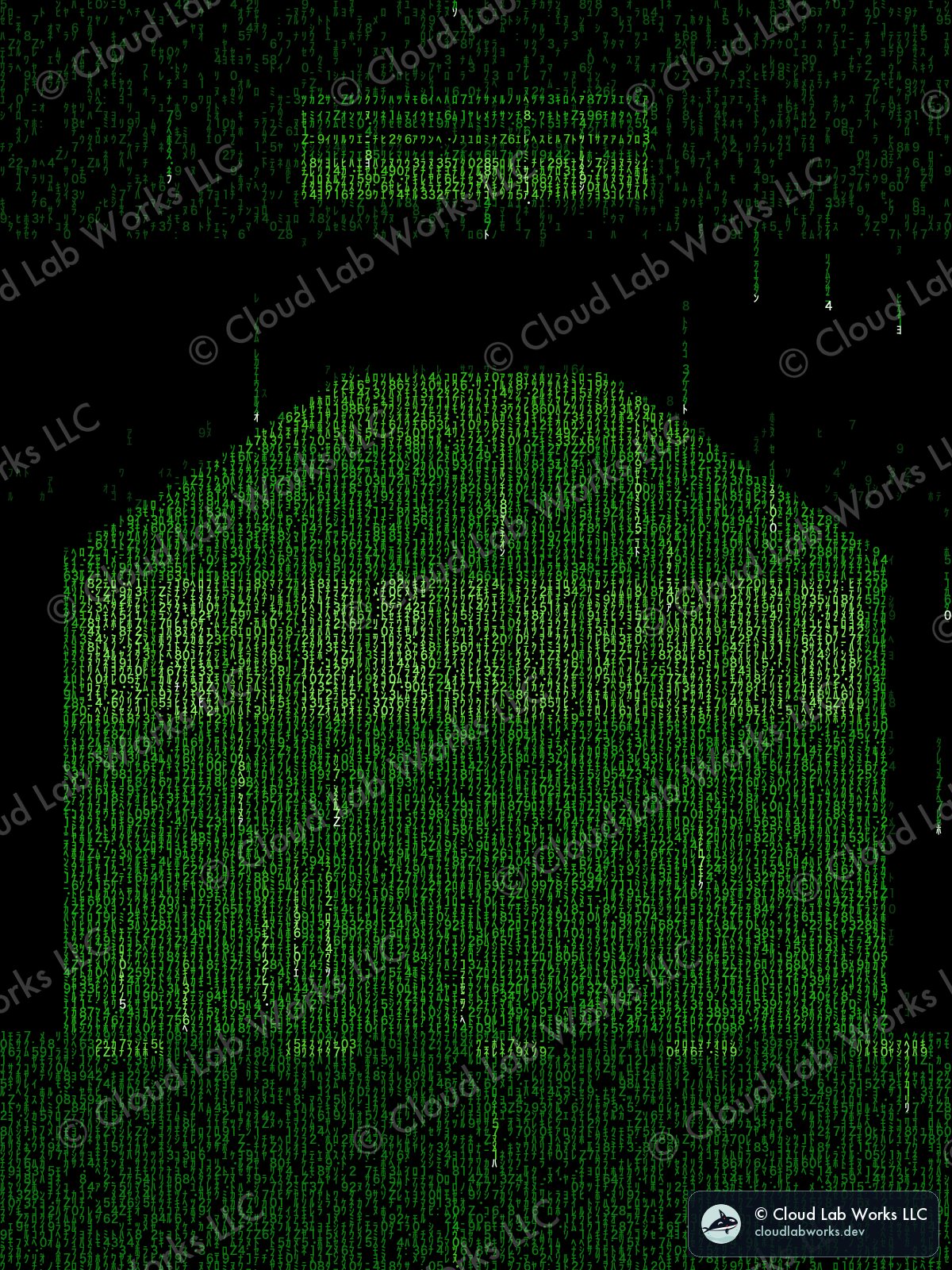 Digital rain · generated sceneShinkansen, the platformThe nose of the train at the platform, the doors lit, the departure board as a grid of glyphs that only says the time.Inquire
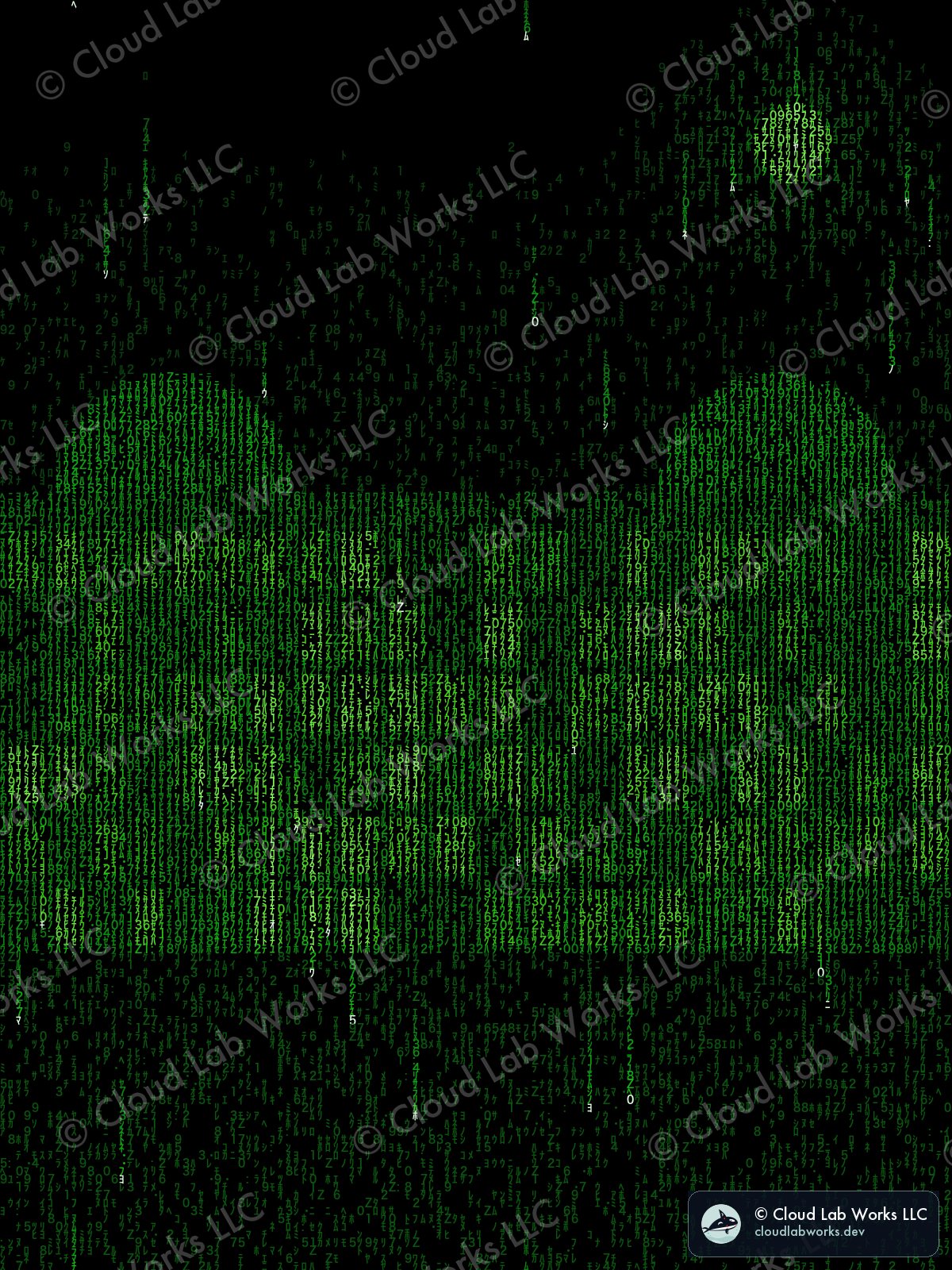 Digital rain · generated sceneTokyo Station, the facadeThe Marunouchi side: two domes, three storeys of brick drawn as lit arches, the plaza empty for once.Inquire
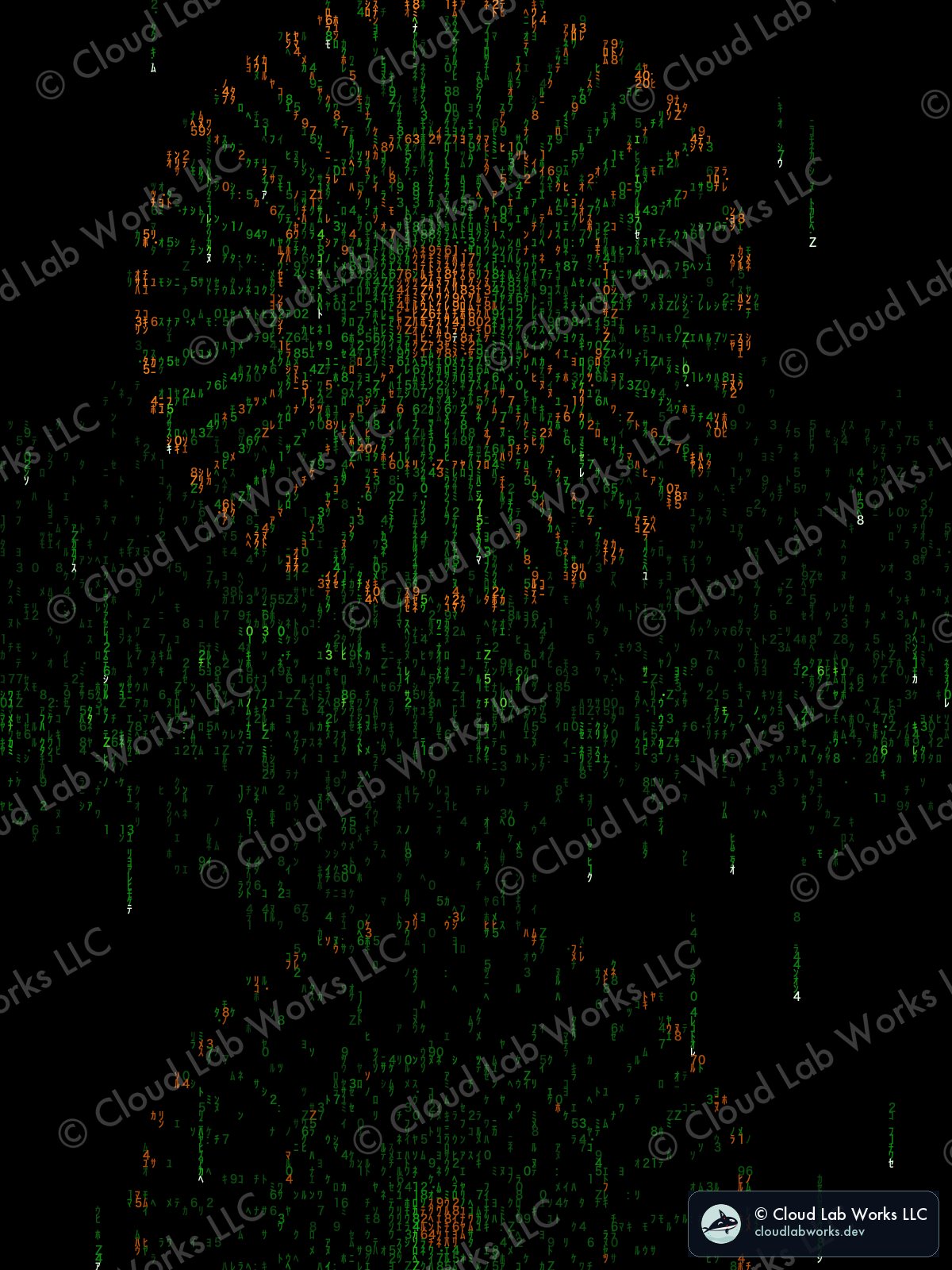 Digital rain · generated sceneSumida, fireworksThe river festival: one burst over the skyline, the whole city looking up, the water taking the copy.Inquire
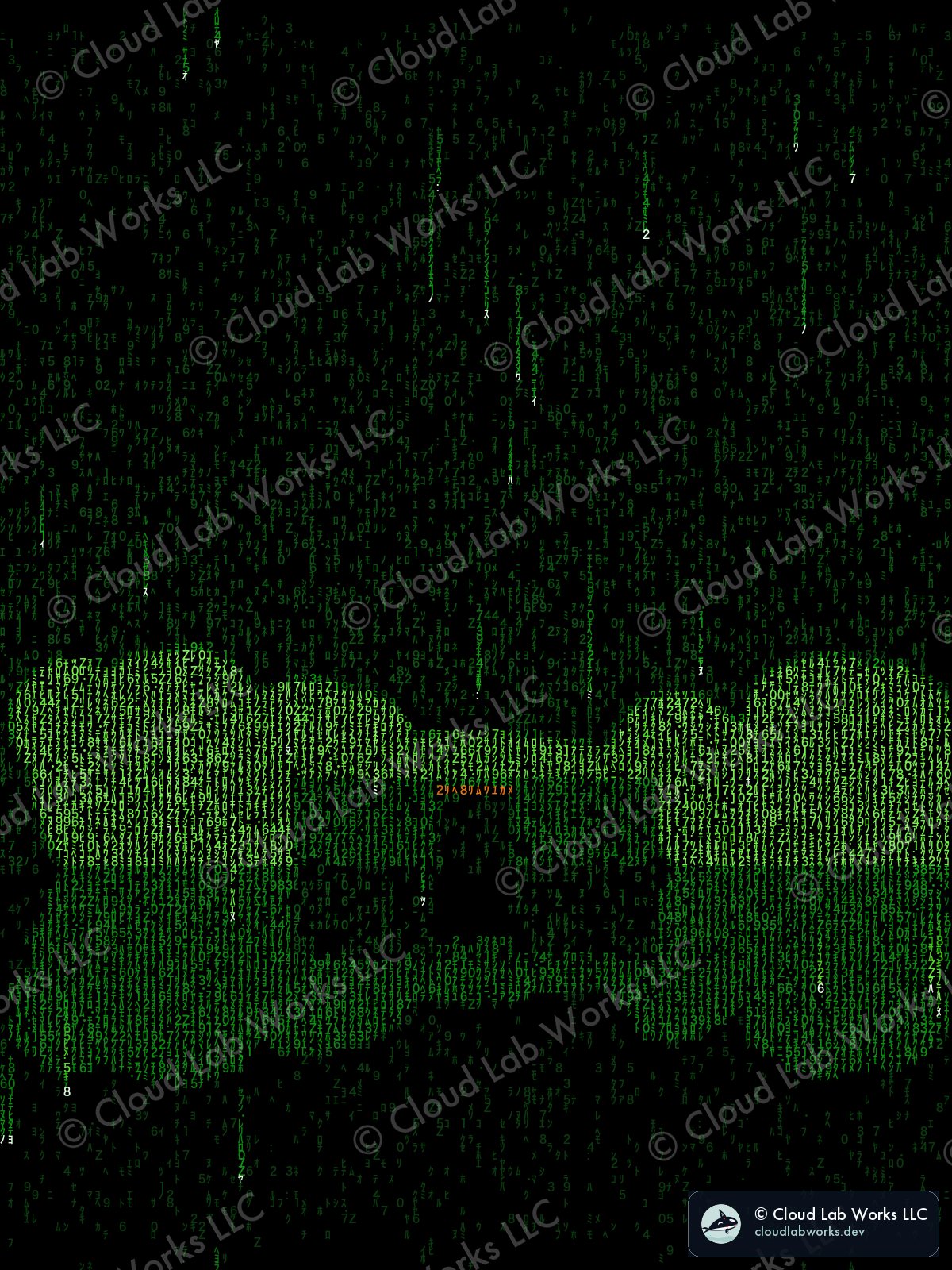 Digital rain · generated sceneNijō, the moat gateThe castle's karamon gate across still water, its ridge gilded, the banks in blossom on both sides.Inquire
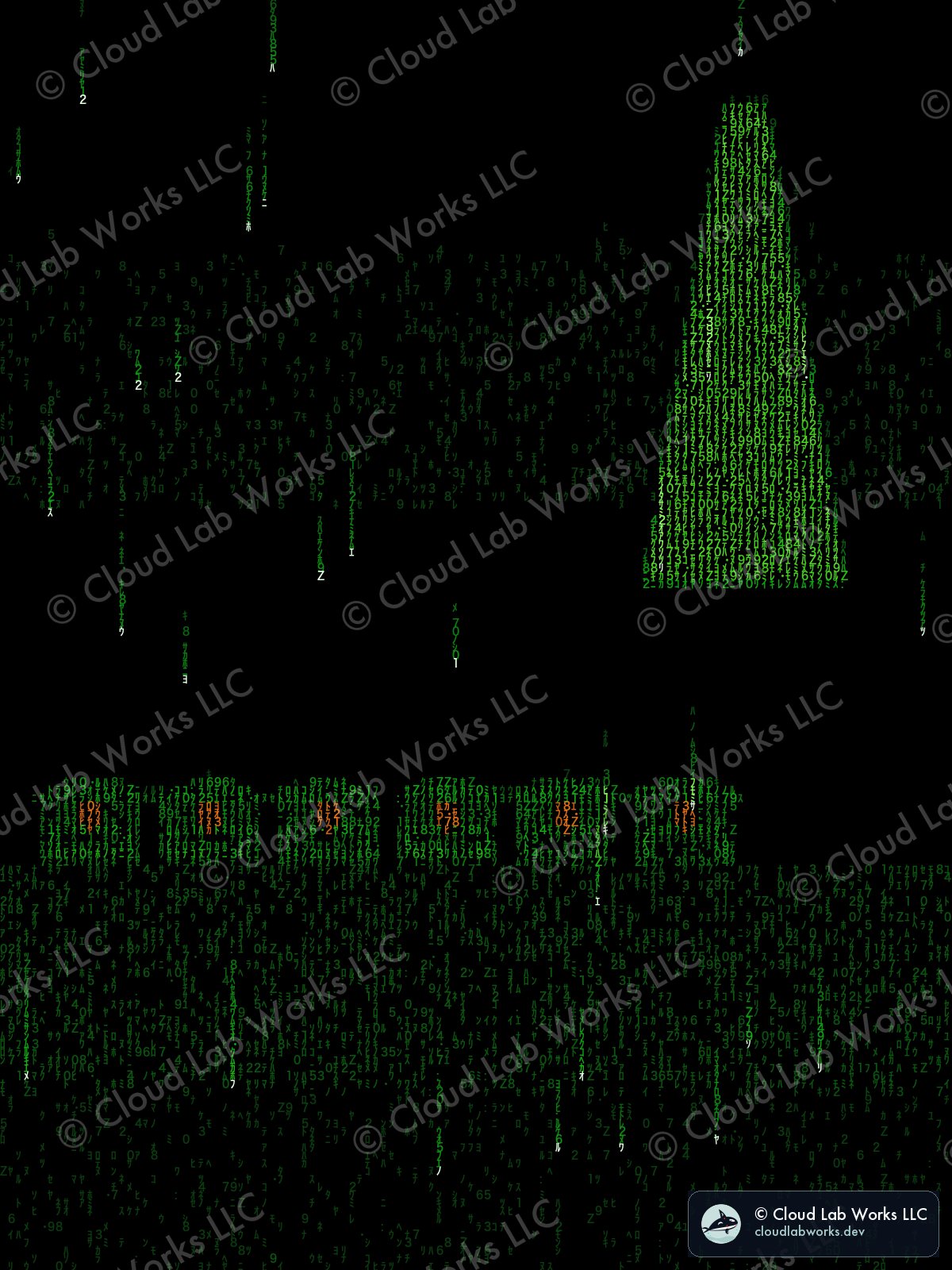 Digital rain · generated sceneHakata, the yatai rowA line of yatai stalls by the canal, steam over each counter, Fukuoka Tower's diamond skin catching the little light there is.Inquire
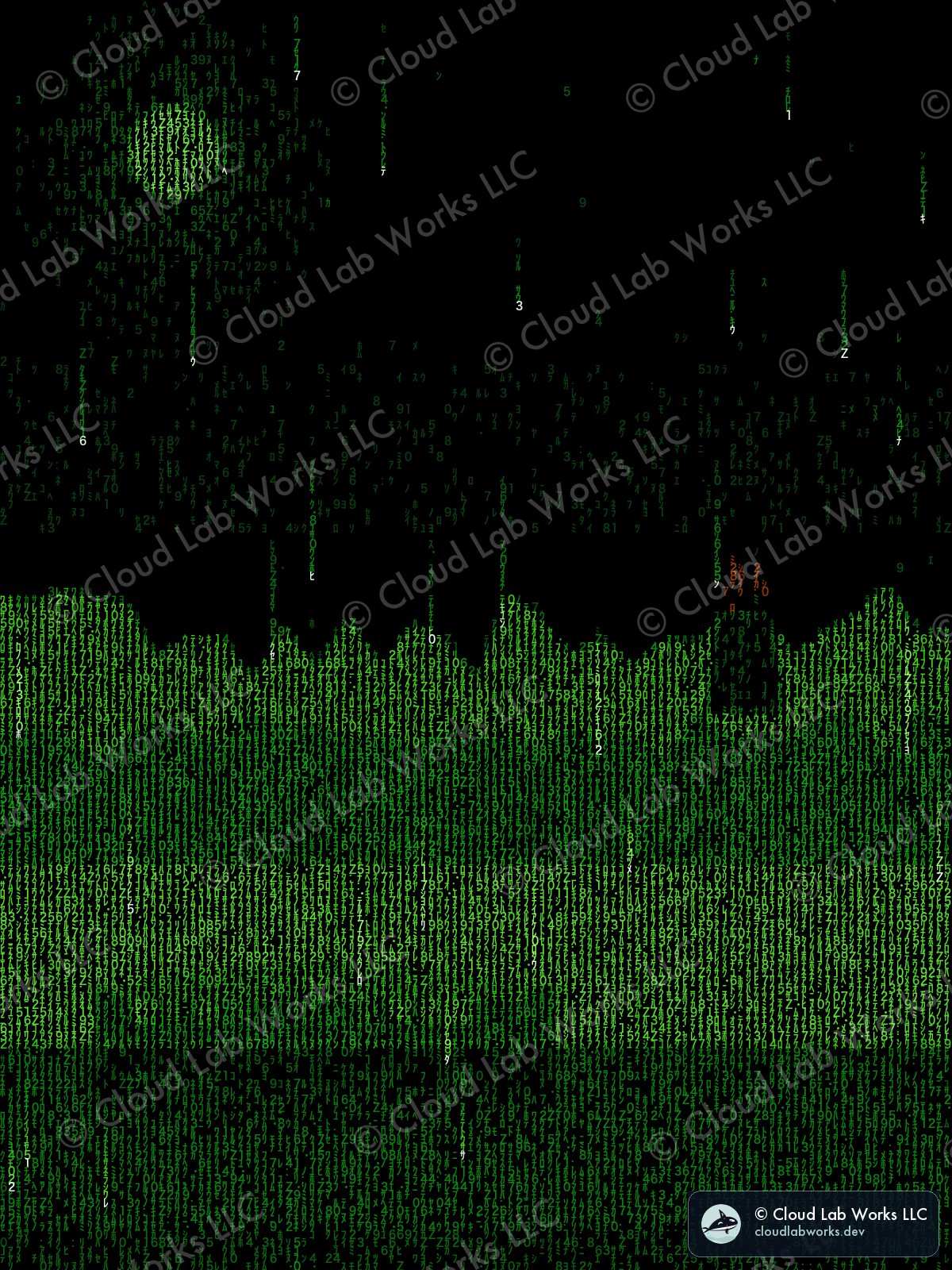 Digital rain · generated sceneNoboribetsu, JigokudaniHell Valley by night: steam standing over sulphur ground, an oni's red eyes on the ridge above the onsen roofs, snow keeping everything else quiet.Inquire
The Ronin set: samurai and masterless swordsmen
Twenty-five scenes in the same digital rain as the Matrix set and drawn by the same code, but turned from architecture to people. A figure has to survive being reduced to ten-pixel glyph cells, so the silhouette carries everything: the flare of a hakama at the hem, the wings of a kataginu, a topknot or a straw kasa, a blade at rest or drawn. Nothing is traced from a photograph or a film still; every figure is drawn in code from a seed, so the set shares a hand with the cities and no two scenes repeat. The warm channel is spent sparingly and never on the swordsman: it goes to a torii, a lantern, a cooking fire, a village burning behind someone who is not looking at it. Source: media/src/ronin/gen.py.
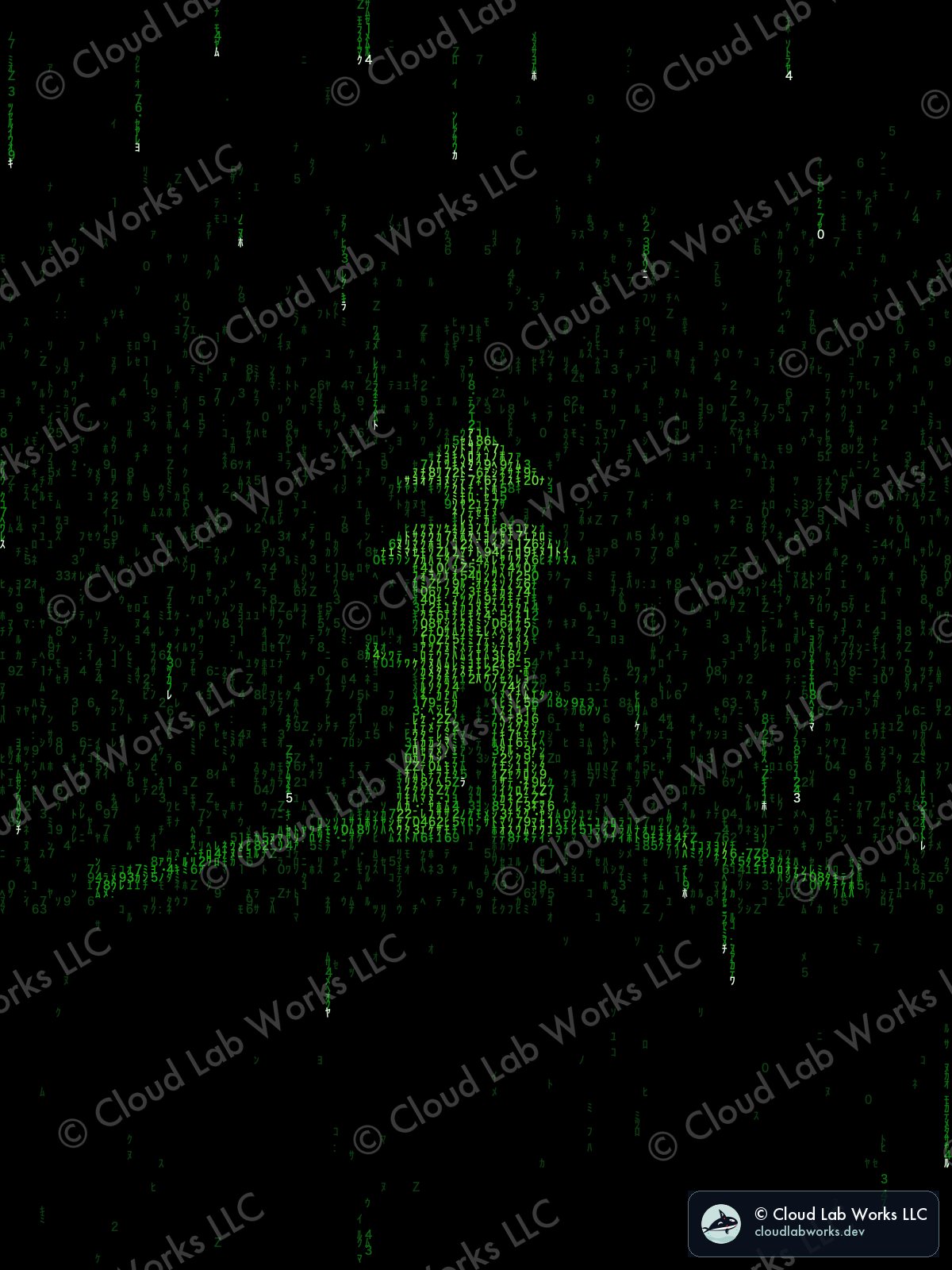 Digital rain · generated sceneRonin on the bridge, rainA masterless swordsman stops halfway across. The rain is already in the glyphs, so the weather and the medium are the same thing.Inquire
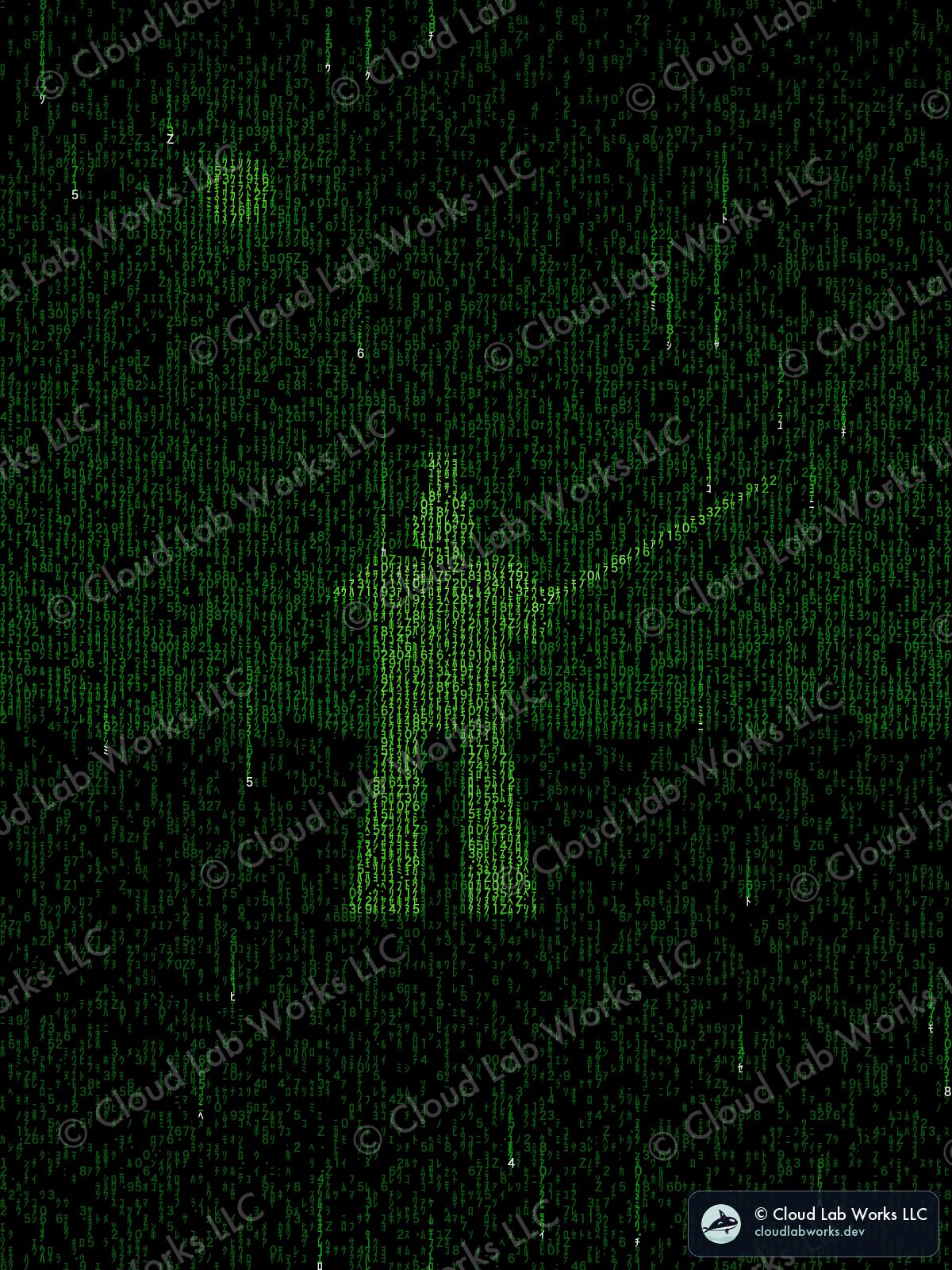 Digital rain · generated sceneIai, first lightThe draw and the cut are one motion. The blade is the brightest thing in the frame because at this distance it is the only thing that moves.Inquire
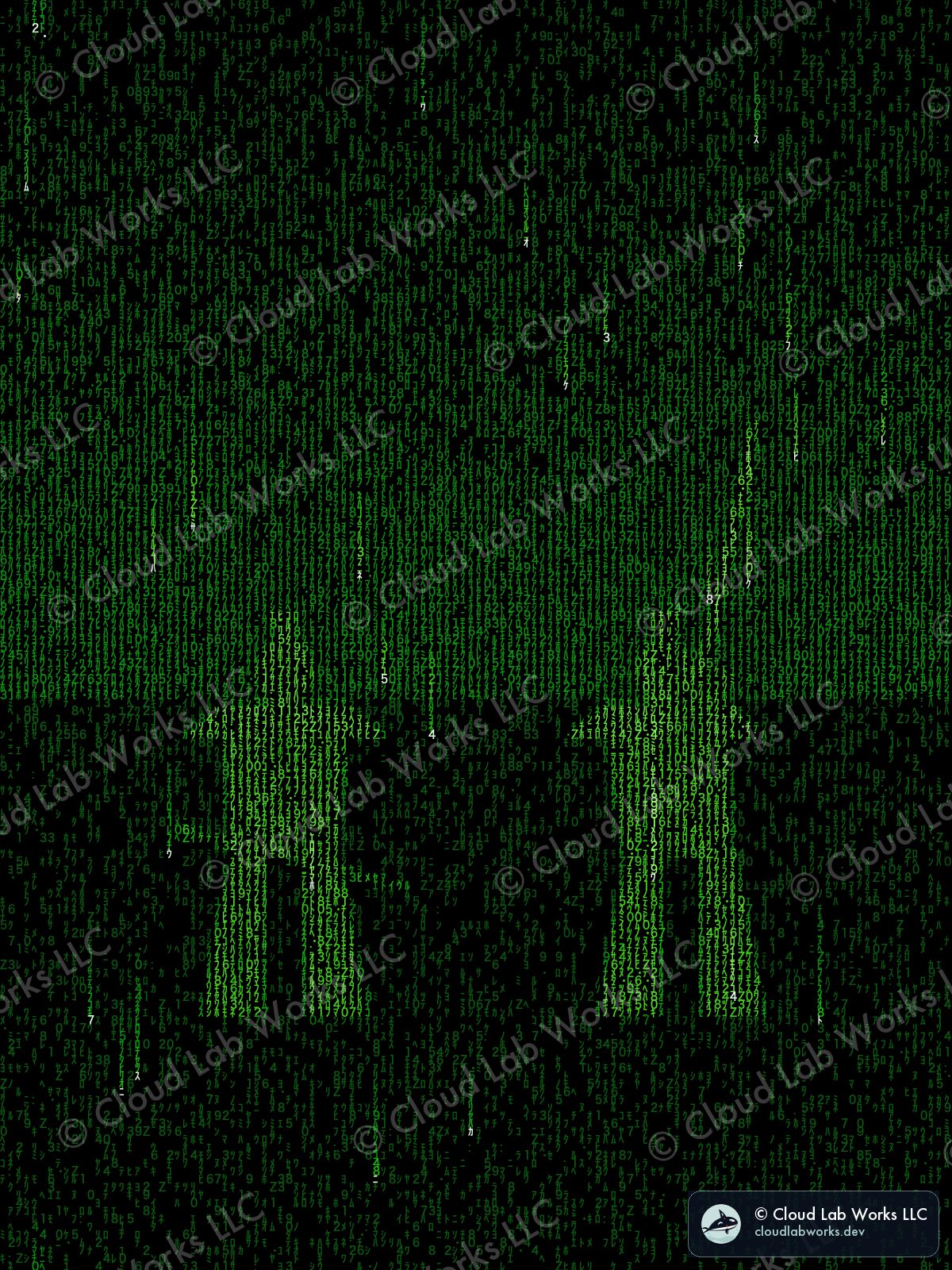 Digital rain · generated sceneTwo on the sand at dawnGanryujima weather. Both figures are the same brightness, which is the only comment the set makes on who was right.Inquire
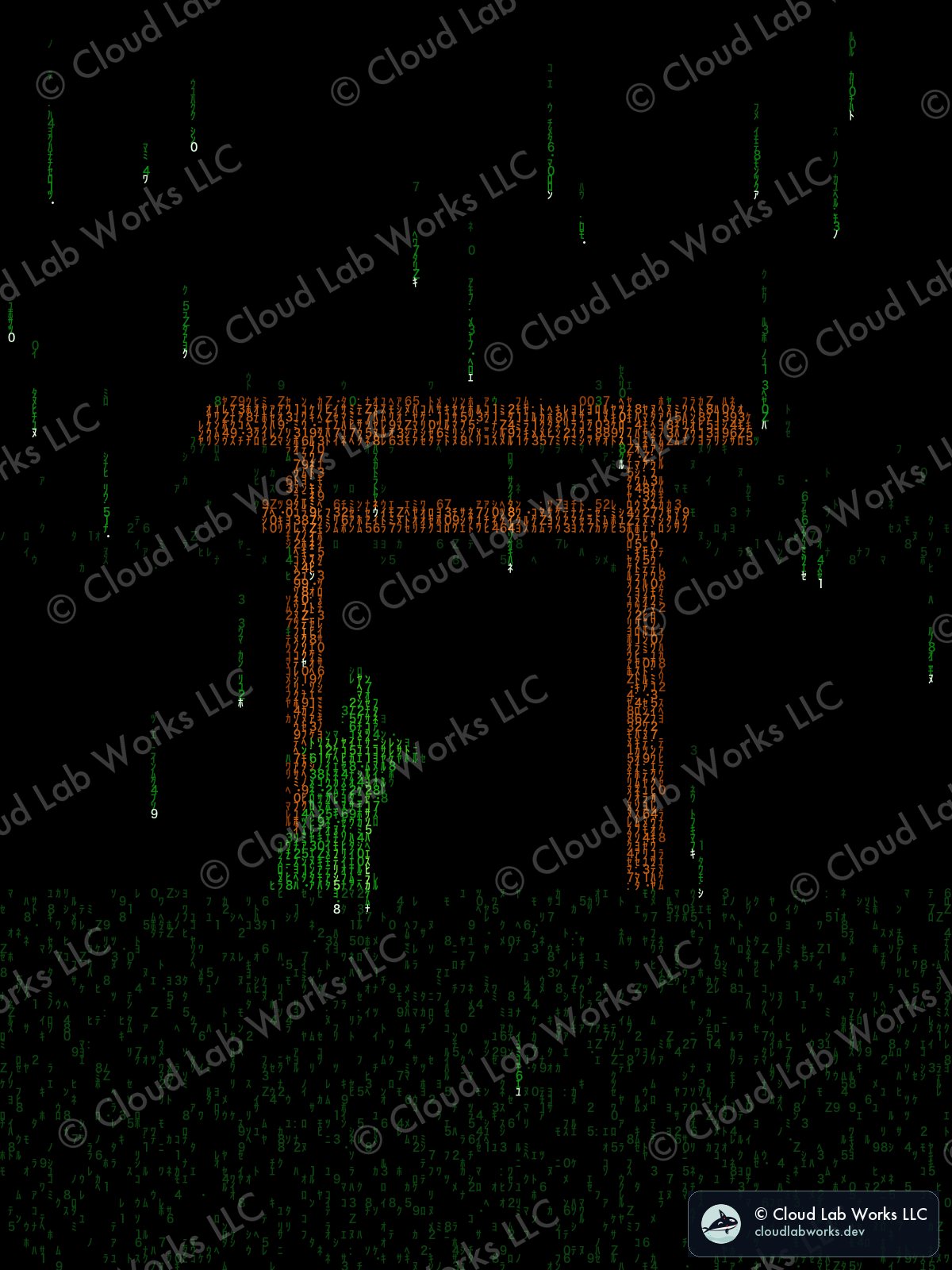 Digital rain · generated sceneAsleep against the gateNo lord, no barracks, no watch to stand. The vermilion of the torii is the warm thing; the man is not.Inquire
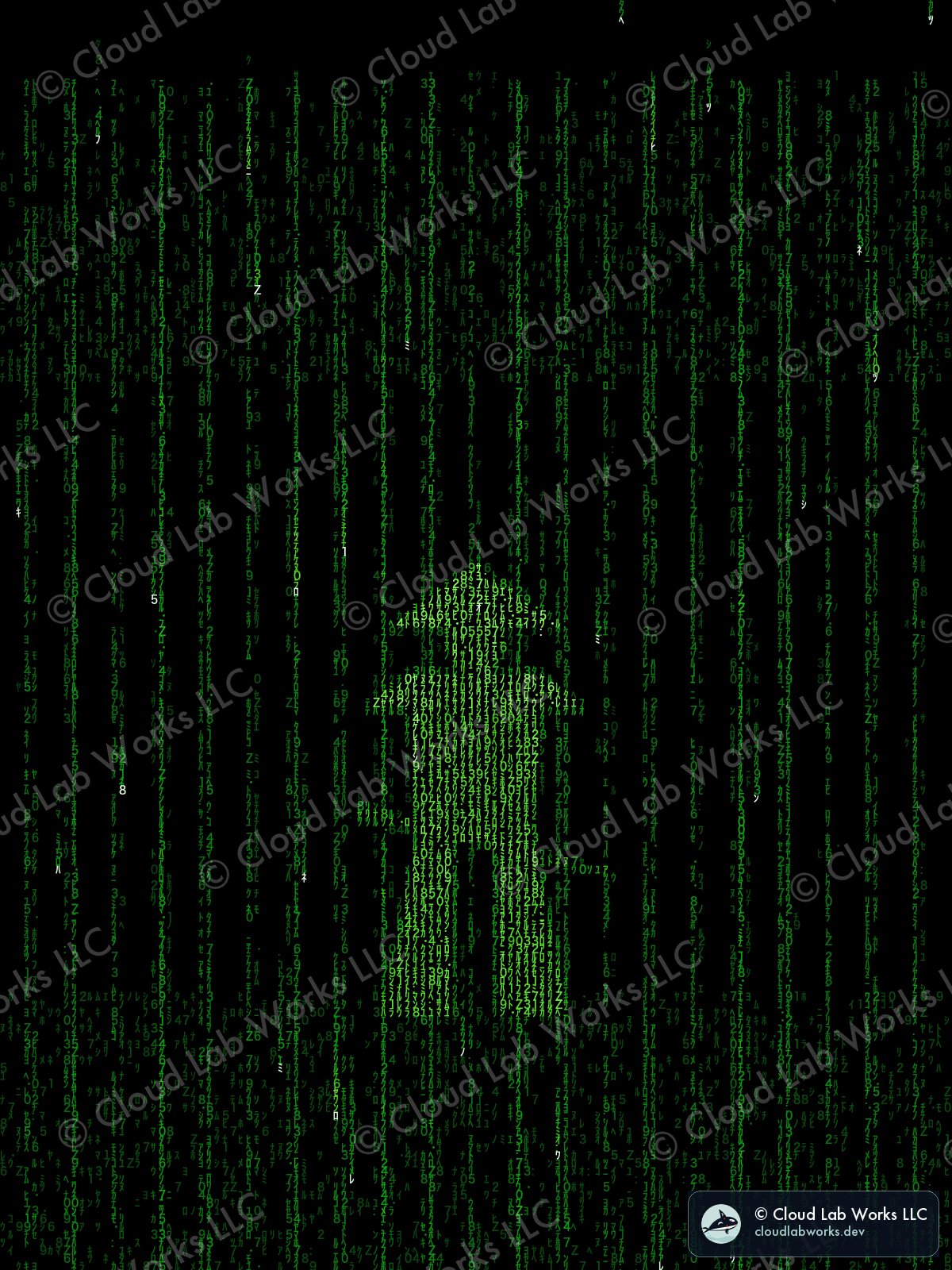 Digital rain · generated sceneThrough the bambooVertical grain everywhere, and one vertical thing that is walking. The grove and the rain columns run the same direction on purpose.Inquire
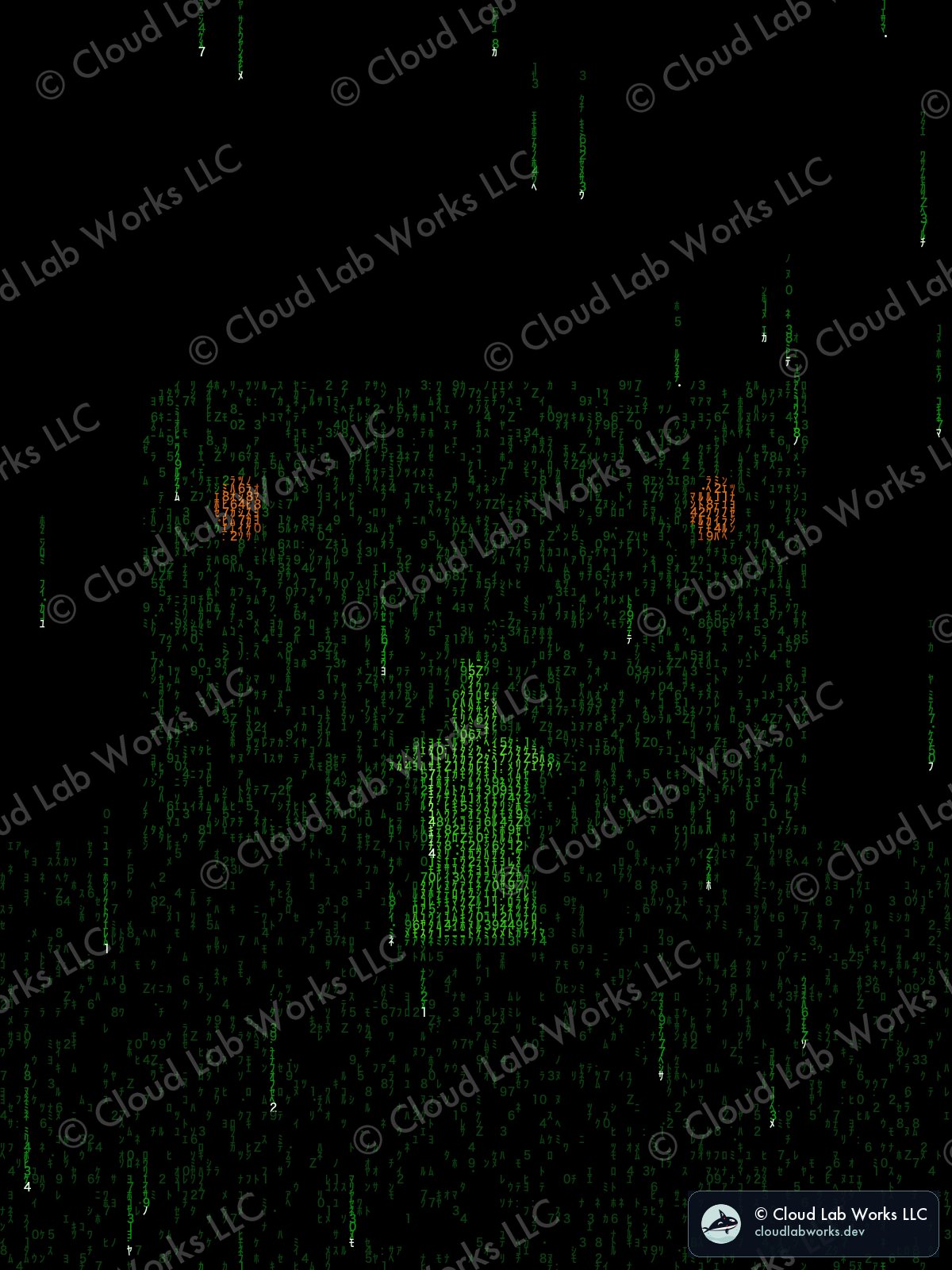 Digital rain · generated sceneSeiza, before the daisKneeling, blade laid to the right where it cannot be drawn quickly. The posture is the message and the room is dark enough to make it the only one.Inquire
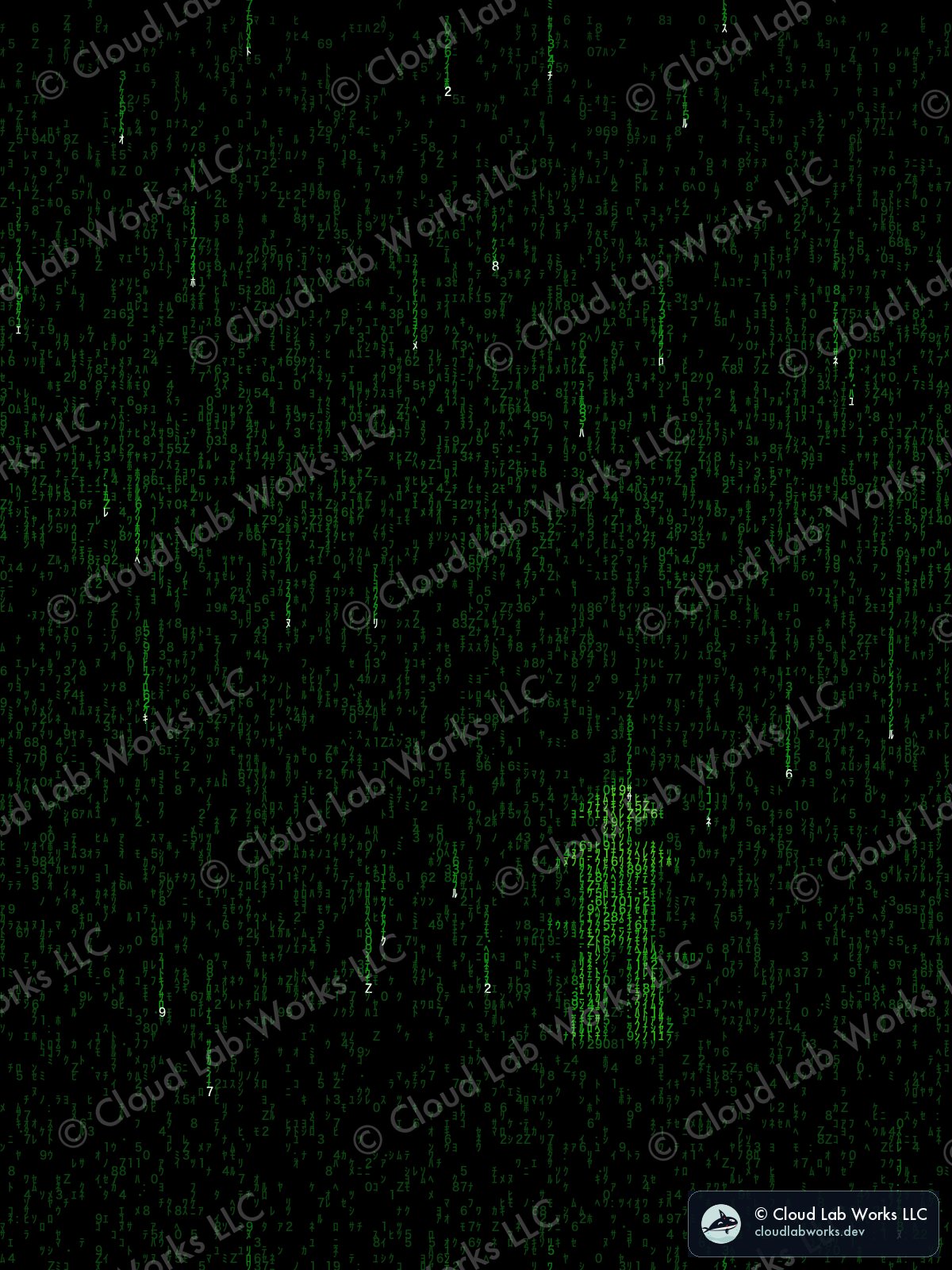 Digital rain · generated sceneThe pass, aloneSmall figure, large country. The hills carry most of the light and the man carries almost none, which is the correct ratio for the situation.Inquire
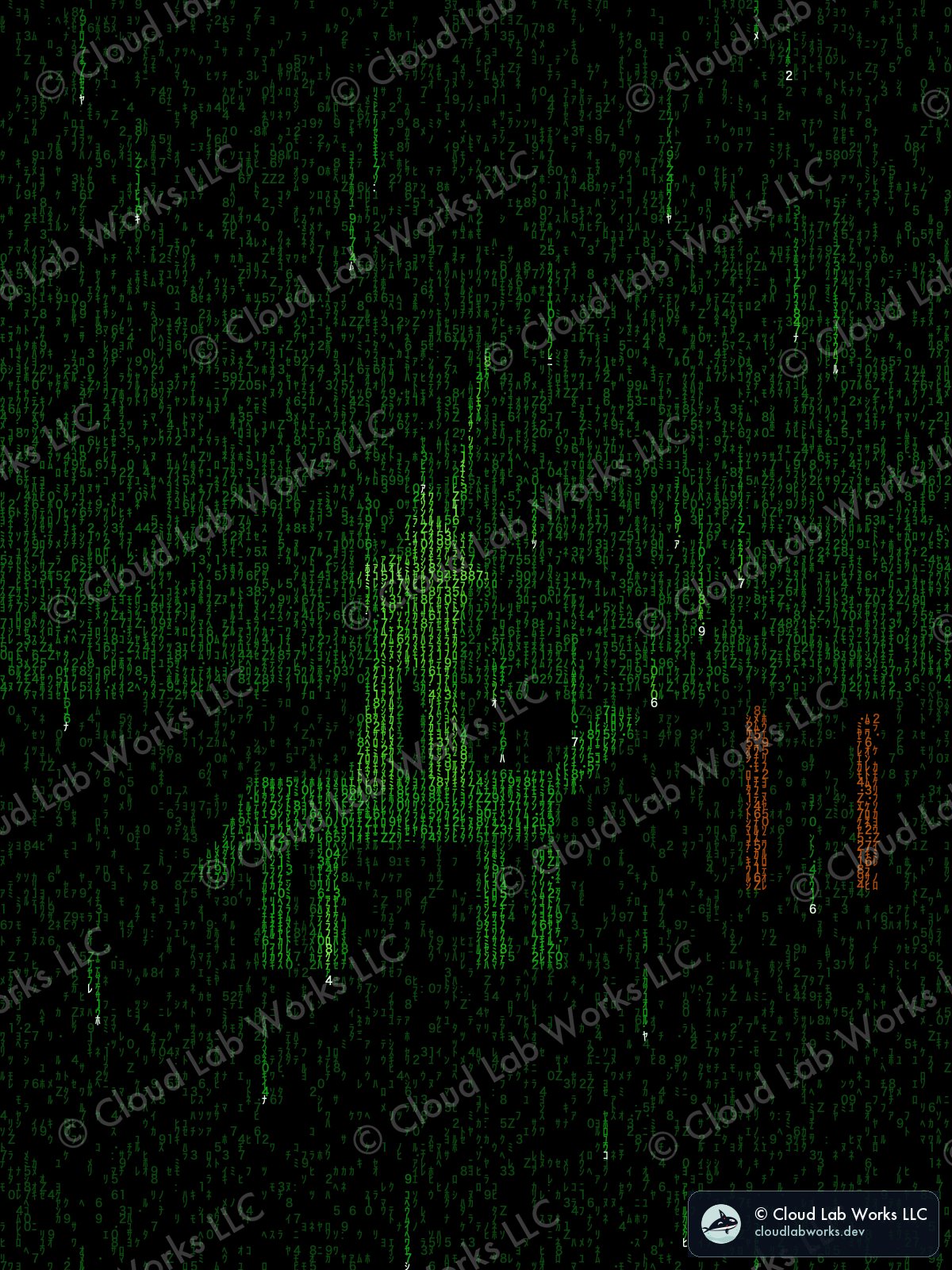 Digital rain · generated sceneYabusame, the third targetMounted archery at a gallop. The horse is drawn flat and fast; the rider is a wedge.Inquire
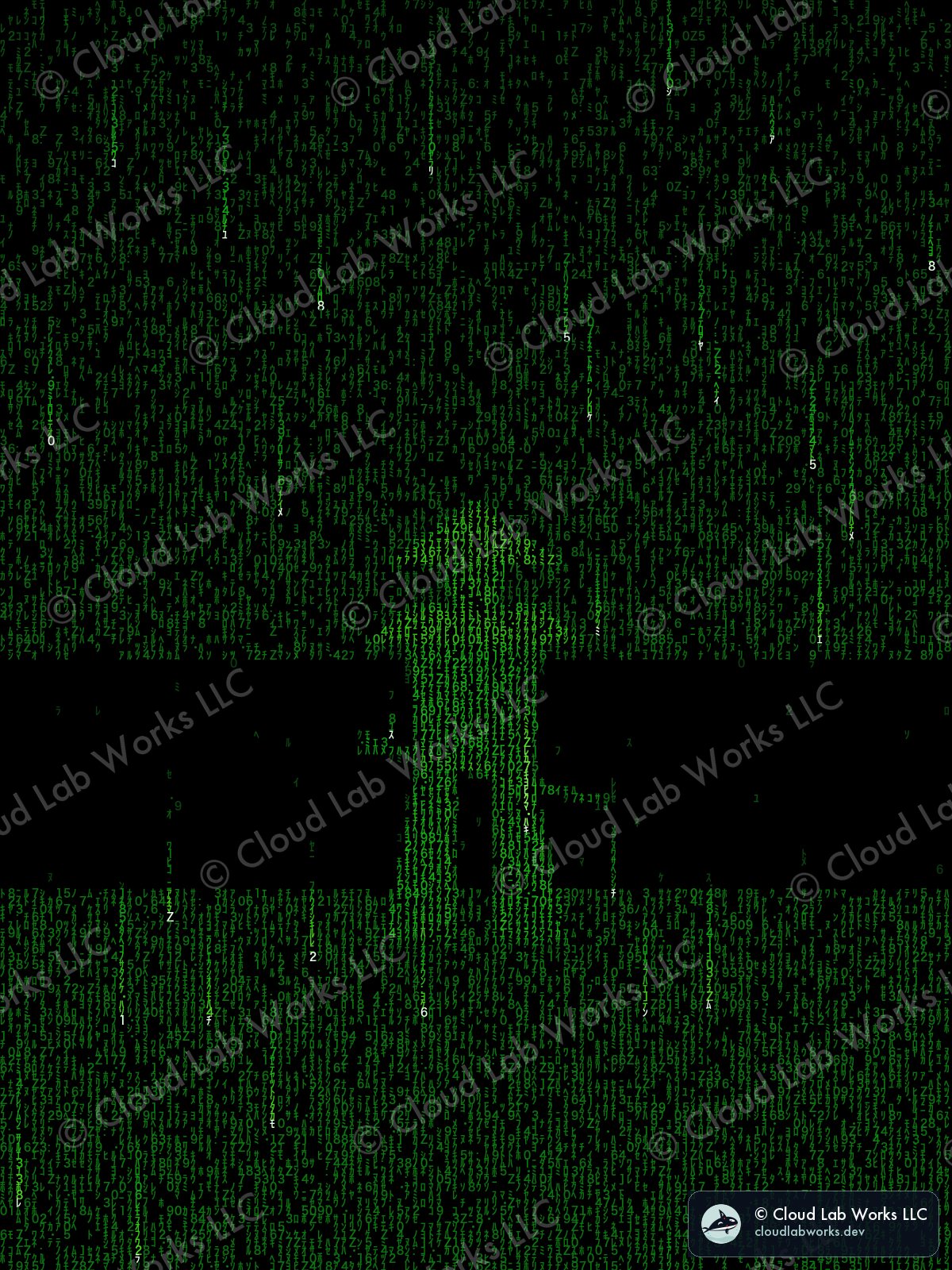 Digital rain · generated sceneStanding in snowSnow in the light map and rain in the glyphs, two weathers in one frame. The figure is the only warm-edged shape and even that is cold.Inquire
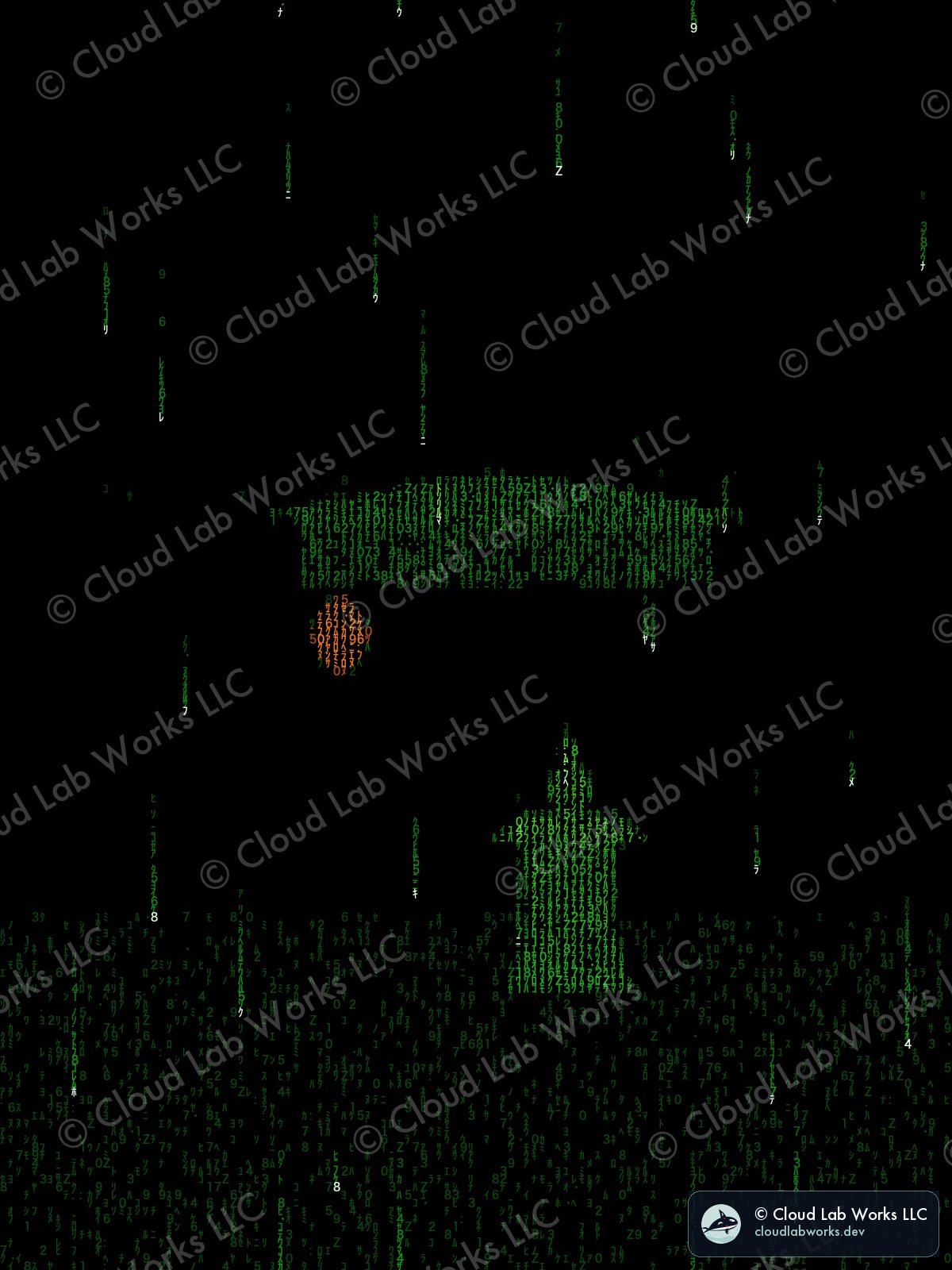 Digital rain · generated sceneThe stall at the roadsideA paper lantern, a bowl, a sword laid across the knees. The one warm thing is the food.Inquire
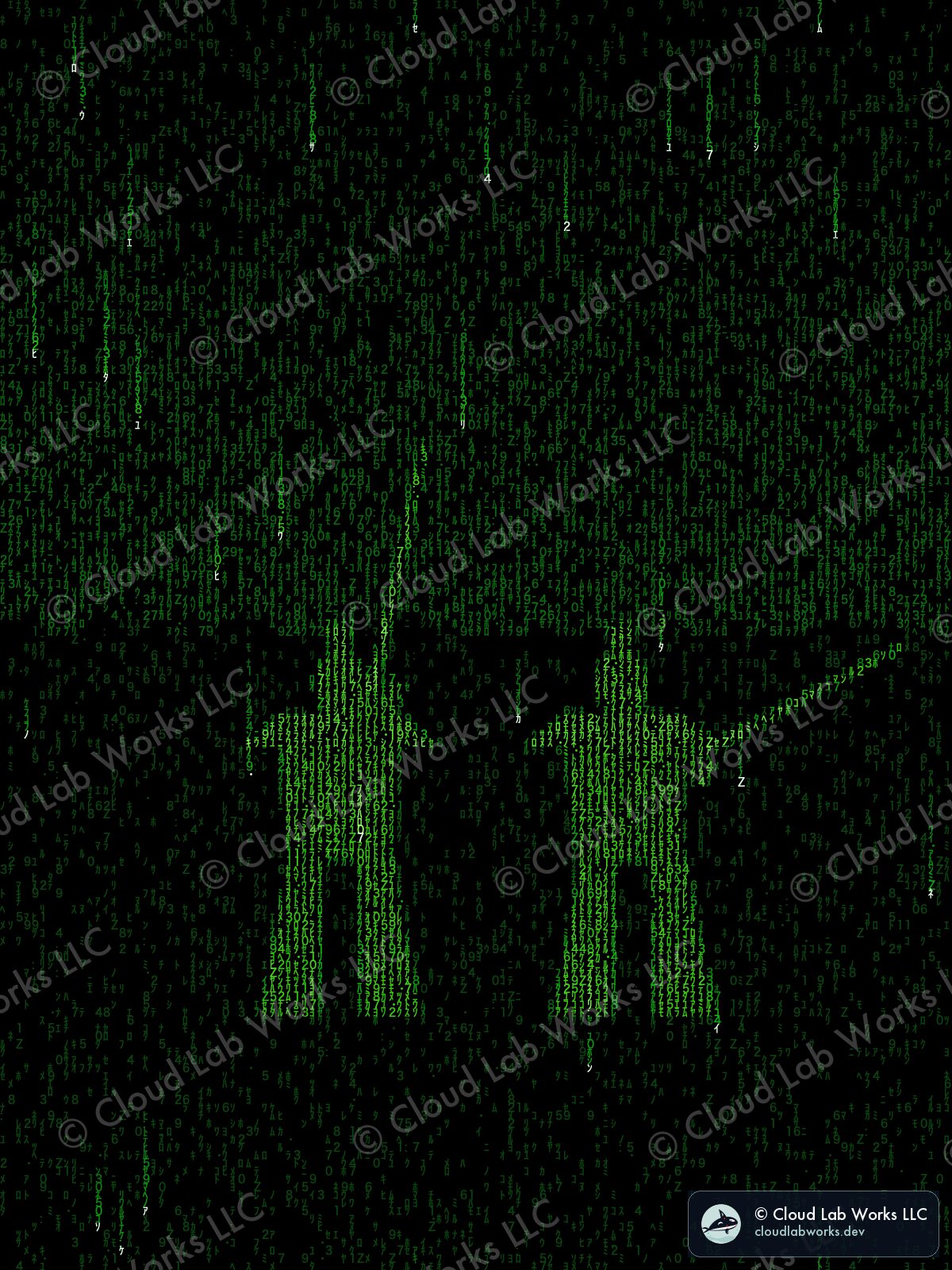 Digital rain · generated sceneDuel in the paddyFlooded field, two men, no ground worth the name. The water takes the light and gives back two silhouettes.Inquire
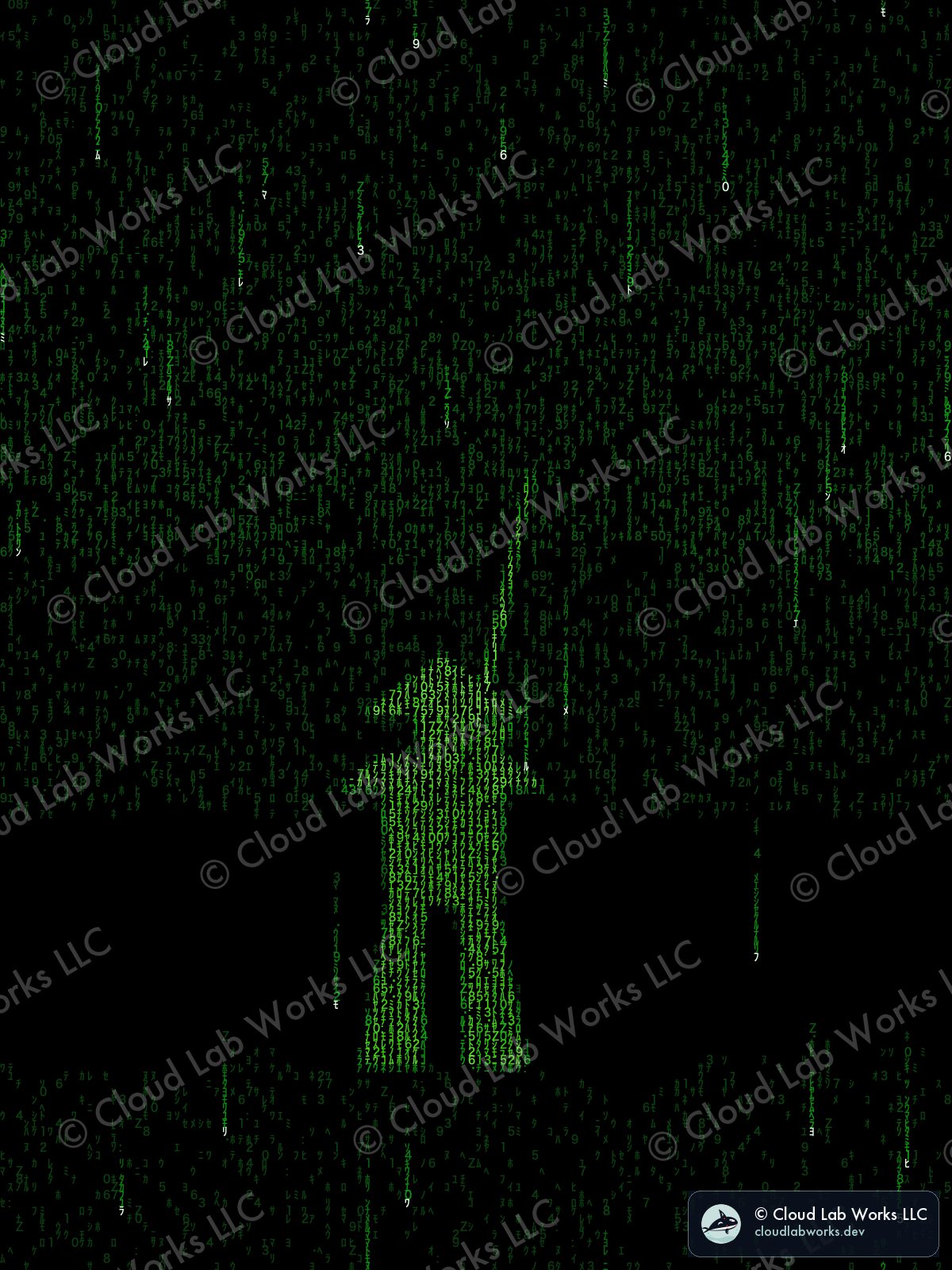 Digital rain · generated sceneThe fordCrossing at the shallow place, blade held clear of the water. Everything below the knee is light with a current in it.Inquire
 Digital rain · generated sceneSeven on the ridgeSeven silhouettes on a skyline, unevenly spaced because a line of men never is.Inquire
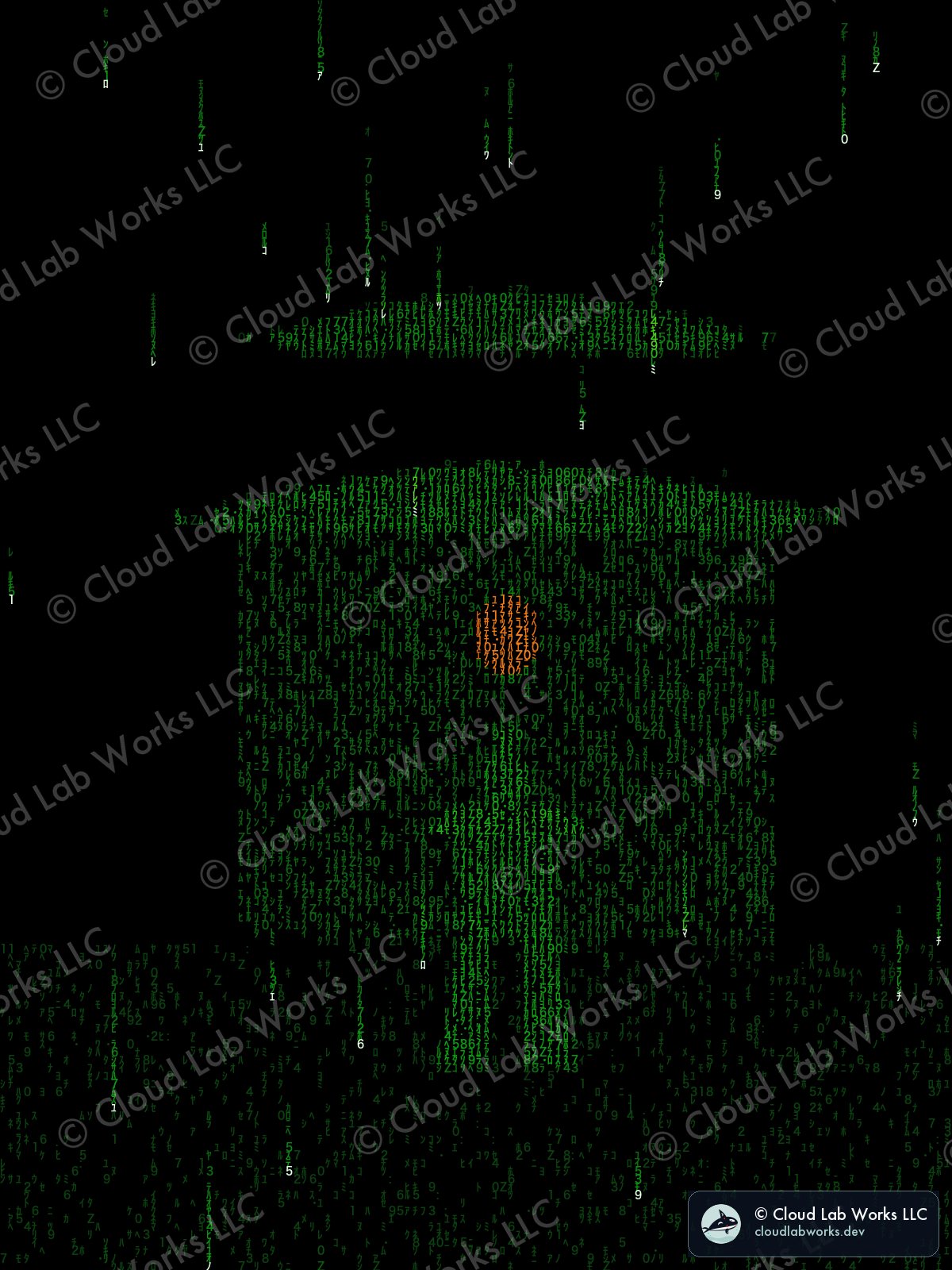 Digital rain · generated sceneThe gate at nightA two-storey gate, a lantern under it, a man who has stopped just short of the light.Inquire
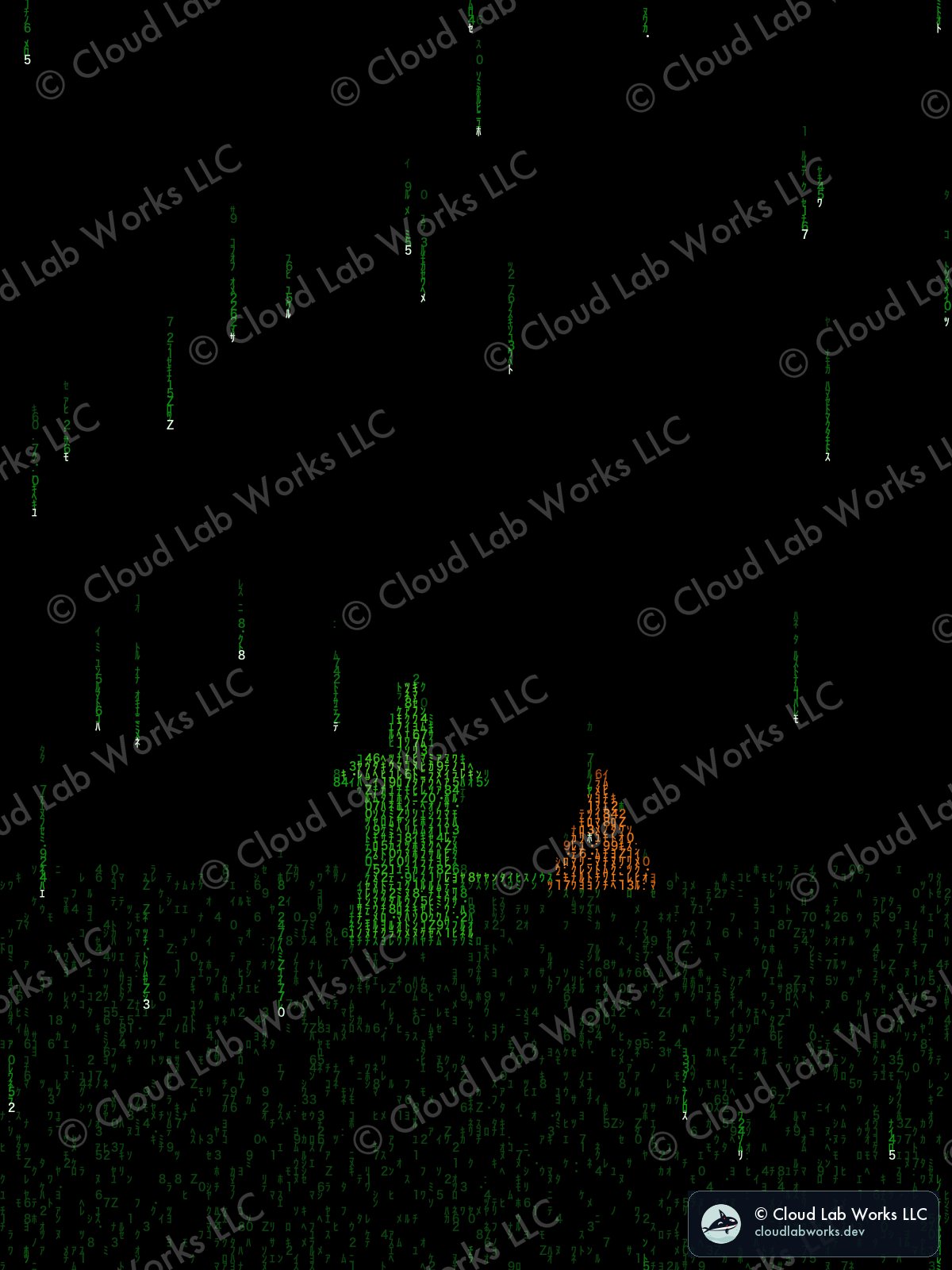 Digital rain · generated sceneSharpening, by the fireThe only scene in the set where the blade is not a threat. It is a chore, and the fire is doing the talking.Inquire
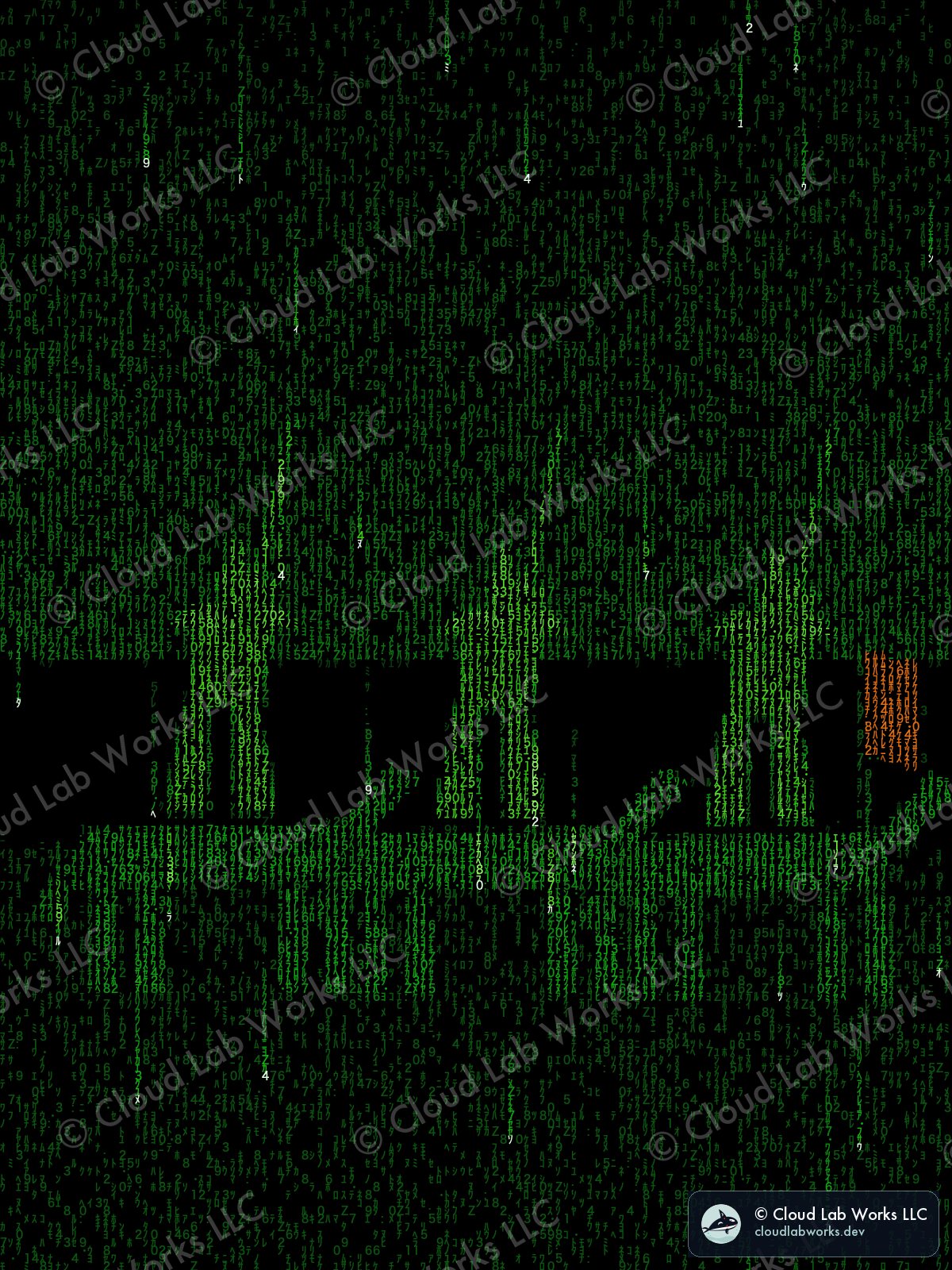 Digital rain · generated sceneThe chargeThree riders abreast. At this size a horse is a wedge and a rider is a smaller wedge on top of it, and that is enough.Inquire
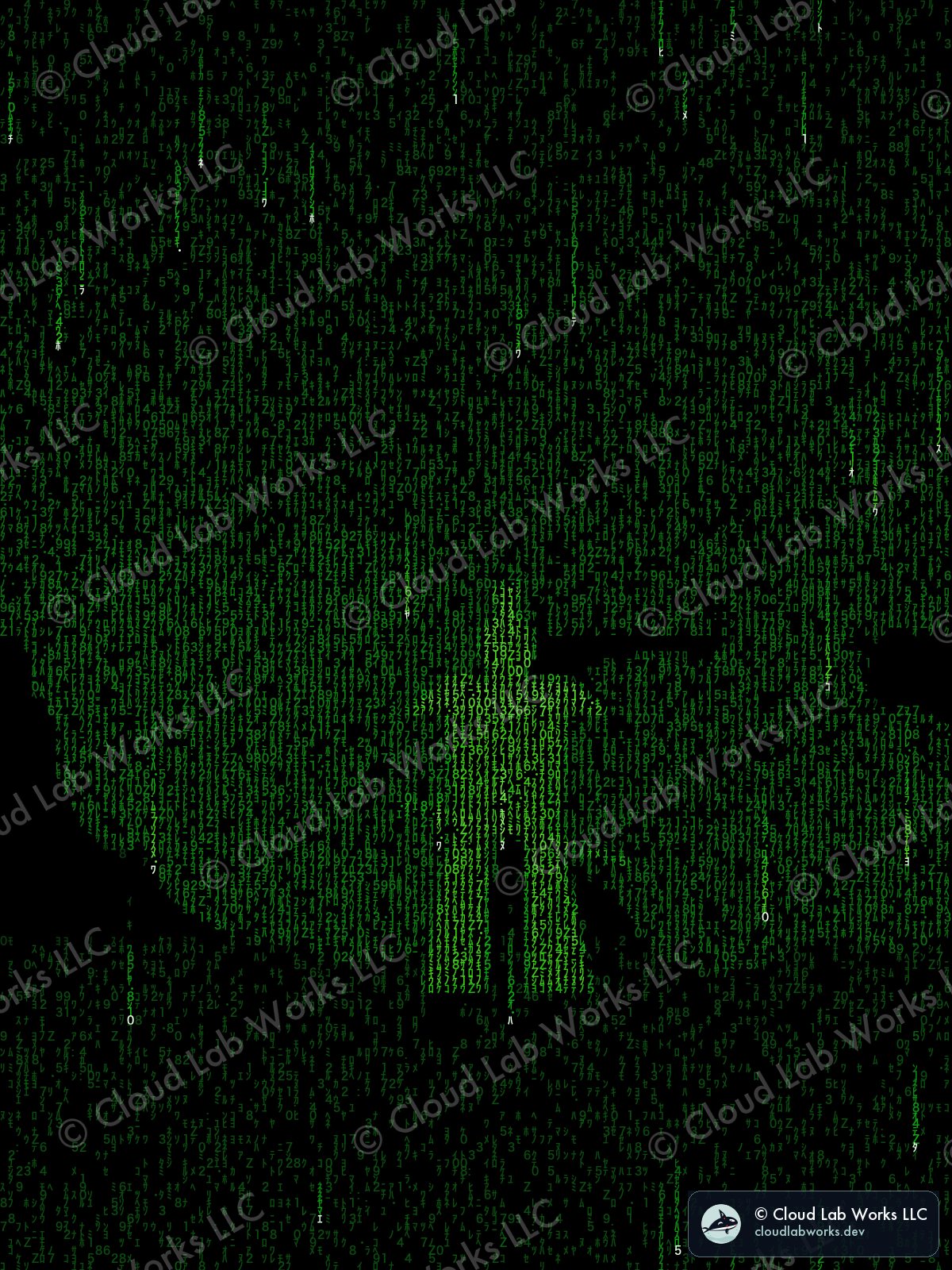 Digital rain · generated sceneUnder the falling blossomThe one scene that borrows the cliche on purpose. Petals are warm-channel, the man is not, and the contrast is the whole point.Inquire
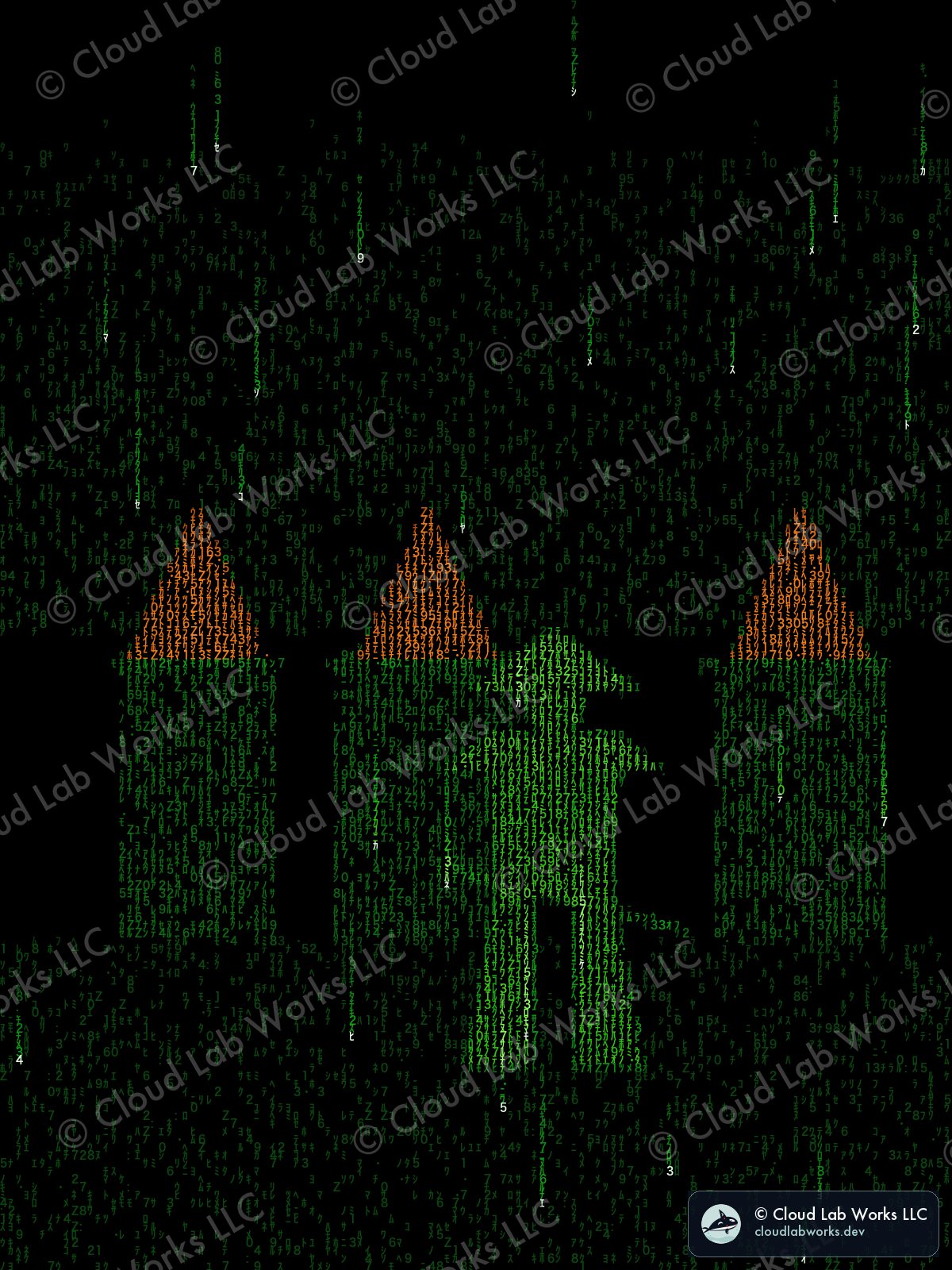 Digital rain · generated sceneWalking out of the villageThe warm channel is doing something it does nowhere else in the set: it is behind him, and he is not looking at it.Inquire
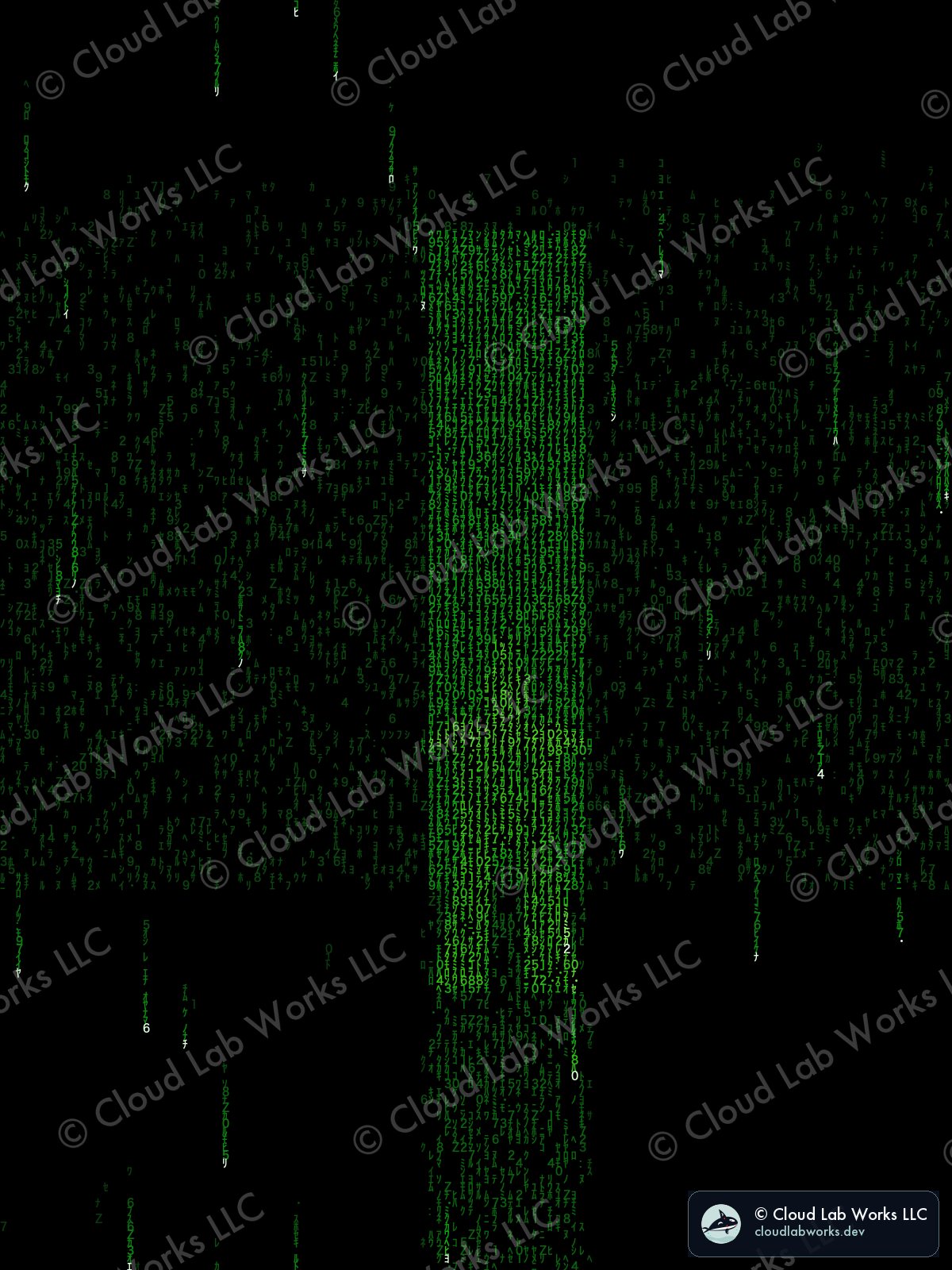 Digital rain · generated sceneUnder the fallMisogi: standing under cold water on purpose. The column of the fall and the column of the man are the same width, which is not an accident.Inquire
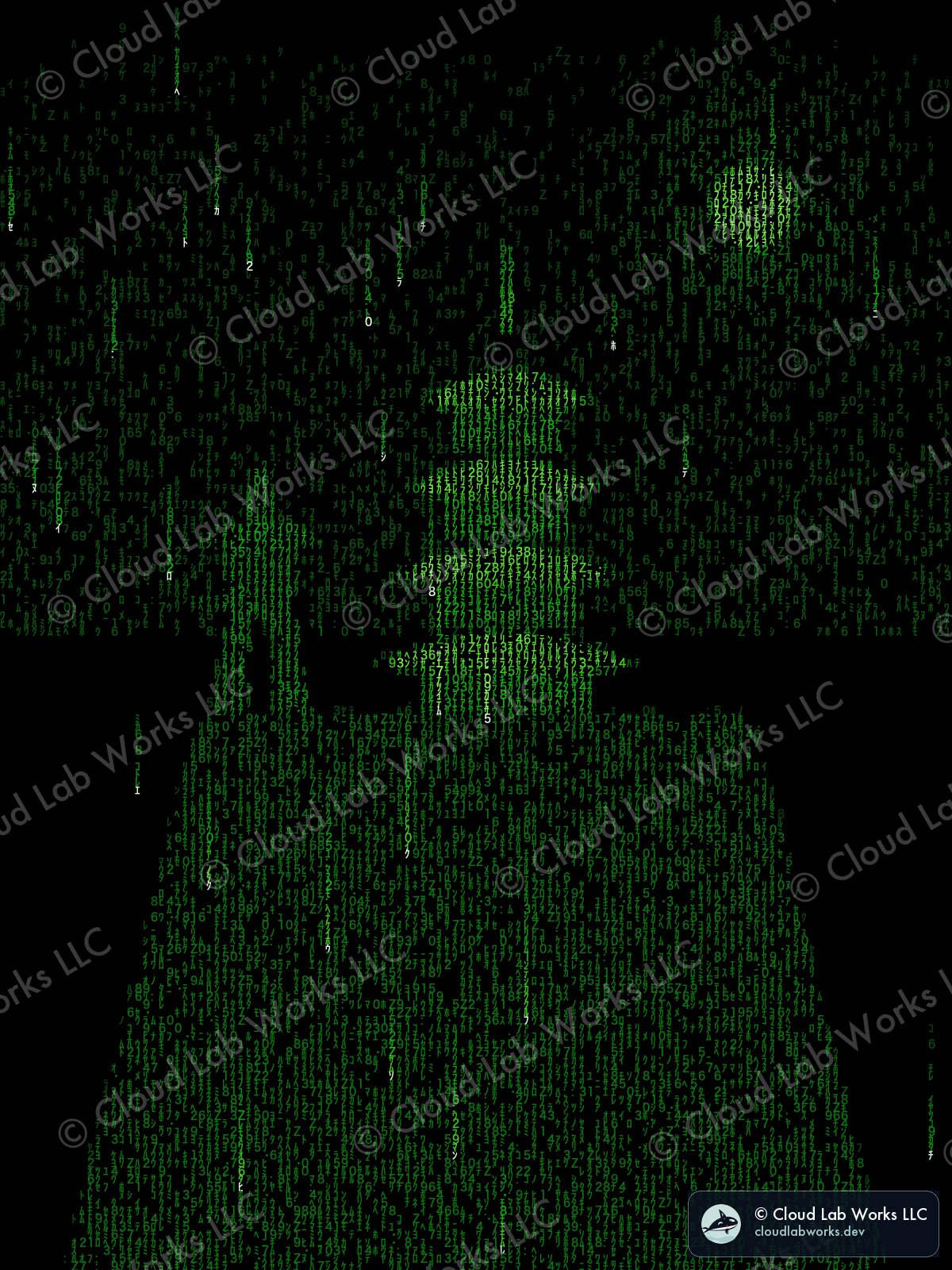 Digital rain · generated sceneOn the wallA sloped stone base, a white keep behind, one sentry. The keep has the light; the sentry has the job.Inquire
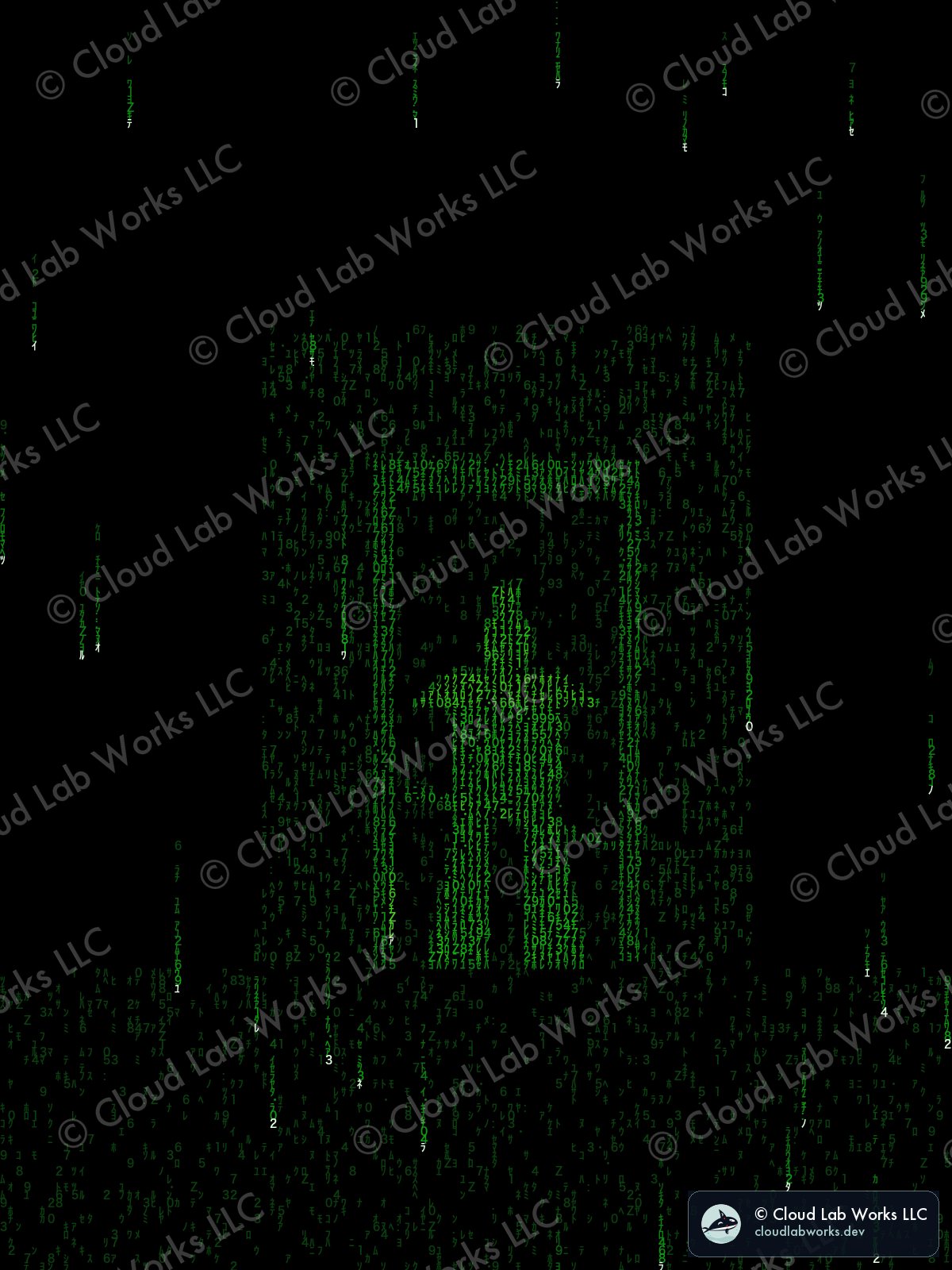 Digital rain · generated sceneIn the doorwayFramed by a doorway he has not decided to walk through. The frame is brighter than either side of it.Inquire
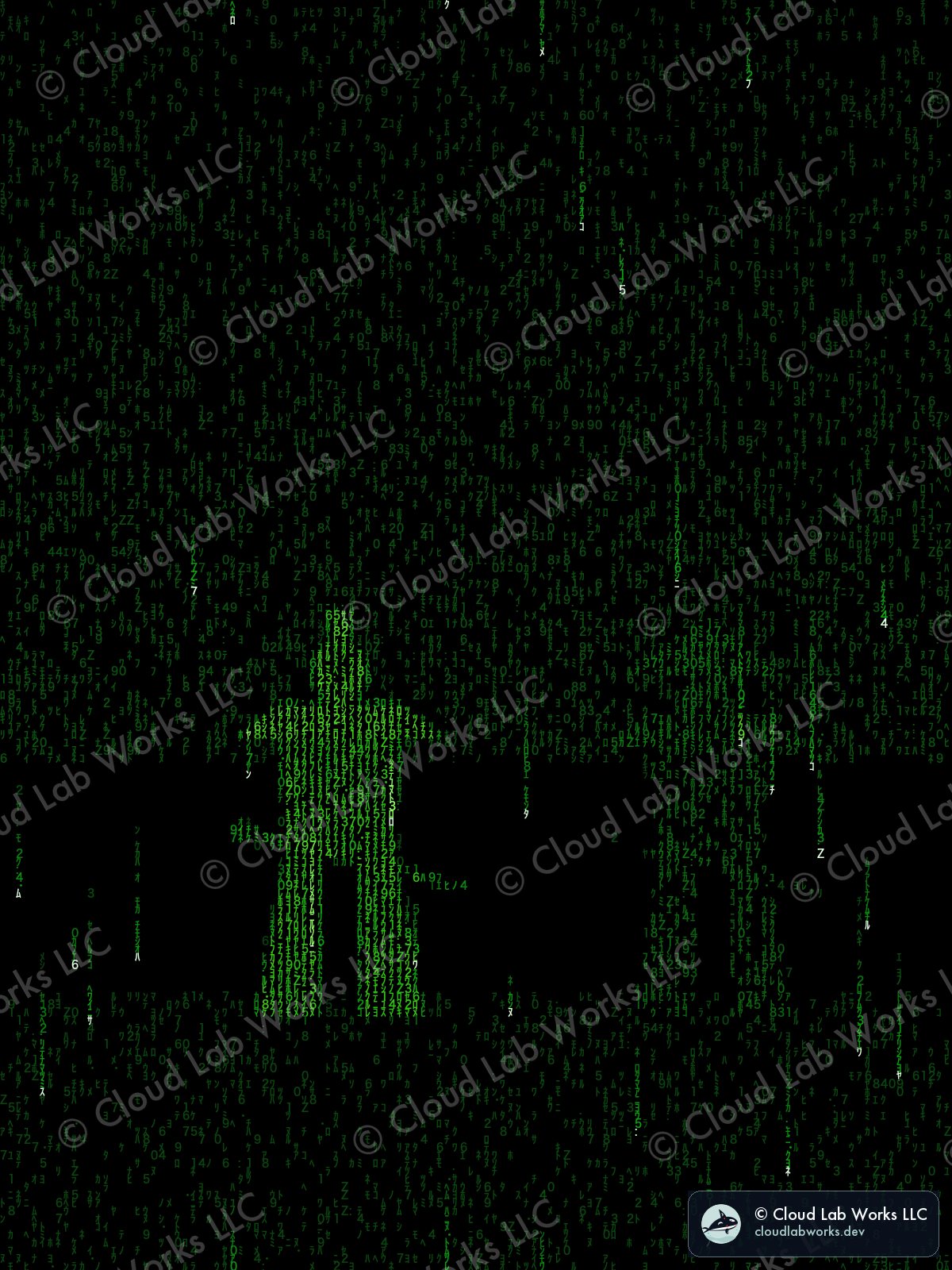 Digital rain · generated sceneFog, and someone else in itOne figure resolved, one barely. The set's quietest frame: most of the glyphs here are carrying almost no light at all.Inquire
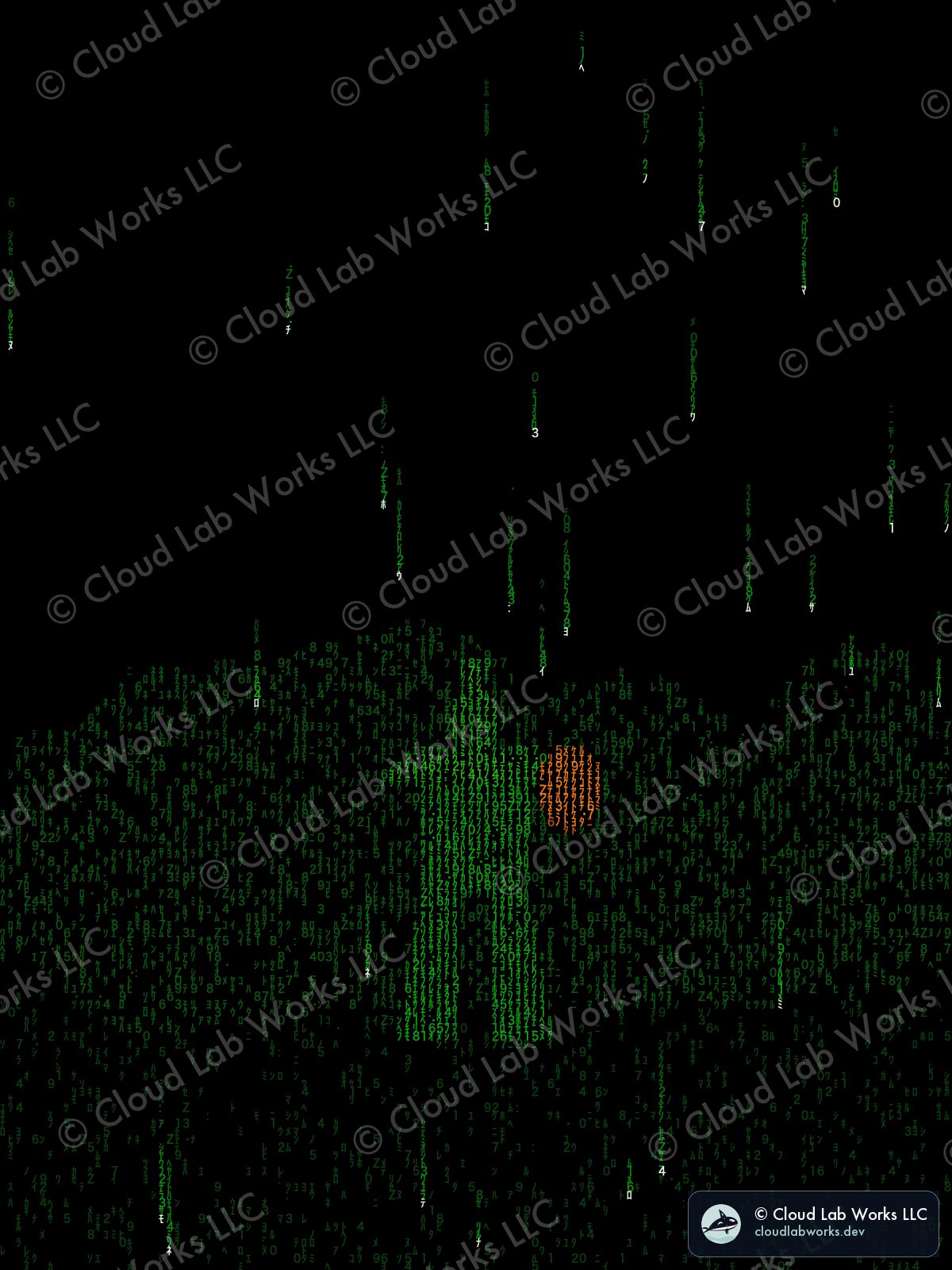 Digital rain · generated sceneCarrying the lightA hand lantern in a cryptomeria wood. The warm circle travels with him and nothing else in the frame is lit at all.Inquire
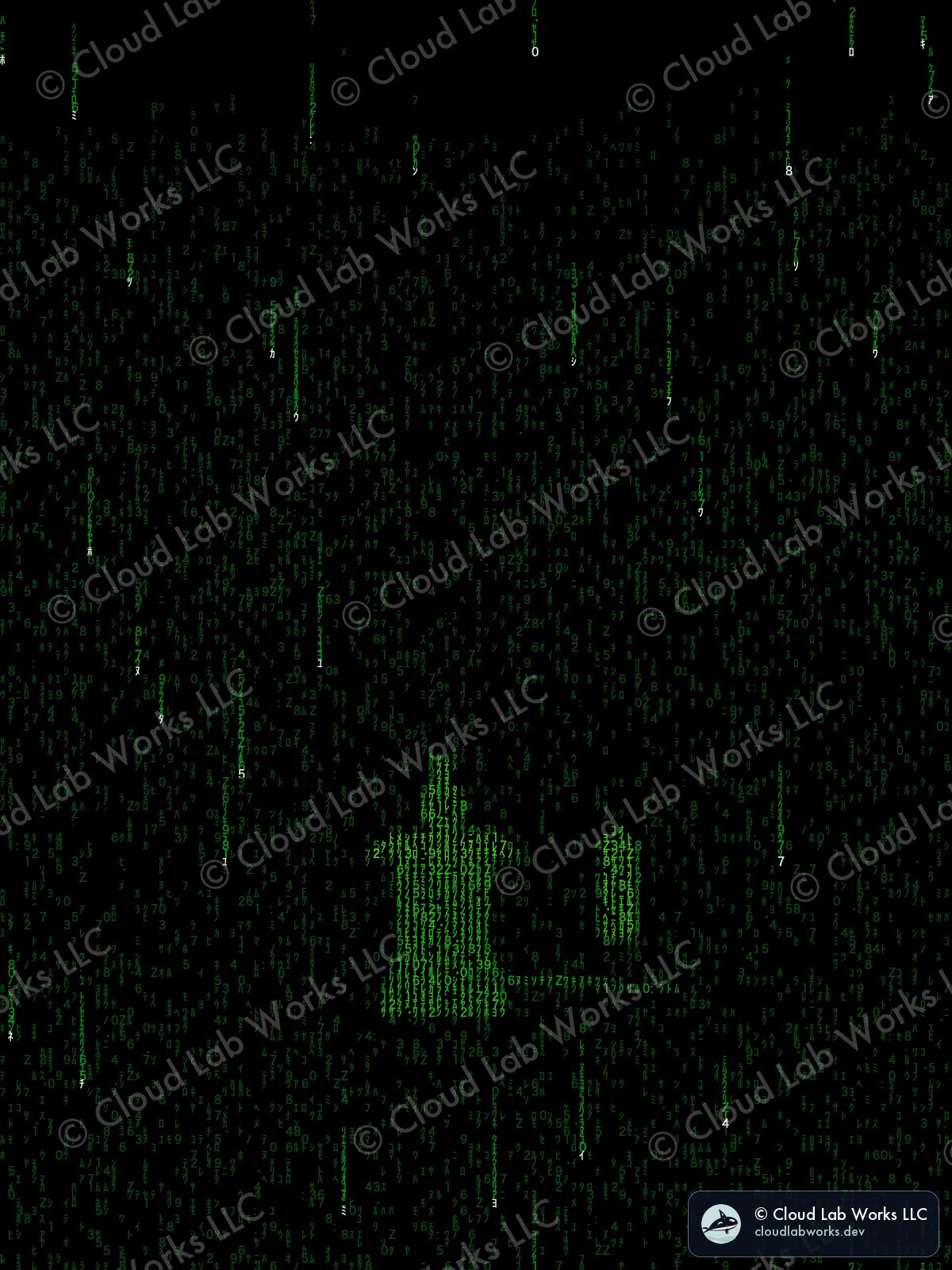 Digital rain · generated sceneAt the markerKneeling at a stone. The sword is on the ground, which in this set happens exactly twice and means the same thing both times.Inquire
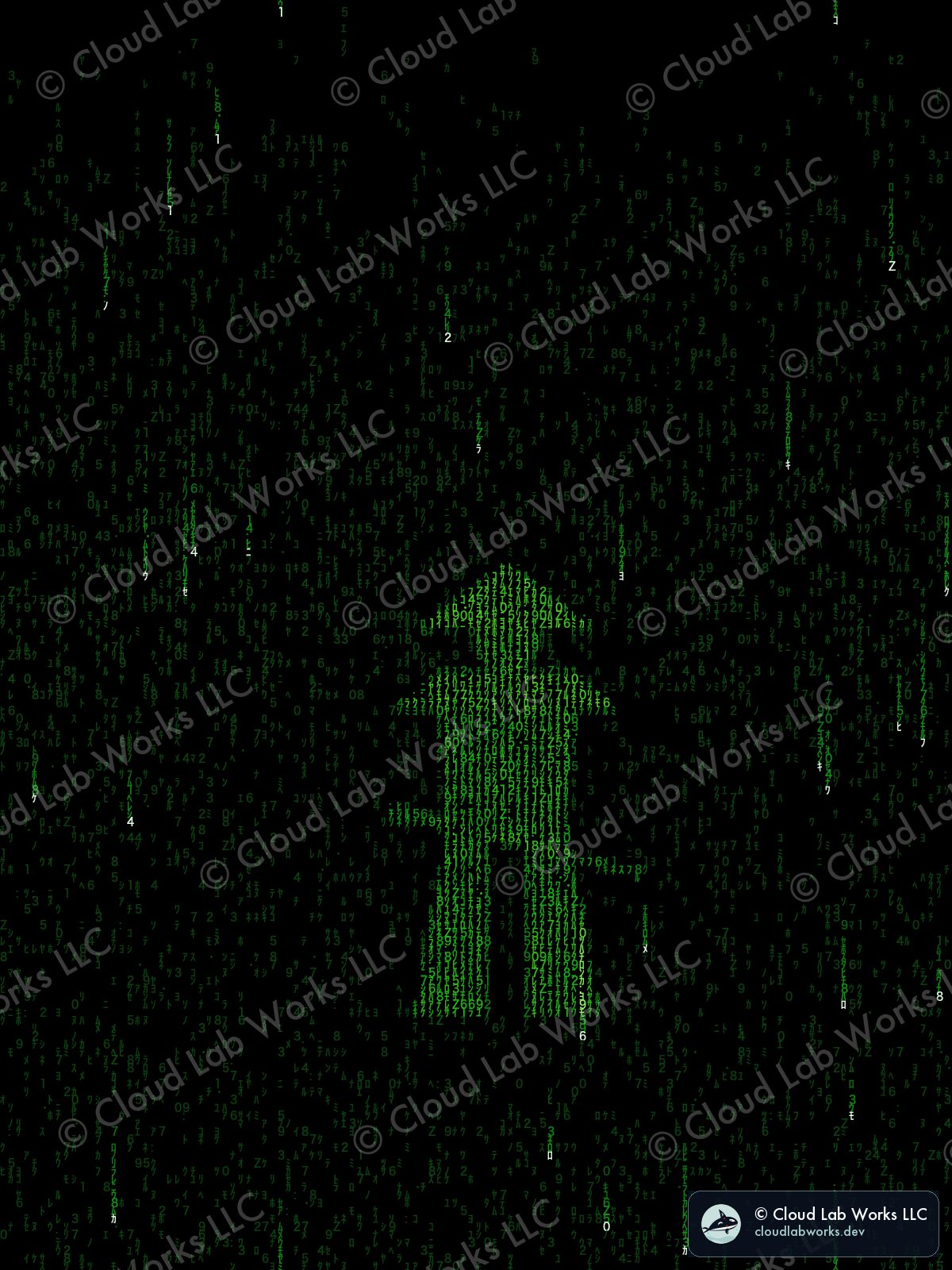 Digital rain · generated sceneWalking into itThe last frame of the set, and the only one shot from behind. Everything ahead of him is rain, which here is also the material the picture is made of.Inquire
Kisetsu: the seasons set
Thirty pieces in the same pop register as the orca set above: flat colour, heavy ink outline, Ben-day dots, a kanji stamp, and no raster model or traced photograph anywhere in it. Every leaf, petal and animal is built from maths in media/src/kisetsu/gen.py. The cultivars and varieties are real and named, not invented: twelve Acer selections from Sango-kaku to Higasayama, ten flowering cherries from the February Kawazu to the twice-blooming Jugatsu.
One correction carried on the page rather than hidden. The brief for the winter scenes said Hokkaido. Japanese macaques live on Honshu, Shikoku, Kyushu and Yakushima and are absent from Hokkaido entirely; their northern limit is the Shimokita Peninsula in Aomori, and the famous bathing troop is at Jigokudani in Nagano. The captions say Nagano and Aomori because they are true. Hokkaido gets its own plate, Noboribetsu, with the steam it really has and no monkeys in it.
Autumn
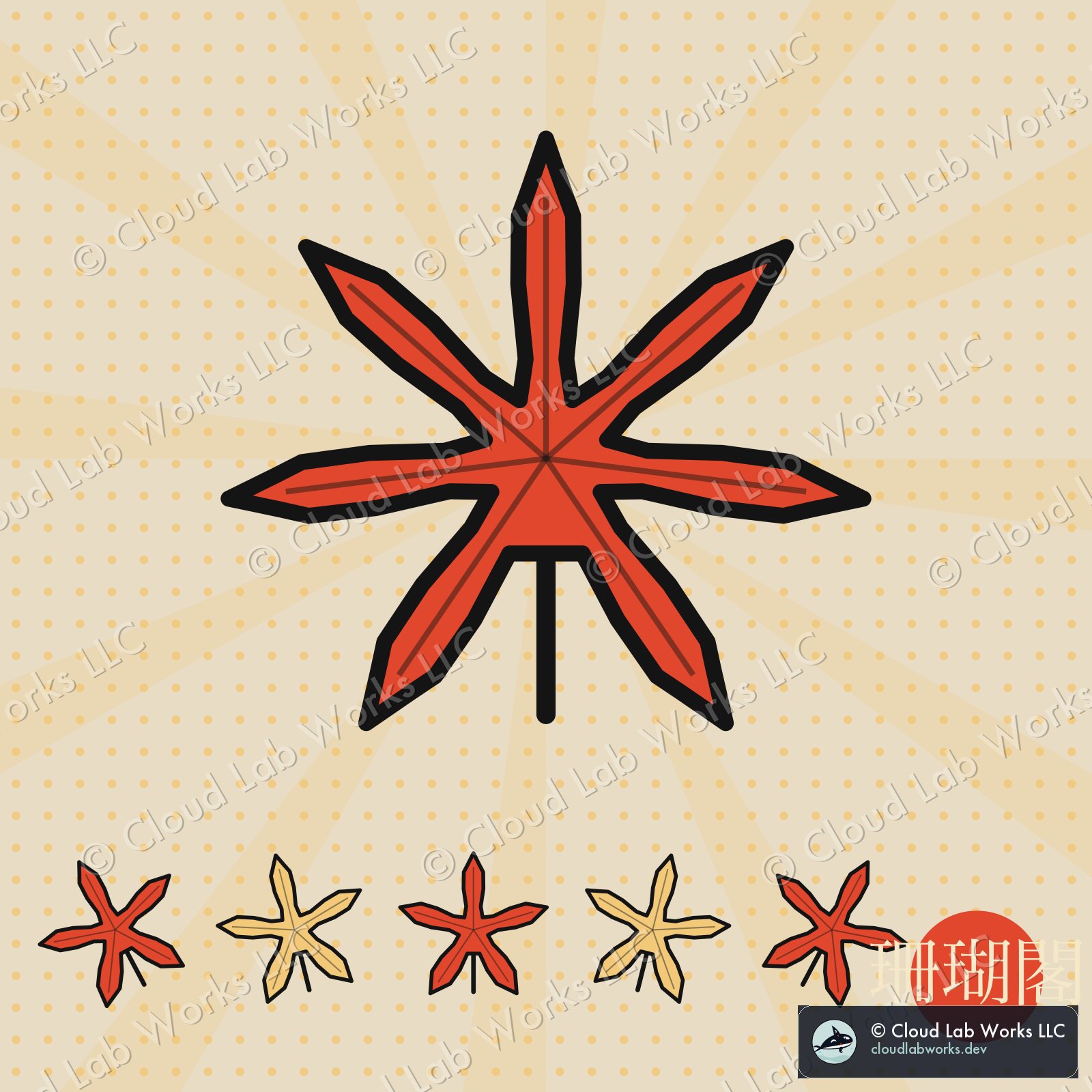 Hand-written SVG · flat colourSango-kakuCoral-bark maple. The winter twigs are the point: the leaves go butter-yellow and fall, and the bare branch turns coral.Inquire
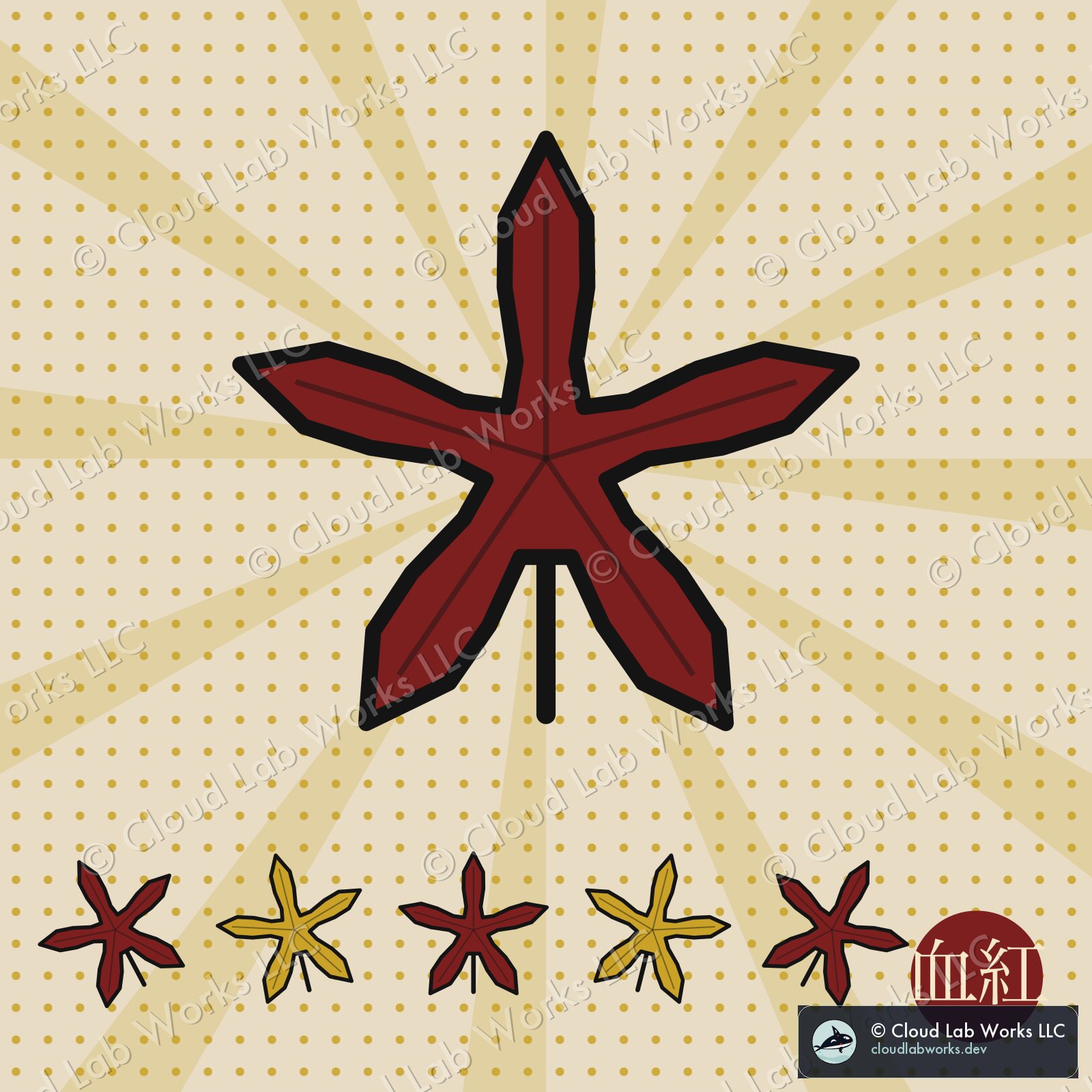 Hand-written SVG · flat colourBloodgoodThe one everyone plants. Deep burgundy all summer, then scarlet; upright and reliable, which is why it is everywhere.Inquire
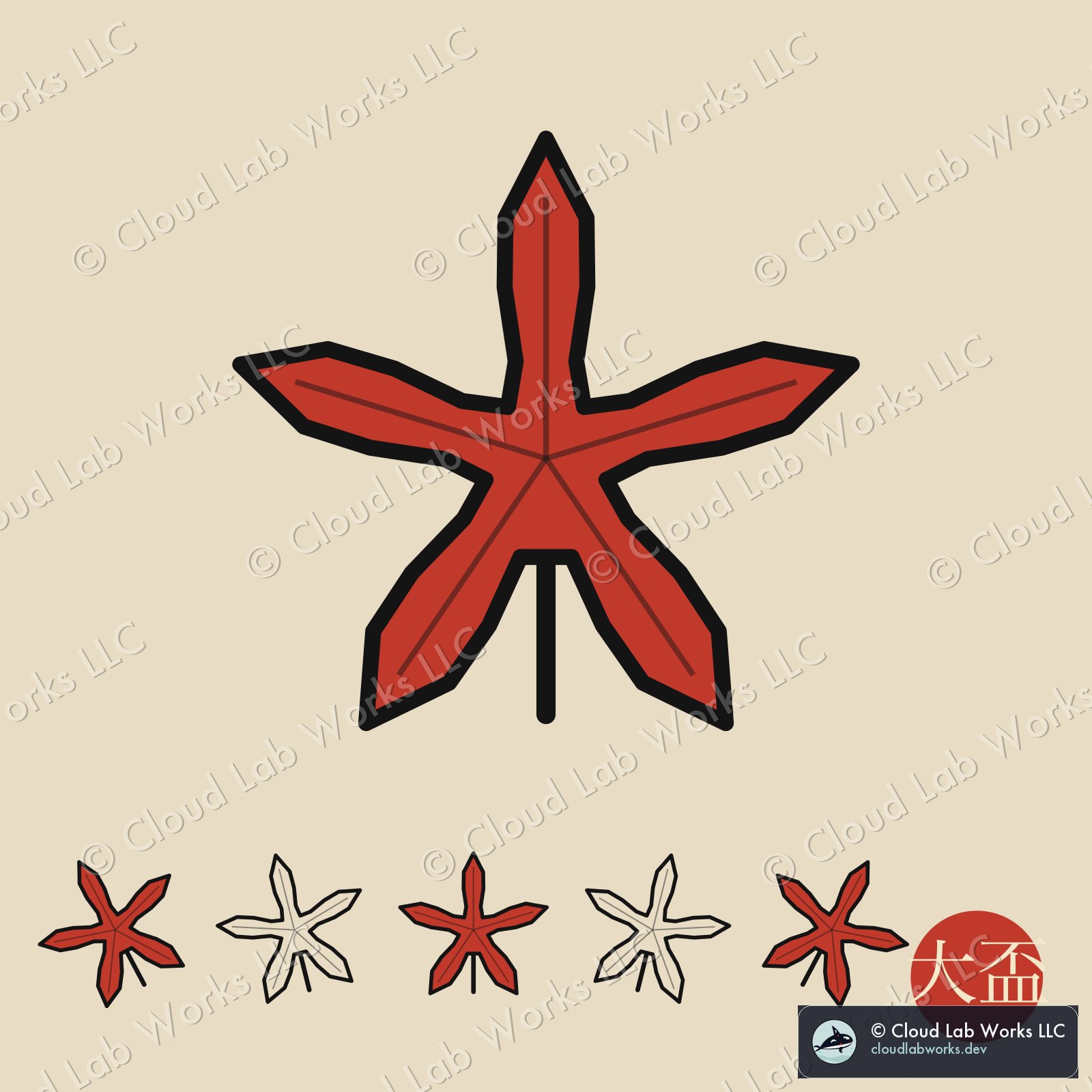 Hand-written SVG · flat colourOsakazukiGreen until it is not. Osakazuki holds plain green through summer and then turns the most violent crimson of any palmatum.Inquire
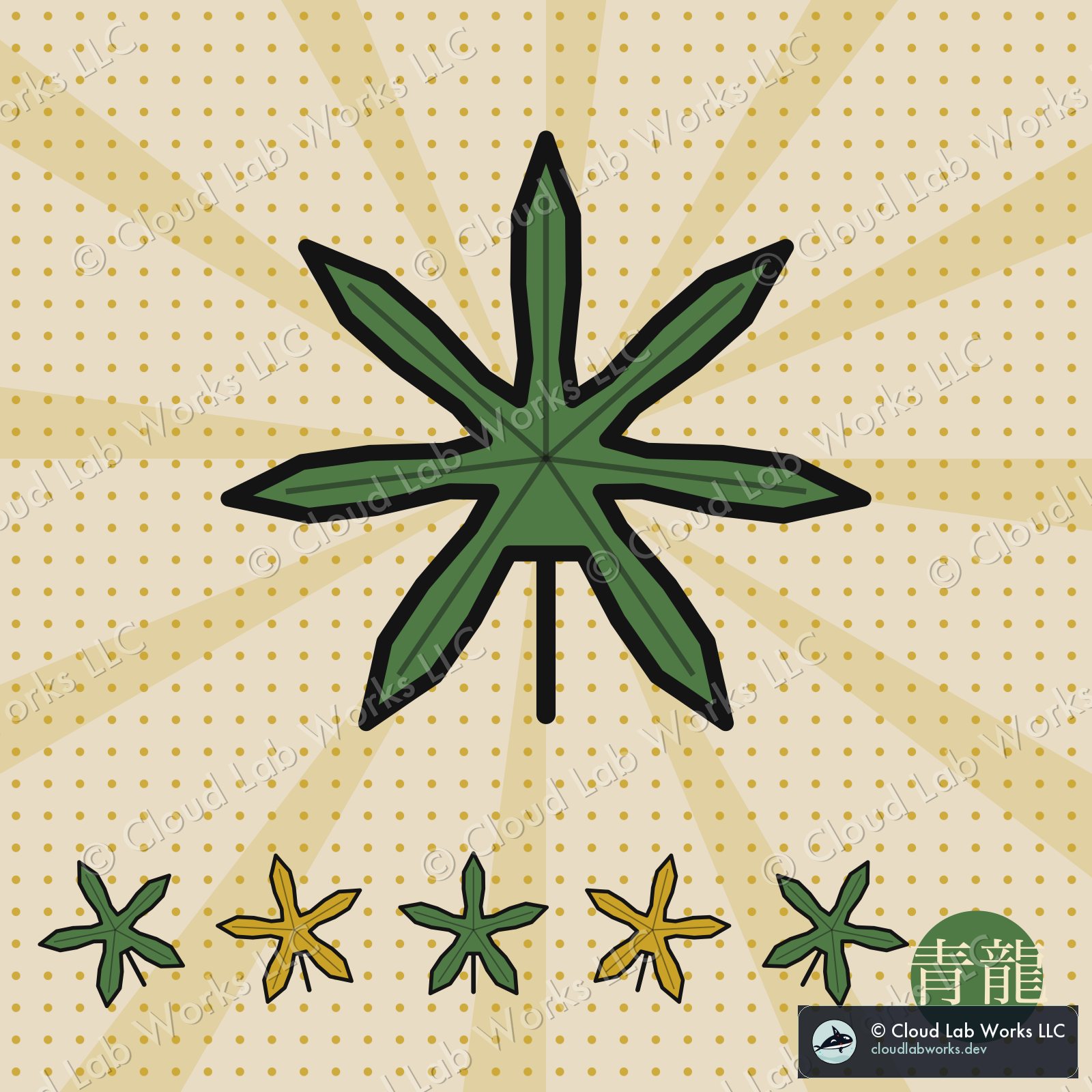 Hand-written SVG · flat colourSeiryuThe only upright laceleaf. Dissected foliage that stays green through the heat and finishes gold with a red edge.Inquire
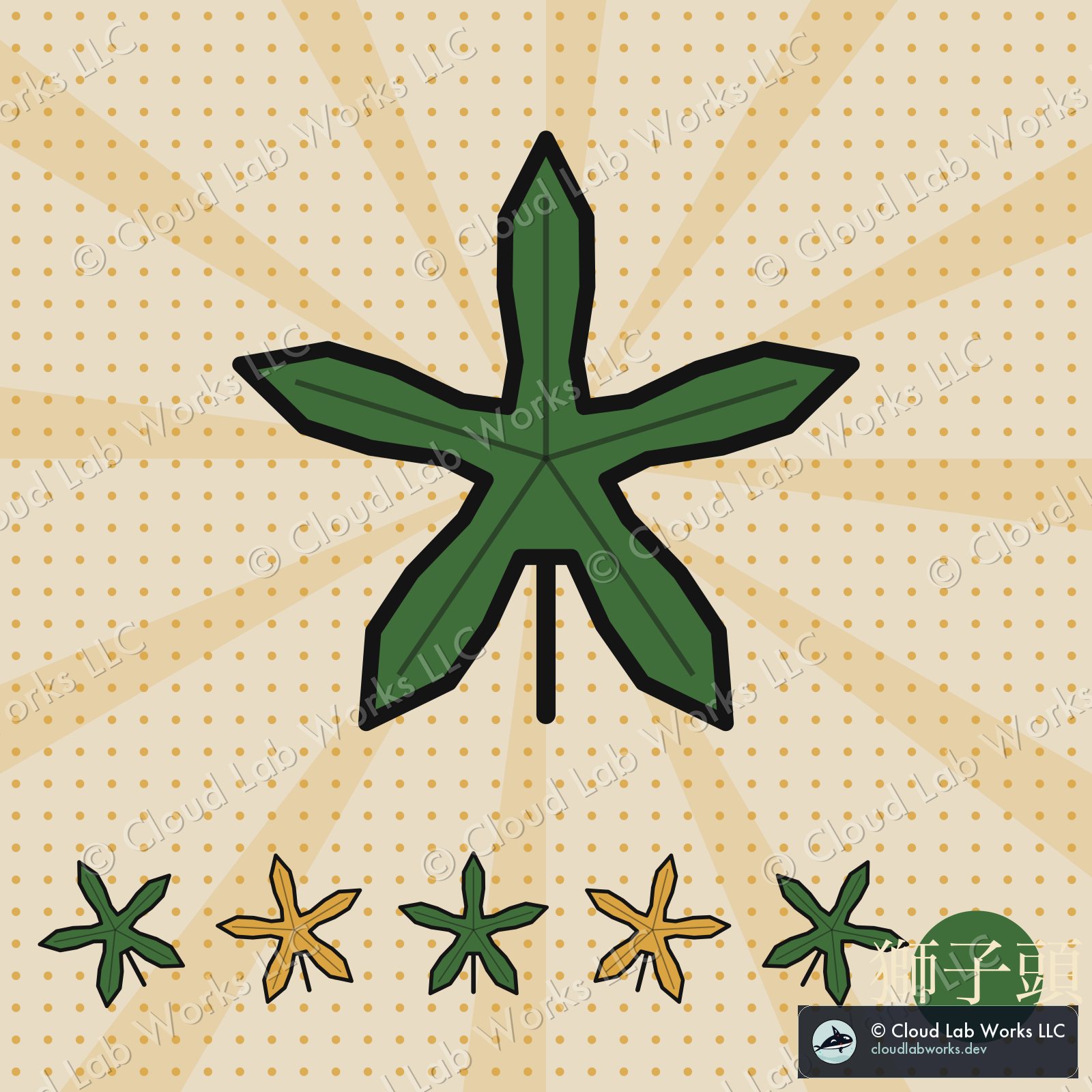 Hand-written SVG · flat colourShishigashiraLion's mane. Crinkled leaves crowded on short internodes, so the whole tree reads as texture before it reads as colour.Inquire
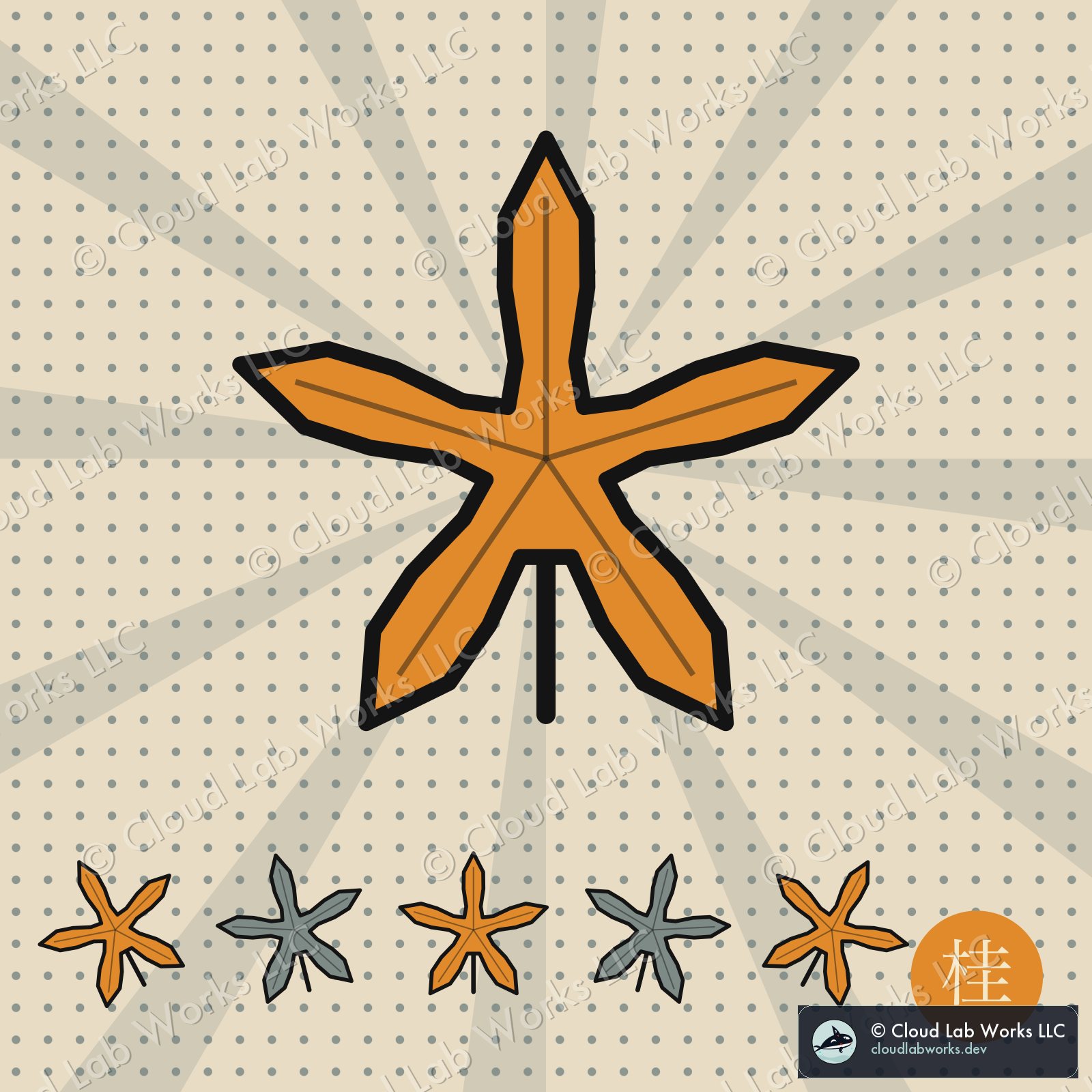 Hand-written SVG · flat colourKatsuraSpring, not autumn, is its season: new leaves open apricot-orange, fade to green, and come back gold in October.Inquire
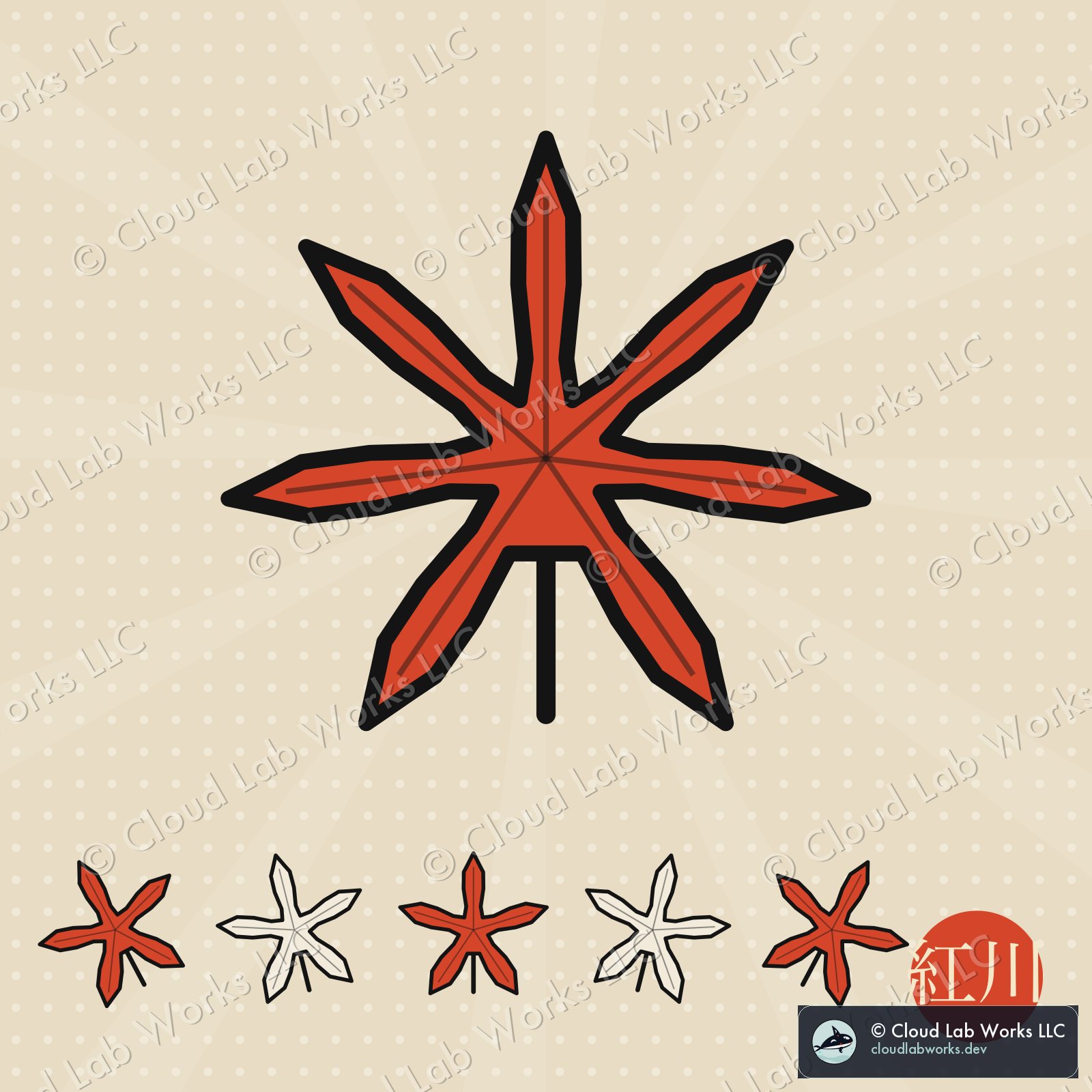 Hand-written SVG · flat colourBeni-kawaRed-bark, the redder sibling of Sango-kaku. Same trick, harder colour, and the bark brightens as the temperature drops.Inquire
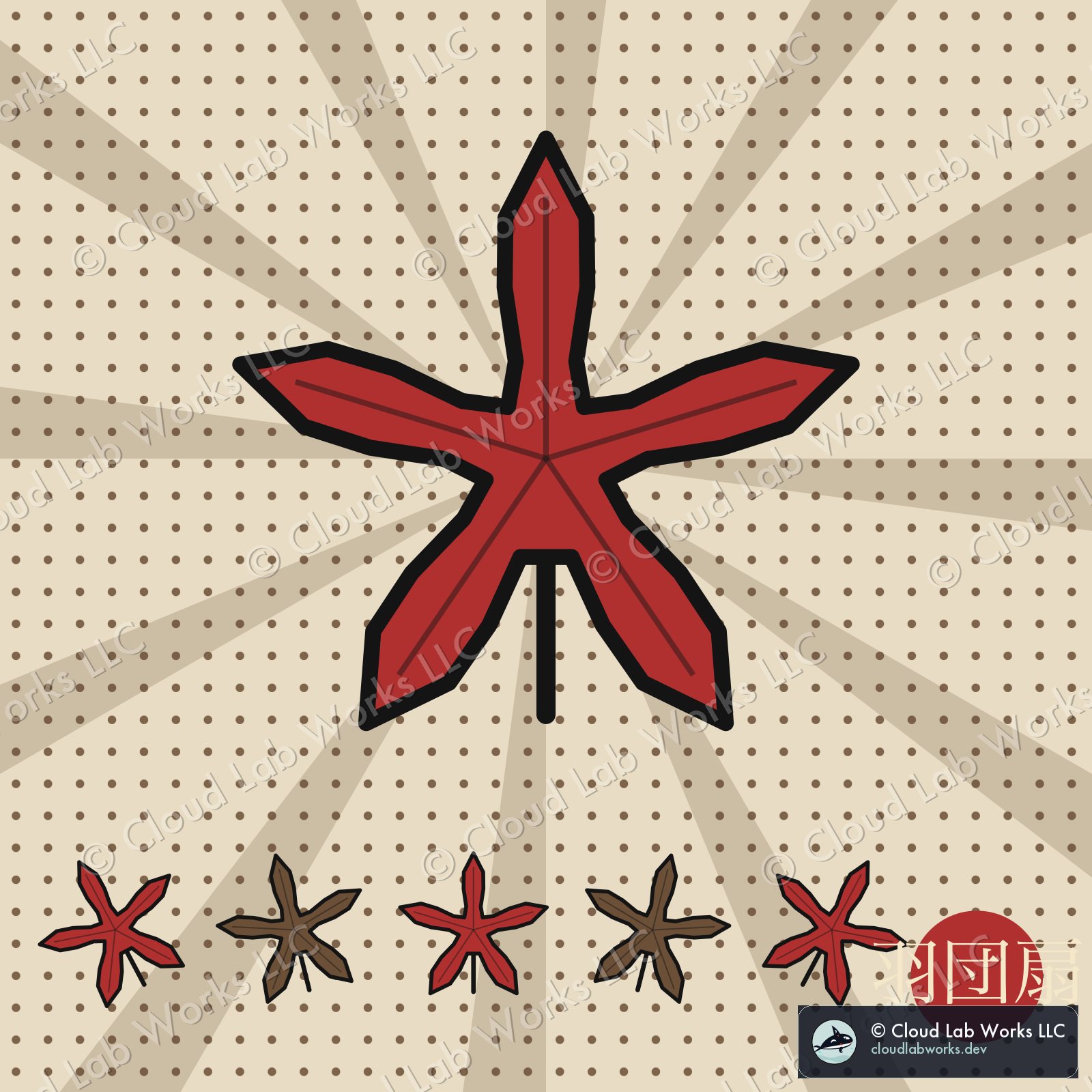 Hand-written SVG · flat colourAconitifoliumFernleaf full-moon maple, an Acer japonicum rather than a palmatum. Deeply cut fans that turn every shade of red at once.Inquire
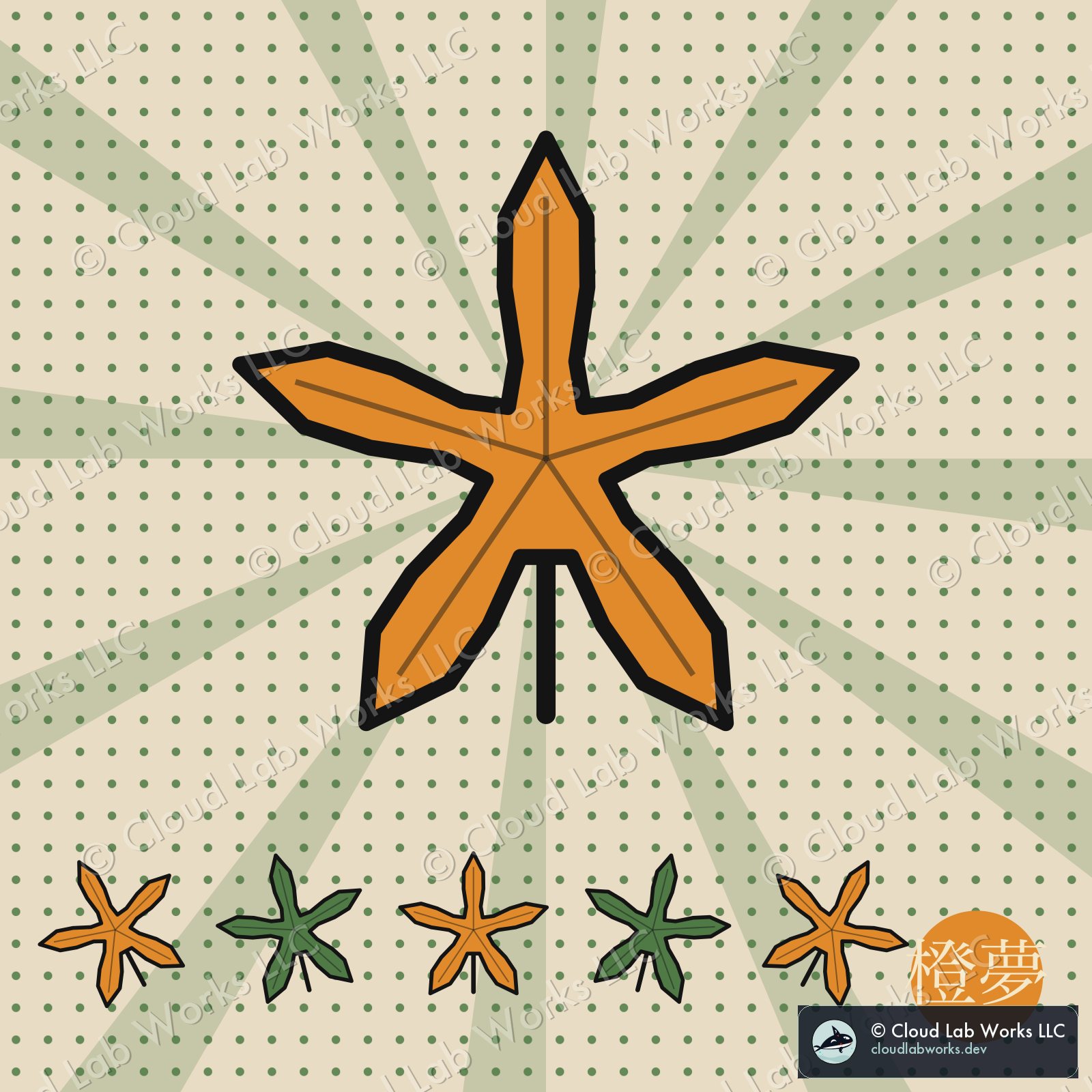 Hand-written SVG · flat colourOrange DreamOpens orange-yellow in spring with a red margin, greens in summer, golds in autumn. Three trees in one year.Inquire
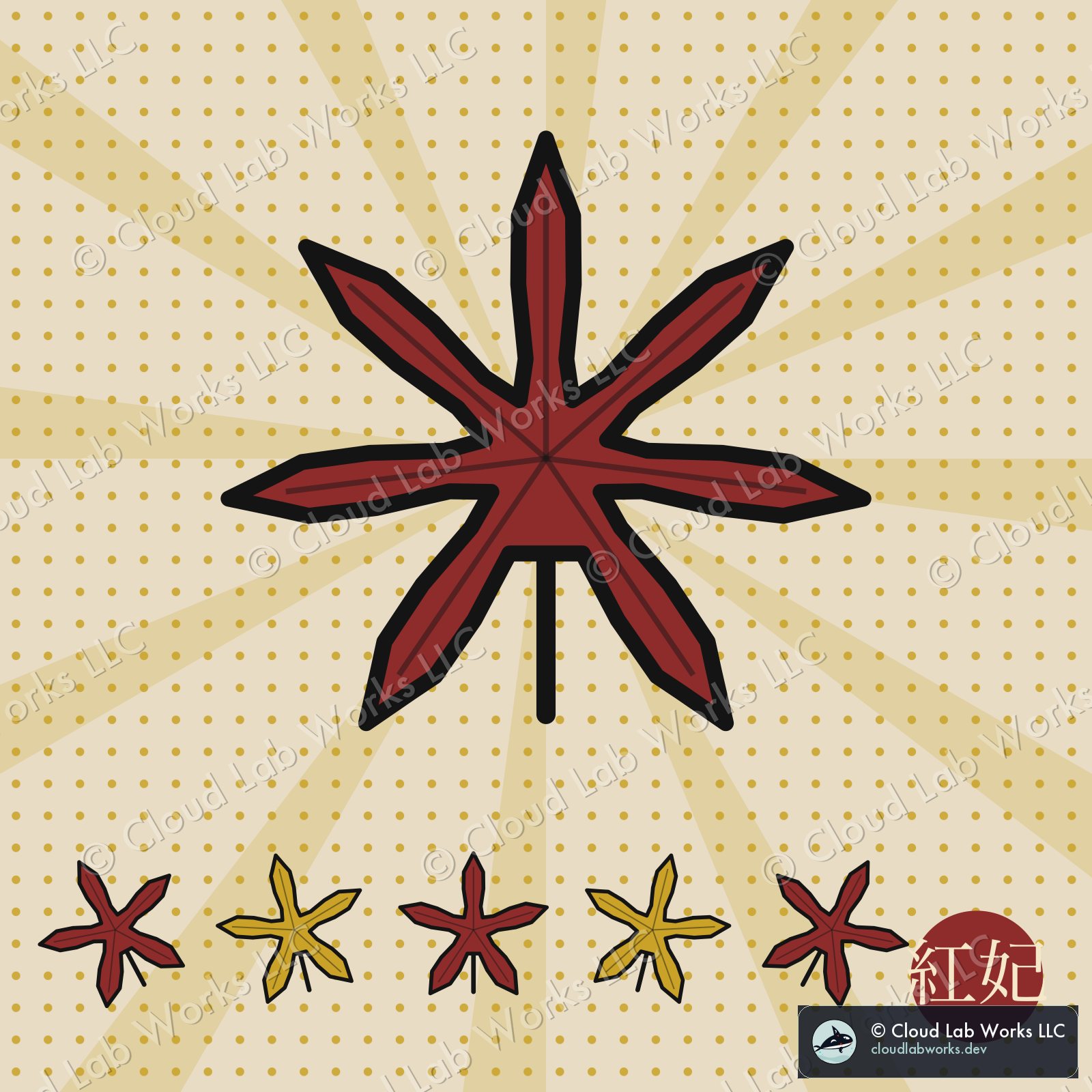 Hand-written SVG · flat colourCrimson QueenWeeping dissectum. Holds its dark red through summer heat better than most laceleaf forms, which is the whole selling point.Inquire
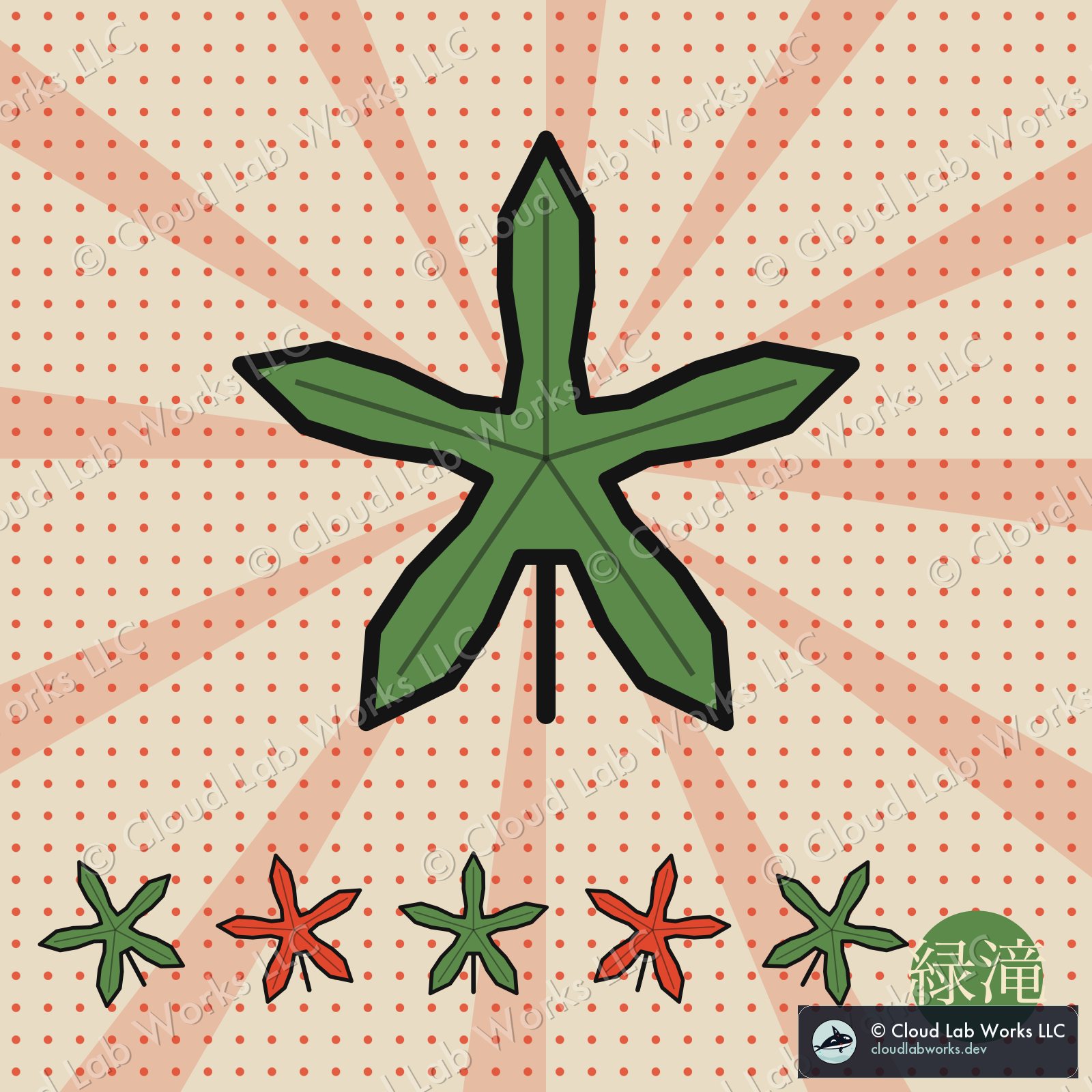 Hand-written SVG · flat colourViridisThe green weeping laceleaf. A mound of dissected foliage that goes gold and orange, the counterweight to Crimson Queen.Inquire
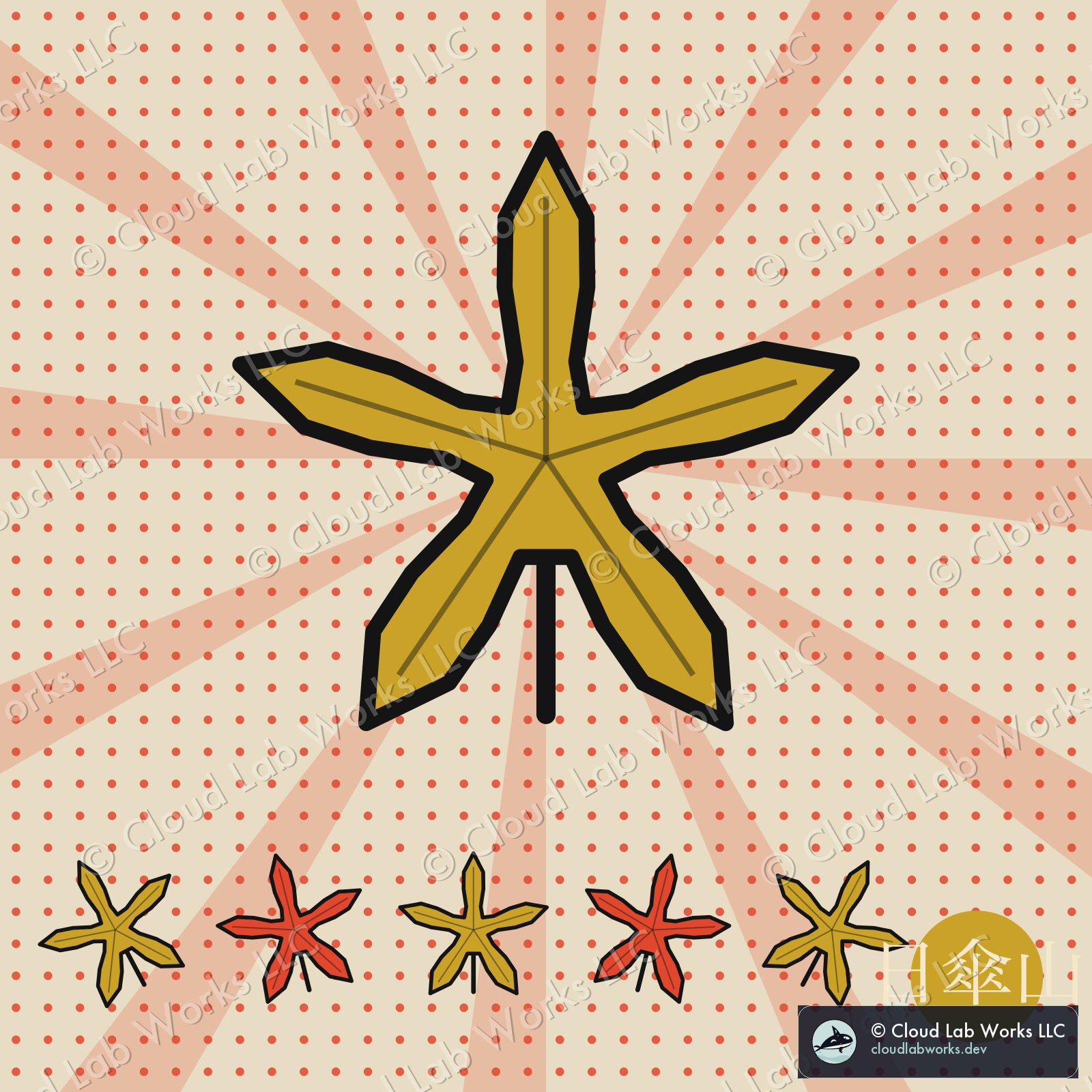 Hand-written SVG · flat colourHigasayamaVariegated: cream margins on green, flushed pink as the leaf opens. Closest thing in the genus to a printed pattern.Inquire
Spring
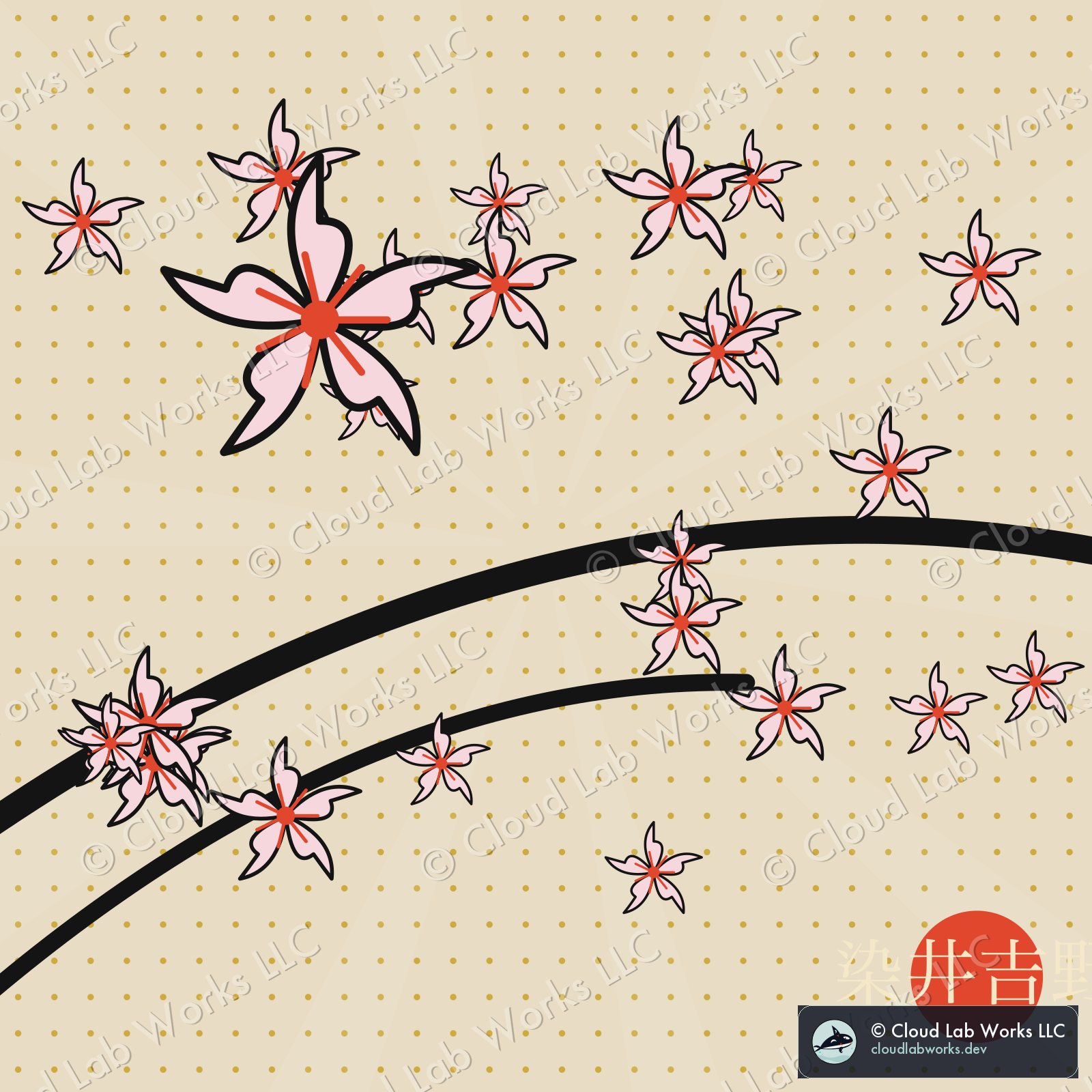 Hand-written SVG · flat colourSomei-yoshinoThe clone. Nearly every famous avenue in Japan is one genetically identical tree, which is why a city blooms on the same day.Inquire
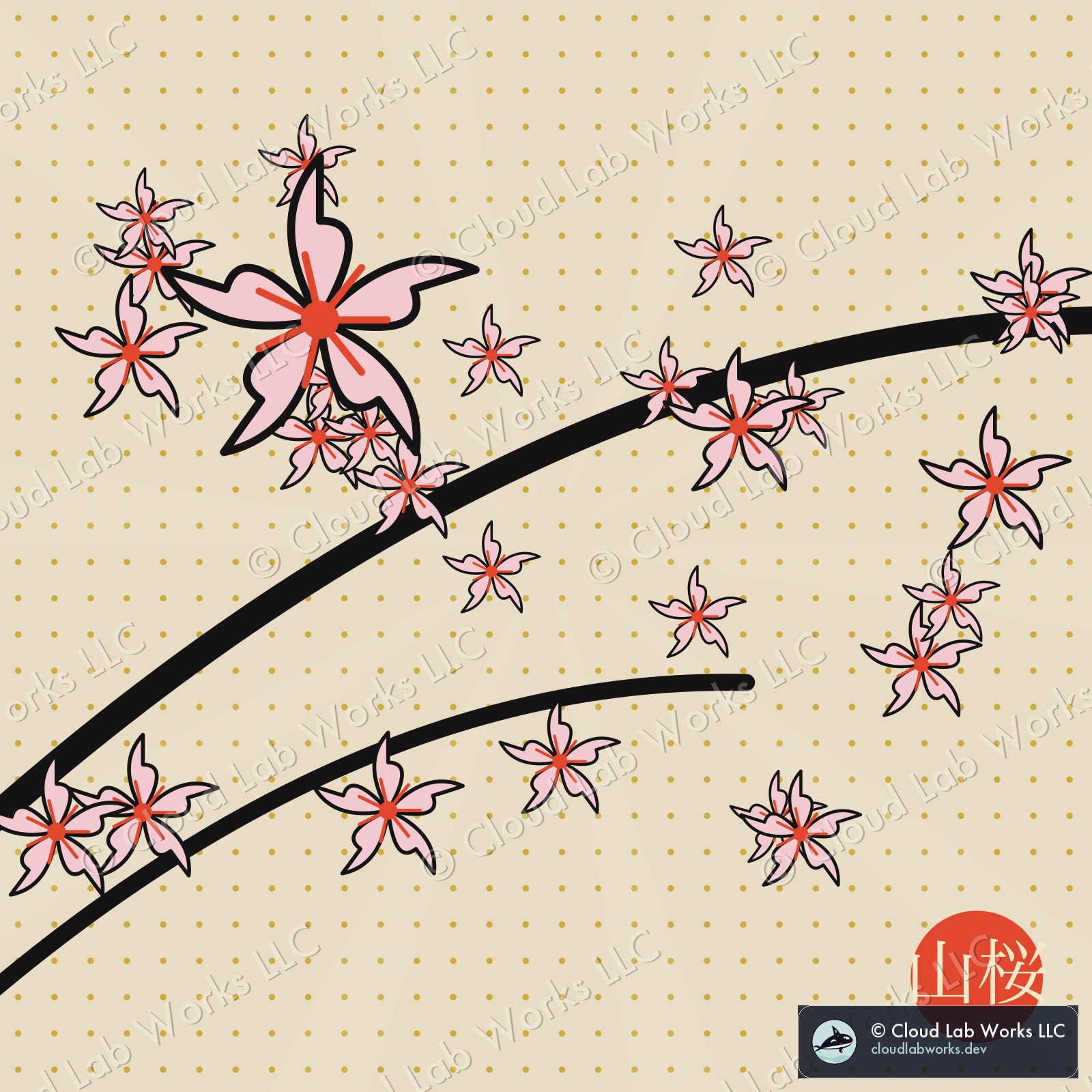 Hand-written SVG · flat colourYamazakuraThe wild hill cherry: flowers and copper-red young leaves open together, so the tree is never pure white the way Somei-yoshino is.Inquire
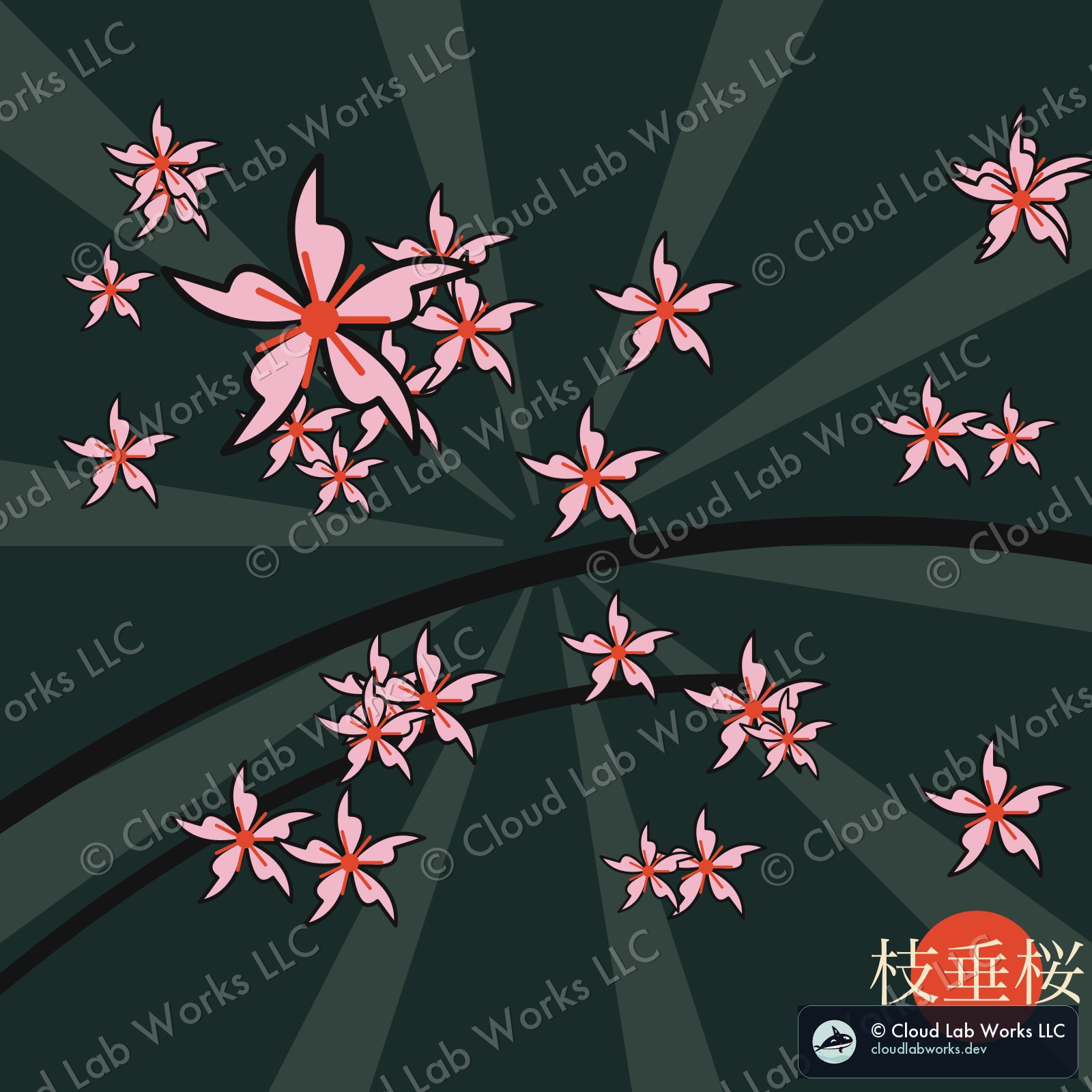 Hand-written SVG · flat colourShidarezakuraWeeping. The branches carry the flowers down rather than up, and the oldest specimens are propped on timber frames.Inquire
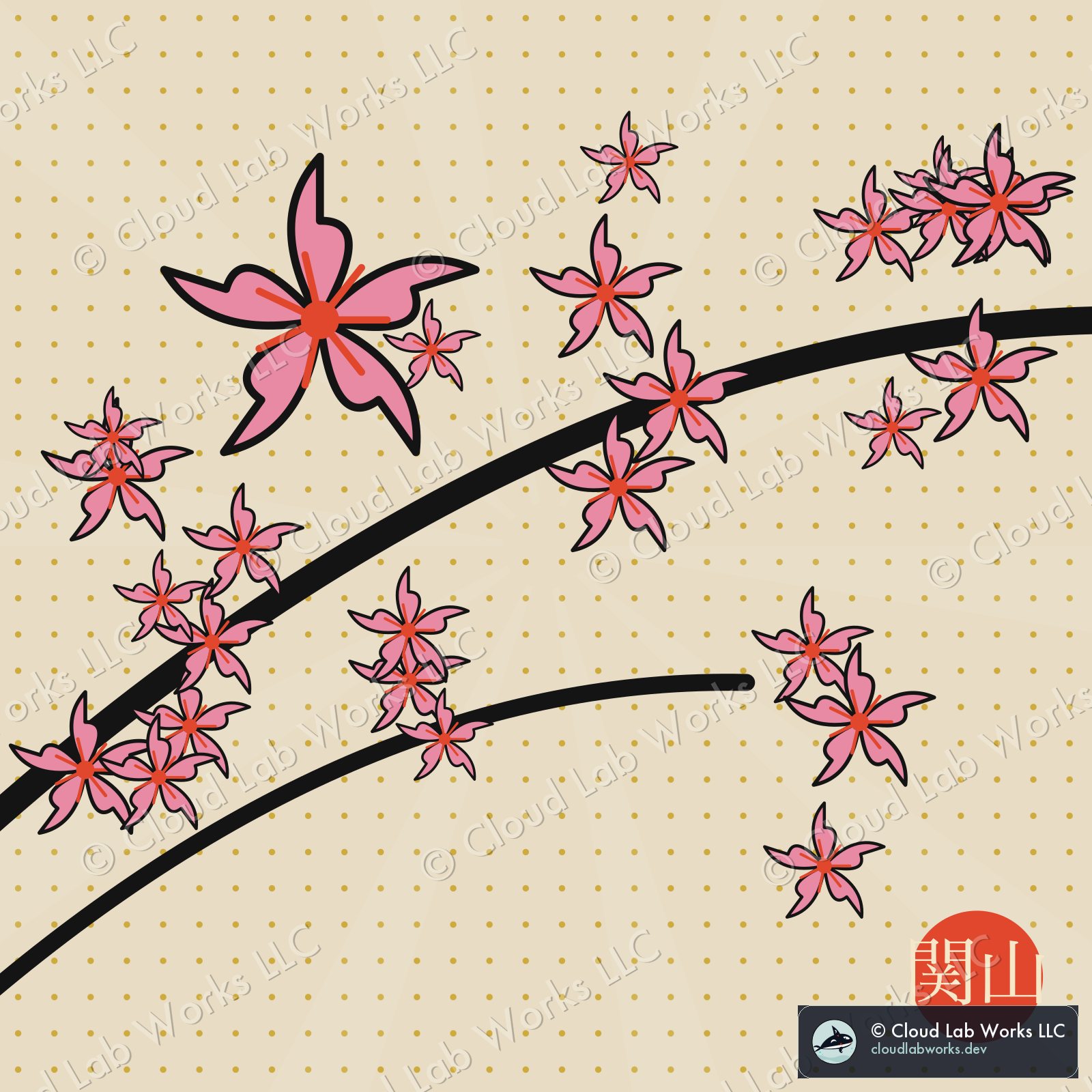 Hand-written SVG · flat colourKanzanDouble, deep pink, thirty petals or more per flower. Blooms late, after the single whites have gone over.Inquire
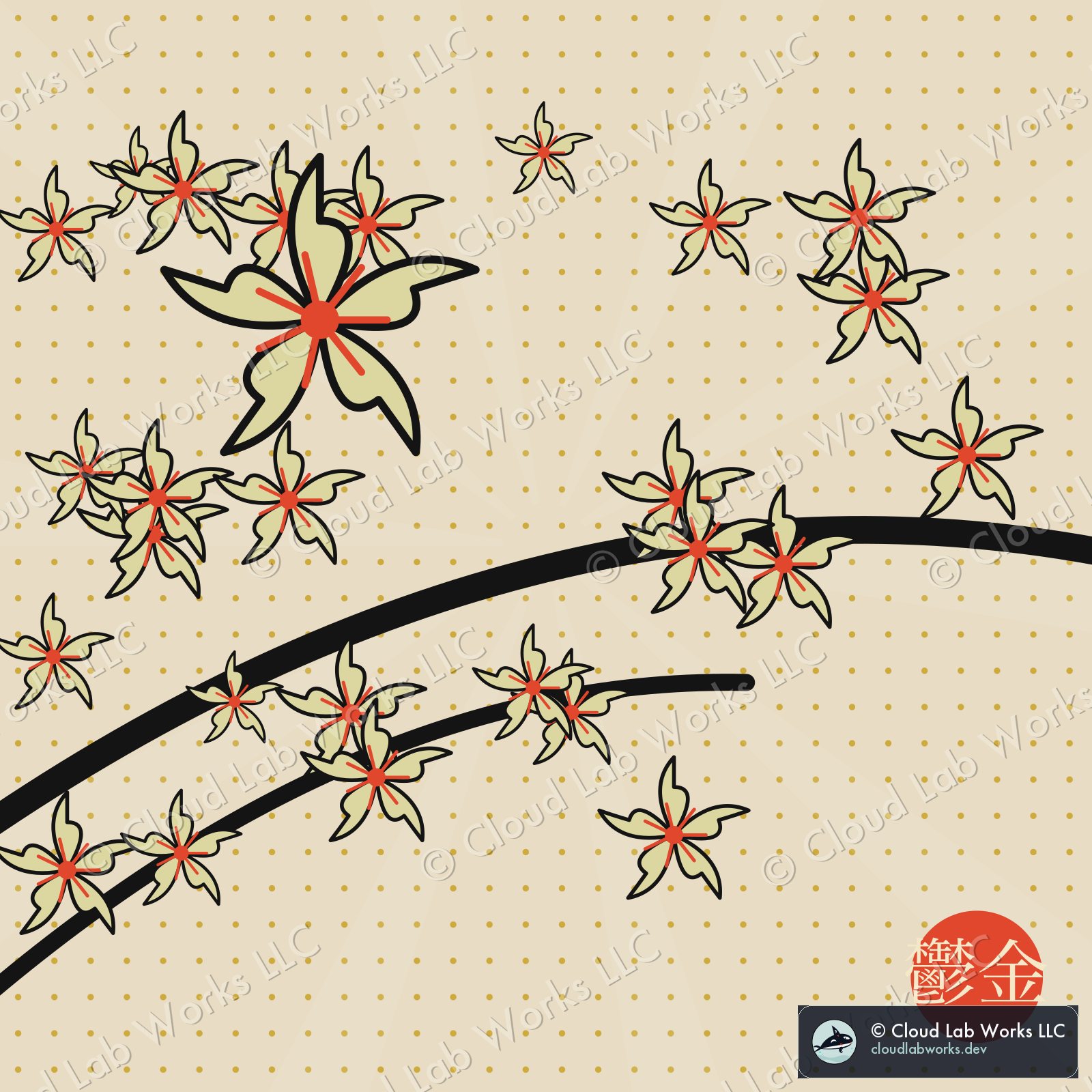 Hand-written SVG · flat colourUkonThe yellow-green cherry. Pale chartreuse petals that pink at the base as they age, which reads as a printing error and is not.Inquire
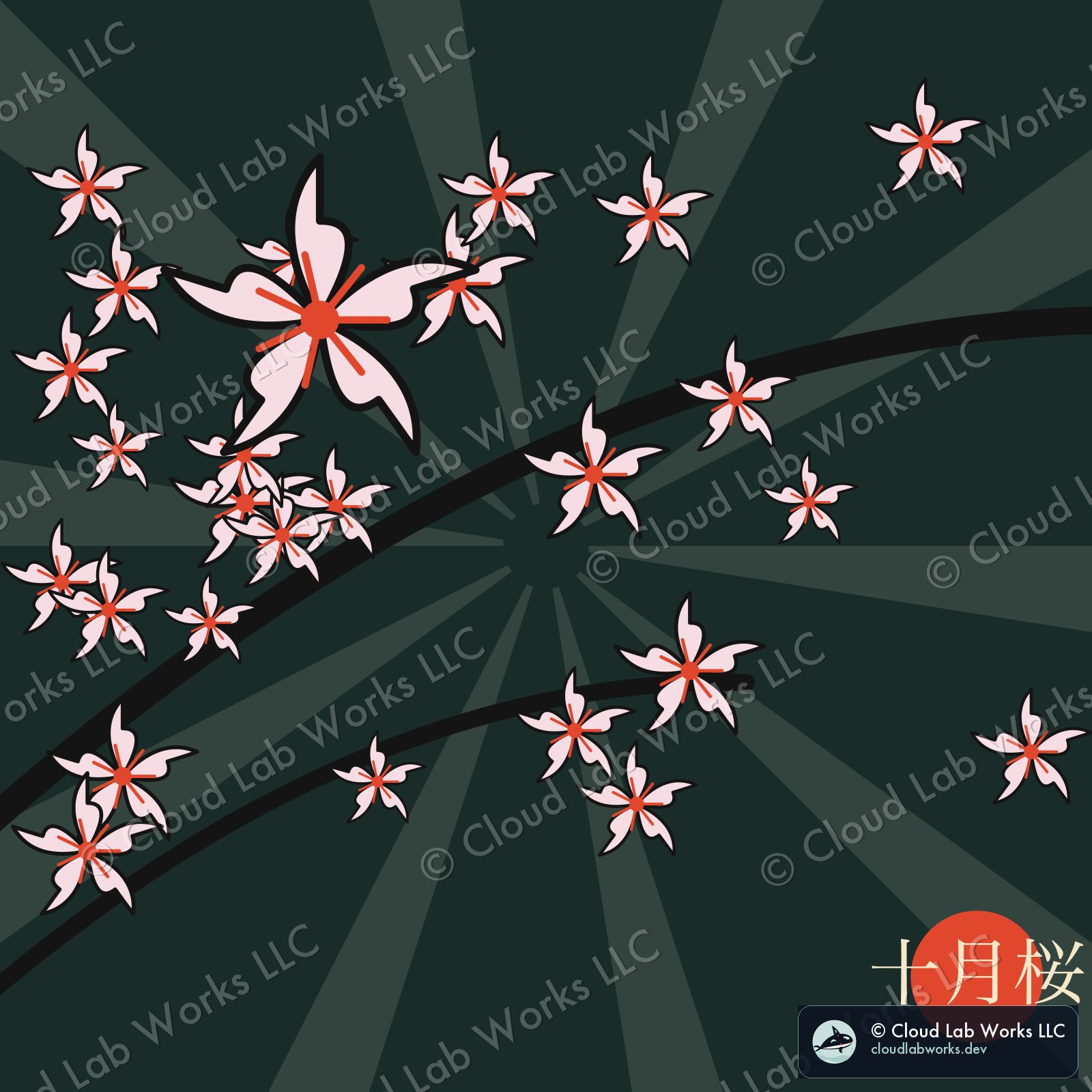 Hand-written SVG · flat colourJugatsuzakuraBlooms twice: a scatter in October and a fuller show in spring. The autumn flowering is sparse on purpose, not a failure.Inquire
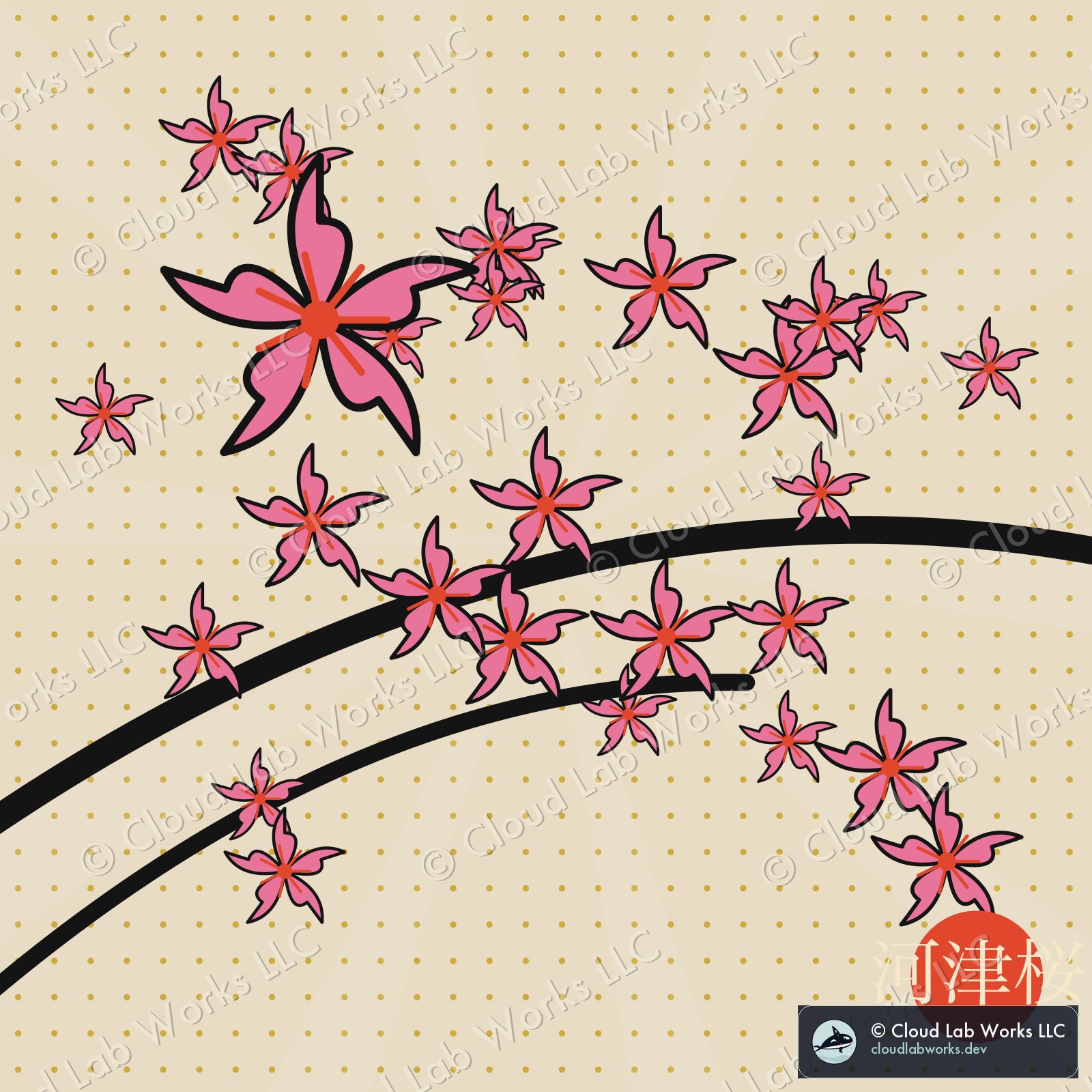 Hand-written SVG · flat colourKawazu-zakuraThe early one. Deep pink and open in February while everything else is bare, which makes it look impatient.Inquire
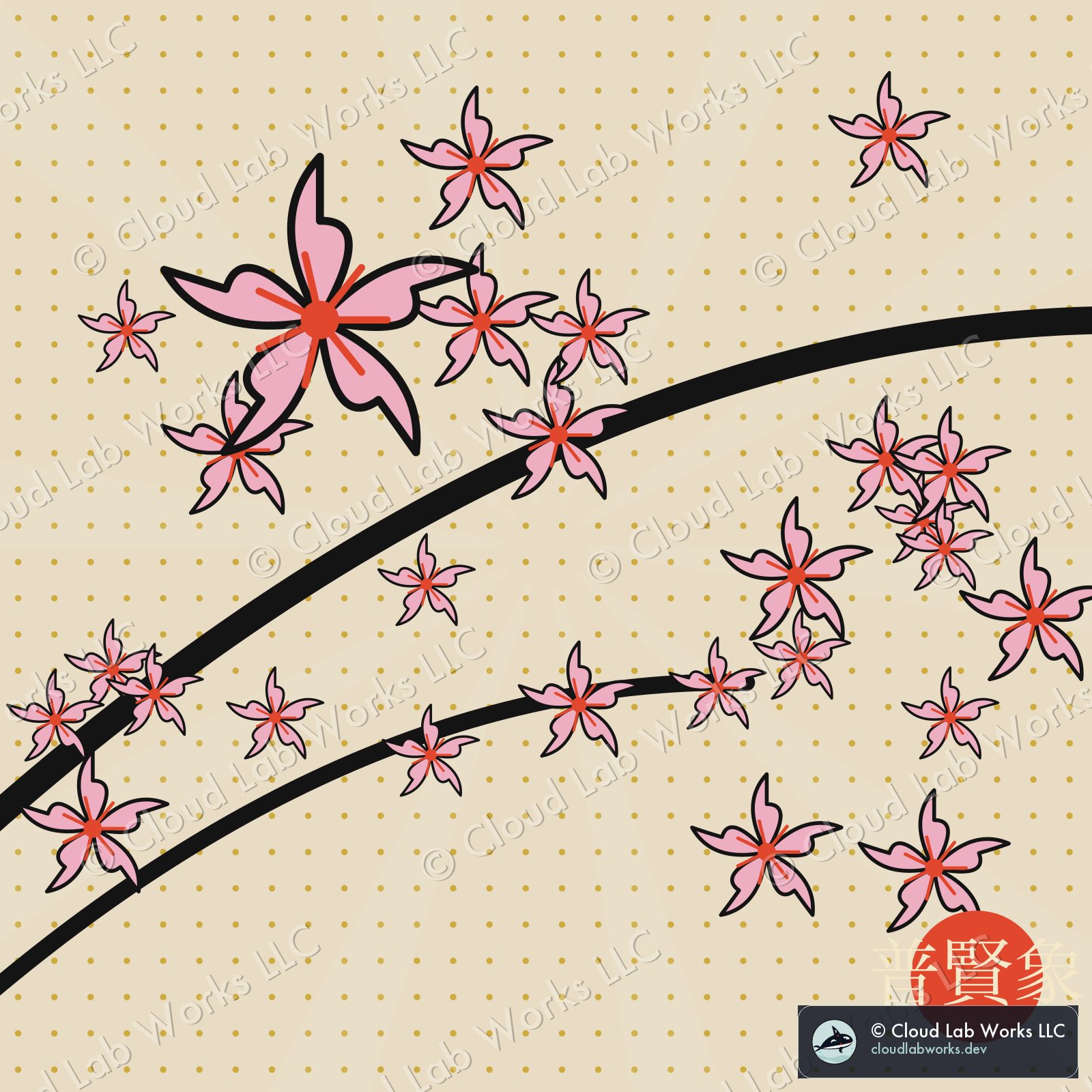 Hand-written SVG · flat colourFugenzoNamed for two leaf-like pistils in the centre said to resemble Fugen's elephant. Double, pink, very late.Inquire
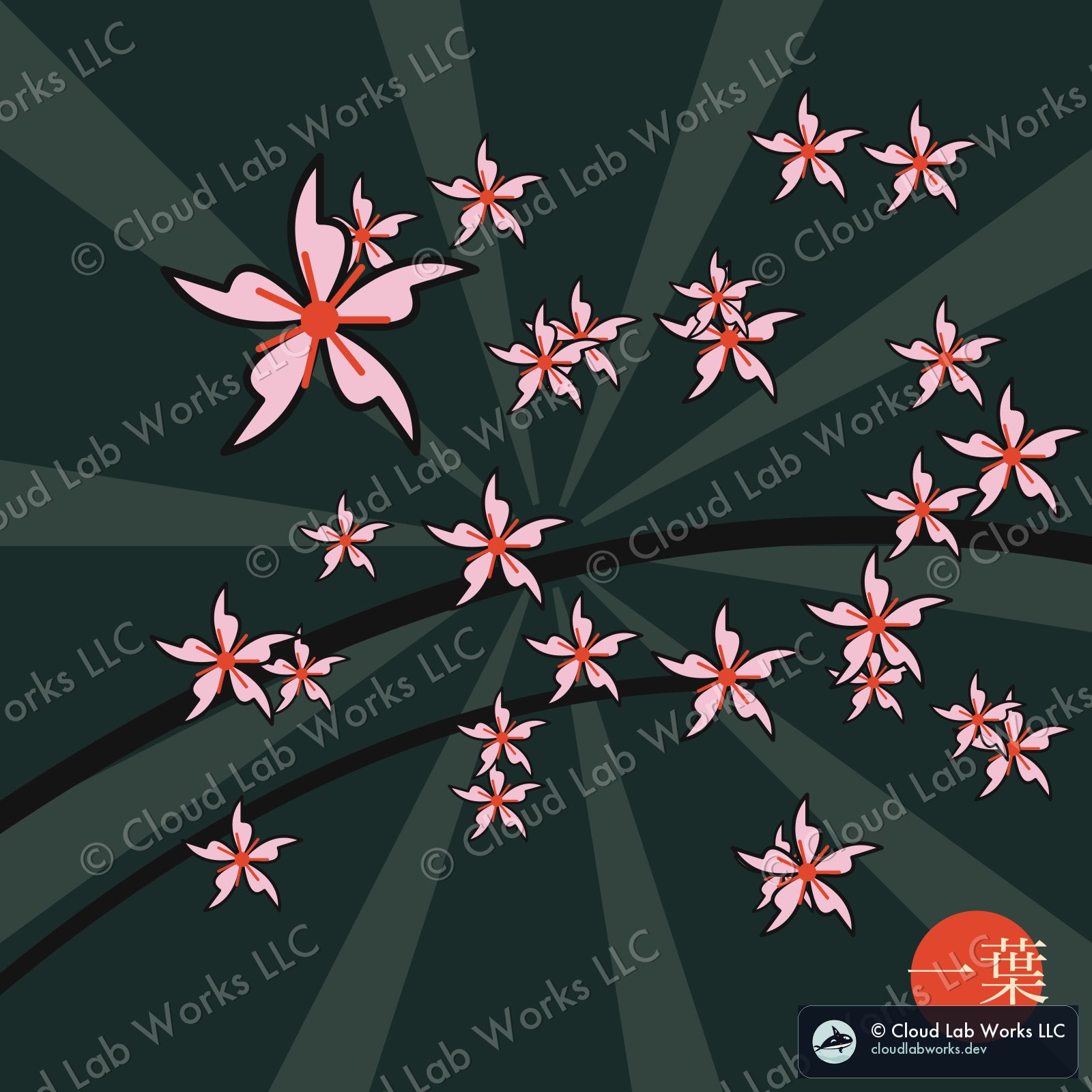 Hand-written SVG · flat colourIchiyoPale double pink with a single leaf-like pistil, hence the name. Opens after Somei-yoshino and holds longer.Inquire
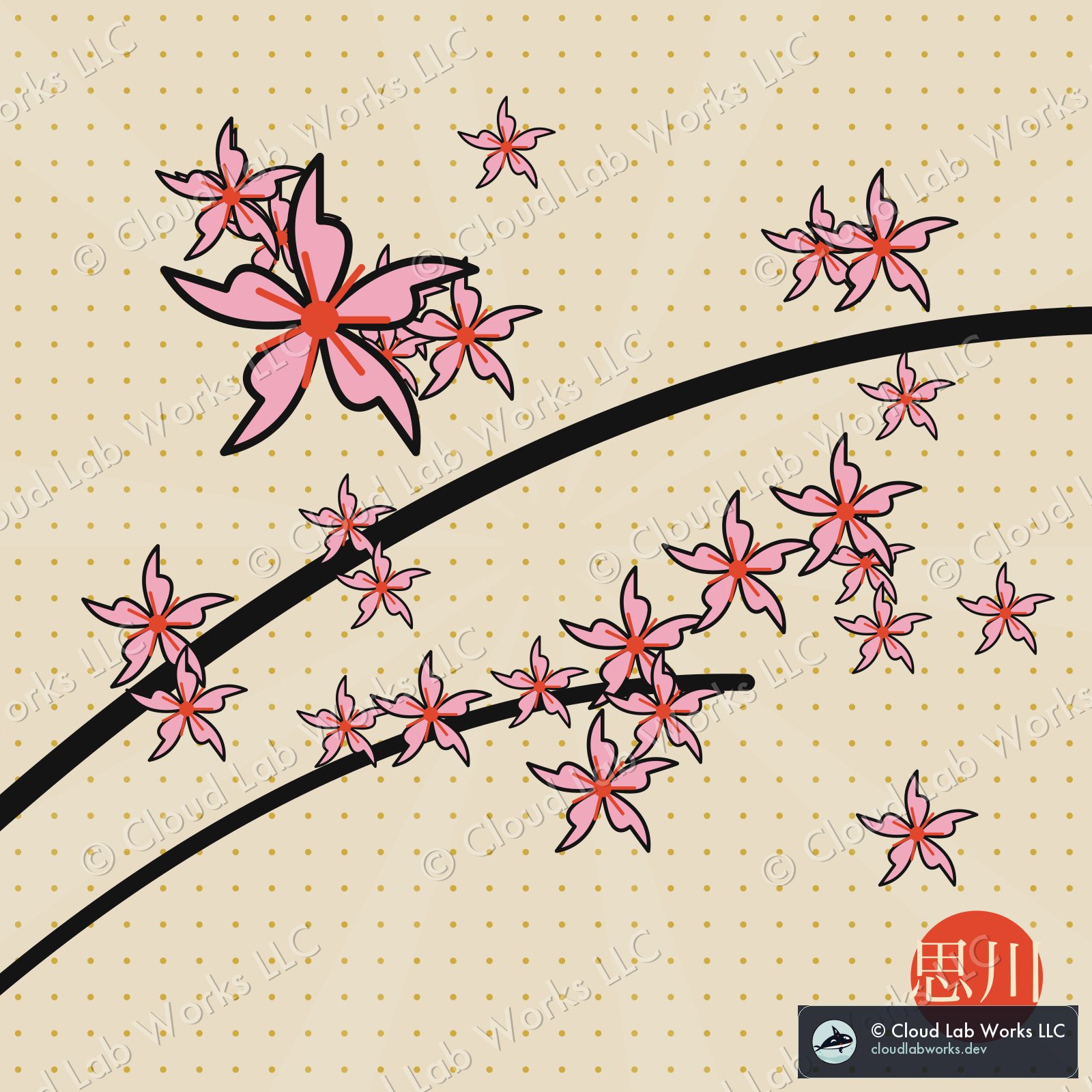 Hand-written SVG · flat colourOmoigawaA modern selection from Tochigi, semi-double and soft pink, and one of the few named cherries younger than the cars under it.Inquire
Winter
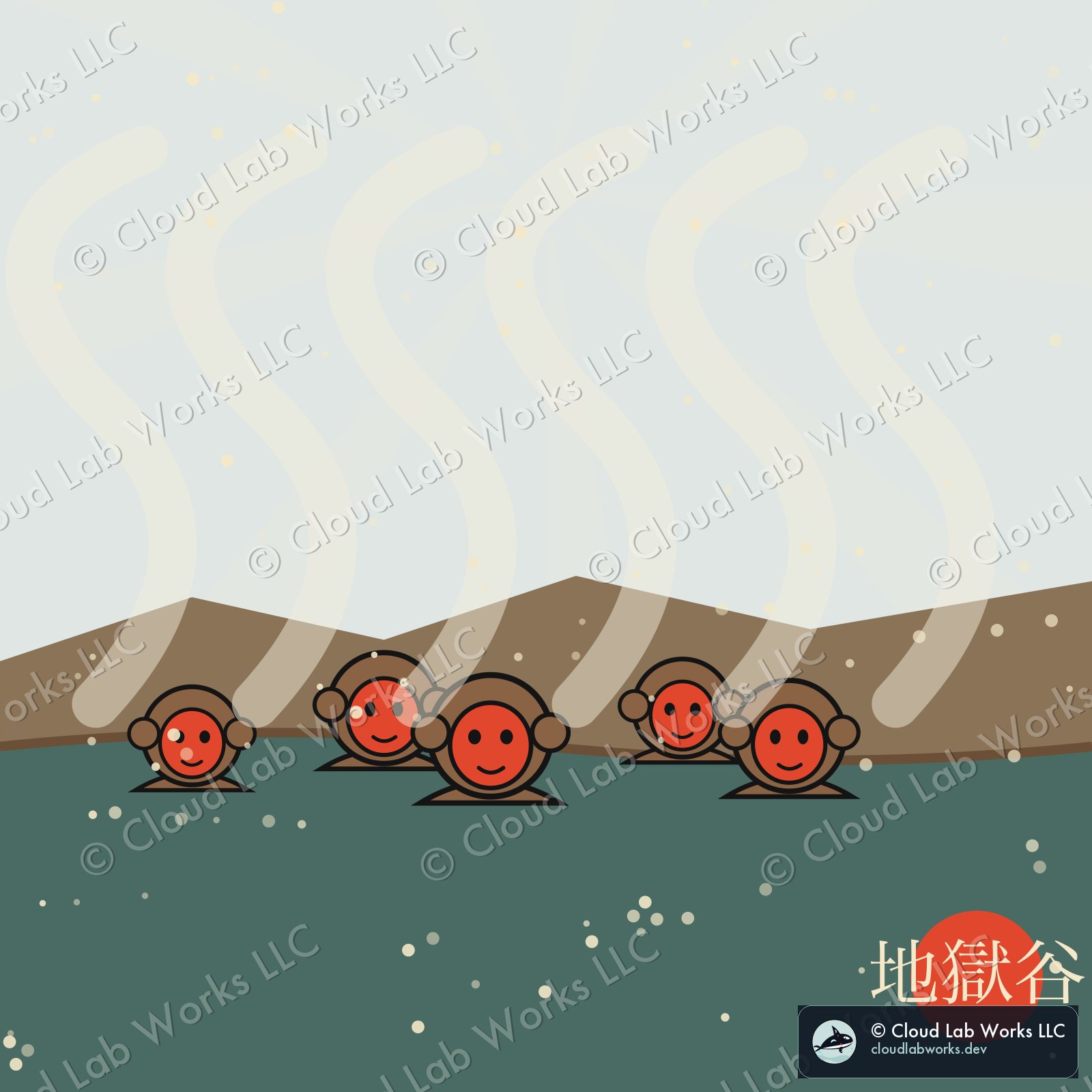 Hand-written SVG · flat colourJigokudani, the troopJigokudani Monkey Park, Nagano. The troop that learned to bathe, reportedly from one young female in the early 1960s; the behaviour spread by imitation and is now a tradition.Inquire
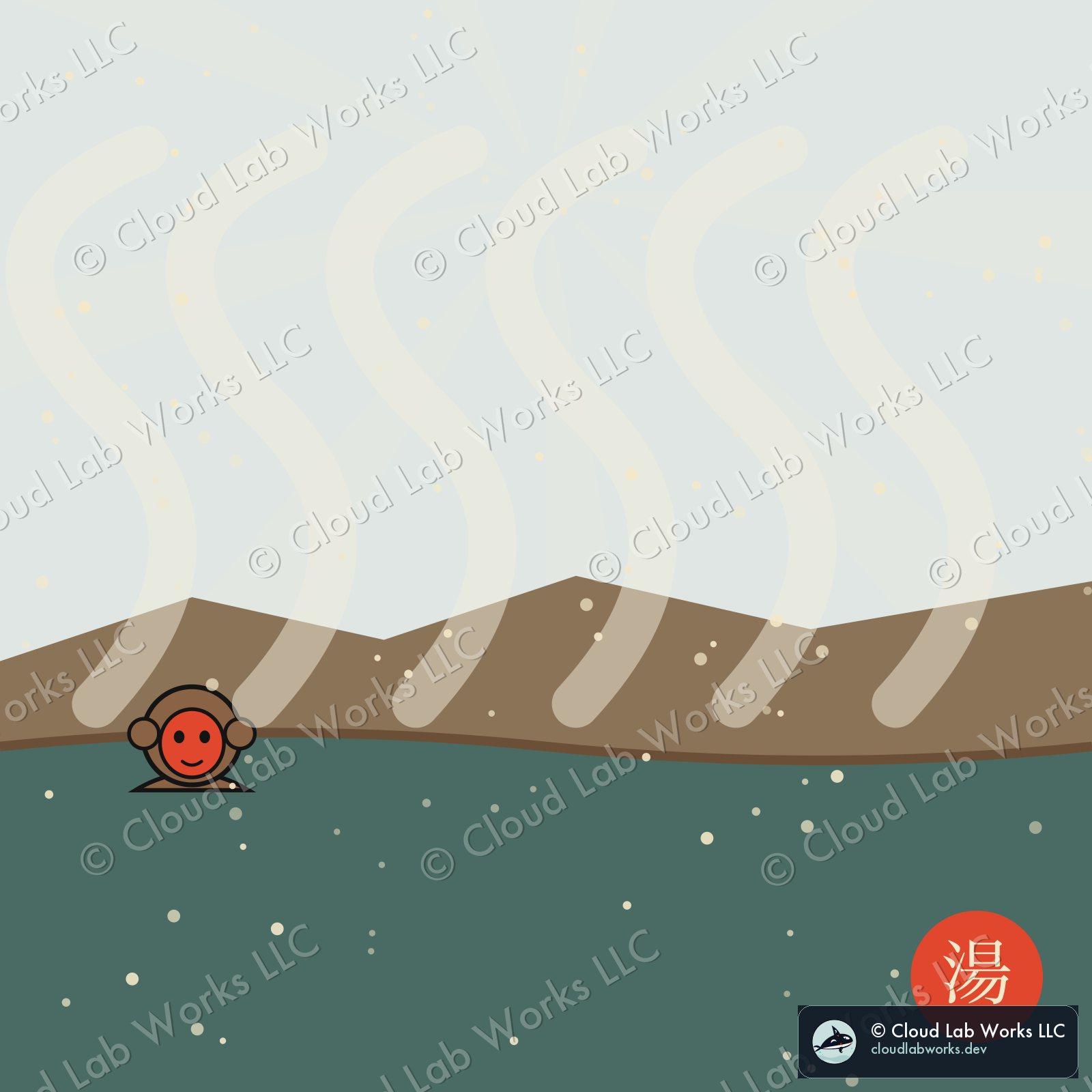 Hand-written SVG · flat colourJigokudani, one in the poolOne macaque, shoulders under. Steam is the only white in the frame and the face is the only loud colour.Inquire
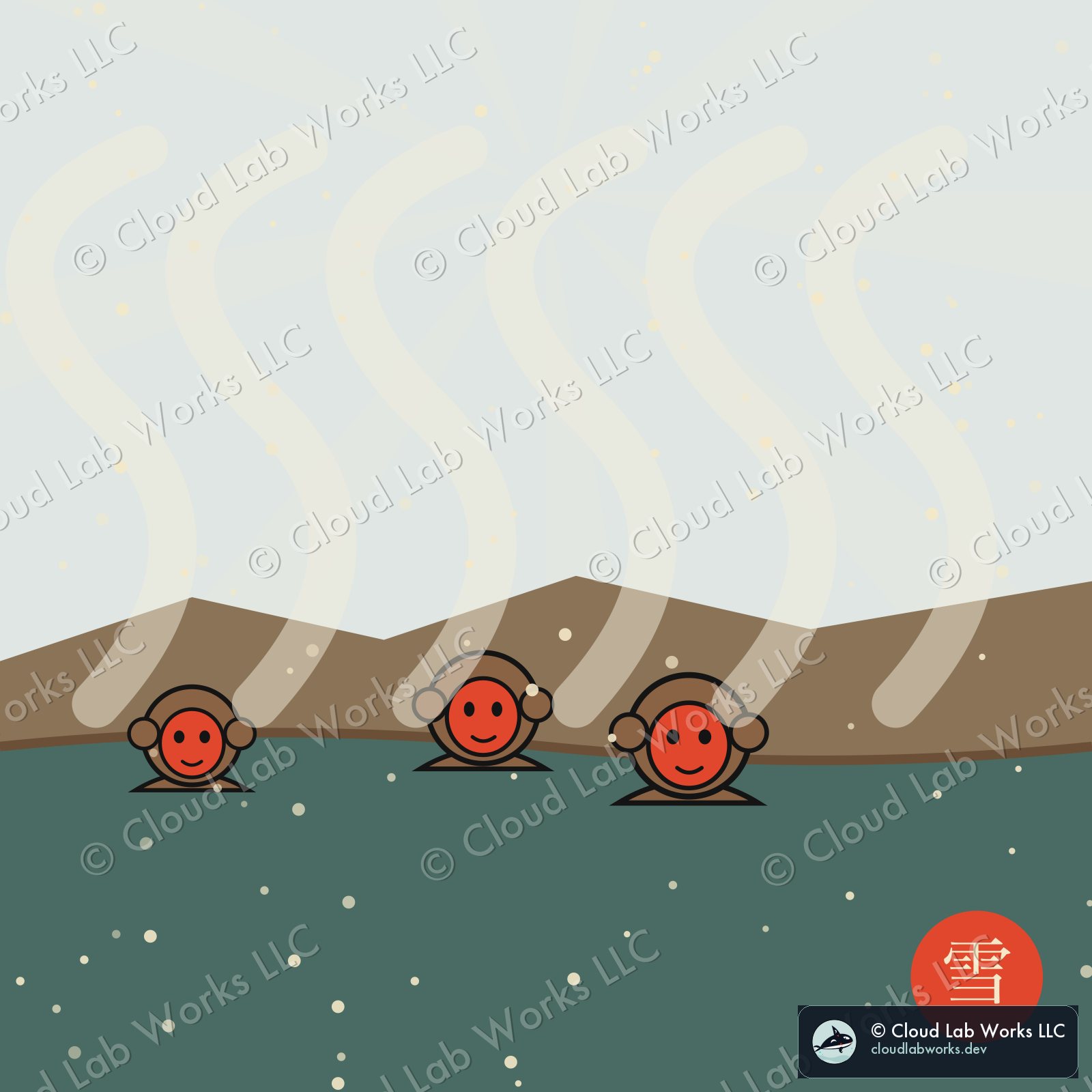 Hand-written SVG · flat colourSnow on the shouldersSnow settles on a wet head and does not melt, because the body below the waterline is warm and the head is not.Inquire
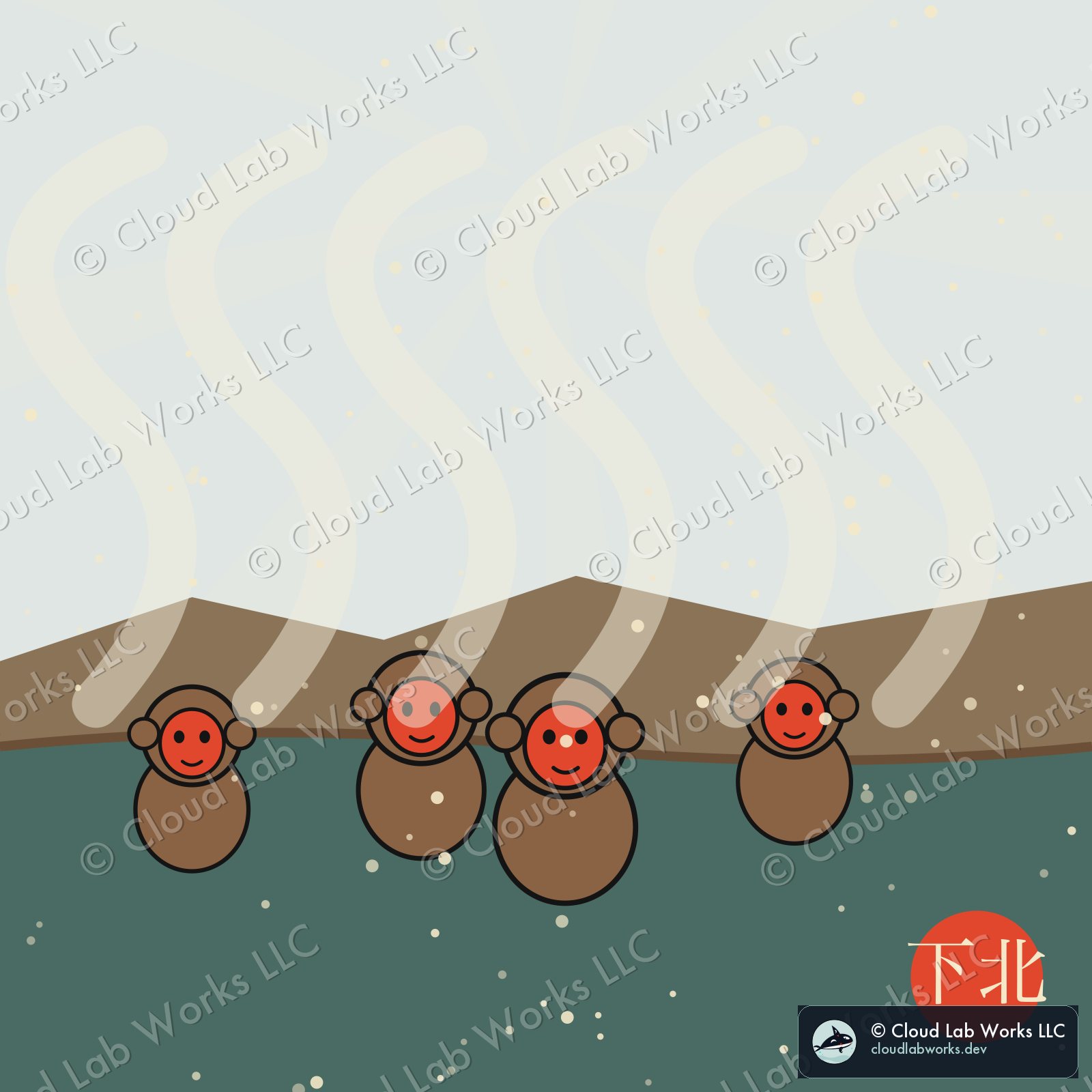 Hand-written SVG · flat colourShimokita, the northern limitThe Shimokita Peninsula in Aomori: the northernmost wild non-human primates on earth, a metre of snow for months, and no hot pool laid on.Inquire
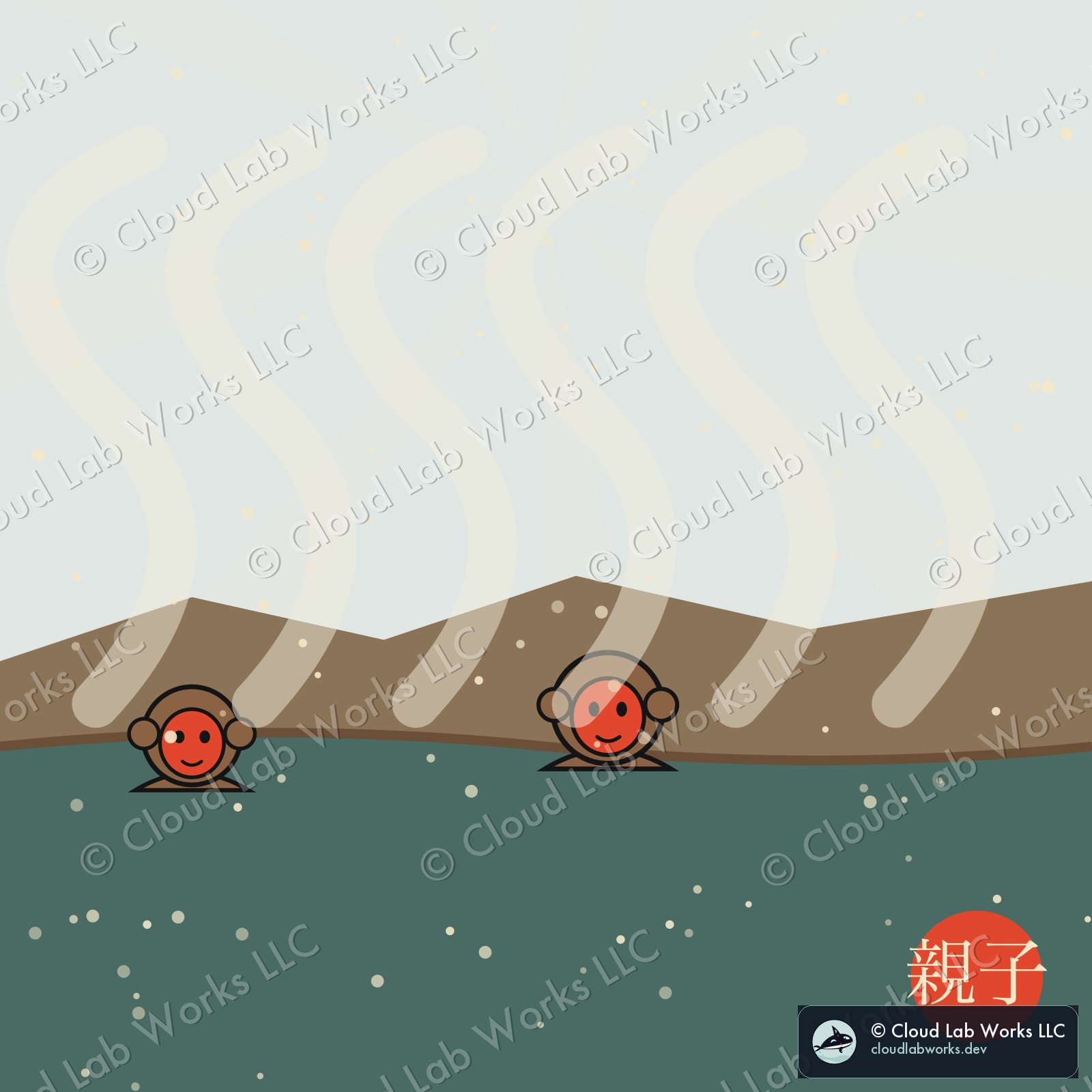 Hand-written SVG · flat colourMother and infantAn infant rides high and dry. Grooming and bathing are both social, and the pool is a place where rank gets negotiated quietly.Inquire
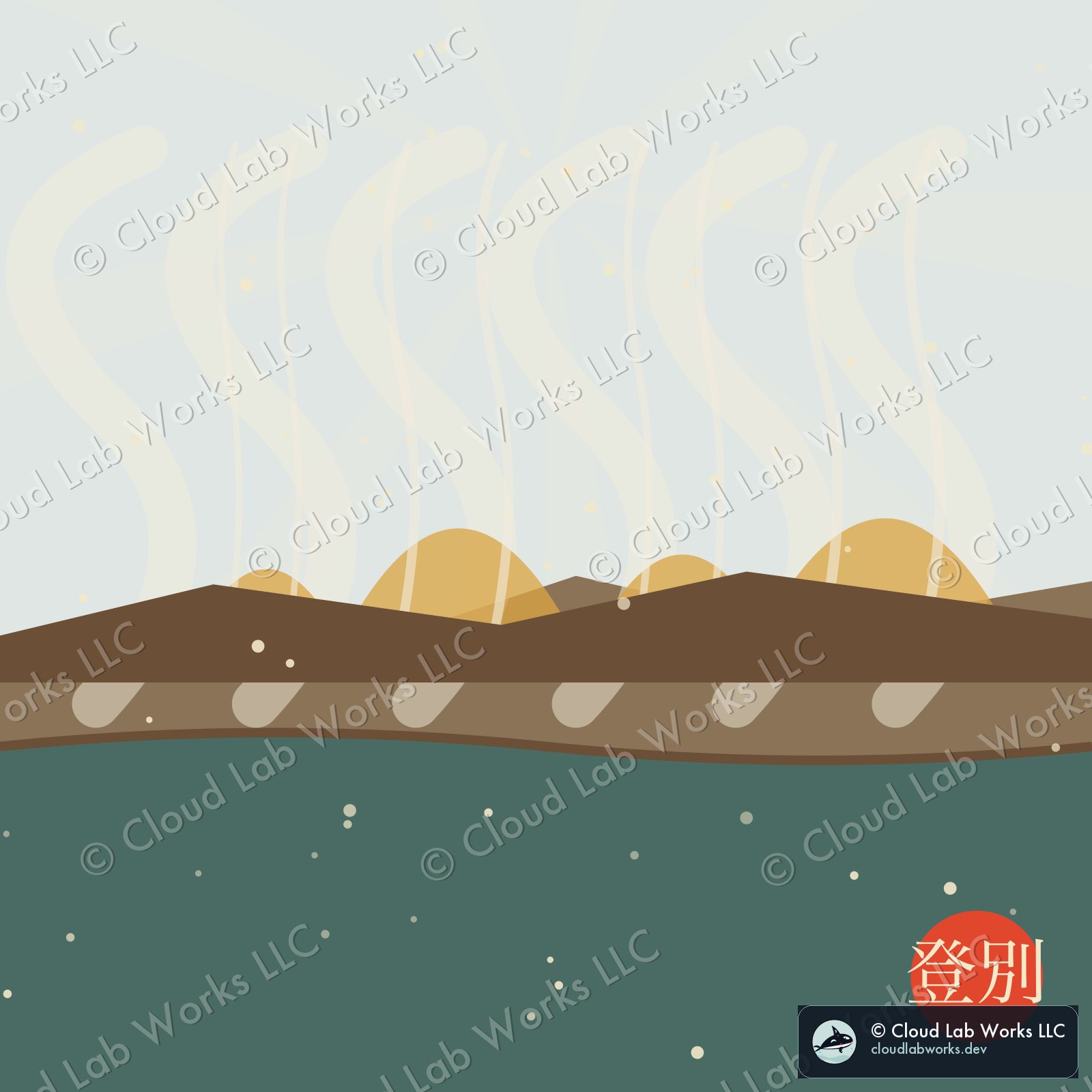 Hand-written SVG · flat colourNoboribetsu, HokkaidoHokkaido steam, drawn honestly: Noboribetsu's own Jigokudani, sulphur vents and no monkeys, because macaques do not live on Hokkaido at all.Inquire
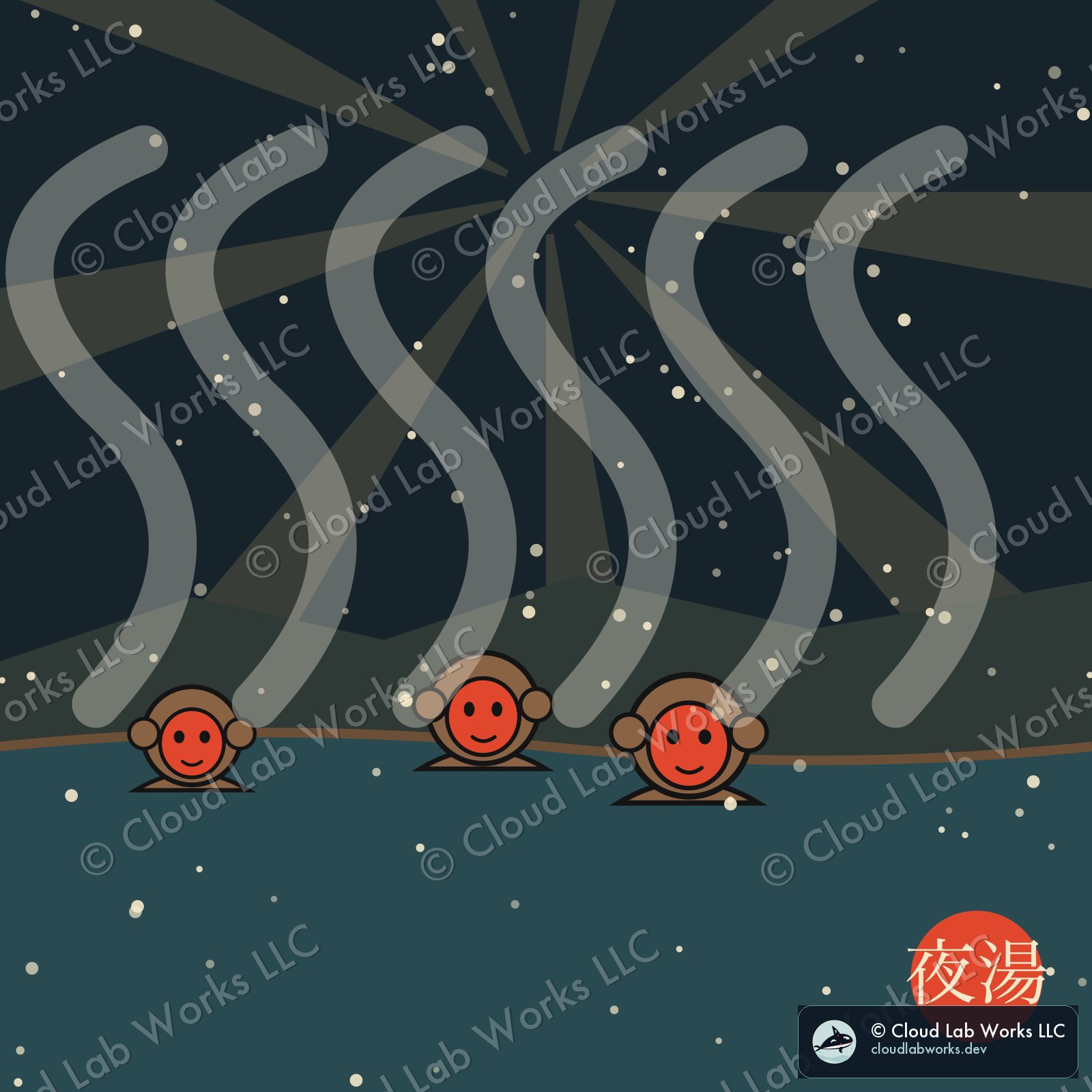 Hand-written SVG · flat colourYudanaka, after darkThe valley after the park closes. Lantern light on water, steam going straight up because there is no wind in a gorge.Inquire
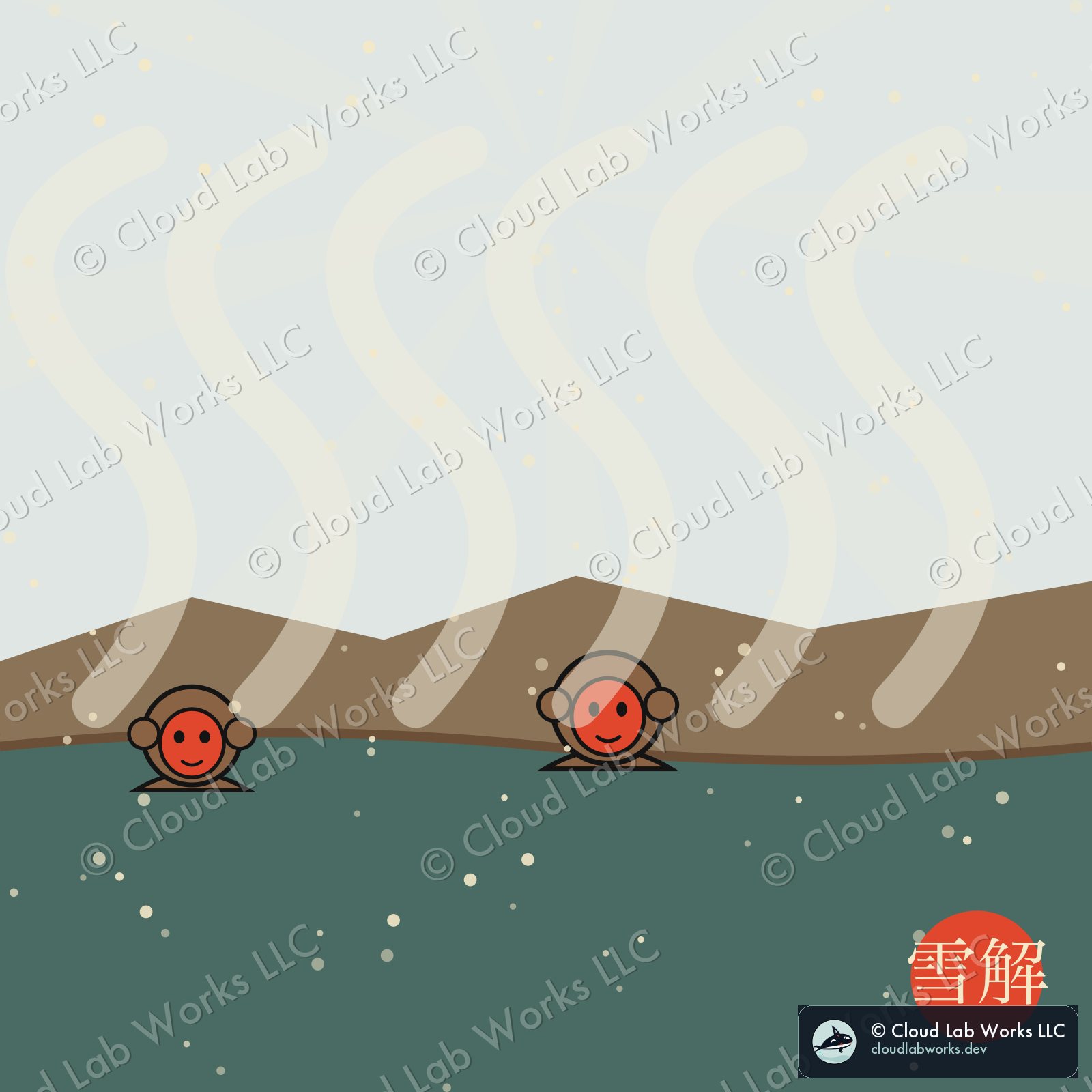 Hand-written SVG · flat colourFirst thawThe end of the set and the end of the season: less steam, more rock, and the troop beginning to sit on the edge rather than in it.Inquire
The ASCII set
The same Japanese motifs in the character set a 1978 terminal had: pipe, underscore, slash, tilde, a period for the spray. Hand-composed, each under ninety columns; the blueprints drawn the same way live on Code as Diagrams.
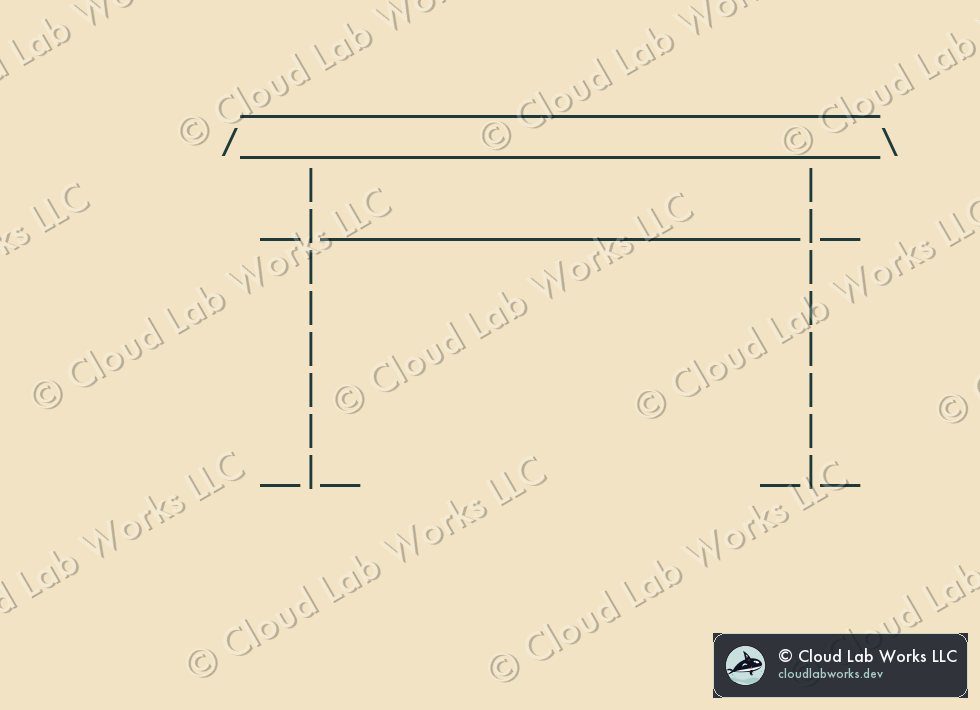 ASCII · monospace, ink on creamToriiThe gate, in eleven lines of pipe and underscore. Two lintels, two posts, the space between them is the point.Inquire about the original →
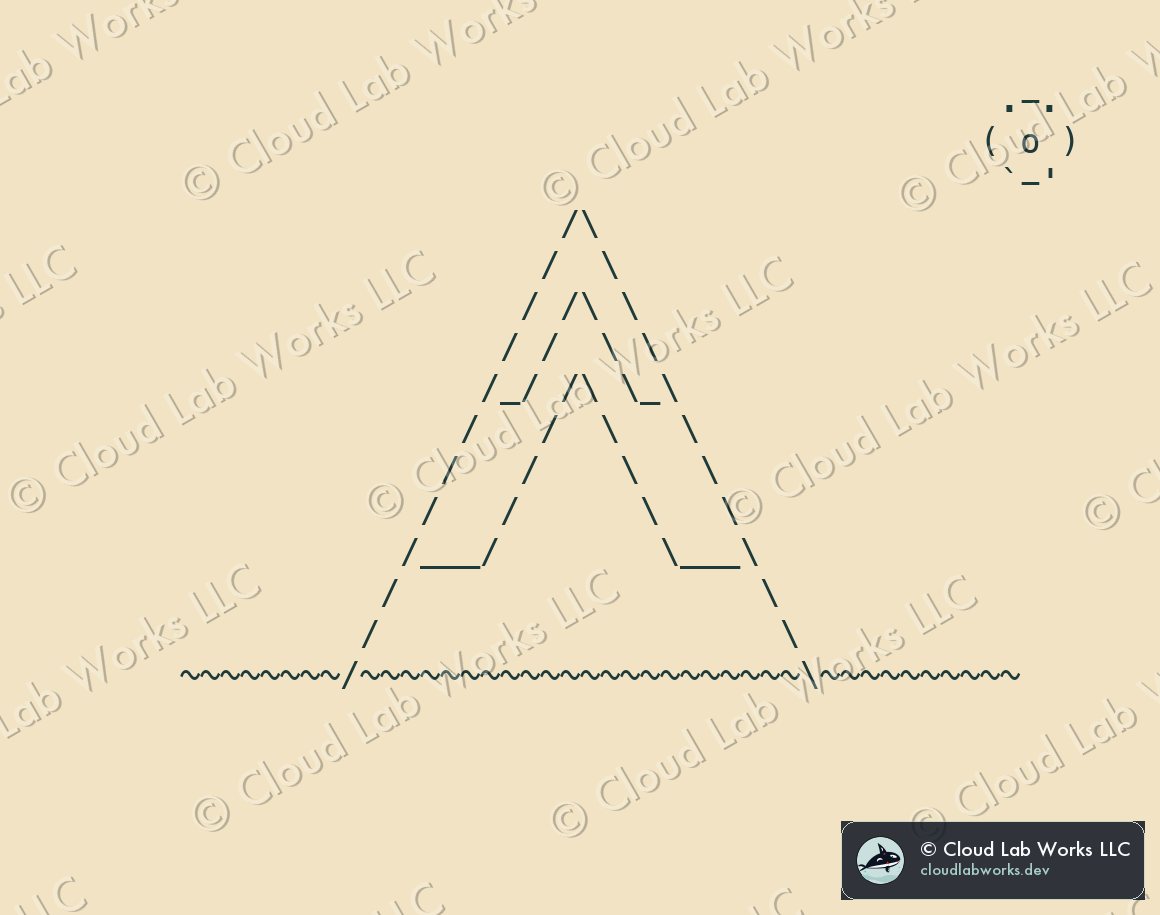 ASCII · monospace, ink on creamFujiSnow on the shoulders as a zigzag, the sun as a period. Every woodblock does the same three things.Inquire about the original →
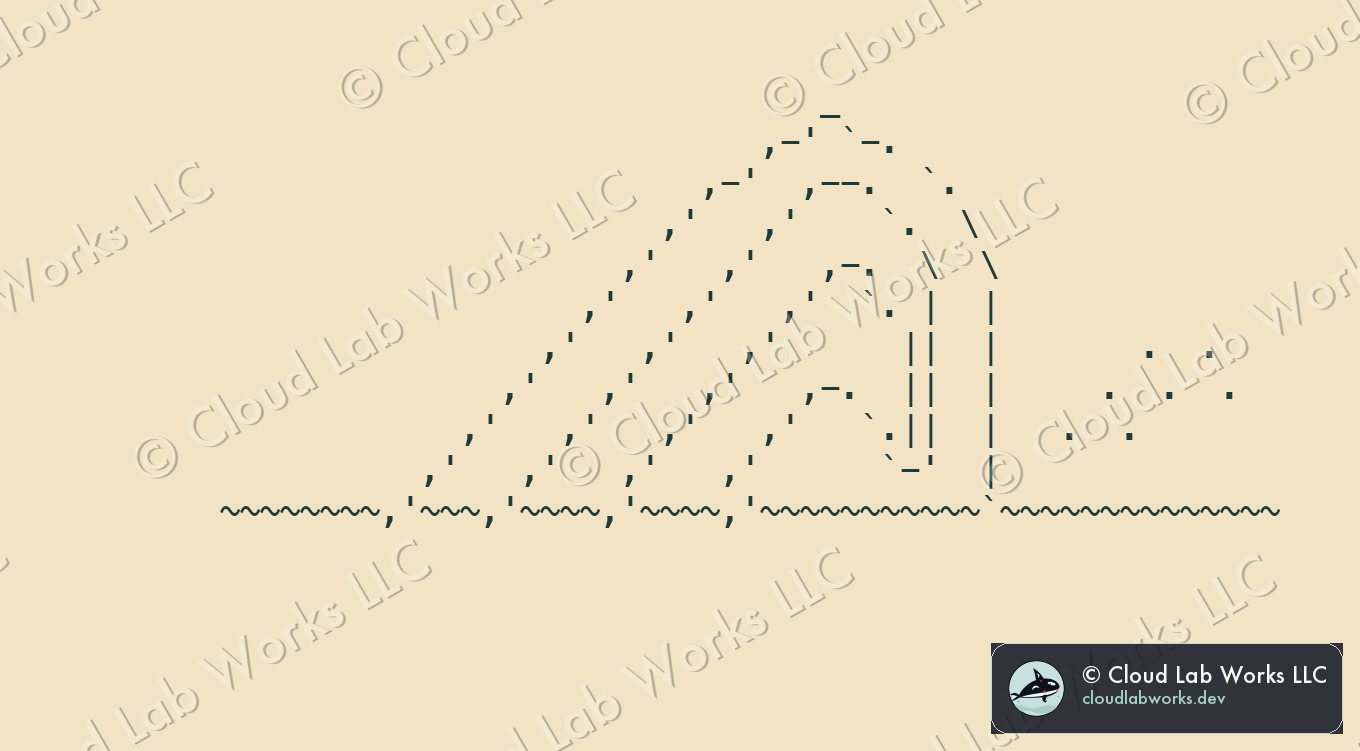 ASCII · monospace, ink on creamThe waveHokusai's claw as one long curl rising from the left, the spray as periods. The boat is not in this one; the boat never had a chance.Inquire about the original →
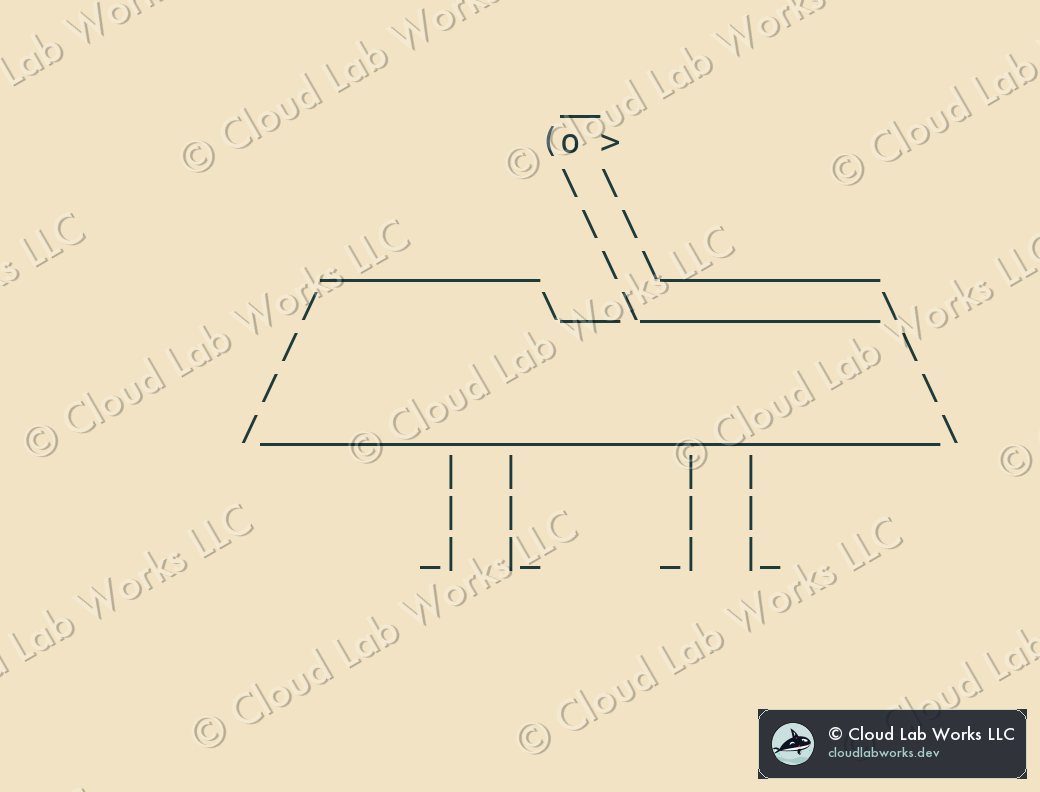 ASCII · monospace, ink on creamTsuruThe crane, standing. The head is three characters; the legs are the same pipe as the torii posts.Inquire about the original →
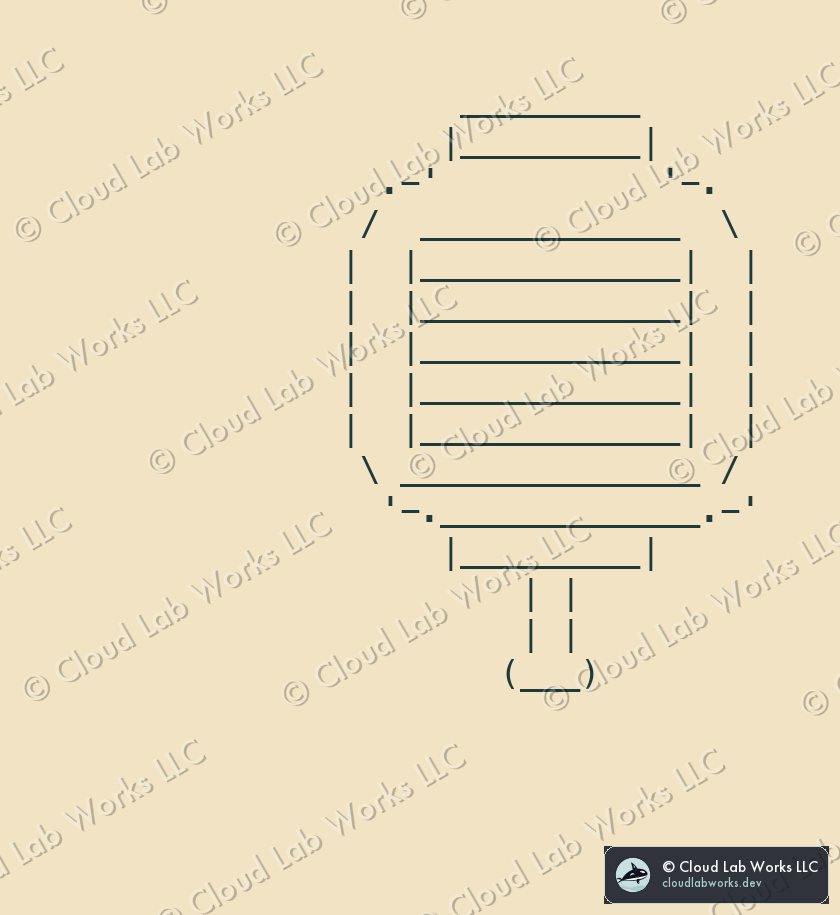 ASCII · monospace, ink on creamChōchinThe paper lantern: a hood, six ribs, a tassel. The ribs are underscores because that is what ribs are.Inquire about the original →
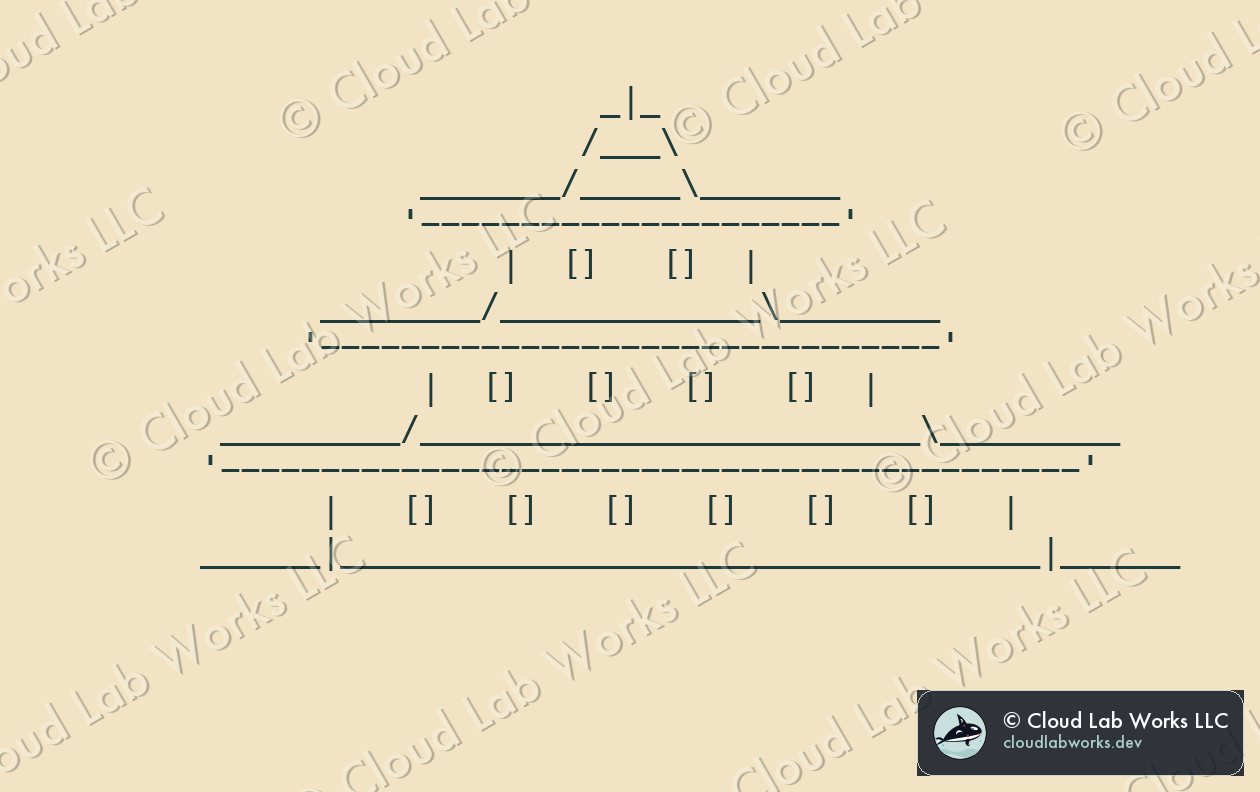 ASCII · monospace, ink on creamPagodaThree stories of roof and lath. Each roof is one line wider than the one above, which is the whole trick of a pagoda.Inquire about the original →
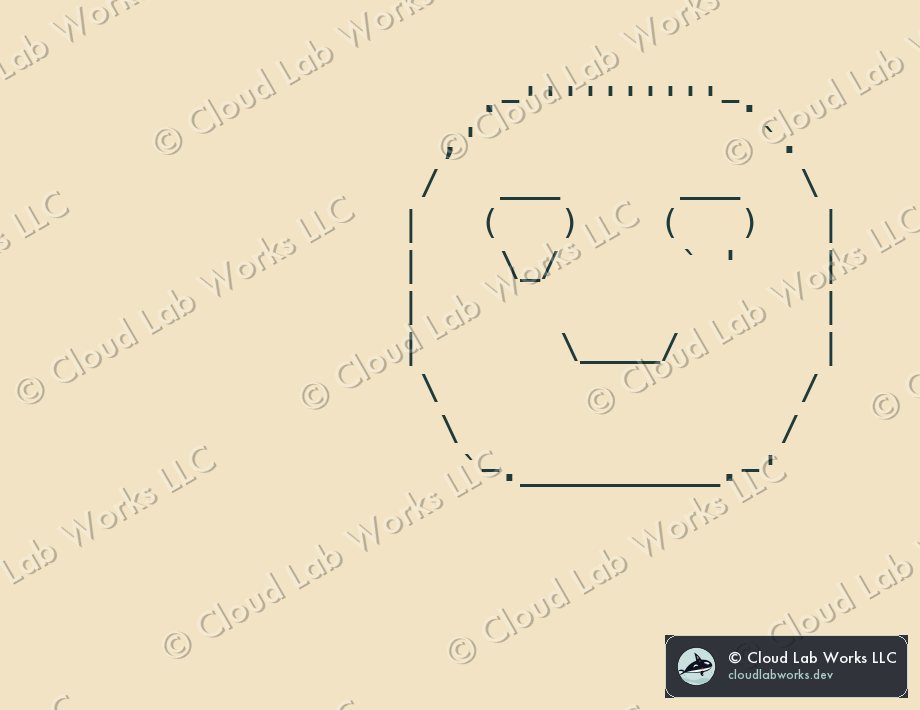 ASCII · monospace, ink on creamDarumaOne eye painted. The other waits for the goal. Round, weighted, gets back up: the whole doll is a proverb.Inquire about the original →
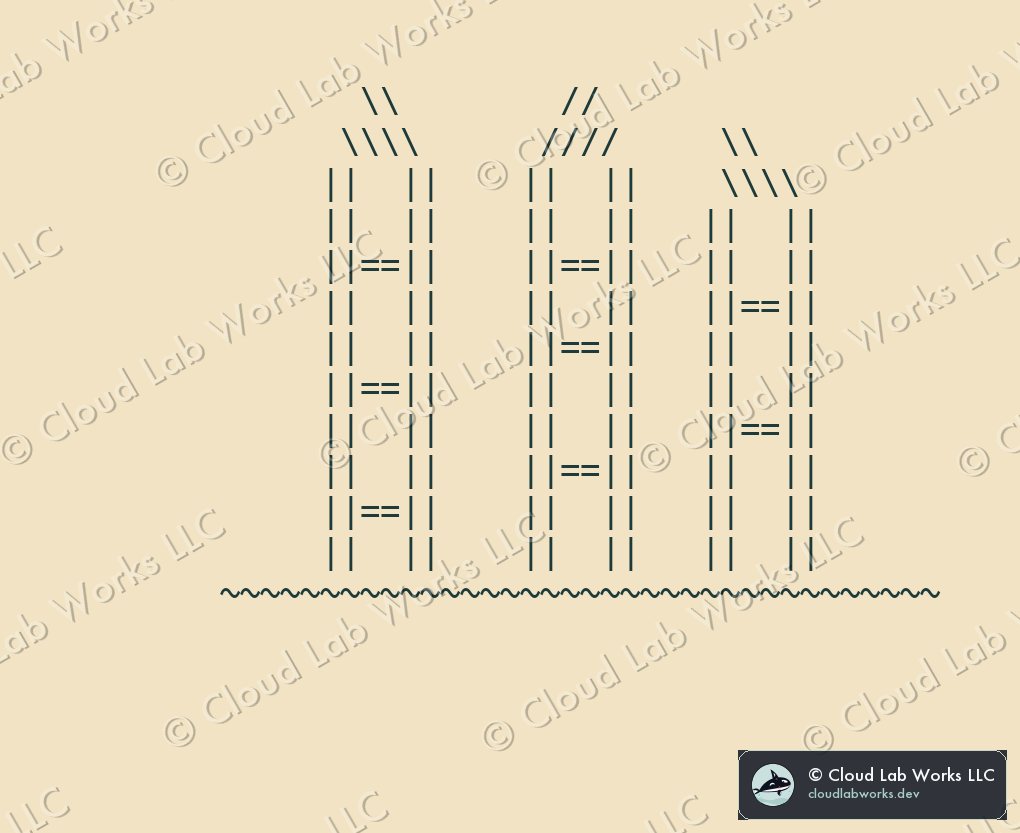 ASCII · monospace, ink on creamTakeThree culms, the nodes as double bars, leaves as slashes. Bends in wind; drawn straight because ASCII does not bend.Inquire about the original →
The site set
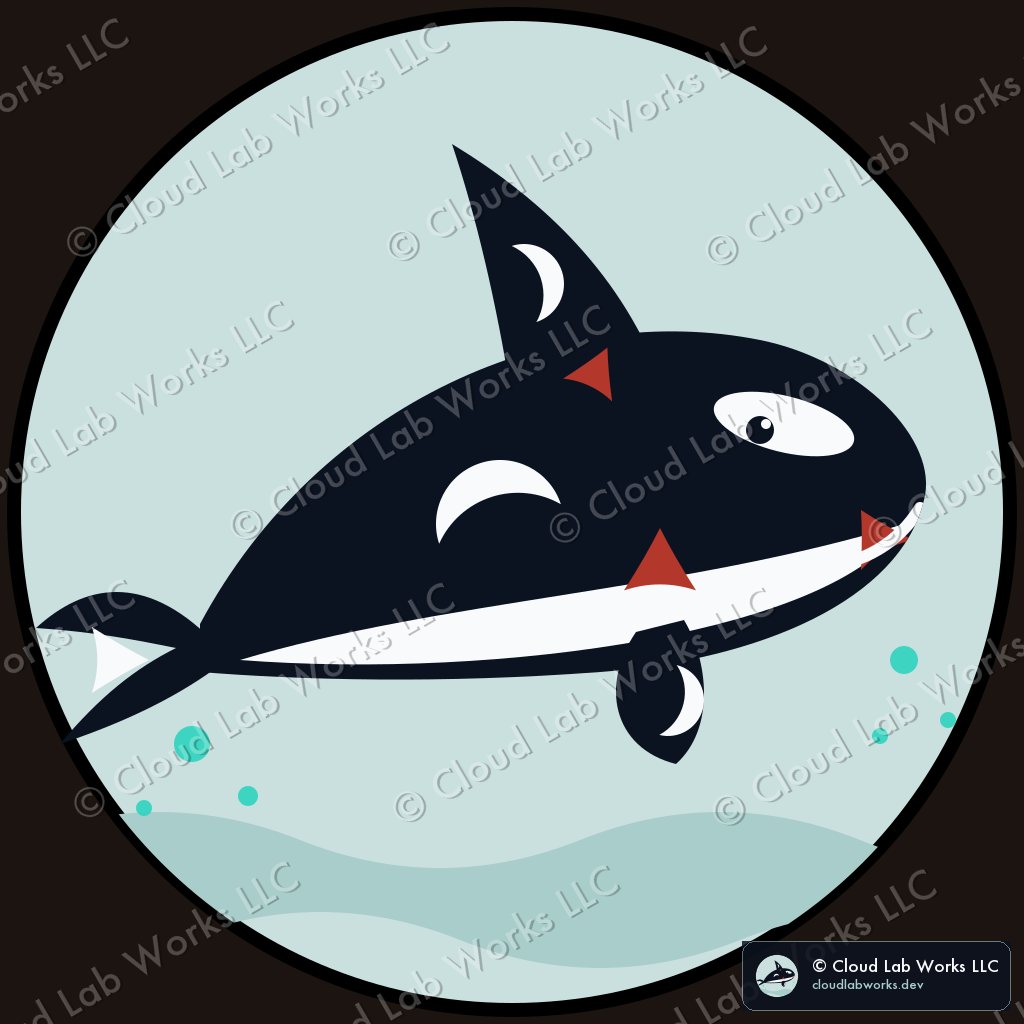 SVG · hand-written pathsThe orca markWaku's own face and the site's mark. Coast Salish formline vocabulary, orca not "killer whale" (his rule), teal against cream. Three cuts: eyes, then background, then a paler field once the first one shouted.Inquire about the original →
 SVG tile · rendered bannerSalish bandOne 720 px tile, repeated: ovoids, crescents, trigons and orcas. Earth first (the brown), then the loud colour placed against it (the rust and teal). That order is Alex's, stated in his own hand, and it is the constraint the whole drawing obeyed.Inquire about the original →
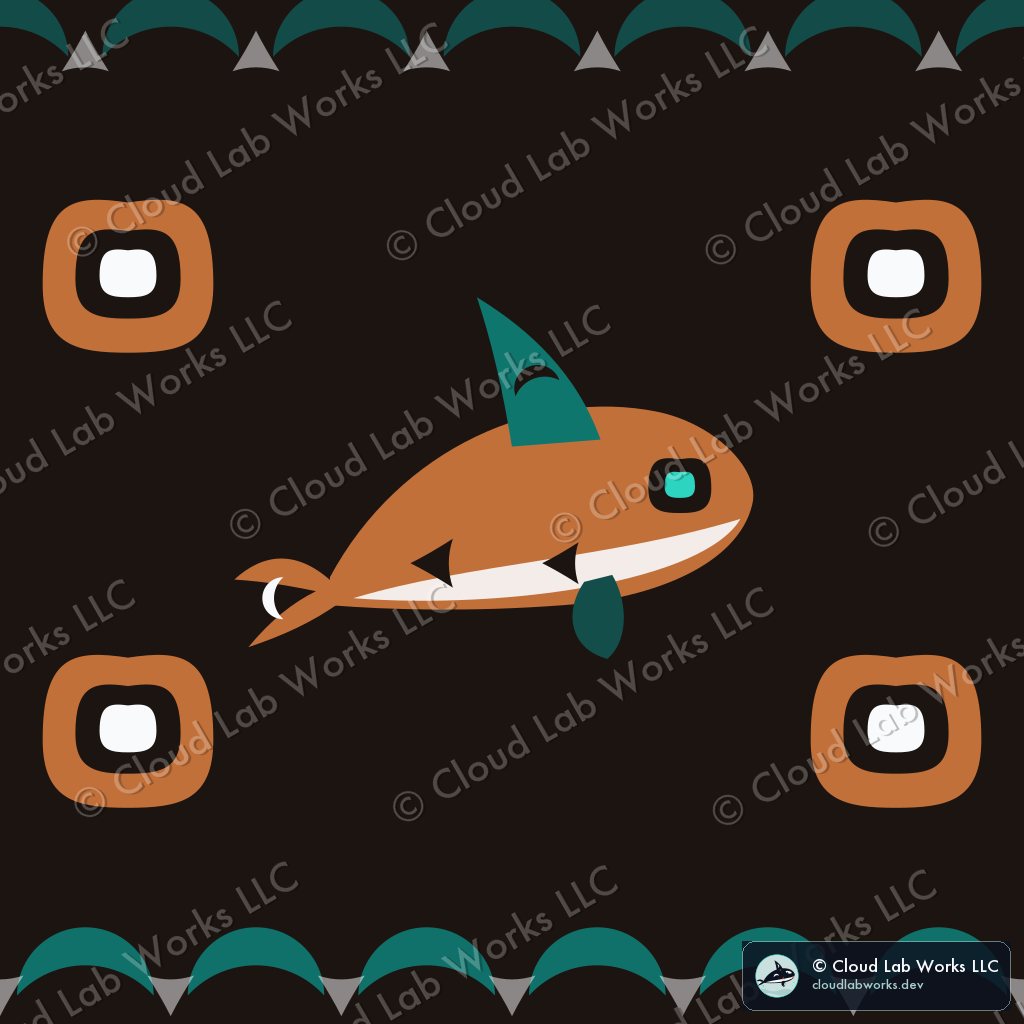 SVG · alpha variantThe watermarkThe same tile with its ground removed, laid behind every page at four percent. Barely there on purpose; Alex set the number.Inquire about the original →
 HTML → PNGShare cardWhat the link looks like when it lands in a chat. Rendered from a one-file HTML page by a headless browser, so the card and the site can never disagree.Inquire about the original →
- Sound from codeInfrastructure as MusicNot a picture: the lab's own state played on Sonic Pi. A deploy is two chords resolved, a fault is a low E twice, a recovery answers a fifth up. Phrases are code in git; recordings run song length.Listen on /live →
- ASCIIThe NC2 panelsTen box-drawn panels that walk a cloud deployment step by step in plain text, width-checked so they never break. Art in the sense a good schematic is art.Read the post →
What feeds it
Artists
- Tradition · Coast SalishCoast Salish formlineOvoids, crescents, trigons, and the orca that carries the whole site. The banner and the watermark on these pages are original drawings in that vocabulary, made for the site; the tradition belongs to the Salish peoples of this coast.Burke Museum, Seattle →
- Photography · Kitsch Pop SurrealismDavid LaChapelleThe style has a name, Kitsch Pop Surrealism, and he is the one who gave it its grammar: hyper-saturated colour, staged tableaux, pop iconography and religious painting run together, everything lit like a shop window and too much on purpose. The movement grew out of 1970s Lowbrow art, underground comics, punk rock and hot-rod culture, and eventually exploded into the contemporary art scene. It takes things traditionally seen as bad taste or overly sentimental and renders them with high-art technical skill. The Office Magazine tear-sheet on the rug is the same key, shot by others.davidlachapelle.com →
- More to comeAlex's listPainters, glass artists, potters and metalworkers, each with a line on why. Names go up as he adds them; nothing here is reproduced, every card links to the artist's own place.
Pieces
- Single worksThe ones that stuckOne piece per card: what it is, where it lives, what it changed. Linked to the museum or the maker, never copied here.
Photography
- Portrait · 1947Philippe Halsman, Albert EinsteinThe poster on the lab wall. Library of Congress holds the print; the caption is Apple's, the face is Halsman's.Library of Congress →
- More to comePhotographers and framesLandscape and documentary work, and the occasional phone frame from the Salish Sea that earned a place.
Writings
- Books, essays, linesThe reading that shapes the workTitles and a sentence each on why. Goes up as Alex adds them.
Publications
- Culture jamming · since 1989AdbustersThe Vancouver magazine that turned ad-format parody into a movement: spoof ads, subvertising, and the anti-consumerist agitation that helped kick off Occupy Wall Street in 2011. Same coast, same instinct to take a familiar visual language and use it against itself.adbusters.org →
- Art & culture · since 1994JuxtapozFounded in San Francisco by Robert Williams and a handful of Lowbrow-scene painters as a home for art the galleries wouldn't hang: hot-rod culture, tattoo art, graffiti, comics. It's the magazine that gave Pop Surrealism a masthead.juxtapoz.com →
- Satire · since 1952Mad MagazineAlfred E. Neuman, the fold-in back page, and forty years of teaching a generation of readers to distrust an ad, a politician, or a movie poster on sight. The cover gag was the lesson.Mad (magazine) →
- Street art & graphic design zineKill PrettyThe underground authority on street art and bold graphic design: overlooked and underrated work, raw interviews, no status-quo. A collectible zine for the vandals and visionaries, same instinct as the rest of this shelf.killprettymagazine.com →
- Independent publicationVolume 0Not Technodystopia after all — the actual name, per Alex: Volume 0, a slashed-zero mark on an independent print/shop publication. Same shelf, same instinct.volume0.com →
Page art: Coast Salish-vocabulary pattern drawn for this site. Background dimmed so the cards read.